

Pufa Silicon Valley Bank: China's First Dedicated Tech Bank Supporting Nearly 100 Medical Projects with Unsecured Credit Loans
The first Sino-U.S. joint venture bank approved in China;
China's first technology bank with independent legal entity status;
China's First Bank Dedicated to Serving Technology Innovation Enterprises.
SPD Silicon Valley Bank, which holds numerous “first” titles, was established in 2012 as a joint venture between Shanghai Pudong Development Bank and Silicon Valley Bank. Distinct from venture capital firms and traditional banks, SPD Silicon Valley Bank positions itself as a technology-focused bank serving science and technology innovation enterprises. Its business model closely mirrors that of its U.S. counterpart, Silicon Valley Bank, which is well-known in the venture capital community for its willingness to lend to startups, even as other banks shy away from high-risk entrepreneurial loans.
In China, startups typically raise capital through equity investments from venture capital firms; previously, there were no technology banks specifically dedicated to serving innovative enterprises. Amid the current favorable conditions for entrepreneurship, SPDB Silicon Valley Bank is committed to introducing the Silicon Valley Bank model to China, catering to a wide range of small and medium-sized sci-tech innovation enterprises.
As an innovative financial model that has taken root in China, what exactly is the role of Shanghai Pudong Development Bank Silicon Valley Bank (SPD Silicon Valley Bank)? What resources can it bring to enterprises? With these questions in mind, VCBeat conducted an exclusive interview with Li Zhouheng, President of the Beijing Branch of SPD Silicon Valley Bank.

Li Zhouheng, President of SPDB Silicon Valley Bank Beijing Branch
China’s First Tech Bank, Adopting the U.S. Silicon Valley Bank Model
Silicon Valley Bank Financial Group’s operations are broadly divided into four segments: commercial banking, private banking, treasury management, and asset management, with commercial banking remaining its core business. Silicon Valley Bank in the United States boasts 35 years of experience serving technology and innovation-driven enterprises as well as venture capital (VC) and private equity (PE) fund clients. It manages a $23 billion loan portfolio covering more than 2,800 PE/VC fund clients, including top-tier venture capital firms such as Sequoia Capital, IDG Capital, and Qiming Venture Partners. The bank holds over 50% of the U.S. market share among VC-backed startup clients.
Like traditional banks, Silicon Valley Bank offers services such as account opening and closing, deposits, loans, payments, and transfers. The key distinction lies in its specialized client base: SVB primarily serves technology innovation companies and their investment institutions in sectors such as software, hardware, life sciences, new energy, and advanced materials, providing venture debt support to firms driven by technological and commercial innovation.
It is inevitable for startup projects to integrate with capital during their growth. In the milestones of corporate development, each round of financing is typically regarded as a new temporal node. For enterprises, selling equity in exchange for funding has become the primary choice for startups.
However, as a company grows, its early-stage equity becomes increasingly valuable. Consequently, alongside equity financing, models such as that of Silicon Valley Bank—which provides debt financing to entrepreneurs—have emerged. Debt financing helps startup teams avoid excessive dilution of their equity stakes and supports the enterprise in achieving a higher valuation before its next round of funding.
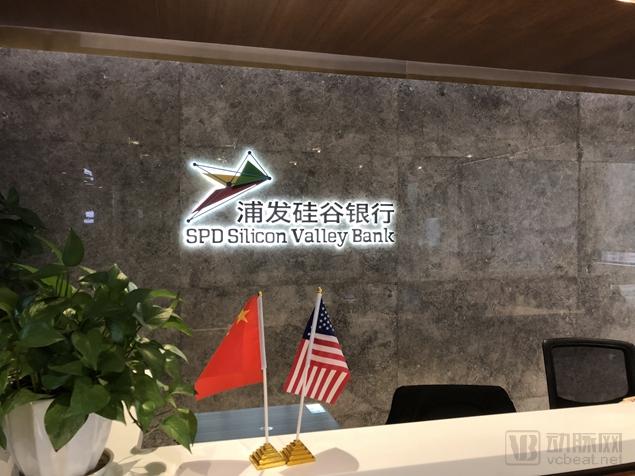
Leveraging Silicon Valley Bank’s business model, SPDB Silicon Valley Bank provides flexible, customized debt financing solutions to support the early-stage development of technology and business innovation enterprises. This serves as a positive complement to their existing equity financing, supporting working capital, fixed asset investments, and upfront expenditures such as product research and development. By doing so, it helps avoid excessive equity dilution, reduces core financing costs, and extends the runway for companies’ subsequent high-speed growth.
Regarding its business model, Li Zhouheng described it with this statement: “From the perspective of venture capital firms, we have the deepest understanding of banking operations; within the banking sector, we are the institution with the most profound grasp of innovation, entrepreneurship, and the principles governing venture capital.”
According to publicly available information from SPDB Silicon Valley Bank, Li Zhouheng, currently the President of the Beijing Branch of SPDB Silicon Valley Bank, joined the U.S. headquarters of Silicon Valley Bank Financial Group in late 2009. As the first Sino-U.S. management talent cultivated by Silicon Valley Bank, he engaged in innovative financial banking services in Silicon Valley for three years. In late 2011, he returned to Shanghai from the U.S. headquarters and joined SPDB Silicon Valley Bank Co., Ltd., a joint venture initiated by Silicon Valley Bank and Shanghai Pudong Development Bank (SPDB), where he was responsible for market expansion and innovative financial services in Beijing. On December 30, 2016, the Beijing Branch of SPDB Silicon Valley Bank Co., Ltd. received formal approval for commencement of operations from the Beijing Banking Regulatory Bureau, and concurrently, Li Zhouheng assumed the role of President of the Beijing Branch.
Li Zhouheng stated, “Currently, China’s innovative healthcare ecosystem holds significant potential. Precisely because of the ecosystem’s continuous development, SPDB Silicon Valley Bank has positioned itself at a critical juncture of this growth. Small and medium-sized enterprises (SMEs) in China, particularly those in the innovation-driven sector, are not yet fully covered by capital, leaving substantial room for optimization.” Therefore, the emergence of institutions such as SPDB Silicon Valley Bank is the result of alignment with national strategies.
In the healthcare sector, SPDB Silicon Valley Bank has served nearly 100 medical innovation enterprises, including Almond Doctor, Good Life International Health Group, and Zhiben Medical. Currently, domestic startups in the fields of healthcare data and intelligent medicine are still in their early stages of development and thus remain heavily reliant on capital support. Science and technology innovation enterprises in life sciences and innovative technologies generally have substantial funding needs during product research and development as well as commercialization, which presents opportunities for SPDB Silicon Valley Bank.
Startup Loans, Upstream-Downstream Synergy, and International Resource Integration: Empowering Sci-Tech Enterprises to Achieve Key Milestones
Typically, for the banking industry, tech innovation enterprises are not “good” clients—their business models are difficult to understand, and the high uncertainty surrounding their products leads to excessive risk.
The principle of bank lending is to ensure that, in the event a company fails to repay the loan within the agreed term, there are alternative means to recover the funds lent.
In traditional commercial banks, borrowers typically have two ways to obtain bank credit: one is to secure a loan by pledging the fixed assets owned by the enterprise as collateral, and the other is to obtain an unsecured credit loan based on an impressive “track record” and a solid operational history (such as a three-year growth in total profits).
SPD Silicon Valley Bank distinguishes itself by deviating from traditional banking assessment criteria, adopting an alternative logic for providing debt financing. It offers unique, diversified credit financing solutions that do not gauge loan risk based on collateral or corporate profitability. Specifically, the primary criterion for selecting enterprises is their inherent innovative vitality and their capacity to create value. “The reason we are willing to support them is mainly because these enterprises possess innovative vitality. Therefore, what we focus on is often neither collateral nor guarantees, nor the founders’ personal guarantees or assets, but rather the company’s future enterprise value.”
In the philosophy of SPDB Silicon Valley Bank, the model for serving enterprises is described as full-lifecycle service. Startups have different financing needs at various stages of their development cycle. After equity financing provides the initial impetus for launch, bank loans help extend the company’s runway and support its progress toward the next milestone. The core business of SPDB Silicon Valley Bank is to provide financing to venture capital-backed technology and innovation companies, helping them achieve an optimal debt-to-equity ratio.
In addition to financial support, by leveraging Silicon Valley Bank’s global network and Shanghai Pudong Development Bank’s domestic network, Shanghai Pudong Development Silicon Valley Bank can connect small and medium-sized sci-tech innovation enterprises with high-quality overseas resources. Over the past few years, through hosting healthcare capital and matchmaking summits, they have cumulatively invited more than 300 CEOs in the life sciences sector and over 85 venture capital firms to engage in exchanges with Chinese enterprises, thereby facilitating cross-border collaborations.

2017 Healthcare and Medical Capital Matchmaking Summit, hosted by Silicon Valley Bank, SPD Silicon Valley Bank, the Advanced Medical Technology Association (AdvaMed), investment bank Piper Jaffray, and Vivo Capital
Meanwhile, at different stages of corporate development, there is a need for synergy with upstream and downstream partners. To support its client enterprises, SPDB Silicon Valley Bank has a dedicated industry research team that provides strategic consulting services.
“In summary, unlike a traditional bank, SPDB Silicon Valley Bank not only provides financial support to technology companies but also leverages its big data platform to offer advice and assistance in areas such as the upstream and downstream industry ecosystem, exit mechanisms, and the investor environment.”
Future: Further increase market share and enhance the convenience of financial services for enterprises.
SPD Silicon Valley Bank’s competitive edge in the market lies in its unique positioning and solid foundation:
First, in terms of positioning, unlike other institutions that have invested in sectors such as real economy industries, SPDB Silicon Valley Bank is a financial institution solely focused on technology and innovation.
Second, its globalized ecosystem determines its resource advantages. Li Zhouheng pointed out, “As Chinese startups continue to multiply, for those positioning themselves as global enterprises, we are the only bank in the global arena that can provide them with international resource support.”
Third is the first-mover advantage. Silicon Valley Bank’s model has been in place for 35 years, while SPDB Silicon Valley Bank focuses on China’s top-tier funds and leading enterprises, which helps it capture a larger market share.
Currently, SPDB Silicon Valley Bank’s loan portfolio in the healthcare sector exceeds RMB 2 billion, covering nearly 100 projects, with this financing volume expected to double this year. Since launching its U.S. dollar business in August 2012 and its RMB business in September 2015, SPDB Silicon Valley Bank has served 15% of the companies invested in by China’s top-tier venture capital firms. As the bank extends credit based on an assessment of enterprises’ growth potential, reaching a sufficient number of leading companies is a critical pathway for generating revenue. Its core success factor lies in maximizing market share within China’s technological innovation sector, thereby raising awareness among more enterprises about this alternative financing option.
SPD Silicon Valley Bank’s strategic goal is to “further increase its market share in China over the next five years and become a more influential institution among China’s sci-tech innovation enterprises.”
Therefore, by co-hosting the China Health and Medical Big Data Industry Innovation Competition with CEC, we aim to connect with more outstanding innovative projects in the healthcare sector, helping enterprises alleviate their funding constraints and gain awareness of the innovative financial services provided by SPD Silicon Valley Bank to entrepreneurs.
Li Zhouheng believes that the gradual shift of technology-focused venture capital firms, including those traditionally investing in TMT projects, toward healthcare services represents a emerging trend. This is particularly evident in the digital health sector, where financing activities have been notably active. According to Silicon Valley Bank’s report on 2018 healthcare investment and exit trends, healthcare investment was projected to reach a record $15.5 billion in 2017, a 31% increase from 2016, with biopharmaceuticals and medical devices showing strong performance. Biopharmaceuticals, medical devices, and digital health constitute the three major sectors that are the primary focus of Silicon Valley Bank’s investments and attention.
In the book *China Venture Capital Map*, a perspective is presented: the current entrepreneurial environment has evolved from a grand era of survival of the fittest into a micro-era characterized by simultaneous demise and emergence. According to data reported by Youth.cn in 2016, under government policies encouraging mass entrepreneurship and innovation, approximately 30,000 new enterprises were being established daily in China, the vast majority of which were micro and small businesses.
For startups, achieving each milestone is a hard-fought battle. Countless companies are founded, yet many that once enjoyed widespread acclaim and peak prominence can inadvertently slip toward demise.
The process of natural selection affords us the time to gradually filter out impurities, yet in the face of cutthroat competition, entrepreneurs have little time to spare. In such an environment, Shanghai Pudong Development Bank Silicon Valley Bank’s persistent commitment to “playing the role of a ‘tree planter’ in the industry by nurturing early-stage companies that are often overlooked” is particularly invaluable.
In providing equity financing, strategic advisory, and resource matchmaking services to small and medium-sized enterprises (SMEs), SPDB Silicon Valley Bank enhances the banking experience for entrepreneurs, saving them time as they focus on product development, market promotion, corporate operations, and other critical tasks, thereby helping companies achieve one milestone after another.
ALL IN-China Health and Medical Big Data Industry Innovation Competition
Big health and medical data is a crucial foundational strategic resource for the nation, rapidly evolving into a new generation of information technology and novel health and medical service models. The application of big data spans the entire healthcare process, including drug research and development, clinical diagnosis and treatment, insurance reimbursement and commercial insurance design, as well as health management and public health services, exerting a profound impact on the future development of the healthcare industry.
At the national level, under the leadership of the National Health and Family Planning Commission, three major health and medical big data groups dominated by state-owned capital were officially established in 2017, marking the entry of health and medical big data applications into a substantive phase. Recently, initiated by China Electronics Data, the “national team” for health and medical big data,"China Health and Medical Big Data Industry Innovation Competition"Officially launched, with Shanghai Pudong Development Bank Silicon Valley Bank participating as a co-organizer.
As one of the most anticipated competitions in the field of healthcare big data, this event will encompass various segments of China’s healthcare big data industrial ecosystem. It focuses on the most innovative projects in medical services, data technology, and data security across the entire industry. The competition brings together the most authoritative technical experts, investment professionals, and industry researchers. It enables innovative healthcare enterprises to understand the latest trends in industrial investment, engage in dialogue with China’s top investment experts, and collaborate with national-level teams to jointly advance the development of China’s healthcare industry.
SPD Silicon Valley Bank expressed its anticipation for co-organizing and participating in the event: “The ‘Healthcare Big Data Industry Innovation Competition’ features high-potential companies from Series A to Series C that have received investments from mainstream Chinese investment firms. As a co-organizer, SPD Silicon Valley Bank hopes to further collaborate with these companies by providing resource coordination opportunities in innovative fields such as hardware, software, internet, life sciences, and biotechnology.”

Scan the QR code to learn more about the competition.