

China's National Healthcare Security Administration Officially Launched with Hu Jinglin as Director and Shi Zihai, Chen Jinfu, Li Tao as Deputy Directors
On May 31, the National Healthcare Security Administration was officially inaugurated, with Hu Jinglin appointed as Director and Shi Zihai, Chen Jinfu, and Li Tao serving as Deputy Directors.
Previously, the National Health Commission and the National Medical Products Administration were officially inaugurated. With the unveiling of the National Healthcare Security Administration, all departments related to medical supervision under this round of the State Council’s institutional reform plan have now been fully established.
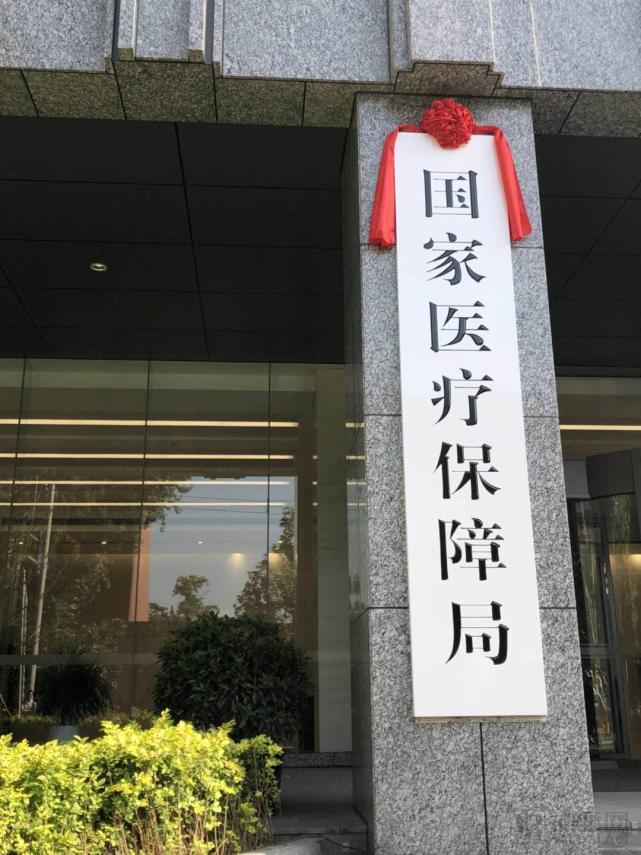
Image source: People's Daily Client
According to the State Council institutional reform plan announced in March, the National Healthcare Security Administration is a newly established department. Its functions are integrated from the basic medical insurance for urban employees and urban residents and maternity insurance under the Ministry of Human Resources and Social Security, as well as the New Rural Cooperative Medical Scheme under the National Health and Family Planning Commission, thereby achieving the “integration of three insurance schemes.” It also assumes responsibilities such as drug and medical service price management from the National Development and Reform Commission and medical assistance duties from the Ministry of Civil Affairs. As it is primarily responsible for managing the healthcare security fund and controlling medical expenditures, the National Healthcare Security Administration is also referred to as the “healthcare security purse” and the “most powerful healthcare payer in history.”
The industry believes that after the National Healthcare Security Administration assumes unified management of the revenue and expenditure of medical insurance funds, adjustments may be made to the formation of the medical service pricing system, drug tendering and procurement, and medical insurance reimbursement rules. Given the financial pressure on medical insurance funds, there will likely be more payer-led cost containment measures in the future, with initiatives such as “medical insurance payment negotiations” and “diagnosis-related group (DRG) payment” continuing to advance.
“The Emergence of the ‘Most Powerful Healthcare Payer’” signifies a more centralized approach to the fundraising and utilization of healthcare insurance funds, with the National Healthcare Security Administration (NHSA) playing a more active role in the tendering and procurement process, thereby truly leveraging its financial clout. Drawing on experiences from Fujian and other regions, the NHSA will engage in direct negotiations with pharmaceutical and medical device suppliers to effectively reduce procurement prices. Furthermore, during the later stages of its functional transition, the NHSA may collaborate with social institutions through “government purchase of services” models to pilot initiatives such as Group Purchasing Organizations (GPOs).
Hu Jinglin Appointed as Director of the National Healthcare Security Administration, Previously Served as Vice Minister of Finance
According to official records, Hu Jinglin was born in June 1964 in Shexian, Anhui Province. He joined the Communist Party of China in June 1987 and began his career in August 1988. He completed postgraduate studies at the Department of Industrial Economics and the School of Labor and Human Resources of Renmin University of China, earning a Ph.D. in Economics.
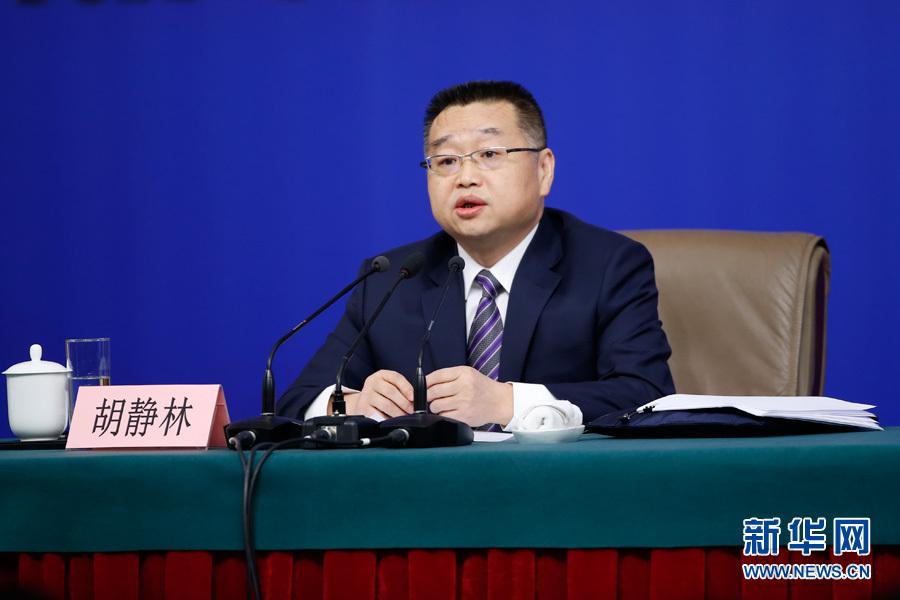
Hu Jinglin answers reporters’ questions during the 2018 Two Sessions (Image source: Xinhua News Agency)
From 1992 to 1994, he served as Deputy Director of the Regulations Division under the Department of Policy and Regulations of the State Administration of State-owned Assets. From 1994 to 1998, he successively served as Deputy Director-General of the Department of Policy and Regulations and Deputy Director-General of the Department of Enterprise Affairs of the State Administration of State-owned Assets (during which period, from February 1995 to March 1996, he was temporarily assigned to serve as Deputy Commissioner of the Baoshan Prefectural Administrative Office in Yunnan Province).
From 1998 to 1999, served as Secretary of the Property Assessment Department of the Ministry of Finance; from 1999 to 2004, served successively as Deputy Director of the Property Assessment Department and Deputy Director of the Economic Construction Department of the Ministry of Finance; from 2004 to 2007, served as Director of the Economic Construction Department of the Ministry of Finance; from 2007 to December 2009, served as Director of the General Office and Spokesperson of the Ministry of Finance; from December 2009 to July 2014, served as Assistant Minister and Member of the Party Leadership Group of the Ministry of Finance; since July 2014, has served as Vice Minister and Member of the Party Leadership Group of the Ministry of Finance.
Hu Jinglin’s responsibilities at the Ministry of Finance include: assisting in the oversight of the Department of Personnel and Education; and directly overseeing the General Office, the Department of Agriculture, the Department of Financial Affairs, the National Agricultural Comprehensive Development Office, the Party Committee of the Ministry, the Bureau for Retired Cadres, the Office of the Leading Group for Inspection Work of the Ministry of Finance, and the China Fiscal and Taxation Museum.
Hu Jinglin has long been engaged in theoretical research and practical work on state-owned enterprise (SOE) reform and macroeconomic theory. With extensive professional experience and a solid theoretical foundation, he has participated in major reforms of fiscal and industrial management systems as well as key research on macroeconomic policies. He is the author or translator of several works, including SOE Reform: Approaches and Pathways, Human Capital and Innovation in Corporate Systems, Financial Asset Valuation, and The U.S. Federal Government Budget.
Transferred from the position of Vice Minister of Finance to become the Director of the National Healthcare Security Administration, Hu Jinglin’s extensive prior experience in fiscal work is expected to play a significant role in managing the healthcare insurance “coffers.”
Other Key Leadership Profiles
Deputy Director Shi Zihai
Shi Zihai, a native of Yuyao, Zhejiang Province, was born in May 1966 and is a member of the Communist Party of China. He graduated from Beijing Normal University in July 1991 with a master’s degree in economics. In the same year, he joined the Policy Research Office of the State Planning Commission, where he was appointed Deputy Director of the Comprehensive Division in May 1997. Subsequently, Mr. Shi held various positions, including Deputy Division-Level and Division-Level Secretary in the General Office, Director of the Comprehensive Division of the Department of Policies and Regulations, and Director of the Policy Research Office.
In January 2016, Shi Zihai was appointed Director of the Price Department. From July 2015 to March 2017, he concurrently served as Spokesperson for the National Development and Reform Commission (NDRC). In October 2017, he was appointed Deputy Secretary-General of the NDRC and Director of the Price Department.
Deputy Director Chen Jinfu
Chen Jinfu, a native of Changzhou, Jiangsu Province, was born in August 1962. He holds a bachelor’s degree in Economics from Nanjing University, Jiangsu Province. He has long been engaged in the formulation and research of medical insurance policies.
Chen Jinfu previously worked at the Party Committee of the Ministry of Finance, the Department of Comprehensive Planning, and the Department of Income Distribution of the former State Commission for Restructuring the Economic System. He successively served as Director of the General Affairs Division under the Department of Medical Insurance of the Ministry of Labor and Social Security, Deputy Director-General of the Department of Medical Insurance of the Ministry of Labor and Social Security, and Deputy Director-General of the Department of Medical Insurance of the Ministry of Human Resources and Social Security. Since 2015, he has been serving as Director-General of the Department of Medical Insurance of the Ministry of Human Resources and Social Security.
The Department of Medical Insurance under the Ministry of Human Resources and Social Security is responsible for coordinating the formulation of policies, plans, and standards for medical insurance and maternity insurance; drafting management measures for medical insurance and maternity insurance funds; organizing the formulation of management and settlement procedures and payment scopes for medical insurance and maternity insurance services provided by designated medical institutions and pharmacies; establishing allowance standards during periods of leave due to illness or maternity; and formulating policies and management measures for supplementary medical insurance in government agencies, enterprises, and public institutions.
Deputy Director-General Li Tao
Li Tao, a native of Enshi, Hubei Province, was born in November 1967. He is of Tujia ethnicity, a member of the Communist Party of China, and holds the title of Professor. He began his career in July 1990. He has a postgraduate education and holds a Doctor of Medicine (M.D.) degree.
After entering the workforce, Li Tao served as an officer at the Wuhan Municipal Health Bureau for two years, and subsequently worked as an ophthalmologist at Wuhan No. 3 Hospital for four years. From 1996 to 2004, Li Tao held the positions of Deputy Director of the General Office and Deputy Director of the Science, Technology and Foreign Affairs Division at the Wuhan Municipal Health Bureau.
From November 2004 to November of the following year, Li Tao served as Vice President and a member of the Party Committee at Wuhan Central Hospital (Wuhan No. 2 Hospital); he was subsequently transferred toWuhan Municipal Health Bureau, RenDirector of the Division of Maternal and Child Health Care and Community Health,Deputy Director of the Health Bureau, Member of the Party Committee、Director of the Health Bureau,Director of the Health and Family Planning Commission, Deputy Secretary of the Party Committee, etc.
In 2014, Li Tao was transferred toMinistry of Health, RenDeputy Director of the Center for Health Development Research, later served asDirector of the Health Development Research Center, National Health and Family Planning Commission、Director of the Department of Primary Health Care, National Health and Family Planning Commission, among other positions.
Speculation on the Actions of the National Healthcare Security Administration After Its Official Launch
The National Healthcare Security Administration was officially inaugurated, marking the dawn of a new era in the management of healthcare security funds. As the primary payer, healthcare security expenditures account for more than half of total health spending. However, in recent years, the most pressing challenge facing these funds has been financial strain. Consequently, the principal objective of the newly established administration is to ensure the effective and efficient management and utilization of these resources.
Previously, the medical insurance fund management authorities had taken multiple measures to control the growth of medical expenses and manage the medical insurance fund. For example, under the leadership of the Ministry of Human Resources and Social Security (MOHRSS), adjustments were made to the drug catalog and price negotiations were conducted. On February 21, 2017, MOHRSS released a new version of the “Medical Insurance Catalog,” marking the fourth adjustment since the establishment of the basic medical insurance system and the first such update in eight years. In early April, MOHRSS included 44 drug varieties in the negotiation scope for the 2017 National Basic Medical Insurance, Work-Related Injury Insurance, and Maternity Insurance Drug Catalog. Ultimately, 36 varieties were successfully included, while 8 were excluded.
Beyond adjustments to the National Reimbursement Drug List, reforming healthcare insurance payment methods is another key focus. In recent years, various departments have successively issued four relevant policies to comprehensively deepen payment method reforms and implement intelligent monitoring of medical insurance. These measures are based on global budgeting and aim to transition toward capitation and diagnosis-related group (DRG) payment models.
The most significant development was the "Guiding Opinions on Further Deepening the Reform of Basic Medical Insurance Payment Methods" issued by the State Council in June 2017. According to these opinions, starting from 2017, budgetary management of medical insurance funds will be further strengthened, and a diversified, composite medical insurance payment system dominated by diagnosis-related group (DRG) payments will be fully implemented. In the future, DRG-based payments may be integrated with reforms to hospital compensation systems and efforts to eliminate the reliance on drug markups for hospital revenue, leveraging payment mechanisms as a key tool to comprehensively deepen the effectiveness of public hospital comprehensive reforms.
In other respects, facilitating cross-regional settlement of medical expenses is a key priority. According to official data released by the National Health and Family Planning Commission, as of the end of September 2017, 7,226 designated medical institutions across all basic medical insurance pooling areas in China had enabled direct settlement of inpatient medical expenses for cross-provincial care, with 88% of tertiary-level designated hospitals nationwide connected to the network.
What is certain is that the newly established National Healthcare Security Administration will continue the aforementioned policies on healthcare insurance financing, cost containment, and management; however, with unified administration under a single department, these policies will be implemented with greater intensity and stronger enforcement.
In terms of personnel allocation, the key leaders of the newly established National Healthcare Security Administration come from various departments, which may facilitate the integration of diverse management experiences. Meanwhile, two leaders with prior experience as physicians and hospital presidents, along with extensive management expertise in the healthcare system, have joined the administration. Their deeper understanding of the real-world dynamics of the healthcare sector is expected to help gradually implement reforms in healthcare fund management.