

How Hospitals Choose Among the Surge of Medical AI Products: Insights from Department Heads
New-generation medical AI technologies have entered a phase of rapid development, with many companies developing products to assist physicians across various specialties. Since 2017, medical AI firms have been aggressively recruiting marketing personnel to accelerate their market expansion.
In March 2018, VCBeat learned from Dr. Hu Hongjie, Director of the Department of Radiology at Sir Run Run Shaw Hospital, that his department had partnered with 10 medical AI companies. In April, VCBeat learned from Dr. Lv Fajin, Director of the Department of Radiology at the First Affiliated Hospital of Chongqing Medical University, that his department had also partnered with 7 medical AI companies.
Medical AI Companies Crowd Hospitals: This Is Not an Isolated Phenomenon, as Most Renowned Grade-A Tertiary Hospitals Face the Same Situation. Amid a Plethora of Products, Most Physicians Use Only One. Faced with Numerous Options, on What Basis Do Departments and Physicians Make Their Choices? Which Medical AI Products Are Truly Implemented in Hospital Departments and Used by Physicians, and Which Are Merely Placeholders—Installed with Equipment or Systems Solely to Generate Press Releases for Publicity and Fundraising?
VCBeat interviewed or gained indirect insights from the directors of the Radiology Department at Sir Run Run Shaw Hospital, the Radiology Department at the First Affiliated Hospital of Chongqing Medical University, the Respiratory Medicine Department at Beijing 301 Hospital, the Blood Transfusion Department at Xiamen Second Hospital, and the Ophthalmology Department at Shanghai Shibei Hospital, to understand their approaches and original motivations for adopting AI.
Xiamen Second Hospital Department of Blood Transfusion: Engineering Staff to Collaborate with Physicians on Research

Lai Dong, Director of the Department of Transfusion Medicine and Central Laboratory, The Second Affiliated Hospital of Xiamen Medical College
Lai Dong, Director of the Department of Blood Transfusion and the Central Laboratory at the Second Affiliated Hospital of Xiamen Medical College, told VCBeat that there are two main considerations behind their selection of medical AI products.
First,Implementation. Regardless of how enterprises describe their AI products, which leverage machine learning, deep learning, or other algorithms, Director Lai’s primary concern is whether these products can solve practical problems in daily clinical workflows, or utilize computational and AI methods to visualize clinical issues of interest to physicians, thereby facilitating analysis and research.
Second,The Maturity of Professional Collaboration Between Engineers and Physicians. Director Lai stated that most of the data studied by their Department of Transfusion Medicine are non-imaging data.
When conducting scientific research, it is essential to first identify the variable data associated with the disease. In addition to highly specific data that are well understood by physicians, many other variables have been confirmed through big data analytics to be correlated with disease diagnosis. Therefore, the primary task for physicians is to comprehensively identify and collect all such relevant variable data.
After identifying associated data, rules must be established to structure general data, enabling computers to recognize and analyze it. This process involves physicians’ professional expertise, data structuring, completeness, and handling of missing values, all of which impact data quality.
Only after data processing is completed can engineers leverage AI technologies to analyze the data and identify correlations between diseases and the data.
Compared with imaging data, it is more difficult to structure and standardize non-imaging data. This is because modern imaging data are essentially digitized upon acquisition from the equipment; once annotated by physicians, they can be directly used for AI training. In contrast, non-imaging information such as prescriptions and clinical descriptions must undergo data structuring before they can be utilized for AI training—a process that heavily tests the expertise of both clinicians and engineers.
Director Lai believes that engineers and doctors form a single R&D team. During data organization, both parties engage in thorough communication to mutually understand each other’s needs and areas of focus. In the product refinement phase, many minor details and issues emerge that require joint resolution.
These issues require a very high level of maturity in the collaboration between medical AI companies and hospitals. Meanwhile, physicians have limited bandwidth; a physician team typically selects one company for in-depth partnership, and the company will station engineering personnel at the hospital to facilitate communication.
Director Lai stated that their collaboration with Yasen Technology has reached a high level of maturity, which is the reason for their long-term partnership.
Department of Radiology, The First Affiliated Hospital of Chongqing Medical University: Passing a Test Is Required for Entry
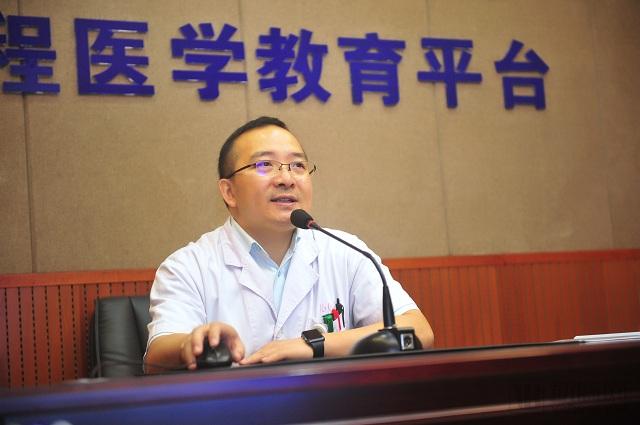
Lü Fajin, Director of the Department of Radiology, The First Affiliated Hospital of Chongqing Medical University
VCBeat learned from Dr. Lv Fajin, Director of the Department of Radiology at the First Affiliated Hospital of Chongqing Medical University, that his department has currently engaged with seven companies specializing in medical AI research, but only three have advanced to the stage of clinical refinement.
Director Lv Fajin told VCBeat that, due to differences between the training data of medical AI products and hospital-specific data, these products will inevitably exhibit performance variations when used at the First Affiliated Hospital of Chongqing Medical University. Therefore, pre-clinical assessment is essential.
The assessment method involves the department establishing a pilot zone based on routine clinical workflows, followed by validation using clinical data from the First Affiliated Hospital of Chongqing Medical University. Only products that pass the test are permitted to enter clinical trials. Products that fail the test are barred from clinical use and returned to the manufacturers for self-correction.
After a period of use, frontline radiologists have indicated that, in addition to product accuracy, they also prioritize ease of operation and whether the product integrates seamlessly with their existing clinical workflows.
Radiologists typically perform their daily work within hospital information systems, utilizing dedicated Picture Archiving and Communication Systems (PACS) for the transmission, storage, and retrieval of imaging data. Consequently, radiologists expect medical AI-assisted diagnostic systems to be integrated into PACS.
Offline systems that require physicians to manually copy and transmit data will increase image interpretation time from 10 minutes to 30 minutes; such products are inevitably destined for obsolescence.
Department of Ophthalmology, Shanghai Jing’an District Shibei Hospital: Clinical Application of Artificial Intelligence Is Equally Important as Innovation

Chen Jili, Director of the Department of Ophthalmology at Shanghai Jing'an District Shibei Hospital
Chen Jili, Director of the Department of Ophthalmology at Shanghai Jing’an District Shibei Hospital, told VCBeat that Shibei Hospital serves as the regional medical center for northern Jing’an District, and their decision to adopt AI products was based on specific considerations.
First,It is already a consensus that AI products will become important assistants for doctors in the future, and their applications in hospitals are becoming increasingly widespread.. As a key medical discipline in Shanghai, the Department of Ophthalmology at Shibei Hospital must keep pace with the times by staying abreast of the latest advancements in medical technology and integrating applicable innovations into clinical practice to better serve patients, in alignment with departmental development and disciplinary construction.
Second, Shibei Hospital is a general hospital. Endocrinologists frequently consult ophthalmologists to examine the fundus of diabetic patients and assess for diabetic retinopathy.
The greatest harm of diabetes lies in its various acute and chronic complications, particularly diabetic retinopathy, which leads to extremely high rates of disability and blindness. However, regular fundus examinations during the early stages of the disease can reduce the risk of blindness by 94.4%. Therefore, early screening, early diagnosis, and early treatment are key for patients with diabetic retinopathy to preserve their vision.
However, an awkward reality persists: while patients with diabetes typically present initially to the Department of Endocrinology, many endocrinologists currently lack the expertise to interpret fundus images, thereby hindering accurate diagnosis and appropriate referral decisions. Furthermore, even if an endocrinologist identifies abnormalities from fundus photographs, they are legally prohibited from issuing ophthalmologic diagnostic reports. Consequently, joint consultations between endocrinologists and ophthalmologists are frequently required.
Under standard procedures, physicians in a department are expected to actively accommodate their colleagues’ requests. However, ophthalmologists are already heavily burdened with clinical duties, while the Endocrinology Department lacks the capability to interpret fundus images. Moreover, many of the cases referred for consultation present with normal ocular findings.
Therefore, Director Chen hopes for a reliable AI-assisted screening product for diabetic retinopathy to facilitate initial screenings. Only when the system flags abnormalities would further consultations be conducted, thereby allowing the ophthalmology department to save significant manpower.
Third, Shanghai has a “Three-Year Public Health Action Plan,” which includes a diabetic retinopathy screening project. The project requires all parties to conduct screenings for diabetic retinopathy and other eye diseases in communities, perform fundus photography locally, and upload the data for interpretation by ophthalmologists at higher-level hospitals. Patients with no pathological findings do not need referral to the ophthalmology departments of higher-level hospitals and can continue with regular screenings; however, those diagnosed with diabetic retinopathy require referral to the ophthalmology departments of higher-level hospitals.
This diabetic retinopathy screening initiative is highly significant; however, Director Chen noted that the workload is extremely heavy. In 2017, 180,000 diabetic patients were screened across Shanghai. Ophthalmologists at tertiary hospitals are already heavily burdened, and the additional task of reading fundus images has substantially increased their workload. This has led to delays in issuing results and prolonged waiting times for patients. Furthermore, variations in the clinical experience of the physicians interpreting the images have resulted in inconsistent quality of the readings.
In fact, an effective solution to the aforementioned issues is to employ AI-assisted diagnostic systems for fundus imaging to handle initial screening. Currently, many hospitals and research companies are developing AI-assisted diagnostic systems for fundus cameras; however, none have yet obtained certification from China’s National Medical Products Administration (NMPA, formerly CFDA). Consequently, these systems cannot be fully deployed in clinical practice and are limited to auxiliary use.
Currently, there are many technology companies in China that have launched AI-assisted diagnostic software for fundus examination. Director Chen has his own set of criteria for selecting partners.
Director Chen stated that, on the one hand,The R&D team of a software development company must be sufficiently robust to continuously optimize and “nurture” its AI system, ensuring high-quality products with adequate accuracy and sensitivity in fundus lesion recognition. Only such auxiliary diagnostic systems will meet future clinical needs.
On the other hand, they seek not only clinical applications but also collaborative R&D partnerships with these technology companies to develop more AI-driven products. Currently, development efforts are focused on AI-assisted diagnostic systems for conventional fundus cameras. Director Chen aims to make significant advancements in AI-assisted diagnostic systems for ultra-widefield laser scanning fundus cameras.。
Standard fundus cameras typically have a field of view of 45 degrees, whereas ultra-widefield fundus cameras offer a 200-degree field of view. With their broader coverage, ultra-widefield fundus cameras can detect more hidden retinal pathologies, representing a key direction for future development.
Collaboration in this area,Shibei Hospital and Airdoc hit it off immediately.Since 2015, Airdoc has been applying deep learning technology to the medical field. It was the first company in China to develop an artificial intelligence algorithm for the automatic recognition of diabetic eye disease and the first to promote AI technology in the market. Therefore, Shibei Hospital and Airdoc quickly reached a partnership agreement.
With the support of Airdoc, the collaborative project “Development and Research on Ultra-Widefield Fundus Laser Imaging System Combined with Artificial Intelligence Image Analysis Technology for Assisted Diagnosis of Fundus Diseases,” jointly applied for by Shibei Hospital and the Department of Ophthalmology at Shanghai Xinhua Hospital in October 2017, received a grant of RMB 500,000 under the Shanghai Municipal Science and Technology Commission’s Science and Technology Innovation Action Plan. The research is currently progressing as scheduled, and their self-developed AI-assisted diagnostic system for ultra-widefield fundus cameras will be launched in the near future.
In February 2018, with the full support of Airdoc, the Artificial Intelligence Screening Project for Diabetic Retinopathy within the Northern Jing’an District Medical Consortium in Shanghai was officially launched. This marked the first clinical application of medical AI technology in ophthalmology in Shanghai. Residents with diabetes in northern Jing’an District can now undergo initial AI-based screening for diabetic retinopathy at their local community health service centers. Fundus photographs are promptly transmitted via the Ophthalmology Big Data Platform of the National Science and Technology Information Center to the Department of Ophthalmology at Shibei Hospital for review. Consequently, diabetic residents in northern Jing’an will no longer need to crowd into tertiary or secondary hospitals to queue for routine diabetic fundus examinations.
Director Chen explained that this AI-based screening system for diabetic retinopathy does not conflict with the three-year public health action plan for diabetic retinopathy screening in Shanghai; rather, it serves as a valuable complement. The program targets diabetic patients visiting community health service centers. When these patients come to collect their medications, general practitioners can recommend them to undergo fundus photography. The Airdoc fundus-assisted diagnostic system can immediately provide results indicating whether fundus lesions are present. If lesions are detected, patients can be promptly referred through a green channel to the Department of Ophthalmology at Shibei Hospital for follow-up consultation and appropriate management.
Director Chen stated that the ultimate goal is to establish an AI-based comprehensive prevention and control service system for eye diseases, featuring a tightly integrated medical-preventive model centered on the workflow of “screening–detection–referral–follow-up–health management” for diabetic retinopathy.
This AI- and big data platform-based screening system for diabetic retinopathy and chronic diseases encompasses disease detection, referral, treatment, follow-up, and health management, effectively addressing the challenges associated with screening for these conditions. Director Chen stated that this service model is poised for widespread adoption across the city and nationwide in China.
Sir Run Run Shaw Hospital Radiology Department: Ten Companies Still Fail to Fully Cover the Hospital’s AI R&D
As a hotbed for innovative AI applications in healthcare, Hangzhou has attracted many companies to establish branches there or prioritize partnerships with its hospitals.
Sir Run Run Shaw Hospital is a public Grade 3A hospital that has passed the JCI international hospital accreditation four times, attracting significant attention from medical AI companies. VCBeat learned through on-site interviews that since 2016, ten medical AI companies have collaborated with the Department of Radiology at Sir Run Run Shaw Hospital to jointly refine their medical AI products.
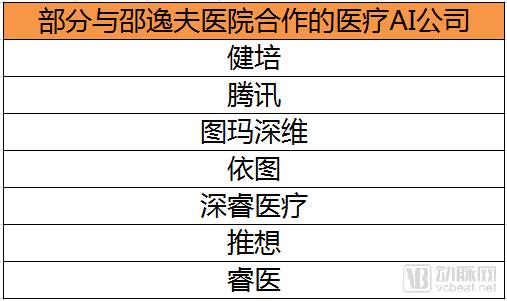
Among these collaborating AI companies, the depth of partnership varies. Some enterprises merely place their products in hospitals for physicians to use, making it difficult to evaluate their effectiveness; others have integrated auxiliary diagnostic software into hospital PACS systems, offering greater convenience for physicians.
Interestingly, however, most AI companies have entered the market through pulmonary nodule projects, with relatively little R&D investment in other areas. The R&D and clinical needs in radiology and other specialties that could have been addressed by AI remain unmet. Consequently, these departments are forced to conduct in-house development or collaborate with universities, with some physicians even writing their own code for research purposes.
For example, automated grading of hepatic space-occupying lesions, preoperative prediction of early postoperative recurrence of hepatocellular carcinoma based on radiomics/machine learning methods, quantitative analysis of emphysema subtypes and their correlation with pulmonary function, and a simple pre-consultation system. (See “Expectations and Confusion: Innovation and Application of Medical AI at Sir Run Run Shaw Hospital” for details.)
Research projects initiated by physicians themselves are invariably rooted in problems they encounter in clinical practice. These represent genuine clinical needs that demand solutions, rather than a narrow focus solely on lung cancer screening products. Even existing lung cancer screening products have yet to achieve perfection.
Dr. Zhang Qiaowei, Associate Chief Physician in the Department of Radiology at Sir Run Run Shaw Hospital, stated that current AI systems and PACS remain distinct entities, with seamless integration yet to be fully achieved. This lack of integration results in a less user-friendly workflow for physicians, thereby dampening their enthusiasm for adoption. Consequently, seamlessly integrating AI systems into PACS will be a key direction for future development.
Before submitting reports, many physicians now choose to consult AI-generated reports to cross-check with their own findings and identify any omissions. The choice of which product to use is based entirely on its accuracy and ease of operation.
In addition, radiologists are required to screen for a wide range of conditions, such as thyroid nodules, breast nodules, liver space-occupying lesions, and other abnormal findings in the prostate. The reporter believes that there are often few developers in many disease areas; if reliable and diligent collaborators emerge, physicians would consider partnering with them for joint research and development.
Four Criteria for Department Heads and Physicians to Make Selections
Through communication with department directors and physicians, we have summarized four key criteria that department heads and doctors use to select medical AI solutions.
First, the team must be reliable; avoid mere storytelling. Prove your capabilities by presenting product prototypes to hospitals and demonstrating a solid understanding of both the product and the disease.
Second, product accuracy is a prerequisite for entering clinical trials. Regardless of the hospital or physician, they have high requirements for product performance; products that fail to meet these standards will simply gather dust in hospitals.
Third, products must be innovative. Although there are numerous medical AI products on the market today, they suffer from serious homogenization. In reality, physicians have substantial research and clinical needs; addressing even a single specific need can facilitate the product’s adoption and implementation in hospitals.
Fourth, engineers should collaborate with physicians to refine the product.
Fifth, AI products should be integrated into physicians' workflows without imposing additional burdens. In radiology departments, AI systems should ideally be embedded within PACS or physicians' imaging workstations.