

Sanjing Tech Solves Interoperability Challenges of Heterogeneous Medical Devices with an IoT-Based Smart Integration System
For a long time, hospitals in China have been filled with various heterogeneous medical examination devices. These devices not only have different interfaces and protocols but also cannot be directly connected to the network. Due to the significant differences among these devices, it is difficult to save examination report data, and storage paths are inconsistent. This makes querying, statistics, and analysis by medical staff very inconvenient. In addition, the examination reports from various medical examination devices come in different formats, making standardization challenging.
To address these challenges, Sanjing Technology has developed an intelligent medical device connectivity system based on Internet of Things (IoT) technology. According to VCBeat, Sanjing Technology was established in 2012 with a registered capital of RMB 6 million. The company currently employs over 30 people, with more than 90% of its staff belonging to the technical team.
Customized Workstation Project at a Grade III Class A Hospital in Changchun
In late 2016, Sanjing Technology successfully won the bid for a customized workstation project at a Grade A tertiary hospital in Changchun. After nearly four months of intensive implementation, the Intelligent Medical Device Integration System was officially launched in April 2017.
To date, the system has successfully connected to more than 40 heterogeneous medical devices, achieving the construction goals of unified report generation, centralized data aggregation, and standardized oversight of examination procedures.
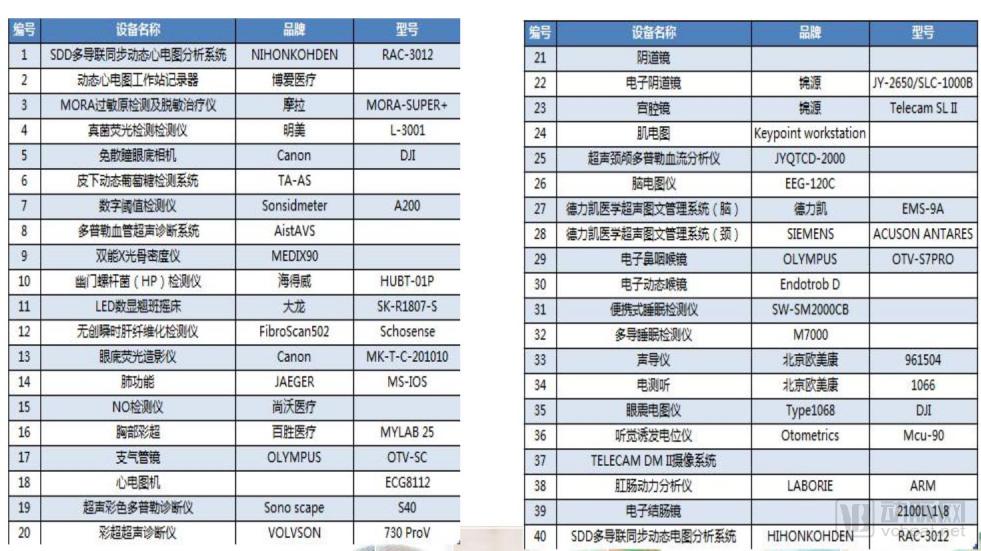
Currently Connected Devices
According to Jia Weihua, General Manager of Sanjing Technology, during the project implementation, the client requested that data from 43 non-standardized, offline medical examination devices within the hospital be integrated into the hospital’s data center. However, during the actual assessment, Sanjing Technology discovered that five of these devices were already out of service, and one device could not be integrated due to manufacturer-related issues. The remaining 37 devices have all been successfully integrated. Currently, the hospital’s Phase II plan involves integrating eight additional devices, and the R&D team has already begun the integration process.
Jia Weihua believes that there are mainly three categories of difficulties in the implementation of the entire project:
1. Some inspection equipment is outdated, with manufacturers unreachable and no technical support available; the development team relies entirely on experience for integration.
2. The computer systems, models, and interfaces accompanying each inspection instrument vary, requiring compatibility issues to be addressed during integration.
3. After the workstations are connected to the network, cross-infection among computers in certain departments has been observed. Proactive antivirus measures must be implemented in advance to prevent information security incidents.
Help Hospitals Save Costs
In the past, the onboarding process for newly acquired hospital equipment was extremely cumbersome. It typically involved equipment assessment, observation of examination procedures, interface analysis, review of systems, versions, and data storage methods, debugging of proprietary software, integration testing, and exception testing, among other steps. Due to the lack of professional analytical tools and methodologies, labor costs were considerably high.
Currently, Sanjing Technology’s intelligent medical device connectivity system has expanded the functionalities of PACS and LIS, enabling integration with all hospital equipment and systems while providing specialized analytical tools, such as imaging analysis tools for CT and MRI. This means hospitals no longer need to procure separate PACS and LIS systems, thereby significantly reducing costs.
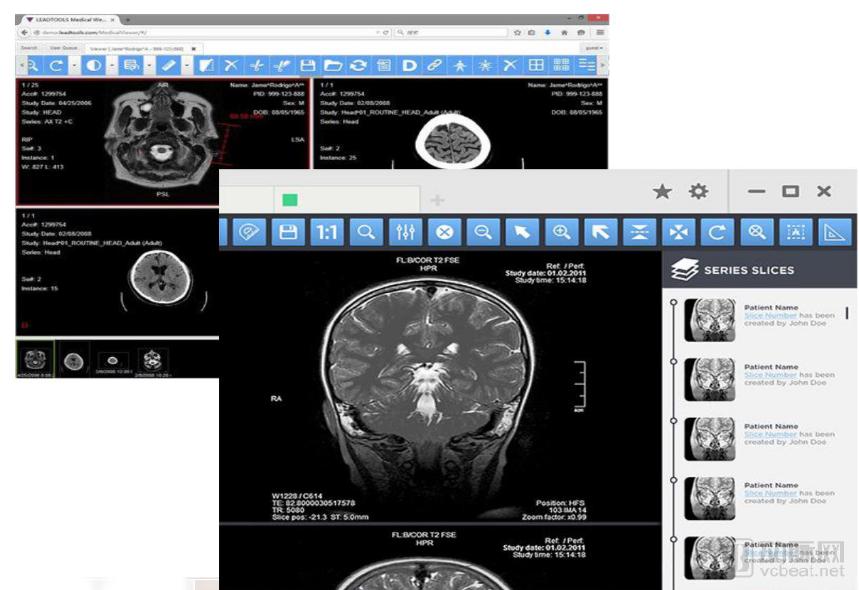
PACS Features
Following the hospital’s commissioning, the intelligent medical device connectivity system enables data sharing across all diagnostic equipment, facilitates the viewing and analysis of patient report data, and supports performance evaluation of diagnostic departments. Meanwhile, the system also addresses issues such as missed charges during patient examinations.
More importantly, in the process of medical record aggregation, the hospital’s original archiving method based on scanning and recognition has been significantly reduced. Through data acquisition via intelligent device integration systems, structured data required for medical records can be directly shared with the data center, thereby saving the hospital substantial labor costs.
A Technical Perspective on Intelligent Access Systems for Medical Devices
The Intelligent Medical Device Access System leverages IoT technology to collect data from various medical devices, including imaging, numerical values, and physiological signals. It also facilitates the entry of diagnostic results and the generation of reports, thereby enabling structured storage of relevant diagnostic data and providing such data to hospital Information Systems (HIS) and Electronic Medical Record (EMR) systems.
Unlike traditional integration platforms, this system is based on data extraction at the medical hardware device access layer, whereas integration platforms rely on customized conversion and exchange at the pure software database level.
In short, the intelligent medical device access system is responsible for data acquisition and classification from hardware devices, while the integration platform handles data exchange and interfacing. Furthermore, the former type of data can be exchanged via the integration platform into the Hospital Information System (HIS) and Electronic Medical Record (EMR) systems.
In principle, the intelligent access system for medical devices achieves data acquisition from different categories of devices through an intelligent access box. The box comes with pre-installed software programs capable of connecting to various types of devices, enabling compatibility with most medical devices available on the market.
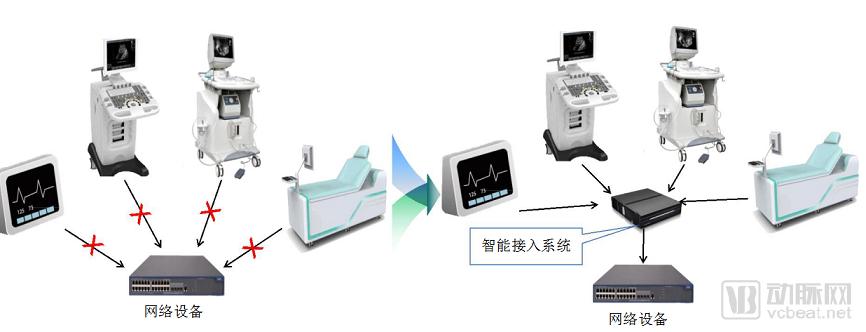
For devices without data output interfaces, Sanjing Technology acquires relevant device data by integrating the software systems embedded in the devices.
The intelligent access system for medical devices employs information integration technology. Jia Weihua stated that while this technology is closely related to multi-source heterogeneous data mining technology, the two are not equivalent.
In the early stages of information system development, the lack of consideration for data exchange and collaborative operations among different systems led to self-contained technical architectures, programming languages, and interface standards. This has made subsequent integration efforts extremely challenging.
However, existing systems and data constitute valuable information resources that cannot be entirely dismantled and rebuilt. Therefore, employing appropriate system integration methods and consolidation technologies to maximize the integration of existing heterogeneous systems and data has become an effective approach to current system integration.
Jia Weihua believes that multi-source heterogeneous data mining refers to the use of mathematical models, statistical methods, data mining, and other techniques to discover patterns and knowledge from data. It can be said that information integration is the prerequisite and foundation of data mining.
Intelligent Medical Device Access System, which associates examination results with patient IDs and examination IDs provided by the Hospital Information System (HIS).
Since patients register in the Hospital Information System (HIS) prior to examination, and only undergo diagnostic or laboratory tests after the outpatient physician has ordered them, a unique patient identifier has already been generated at this stage. The intelligent access system automatically uses this identifier for association, enabling the HIS software to retrieve test results via the same identifier, thereby achieving seamless integration with the HIS.
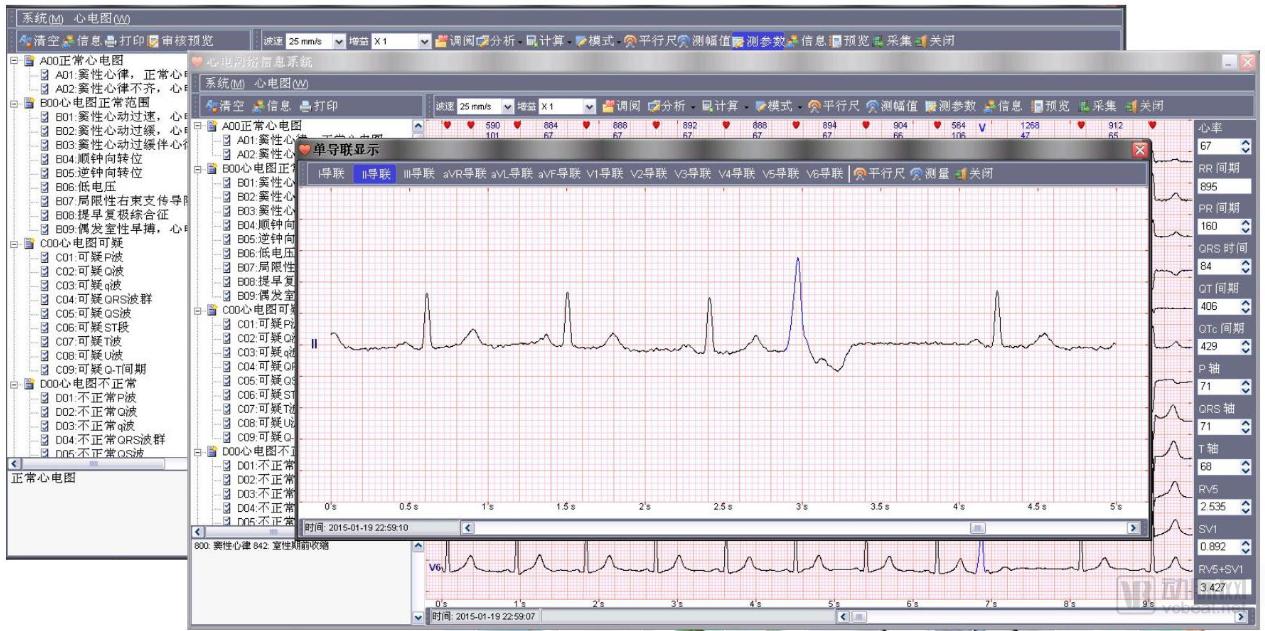
System Interface
Currently, the system does not require an additional Enterprise Master Patient Index (EMPI). In the future, as hospital informatization improves, the system may link data using unique identifiers such as patients’ national ID numbers.