

RADLogics Files for IPO Following Joint Acquisition by Two Asian Investment Groups
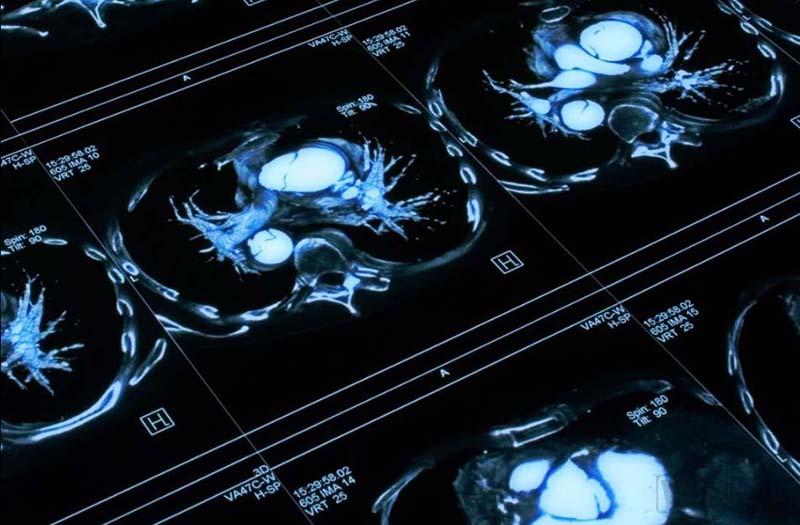
As AI technology is increasingly implemented in large hospitals, machine learning has significantly accelerated physicians’ ability to comprehend and process patient information, with radiology departments benefiting substantially. AI can expedite image transmission and automatically generate relevant reports based on algorithms, thereby greatly enhancing physician efficiency.
In May 2018, Singapore-based Oriental Capital Pte. Ltd. and China’s Tianjin Dashu Asset Management Company jointly acquired RADLogics, a U.S.-based manufacturer of medical imaging workflow solutions. The specific transaction amount was not disclosed. RADLogics is dedicated to providing radiologists with medical imaging solutions that leverage advanced technology to enhance patient care and facilitate the creation of more accurate and comprehensive reports.In January 2011, RADLogics secured $850,000 in seed funding. In 2015, AuntMinnie, the world’s largest medical imaging community website, named RADLogics the winner of the “Best Innovative Radiology Vendor” award.
Moshe Becker, CEO and Co-Founder of RADLogics, stated that the company’s medical imaging products are ready for clinical application, enabling a relatively rapid expansion into the Asian market while simultaneously scaling up its marketing efforts in the United States. RADLogics’ value proposition initially attracted Toyo Capital Ltd. and Tianjin Dashu Asset Management Co., Ltd., which aim to offer these products to major healthcare providers and distribution channels in Asia, with the goal of benefiting a larger patient population.
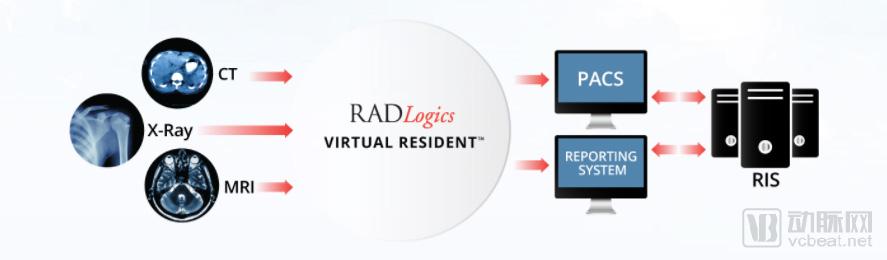
As a new Silicon Valley startup, RADLogics combines big data image analysis with cloud technology to provide radiologists with a tool that supports image interpretation. The system features unique algorithms capable of processing large volumes of imaging data within seconds and sending preliminary reports to radiologists. These reports are typically presented in familiar templates and integrated into PACS, facilitating the review, assessment, and analysis of imaging data by radiologists.
According to VCBeat (WeChat ID: vcbeat), in addition to its Silicon Valley office, RADLogics also operates an R&D center in Israel. Its products support analytical applications for CT, X-ray, MR, and ultrasound scans. Compared with other solutions, its proprietary intellectual property delivers a superior user experience.
A Decade of Entrepreneurial Experience Drives Breakthroughs in Information Technology
RADLogics was founded in February 2010 by Moshe Becker, a seasoned technology entrepreneur with 25 years of business experience spanning international engineering, healthcare IT, mobile communications, marketing management, and enterprise solutions. He is also the Founder and CEO of Stellaris Networks, a high-capacity Wi-Fi solutions provider, and WebTrac, a service software platform.
Moshe Becker received his education in electronic engineering and earned an MBA in Israel and the United States during his early years, accumulating many years of work experience in related fields. In January 1989, Becker served as a Project Manager at Tasco Electronics in the United States, where he was primarily responsible for the development and production of new data and communication systems for the commercial aviation industry, including the Boeing 777 avionics program, product design, and sales services. Over the following seven years, Becker held leadership roles in information technology, network monitoring, and marketing at Edge Microsystems and Kinemetrics, respectively.
In October 1998, Becker, as CEO and founder, announced the official establishment of WebTrac. This venture-backed company was dedicated to developing a location-based transaction service platform for mobile operators, generating revenue by adding multiple software applications. In October 2002, he led WebTrac in acquiring several competitors and consolidating the related assets. Becker focused on collaborating with multinational enterprises to expand its customer base.
In December 2003, Becker founded Stellaris Networks in Tel Aviv, Israel, securing its initial round of venture capital from StageOne and Valley Ventures. Stellaris Networks Ltd. was primarily responsible for developing wireless LAN access points for enterprise wireless networks, providing WLAN infrastructure solutions based on the 802.11 industry standard. In January 2007, Becker relocated to Silicon Valley as Managing Director of Edge Ventures, focusing on providing business consulting to early-stage information technology companies.
During his six years in Silicon Valley, Becker did not cease his exploration, research and development, and innovation in the field of information technology. Over the past three years, he has been dedicated to developing the AlphaPoint algorithm for image analysis.
AlphaPoint Accelerates Radiologists' Workflow Efficiency
In November 2014, RADLogics unveiled its first medical imaging product powered by the AlphaPoint algorithm at the 2014 Radiological Society of North America (RSNA) Annual Meeting. According to Becker, websites utilizing AlphaPoint can transmit data directly from imaging equipment to RADLogics’ cloud servers. Approximately five minutes later, a summary report is sent back to the website in the format of Nuance’s PowerScribe 360—Nuance being a U.S.-based multinational computer software technology company—providing healthcare professionals with preliminary content for reference.
RADLogics positions AlphaPoint as a virtual resident system within medical imaging, capable of automatically performing or taking over certain image interpretation tasks, such as measurements, searches, or qualitative research analyses. According to Becker, the virtual resident system enables radiologists to conduct more studies and process a greater volume of images in less time, while simultaneously improving the quality of care.
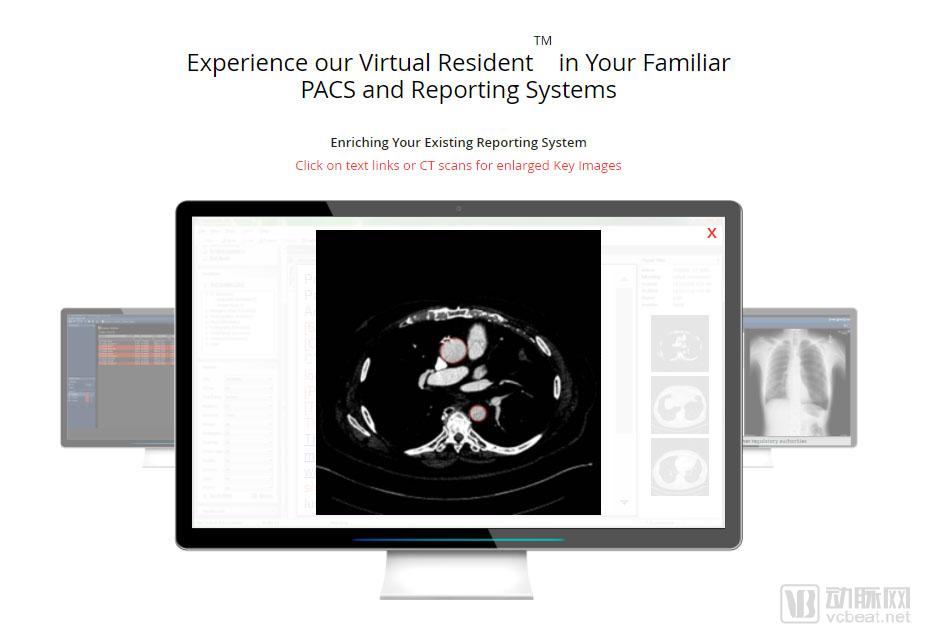
Since 2014, RADLogics has focused on researching a high-profile clinical procedure in radiology—CT lung cancer screening. The company has developed algorithms for analyzing CT images and submitted the relevant data to the American College of Radiology’s Lung Cancer Screening Registry.
In 2012, RADLogics’ chest CT scan software received FDA clearance. As the first software application on the AlphaPoint platform, the chest CT scan tool was scheduled for market launch in January 2015, with other imaging-related applications to follow sequentially upon regulatory approval. Becker stated that the chest CT scan application had already been deployed at multiple test sites, including El Camino Hospital in California and Mount Sinai Hospital in New York City.
Furthermore, RADLogics has maintained collaborations with medical reporting software providers. The objective is to integrate AlphaPoint into the company’s Aspen Lung software for applications such as lung screening, patient tracking, and report summarization. RADLogics’ radiology knowledge base continuously enhances the speed and accuracy of AlphaPoint, while also evolving through ongoing research conducted by radiology departments and imaging centers worldwide.
Virtual Resident System Enhances the Value of Content Reporting
Becker stated that the products and services offered by RADLogics are fundamentally different from the computer-aided diagnosis (CAD) systems commonly used by radiologists. While CAD assists physicians in analyzing and interpreting scan images, the preliminary reports generated by AlphaPoint are typically presented in text or image format before such analysis takes place—often immediately after a physician clicks on a specific case file. AlphaPoint helps physicians gain an initial understanding of the patient’s condition.
In a recent project study, Dr. Matt Brown and his research team from the University of California, Los Angeles (UCLA) evaluated RADLogics’ virtual resident system. Preliminary results indicated that the system improved radiologists’ efficiency by 47% compared to the time previously required to complete summary reports. The study demonstrated that the accuracy of nodule/mass detection using the system was consistent with that of detections performed without the system, with an error margin of ≤1 mm.
Additionally, research from UCLA indicates that RADLogics’ virtual resident system can provide data not typically found in previous reports, offering further value to clinical research. This information includes quantifiable volumes of nodules or masses, aortic diameter, and volumes of free fluid or air, among other metrics.
Thus, with the implementation of a virtual persistent system, radiologists no longer need to expend additional time and effort to generate more comprehensive reports. With access to accurate patient information, physicians can promptly prescribe targeted treatments, facilitating faster and better patient recovery.
“Radiologists are just as valuable as diagnostic physicians,” said Becker. “However, since humans cannot master pixel counting or visual search, leveraging machine learning can help them perform their tasks more accurately and consistently, thereby saving reading time.” Studies have found that radiologists typically spend 80% of their time searching for, identifying, and measuring pixels. The emergence of RADLogics acts as a capable assistant to radiologists, ensuring that errors are minimized when they prepare final reports. Becker firmly believes that the efficient application of machine learning is not intended to replace radiologists, but rather to assist them in acquiring information with high efficiency and quality, allowing them to focus on treatment itself.
Why Does Radiology Need Artificial Intelligence?
1、Radiology is technology-centric.
In modern hospital development, the Department of Radiology is an integrated unit encompassing examination, diagnosis, and treatment. Many diseases across various clinical specialties require radiological equipment for definitive or auxiliary diagnosis. Common radiological equipment includes conventional X-ray machines, Computed Radiography (CR) systems, Direct Digital Radiography (DR) systems, Computed Tomography (CT), and Magnetic Resonance Imaging (MRI). Due to the technology-driven nature of their daily work, radiologists are often regarded as “early adopters” of artificial intelligence.
2、Radiology Departments Rely on the Internet for Cloud Storage
The application of cloud technology will have a direct impact on artificial intelligence. According to estimates in a Wall Street Journal article, approximately 600 million medical images—including CT scans, MRIs, X-rays, and ultrasounds—are generated annually across the United States. These imaging data not only consume storage space at various hospitals but also impose significant economic burdens on healthcare institutions. If medical images could be stored via cloud storage, breaking down barriers between hospitals’ imaging systems, physicians from any hospital would be able to access them as needed, offering greater convenience for patients.