

Invisalign Dominates as Dental Giants Vie for a Slice of the Booming Clear Aligner Market
In recent years, clear aligners represented by Invisalign, Ortho Clear, and Angelalign have gradually gained favor among consumers and orthodontists due to their nearly transparent appearance and portability and ease of use.
Over the past two decades, more than 5 million patients worldwide have regained their captivating smiles with Invisalign. Although clear aligners currently account for only about 15% of the overall orthodontic market, demand is rising steadily. According to relevant industry research reports, this sector is projected to expand rapidly at an annual growth rate of 12% over the next four years.
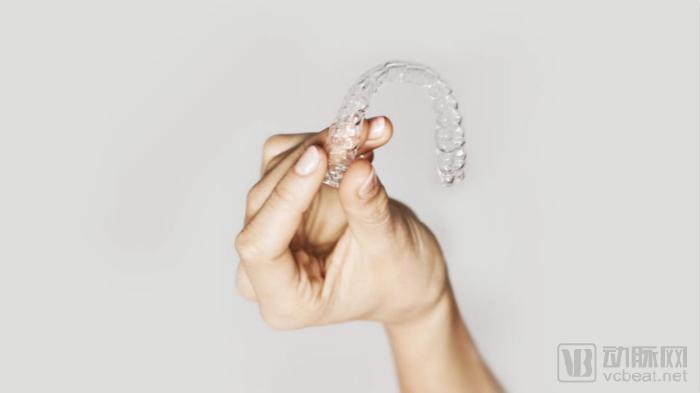
Image from Fast Company
For orthodontists, there were previously few product options available, with the majority of the market share dominated by the industry giant Invisalign.
VCBeat has previously published articles outlining the development history of Invisalign, the giant in the clear aligner market, as well as the current state of the industry. With the recent expiration of several of Invisalign’s patents (Editor’s note: The patent for the older EX30 material has expired; the currently used SmartTrack material is not related to the expired patents), numerous established dental healthcare giants and startups are now vying for a share of this market.
Of course, thanks to the vast number of patents accumulated over the years and strong market recognition, as well as its proactive launch of new product lines and technologies, Invisalign’s position as the industry leader remains unshaken for now. However, faced with intense competition from a surge of rivals emerging like bamboo shoots after rain, Invisalign must actively respond to these challenges.
On April 25, 2018, Align Technology, the manufacturer of Invisalign, released its financial results for the first quarter ended March 31, 2018. The report showed that global shipments of Invisalign clear aligners reached 272,200 units in Q1 2018, representing a year-over-year increase of 30.8%. Shipments to the Americas (North America and Latin America) and other international regions (Europe, the Middle East, and Africa) grew by 24.0% and 43.4%, respectively. Of the total Invisalign aligner shipments, approximately 69,100 cases involved adolescent patients undergoing Invisalign orthodontic treatment, marking a 40.9% year-over-year increase.
# Rapid Surge in the Adolescent Client Base
Align’s net revenue for the first quarter was $436.9 million, a year-over-year increase of 40.8%. Operating income amounted to $98.2 million, up 59.2% year over year, with an operating margin of 22.5%. Additionally, the company’s net income reached $95.9 million, or $1.17 in diluted earnings per share, representing an increase of $0.32 compared to the prior year.
Joseph M. Hogan, CEO of Align Technology, commented on the company’s first-quarter 2018 results, stating: “We are delighted to report that our first-quarter performance exceeded expectations, marking a strong start to 2018. Net revenue increased by approximately 41% year over year, indicating continued robust sales of Invisalign products across all regions and customer channels. Notably,”iTero scanner sales increased by 84% year-over-year.. The increase in Invisalign shipments was mainly due to the expansion of the customer base and the rise in utilization rate, especially ourAdolescent Customer Base Shows Encouraging Growth, while in the first quarter we onboarded 4,200 orthodontist clients globally.”
For the second quarter, Align expects net revenue to reach $460–$470 million, representing a year-over-year increase of 29%–32%. Invisalign shipments are projected to range from 296,000 to 301,000 units, reflecting a 28%–30% increase compared to the same period last year, while operating margin is expected to remain between 21.0% and 21.8%. These financial results demonstrate that despite facing significant competitive pressure due to patent expirations, Invisalign continues to deliver robust performance and maintain its leadership position in the clear aligner market.
Strengthen Localized Customer Support
In response to market changes, a major strategy for Invisalign is to continue advancing digital healthcare and localizing customer support.
On May 4, 2018, Align Technology announced that, following San José, the capital of Costa Rica, and ChinaChengduAfterward, they were in GermanyCologneThe establishment of the world’s third Invisalign treatment planning center demonstrates Align Technology’s ambition for rapid global expansion.
Prior to this, Invisalign customers across the Europe, Middle East, and Africa (EMEA) region relied exclusively on the Invisalign Treatment Design Center in San Jose. As part of the digital treatment workflow, the Cologne Treatment Design Center in Germany leverages a collaborative approach where CAD designers and clinical experts jointly develop treatment plans and digital case setups. Working closely with orthodontists trained in Invisalign, the team creates highly customized digital orthodontic treatment solutions for patients.
Furthermore, this Treatment Design Center, equipped with Align’s most advanced medical facilities, will also serve as the training and education hub for Invisalign dentists in key German-speaking markets. It will provide German-language clinical education and support to dentists in Germany, Austria, Switzerland, and the Principality of Liechtenstein, enabling local practitioners to gain deeper insights into a wide range of Invisalign clinical cases, including many complex orthodontic cases.
Joe Hogan, President and Chief Executive Officer of Align Technology, stated: “The clear aligner market in German-speaking countries is strategically significant for Align. We are honored to establish an Invisalign treatment design center in Cologne, Germany. Since 2003, we have successfully penetrated the German market through our Invisalign clear aligners and a loyal customer base. To date, German-speaking countries and the surrounding region have become our third-largest market in Europe, with market share expanding by 28% in 2017. Therefore, we must build on this momentum. Now is the ideal time to continuously expand our business scope and better align with customer needs, thereby meeting the regionalized and growing demand in this area.”
Emory Wright, Senior Vice President and President of Operations at Align Technology, stated: “Our Treatment Design Center in Cologne encapsulates the essence of Align’s innovations in digital medical technology and treatment planning software over the past 21 years. By integrating this specialized expertise with our local team of experts boasting extensive clinical experience in Cologne, we ensure that our physician clients and patients in the German-speaking regions can access Align’s end-to-end digital workflow in their native language.”
“I am delighted that Germany has become the first country in our European market to establish an Invisalign treatment planning and training center,” said Simon Beard, Senior Vice President and Managing Director for Europe, China, and Africa at Align Technology. “This initiative not only demonstrates our emphasis on and commitment to the local market, but also reflects our recognition that providing services closer to local customers enables us to deliver the most effective support. I firmly believe that this investment will play a pivotal role in strengthening our local business presence in German-speaking regions and facilitating further expansion across Europe, as well as into the Middle East and African markets.”
The establishment of the Treatment Design Center integrates local languages into the workflow, significantly reducing communication and turnaround times between experts and dental professionals, thereby greatly enhancing the overall customer experience. Invisalign’s local treatment design technicians in Germany will assess clinical outcomes to ensure patients receive high-quality orthodontic results. Furthermore, treatment plans will be tailored to better reflect local clinical preferences, and Invisalign’s local clinical team will provide dentists with more timely support.
In fact, Align has maintained an office in the German market since 2003, and this year it finally established a Treatment Design Center. Align also revealed its plan to expand its local workforce to approximately 150 employees by 2019, ensuring broader coverage of its support services.
According to available information, Align Technology has established an Invisalign treatment planning center and a training center in Chengdu, while its production facility in Ziyang, China, is under construction as scheduled.
The 4 Major Advantages of Invisalign
In an interview with Today’s Dentistry of China Medical Tribune, Joseph M. Hogan, CEO of Align Technology, stated that orthodontic treatment is highly prevalent in the United States, and consumers hold very open attitudes toward it. The demand for orthodontic treatment among Chinese consumers is not as widespread as in the U.S.; they typically consider undergoing orthodontics only when dental misalignment severely affects aesthetics. Therefore,Chinese Consumers Face Relatively Greater Difficulty in Orthodontic Correction。
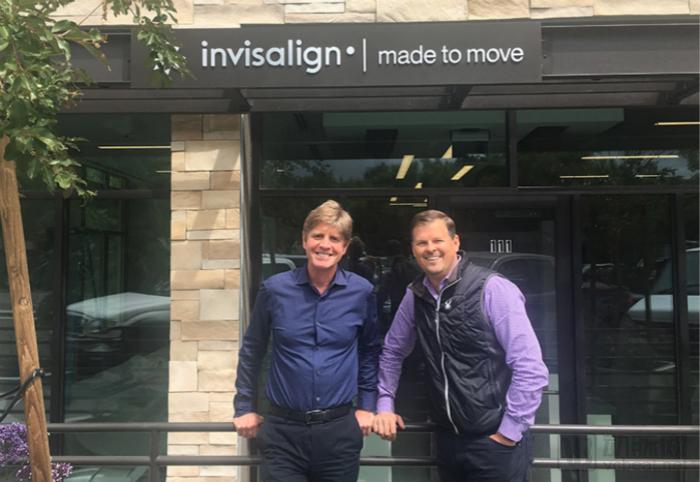
Align Technology CEO Joseph M. Hogan (left) Image from Forbes
Currently, China’s market potential is undeniably larger than that of any other market in the world. With rapid economic development and a significant rise in the middle class, there is substantial demand for dental care and oral health services.
How is the acceptance of Invisalign products among Chinese patients? He believes that consumer acceptance has consistently been strong, particularly among the current generation that actively uses social media. From the perspectives of social media influence and user demand, everyone aspires to present a better image and showcase a more attractive smile.
As the pioneer of clear aligners, Invisalign has treated over 5 million users worldwide to date. Leveraging a vast number of cases and extensive treatment experience, Invisalign holds unique advantages in clear orthodontics, backed by numerous patents. These advantages are primarily reflected in four dimensions:
The first dimension is materials science, utilizing a proprietary material called Smart Track;
The second is software, which can help predict the directional movement of teeth;
Third is biomechanics. Dentists need to understand the direction and speed of tooth movement. If patients change their aligners every one to two weeks, it is essential to determine the displacement of each tooth to ensure that forces are applied correctly and in the proper manner.
Fourth is 3D printing technology. Invisalign produces hundreds of thousands of customized aligners daily, a feat achievable only through 3D printing and the iTero intraoral scanner for customized manufacturing. Behind every aligner lies a 3D-printed model.
The greatest challenge to promotion in China lies in physician education.
During its promotion, the greatest challenge for Invisalign lay in educating dentists on how to perform orthodontic treatment using digital methods and plastic materials, rather than relying on traditional metal braces.
Invisalign offers a variety of training methods for doctors, primarily inSoftware UsageDoctors must learn how to use Invisalign’s software to predict tooth movement. This is not the traditional simulation method but a new digital approach to forecasting tooth movement. Additionally, peer-to-peer training occurs among clinicians; for instance, senior doctors with in-depth knowledge of our products can train junior colleagues.
In November 2017, Invisalign officially established its Training Center in China, equipped with the most advanced training facilities globally. Through modular training programs, it offers physicians more immersive and customized courses. Additionally, Invisalign provides online training courses and other resources.
Previously, Invisalign products were manufactured in North America and then shipped over. “Going forward, we hope to produce them in Ziyang, China. Our decision to establish a factory in Sichuan is not driven by cost reduction considerations, but rather to betterMeeting the Needs of Local Doctors and Consumers in China, enabling them to adopt our products and services more quickly.”
Throughout Align’s development, it has consistently faced competitive obstruction from rivals. For instance, Align acquired OrthoClear in an all-cash deal worth $20 million. Currently, its major competitor abroad is ClearCorrect, the world’s second-largest brand in clear aligner therapy, whose aligners are manufactured using its proprietary wear-resistant material, Zendura.
In August 2017, the Straumann Group acquired ClearCorrect for $150 million, and by taking a controlling stake in the Spanish clear aligner brand Geniova and fully acquiring Dental Wing, a provider of digital dental solutions, it formally entered the field of digital orthodontics. In addition, reporters have learned that several major dental equipment giants are also interested in joining this promising market competition.
Henry Schien
On May 4, 2018, Henry Schein, the world’s largest dental distributor, launched its patented SLX™ clear aligner system at the annual meeting of the American Association of Orthodontists (AAO) in Washington, announcing its formal entry into the rapidly expanding clear aligner market.
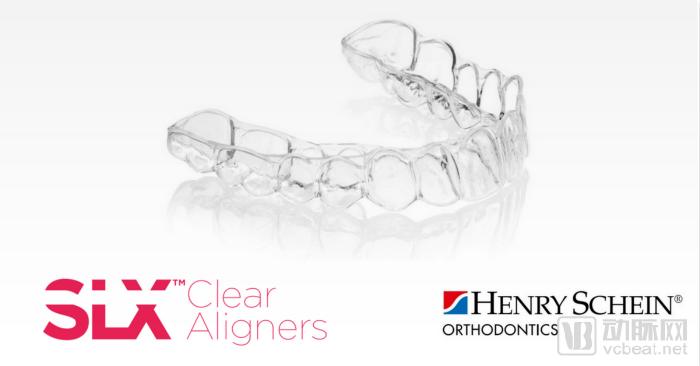
Schematic Diagram of the SLX™ Orthodontic System (Image Source: Henry Schien Company)
The SLX™ Orthodontic System integrates the patented Sagittal First/Motion 3D technology from Henry Schein Orthodontics (HSO), an orthodontic subsidiary of Henry Schein, offering a comprehensive orthodontic solution.
This innovative orthodontic system offers clinicians and patients an intuitive and simplified treatment workflow. According to Dr. Dave Paquette, the company’s Chief Clinical Advisor, the Sagittal First/Motion 3D technology can significantly reduce the number of aligner changes required in typical orthodontic cases, enabling both clinicians and patients to tangibly experience a shortened treatment duration.
The SLX™ Clear Aligner System employs patented manufacturing processes that not only enhance the transparency of the aligners but also ensure a precise fit, thereby improving patient comfort and orthodontic outcomes. The SLX™ system has now received FDA clearance. The official website for SLX™ Clear Aligners accepts STL digital files exported from currently prevalent advanced intraoral scanners and integrates with open-source platforms, offering a high degree of customization flexibility.
“Henry Schein is committed to providing clinicians with the most advanced and meticulous treatment solutions,” said Stanley M. Bergman, Chairman of the Board and Chief Executive Officer of Henry Schein. “The launch of the SLX™ Orthodontic System, powered by Sagittal First/Motion 3D technology, demonstrates our further determination and sense of mission, and marks the beginning of our transformation into a global provider of comprehensive innovative orthodontic solutions. We have already seen the tremendous potential in this market and are pleased to offer clinicians innovative tools to meet patients’ orthodontic needs.”
The introduction of the SLX™ Clear Aligner System not only provides patients with an effective and aesthetically pleasing new option for orthodontic treatment, but also offers clinical orthodontists a more convenient workflow for case submission and treatment plan customization, thereby delivering high-quality orthodontic outcomes.
“Clear aligners have already gained considerable recognition among clinicians and patients alike. We are delighted to enter this market, offering patients and orthodontists a brand-new orthodontic option,” said Ted Dreifuss, General Manager of Henry Schien Orthodontics. “With our intuitive, user-friendly interface, we are confident that doctors will spend less time submitting cases and developing treatment plans.”
With the launch of the SLX™ clear aligner system, Henry Schien Orthodontics has opened registration and clinician training, and began accepting case submissions on May 25.
3M
Also at the AAO Annual Session in the United States, 3M Oral Care, another heavyweight in the orthodontic industry, announced the launch of its Clarity™ Clear Aligner System brand. The company also showcased the 3M™ Oral Care Portal and uLab software, marking 3M’s official entry into the clear aligner market.
“3M Oral Care has extensive experience and a long-standing history in the field of orthodontics, and we have consistently been one of the market leaders. Therefore, we deeply understand that the orthodontics market demands new options that better meet aesthetic needs,” said Sebastian Arana, President and General Manager of 3M Oral Care. “Orthodontists and patients will truly appreciate our profound expertise in material science, and the Clarity™ Clear Aligner System will provide them with a trustworthy new choice.”
According to 3M, the company provides orthodontists with software called the 3M™ Oral Care Portal, which enables them to create treatment plans and order orthodontic appliances for patients anytime and anywhere with internet access, reducing the entire process to as little as 10 minutes. The 3M™ Oral Care Portal is an open platform co-designed by numerous orthodontists, HIPAA-compliant, and allows clinicians the flexibility to choose their preferred intraoral scanning devices.
Meanwhile, the 3M™ Oral Care Portal has been highly integrated with an automated treatment planning software developed by uLab Systems, a partner of 3M. uLab Systems is a company specializing in digital dental healthcare. In addition to securing exclusive licensing rights for uLab Systems’ software, 3M has also invested in the company.Strategic Investment, demonstrating 3M's commitment to digital dentistry.
Sebastian Arana stated, “With the powerful capabilities offered by uLab, clinicians can easily customize orthodontic treatment plans in-office and maintain better control over case progression. They have the option to leverage uLab’s streamlined automated workflow for plan customization or submit cases to 3M for this purpose.”
Straumann
As Invisalign’s largest competitor prior to its current dominance, ClearCorrect has expanded its market presence across North America, Europe, Israel, and Oceania, offering patients more flexible treatment options and effectively reducing out-of-pocket medical costs, thereby serving as a cost-effective alternative to Invisalign.
Last August, Swiss dental company Straumann acquired ClearCorrect for $150 million, marking a significant step in the Straumann Group’s strategy to enter the clear aligner market. On one hand, as the Straumann Group had no prior presence in the clear aligner sector, ClearCorrect provided it with extensive expertise and strong brand equity. On the other hand, the Straumann Group offered ClearCorrect enhanced brand visibility, along with its global marketing and distribution network, creating a win-win situation for both parties.
Jarrett Pumphrey, CEO of ClearCorrect, stated, “We are honored to become part of the Straumann Group, which boasts decades of experience in the dental industry. This partnership enables the long-sought expansion we have desired, without compromising brand integrity.”
Following the acquisition, ClearCorrect will retain its original product brand. The design and manufacturing of its clear aligners are both conducted in Texas, USA, giving it substantial capital to compete with Invisalign.
Dentsply Sirona
On March 24 this year, Dentsply Sirona, a U.S. dental solutions company, signed a definitive acquisition agreement to acquire OraMetrix, the manufacturer of SureSmile products that features advanced 3D technology solutions and is dedicated to improving orthodontic outcomes.
Dentsply Sirona is a global leader in dental technology and product manufacturing, with a history spanning over a century. This acquisition will combine OraMetrix’s GAC bracket technology with Dentsply Sirona’s digital capabilities, enabling Dentsply Sirona to offer a more comprehensive range of orthodontic products, including full-arch clear aligner solutions.
OraMetrix’s proprietary technology, SureSmile, primarily targets the field of bracket-based orthodontics. By integrating 3D imaging and treatment planning assistance software, it aims to enhance the controllability of orthodontic outcomes, reduce patient follow-up visits, and improve treatment efficiency. It has been verified to shorten the orthodontic treatment cycle by 34%.
Over the past 20 years, OraMetrix has accumulated substantial technological expertise. The company has developed an advanced CAD platform for clinical orthodontists that integrates multiple diagnostic modalities, including CBCT, cephalometric analysis, and facial data, thereby significantly enhancing the predictability of orthodontic outcomes. Building on this foundation, Dentsply Sirona provides end-to-end digital workflows and a more comprehensive portfolio of medical devices, offering orthodontists greater flexibility and control over treatment results.
In other words, Dentsply Sirona aims not only to capture a share of the clear aligner market but also to dominate the entire orthodontics market.
Unlike traditional bracket braces, clear aligners are made from transparent, elastic polymer materials, offering a more aesthetic appearance. Leveraging computer science technologies, dentists and patients can preview the changes at each step in advance, making the orthodontic process predictable and improving treatment efficiency.
In recent years, domestic brands have significantly increased their investment in research and development as well as marketing within the clear aligner sector. By offering more affordable pricing and leveraging localized workflows that are more convenient and efficient, these brands have gained a competitive edge in market share. Among them, Angelalign is unequivocally the industry leader, while a number of other outstanding brands have also emerged.
Angelalign
Since its inception in 2001, Angelalign has undergone 18 years of development. Starting from a zero baseline for clear aligner technology in China, it has pioneered an innovative path for the industry through continuous R&D and technological innovation, securing nearly 100 patents along the way.
In the field of materials science, Angelalign has collaborated with internationally renowned companies specializing in the research and development of clear aligner materials to create MasterControl™, a new generation of medical-grade polymer material. In the realm of computer science, Angelalign has independently developed treatment planning software and iOrtho, a one-stop case management platform. In the area of biomechanics, it has established MasterForce™, a testing and analysis system for mechanical factors throughout the entire clear aligner treatment process. In the medical field, by fully integrating clinical experience, Angelalign has launched the A6 invisible SGTB technique and the A7 clear aligner treatment solution for premolar extraction cases.
In September 2017, Angelalign entered into a partnership with the Training Bureau of the General Administration of Sport of China. In early 2018, Angelalign’s products received clearance from the U.S. Food and Drug Administration (FDA), making it the first overseas company in the clear aligner sector to obtain FDA approval. This milestone serves as testament to the international recognition of Chinese technology. The following outlines Angelalign’s core products, technologies, and solutions:
AngelMind: A Digital Orthodontic Intelligence System – AngelAlign has distilled its years of expertise in the clear aligner industry and its holistic aesthetic philosophy for facial harmony into AngelMind, a digital orthodontic intelligence system that serves as a vital tool for clinicians to craft perfect smiles and help patients achieve ideal orthodontic outcomes.
MasterForce™: A Comprehensive Mechanical Factor Testing and Analysis System for the Entire Clear Aligner Treatment Process: The MasterForce™ platform is a biomechanical research platform that integrates all stages of clear aligner therapy. It encompasses a complete system workflow for analyzing mechanical factors, including the fundamental mechanics of aligner materials, manufacturing processes, structural mechanics, treatment planning, and force decay. By providing precise simulation and visualization of orthodontic force expression and application efficacy, it offers a powerful, quantifiable, and visualizable tool for the accurate delivery of forces in clear aligner orthodontics.
MasterMulti™ Multimodal Orthodontic System: Unlike the single-aligner approach of traditional orthodontics, this system enables clinicians to tailor treatment by selecting different aligner materials, orthodontic protocols, and wear schedules based on specific case types and treatment stages, thereby achieving truly personalized and precise therapy.
Medical-Grade Polymer Material MasterControl™: MasterControl™ is a new generation of medical-grade polymer material, jointly developed by Angelalign and an internationally renowned manufacturer of clear aligner materials, and rigorously certified by the UCLA Dental Research Service Center. The MasterControl™ material has been applied in Angelalign Pro. It demonstrates excellent performance in controlling complex tooth movements, fracture resistance, aesthetic invisibility, and chemical tolerance, enabling orthodontists to easily manage complex cases while providing consumers with a comfortable, aesthetically pleasing, and precise treatment experience.
A6 Invisible SGTB Technology: Angelalign, in collaboration with Professor Shen Gang’s orthodontic team, has developed the A6-Invisible SGTB technology specifically to address malocclusion issues in Asian patients. This proprietary digital technology breaks through traditional limitations of clear aligner therapy by focusing on orthopedic correction of protrusive facial deformities associated with jaw positional factors. Leveraging digital technologies and 3D printing, it enables the design of a new generation of dual-occlusal splint appliances. By integrating orthopedics with orthodontics, this approach allows simultaneous jaw orthopedic treatment, correction of misaligned teeth, and occlusal reconstruction. This not only enhances treatment efficacy but also reduces the overall treatment duration by one-third, while ensuring patients’ oral hygiene and comfort.
A7 Invisible Orthodontic Solution for Premolar Extraction Cases: In 2015, Angelalign systematically introduced the A7 solution, specifically designed for cases involving premolar extractions. Grounded in the classic Tweed orthodontic theory and incorporating the concept of anchorage preparation, A7 employs optimized attachment designs and stepwise biomechanical balancing. Through this approach, Angelalign achieves precise control over complex extraction cases, including anchorage molar control, en masse canine movement, anterior tooth torque control, and vertical dimension control, thereby providing patients with a precise invisible orthodontic experience.
iOrtho 8.0—Make It: A Rapid Digital Orthodontic Design Solution: The most distinctive feature of this design solution is its ability to enable open data integration with all intraoral scanners. As an open data integration platform, Make It (Chinese name: Meike) allows more clinics and dentists to quickly and directly connect intraoral scan data from any brand with Angelalign’s backend system. This enables users to view 3D animated treatment plans in a very short time, facilitating efficient and convenient communication between doctors and patients, thereby enhancing the initial consultation experience.
Zhengya Dental Technology
Smartee Dental Technology is a high-tech enterprise founded by overseas returnees in 2004. Headquartered in Zhangjiang High-Tech Park, Shanghai, with its production, design, and R&D base located in Jiaxing Science and Technology City, the company specializes in digital orthodontic technical services and the development of clear aligner products, having accumulated tens of thousands of cases. Currently, Smartee Dental Technology has completed its joint-stock reform and entered the preparatory stage for listing on the National Equities Exchange and Quotations (NEEQ).
The Smartee™ bracketless clear aligner technology, independently developed and granted multiple national patents, is an orthodontic system built upon professional orthodontic theory and integrating 3D printing, computer-aided 3D design, and digital rapid prototyping technologies, refined through extensive scientific research and clinical practice. Both the “SmartCheck Clear Aligner Treatment Planning System” and the “Smartee Customized Clear Orthodontic Aligners” possess complete independent intellectual property rights.
According to available information, the establishment and development of Smartee Dental Technology benefited from the founder’s father’s R&D experience in the field of customized artificial joints (his research achievement, “CAD/CAM Personalized Prosthesis Manufacturing Technology,” was awarded the Second Prize of the National Science and Technology Progress Award). In 2003, as Invisalign, the world’s largest manufacturer of clear aligners, was gaining momentum in the United States, founder Yao Junfeng recognized the significant market potential of clear aligners and conducted secondary development of his father’s scientific achievements, introducing them into the field of orthodontics.
From 2004 to 2009, during its start-up phase, Smartee began collaborating with several domestic 3D printing service providers to accumulate clinical application experience. In 2010, based on a substantial number of clinical cases, Smartee successfully obtained the medical device manufacturing license and commenced small-scale market sales. In 2013, the company introduced stereolithography (SLA) 3D printing equipment from Shanghai UnionTech and expanded its production capacity.
Not only that, but Zhengya Dental Technology has also been highly favored in the capital market. It secured angel funding in 2013 and Series A financing in 2015, after which it expanded its manufacturing facilities.
In September 2017, the company announced the completion of its RMB 50 million Series B financing round, which was co-led by Vensure Capital and Chende Capital, with Dongzi No. 1 Fund participating as a follow-on investor. Yao Junfeng stated that the proceeds from this round would be primarily allocated to product research and development, as well as the optimization and innovation of orthodontic technologies.
Henghui Technology
Henghui Technology is a joint venture engaged in digital dental technology. Since its establishment in Xi’an in 2004, it has received investments from SoftBank Venture Capital and Legend Holdings.
Henghui possesses high-precision manufacturing technologies and patents spanning from digital orthodontics and dental implant planning (CAD) to the production and manufacturing of precision computer-controlled medical devices (CAM).
Henghui Technology has integrated laser scanning, computer graphics, and precision automation control technologies. Leveraging accumulated experience from tens of thousands of clinical cases, the company developed the iROK clear aligner system, tailored to the dental characteristics of Chinese patients. In 2008, it obtained registration, manufacturing, and sales licenses for Class II medical devices.
Furthermore, OrthoRx is the complementary orthodontic software for iROK technology, offering a library of software tools and user-friendly operability that enables clinicians to design precise treatment goals and simulate the orthodontic process. Compared with traditional orthodontic techniques, iROK technology allows orthodontists to predict treatment outcomes through simulation and to design and select the optimal treatment plan.
The iROK clear aligner system currently serves many large and medium-sized cities in mainland China and is rapidly expanding into more than 20 countries and regions in the international market, including developed nations such as the United Kingdom and Italy.
Zhengli Technology
Zhengli Technology, established in September 2014, is a medical device enterprise based in Tianjin that integrates the research and development, production, and sales of clear aligner products, leveraging 3D reconstruction and 3D printing technologies to deliver personalized orthodontic treatment.
After extensive technological R&D and substantial clinical practice, Zhengli Technology leverages its fully independent intellectual property rights in case design software, case management software, clinical communication software, manufacturing systems, and high-quality raw materials to provide users with high-performance bracketless clear aligners.
Its new-generation products include the Magicalign bracketless clear aligners and the self-developed Orthoplus 5.0 platform; this proprietary digital design system enables precise simulation and planning throughout the entire treatment process.
According to available information, Zhengli Technology operates automated production lines and stringent regulatory processes, utilizing fully imported raw materials to enable delivery within 3–7 days of automated manufacturing. Clinicians can submit cases online, manage case records, and track case status through Zhengli Technology’s Orthoplus platform. The company assigns expert teams to assist physicians in designing treatment plans and employs computer-aided 3D simulation software to predict treatment outcomes, thereby enhancing the precision of orthodontic results.
Hibeauty Yinxiu
Hibeauty Yinxiu is a full-process digital orthodontic ecosystem established by Topcare Group, integrating technologies such as clinical oral medicine, digital dentistry, biomechanics, cloud networking, and Industry 4.0.
Xiu Clear Aligner Therapy utilizes computer-generated 3D imaging to simulate the correction of malocclusion models. A series of custom-made clear aligners for both the upper and lower dental arches are fabricated based on the simulated tooth movement. Leveraging the elasticity of these custom-made clear aligners, misaligned teeth are gradually corrected, ultimately achieving a beautiful transformation of the smile.
The expiration of over 40 Invisalign patents, while insufficient to shake its market leadership, has at least created significant opportunities for numerous startups to enter the field. Although these newcomers lack the deep technological accumulation of industry giants, they are still capable of delivering patient satisfaction in orthodontic cases of moderate complexity.
According to incomplete statistics from VCBeat (WeChat: vcbeat), five startups have entered the invisible orthodontics market, among which Smile Direct Club has received investment from Align Technology. These companies are fully leveraging digital health technologies and paperless workflows to reduce costs, with the potential to lower the current market price of invisible orthodontic products to less than half of their present levels.
The emergence of new companies has injected vitality into the clear aligner market, providing more potential users with greater choices and thereby accelerating market expansion. These five startups all deliver aligners to consumers via direct mail. Below is a summary of their pricing structures and brief introductions, compiled by VCBeat.
Smile Direct Club
Average Cost: $1,850–$2,665
Company Financing: $60 million
SmileDirectClub was founded in 2014. Its service model allows patients to take dental impressions either at home or at any of its 75 retail locations across the United States. The impressions are then sent back to the company, where orthodontic experts customize clear aligners and mail them directly to consumers. This approach enables patients to bypass traditional dentists and clinics, eliminating the hassle of repeated visits.
In 2016, following litigation with SmileDirectClub, Align Technology invested $46.7 million in the company, acquiring a 17% stake and a board seat. Last July, Align further increased its holdings by purchasing an additional 2% stake, raising SmileDirectClub’s valuation to $640 million. However, relations between the two companies remained strained. In February of this year, SmileDirectClub accused Align of copying its retail store model and demanded that Align divest its shares. Align denied these allegations and stated that if negotiations fail to resolve the dispute, it would not rule out taking further legal action.
Candid
Average Cost: $1,900–$2,100
Company Financing: $15 million
Candid is a relatively young company, founded in 2017. Its founder, Nick Greenfield, was formerly an executive at Lyft. Although he had straight teeth in his youth, they gradually became misaligned as he aged. When he sought orthodontic treatment, he was surprised to discover that the full course of treatment could cost as much as $8,000. This experience inspired him to create more affordable orthodontic solutions for consumers.
Since its establishment over a year ago, the company has achieved sales exceeding $100 million, demonstrating rapid growth. With products starting at $1,900 and offering 24-month installment plans, they present a significantly more cost-effective option compared to Invisalign.
YourSmileDirect
Average Cost: $2,100–$2,480
Company Financing: $2.5 million
YourSmileDirect, based in Dublin, the capital of Ireland, is one of the few European startups specializing in clear aligner orthodontics. Similarly, it offers patients the option to take dental impressions at home or visit any of its six clinics located in Ireland, Italy, the United Kingdom, and France.
Uniform Teeth
Average Cost: $3,500
Company Financing Status: Unknown
Headquartered in California, USA, Uniform Teeth was founded by orthodontist Kjeld Aamodt. Unlike its competitors, the company does not exclude orthodontists from its service process. Patients can be matched with orthodontists through a dedicated app for online communication, and their aligners are also handled by orthodontists; however, this service requires an additional fee of $1,000.
Orthly
Average Cost: $1,900–$2,600
Company Financing Status: Unknown
Orthly was founded by Patrick Lee, a 20-year-old undergraduate student at Duke University, in his parents’ garage. Orthly enables patients to select suitable orthodontists through its app. While their clear aligners are still delivered via mail, patients receive thorough professional examinations, thereby reducing the demands placed on users for self-management.
Entrepreneurs in the clear aligner orthodontics sector may continue to emerge, but as industry giants disrupt the market and business models become increasingly homogeneous, these startups may face acquisition by the major players.
We still have some questions about these nascent business models: Is it more necessary for patients to undergo in-person examinations by dentists? Can this model, which bypasses traditional dentists and clinics, ensure effective outcomes for complex orthodontic cases? Any company that can provide concrete answers to these questions will undoubtedly take the lead in this competitive landscape.
Note: Intern Tang Dabiao also contributed to this article.
References:
Invisalign: Why Increase Investment in China? Why Choose Western China? Today's Dentistry, Chinese Medical Tribune
https://globenewswire.com/news-release/2018/05/04/1496619/0/en/Align-Technology-Opens-Invisalign-Treatment-Planning-and-Training-Facility-in-Germany.html
https://www.prnewswire.com/news-releases/henry-schein-introduces-proprietary-slx-clear-aligner-system-300642660.html
https://www.forbes.com/sites/michelatindera/2018/05/02/bracing-for-competition-cheaper-challengers-enter-invisaligns-1-5-billion-market/#4d13d7e82392
https://techcrunch.com/2018/01/27/tech-startups-want-to-go-inside-your-mouth/
Related Reports: