

Digital Chronic Disease Management Platform Leveraging Smart Hardware for Precision Decision-Making Files IPO Prospectus
At the beginning of 2014, mobile health began to gain significant momentum, with hundreds of startups established in a short period. Among these, projects primarily targeting patients fell into three major categories:
The first category consists of appointment registration and medical consultation service platforms; the second comprises platforms that integrate physician search and medical inquiries with pharmaceutical e-commerce; and the third focuses on vertical disease-specific areas and chronic disease management.
According to data from the Qianzhan Industry Research Institute, China's total health expenditure has shown a rapid growth trend in recent years, rising from RMB 1.998 trillion in 2010 to RMB 4.6345 trillion in 2016, with a compound annual growth rate (CAGR) of 15% during the period from 2010 to 2016.
Chronic disease expenditures account for approximately 70% of total health spending, amounting to around RMB 3,244.15 billion in 2016. If 10% of this amount could be redirected toward chronic disease management services in the future, the market size would reach RMB 324.4 billion, indicating substantial growth potential.
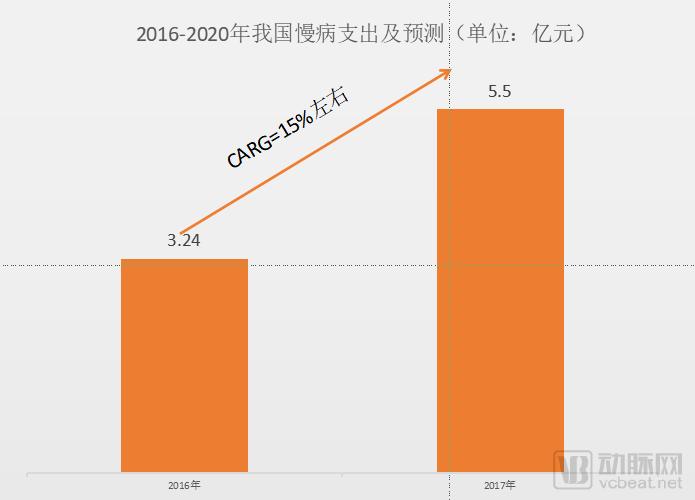
Source: Qianzhan Industry Research Institute
As chronic disease management has been elevated to a national strategic priority, how to implement it efficiently has become a key issue in top-level design. Given the complexity of the chronic disease management system, which encompasses services across various sectors from hospitals to pharmacies, VCBeat has compiled a list of typical enterprises that have integrated chronic disease management with the Internet in recent years. This effort aims to explore development trends in chronic disease management through the lens of digital transformation.
Traditional Chronic Disease Management: Hospital-Centric Services, Physician-Led Management
Traditional chronic disease management models primarily follow the workflow of "diagnosis, treatment, rehabilitation, and follow-up," involving three parties: patients, hospitals, and community health service centers. Hospitals and community medical service institutions serve as the main implementers of chronic disease management, undertaking multiple responsibilities including prevention, healthcare, medical treatment, rehabilitation, and health education.
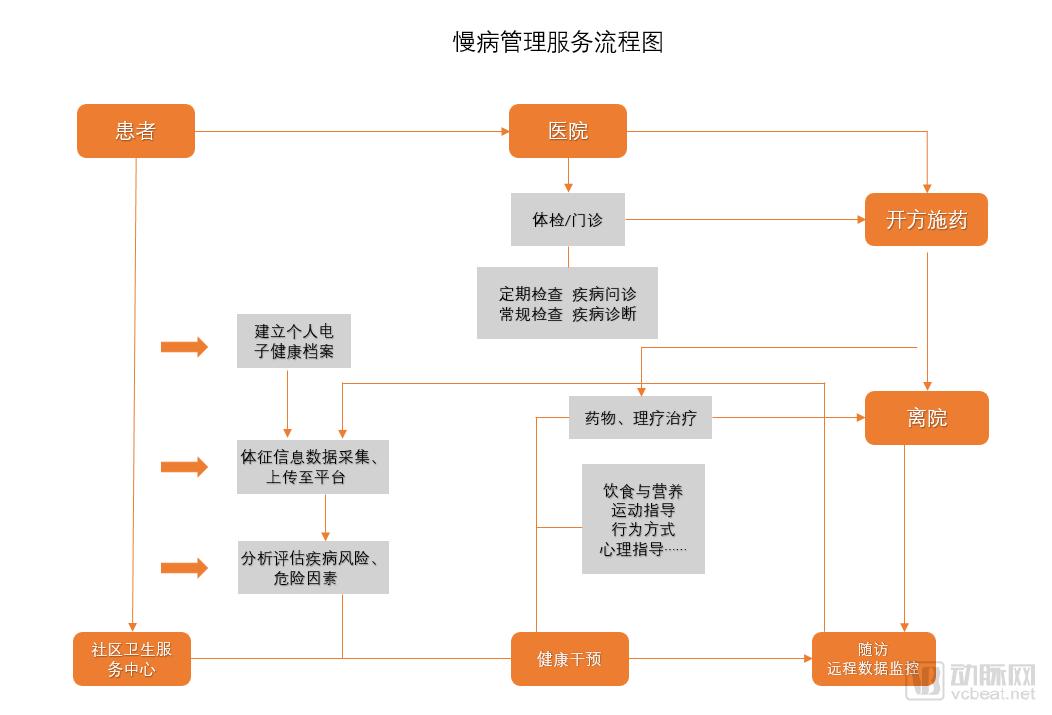
Chronic Disease Management Service Flowchart
In the traditional management of chronic diseases, the key still relies on “people.” However, due to the excessive concentration of high-quality medical resources in large healthcare institutions, primary care facilities not only lack general practitioners and preventive health professionals capable of managing chronic conditions, but also suffer from insufficient service infrastructure and medical equipment. Moreover, inadequate policy support and fiscal investment have further eroded patients’ trust in primary care providers and institutions.
Taking the most prevalent form of diabetes in the population as an example, a year comprises 365 days, totaling 8,760 hours. Under traditional Chinese medical conditions, patients with diabetes may have only six hours of contact per year with nurses, physicians, dietitians, and other healthcare professionals, leaving the remaining 8,754 hours to rely solely on patient self-management.
Internet-Enabled Chronic Disease Management: Home-Based Scenarios and Precision Decision-Making
With the development of new-generation information technologies, the application of mobile apps and wearable devices in the field of chronic disease management is increasingly widespread. The advancement and popularization of new-generation information technologies, such as mobile internet, the Internet of Things (IoT), cloud computing, and big data, have injected new vitality into chronic disease management and innovated its management models.
To address the pain points of traditional chronic disease management, the demands for internet-based solutions are home-based scenarios and precision in decision-making.
A sound management network serves as the hardware foundation for chronic disease management. Currently, the effectiveness of regional health information platform construction has not yet become prominent; electronic health records and electronic medical records of patients with chronic diseases cannot be effectively shared across different medical institutions, preventing physicians from accessing patients’ medical histories.
Furthermore, China lacks a unified information software system for resident health records, and the chronic disease monitoring network remains underdeveloped. A nationally unified information platform for chronic disease prevention and control has not yet been established. Consequently, physicians lack access to comprehensive data on patients’ lifestyle habits and behaviors—such as dietary patterns, physical activity, behavioral habits, and psychological well-being. Moreover, vital sign data self-monitored by patients with chronic diseases are fragmented and cannot be promptly accessed or monitored by clinicians. This results in generalized clinical management of chronic disease patients, making it difficult to develop personalized and precise diagnosis and treatment plans.
How to conduct effective patient education and chronic disease management has become a shared objective, ranging from national top-level design to grassroots service institutions. In the collaboration between patients and medical institutions facilitated by the internet for chronic disease management, the following factors have become key determinants affecting chronic diseases:
Tiered Diagnosis and Treatment
As the most critical component in implementing primary healthcare services within the tiered diagnosis and treatment system, chronic disease management has led to the widespread adoption of a “chronic diseases first” strategy in healthcare reforms from the central to local governments.
At the end of 2015, the National Health and Family Planning Commission issued the “Notice on Doing a Good Job in the Pilot Program for Tiered Diagnosis and Treatment of Hypertension and Diabetes” (hereinafter referred to as the “Notice”), which clarified the key tasks for the tiered diagnosis and treatment of hypertension and diabetes. It required determining the number of patients suitable for the tiered diagnosis and treatment service model and assessing their condition and basic information, based on the prevalence, incidence, and consultation rates of chronic diseases such as hypertension and diabetes, as well as the technical protocols for tiered diagnosis and treatment. Efforts should be strengthened to build information systems.Establish electronic health records (including specialized information on hypertension and diabetes) that connect secondary-and-above hospitals with primary healthcare institutions, tailored for patients under the tiered diagnosis and treatment system.. and clearly define the functional roles of medical institutions at all levels in the management of chronic diseases.
In 2016, the State Council issued the “Key Tasks for Deepening the Reform of the Medical and Healthcare System in 2016,” accelerating the launch of pilot programs for tiered diagnosis and treatment. In accordance with"Initial diagnosis at primary care level, two-way referral, separate management of acute and chronic conditions, and coordination between upper- and lower-level institutions"” requirements, focusing on provinces piloting comprehensive healthcare reform and cities piloting comprehensive public hospital reform, to accelerate the promotion of tiered diagnosis and treatment, with pilots being carried out in approximately 70% of prefecture-level cities.
In June 2016, six departments, including the State Council’s Office of Healthcare Reform and the National Health and Family Planning Commission, jointly formulated the “Guiding Opinions on Promoting Family Doctor Contract Services,” proposing thatBy 2020, efforts will be made to expand family doctor contract services to the entire population, basically achieving full coverage of the family doctor contract service system.
In June 2016, the General Office of the State Council issued the “Guiding Opinions on Promoting and Regulating the Application and Development of Health and Medical Big Data,”Basically achieve standardized electronic health records for urban and rural residents, along with fully functional health cards.
A brief review of the above policies shows that,Aimed at patients with chronic diseases, the goal of promoting tiered diagnosis and treatment through internet-based tools, reallocating medical resources, standardizing health big data via family doctor contract services, and enhancing public health and health management capabilities is gradually becoming a reality under comprehensive policy support.
Medical Insurance Payment
According to statistics from the National Health and Family Planning Commission, the incidence of chronic diseases in China has shown a rapid upward trend in recent years. Data from the "China Health and Family Planning Statistical Yearbook 2017" indicates that the prevalence of chronic diseases has continued to rise, nearly doubling over the ten-year period from 2003 to 2013.
This has been accompanied by a rise in healthcare expenditures. In 2014, China’s total health expenditure reached RMB 3.5312 trillion, with medical costs attributable to chronic diseases accounting for 70% of the total. The substantial proportion of healthcare spending driven by chronic diseases is significant and cannot be overlooked.
In June 2017, the State Council issued the “Guiding Opinions on Further Deepening the Reform of Basic Medical Insurance Payment Methods.” The release of this significant policy document will undoubtedly accelerate the reform process of medical insurance payment.
Display RequirementsFor inpatient medical services, payment is primarily based on disease types and Diagnosis-Related Groups (DRGs); long-term and chronic disease inpatient services may be reimbursed on a per-bed-day basis. For primary care services, capitation payment models may be adopted, with active exploration of integrating capitation with chronic disease management. For complex cases and outpatient expenses not suitable for bundled payments, fee-for-service reimbursement may be applied.Explore payment models aligned with the characteristics of traditional Chinese medicine services. Strengthen health insurance oversight of medical practices, shifting the regulatory focus from controlling medical costs to dual control of both medical costs and quality of care.
According to the "2016 China Internet Chronic Disease Management Industry Insight Report" released by iResearch,Since a significant proportion of the total expenditure of the urban basic medical insurance fund is allocated to reimbursements for chronic disease treatment, effective management of chronic diseases—through measures such as initial diagnosis at primary care institutions, two-way referrals, separate management of acute and chronic conditions, and coordinated care across different levels of healthcare providers—is essential to effectively control the growth of total expenditures, thereby indirectly reducing the costs associated with chronic disease treatment.
"Internet + Healthcare Policy"
For the tiered diagnosis and treatment needs in chronic disease management, the “lifting of restrictions” on Internet + Healthcare has become the market’s most timely “tailwind.”
The government’s stance on “Internet Plus” has shifted from initial prohibition to encouraging various initiatives. In 2018, the State Council officially issued a policy document, ushering in a period of favorable development for “Internet Plus Healthcare,” with electronic prescriptions and online medical services gradually being deregulated. In the internet-related market, health and chronic disease management have low entry barriers, making it easier for small and medium-sized enterprises to participate.
The challenge in managing chronic disease patients within healthcare institutions lies in the discontinuity and fragmentation of data. Typically, after completing basic tests at community health service centers or secondary hospitals, patients are required to undergo redundant examinations at higher-level hospitals to monitor key indicators, as data remains siloed across different tiers of medical institutions. Furthermore, hospital-based chronic disease management outside the clinical setting lacks contextual integration, thereby exacerbating data discontinuity.Therefore,The Internet and smart hardware play a crucial role in the entire process of chronic disease management.
Smart Hardware Becomes the Gateway for Data Collection
Research trends in the application of Internet of Things (IoT) technology to chronic disease management have generally evolved from a focus on IoT-based information systems to the design of chronic disease management platforms, and further to the construction of management models. From a modal perspective, these can be categorized into government-led multi-stakeholder participation, hospital-commissioned construction, enterprise leasing and outsourcing, and collaborative development by medical institutions and enterprises.
The rapid development of big data and smart hardware has made wearable devices and similar technologies important tools for the treatment, monitoring, data collection, management, feedback, and reminders in chronic disease care. This is particularly evident in fields such as diabetes and cardiovascular diseases, where advancements have provided significant convenience for primary healthcare management and disease surveillance. Currently, personal health management relies mostly on preliminary functions offered by software and hardware solutions—such as mobile apps, fitness bands, blood pressure monitors, and glucose meters—including health monitoring, exercise assistance, health information, and health reminders. These approaches are still in an exploratory stage.
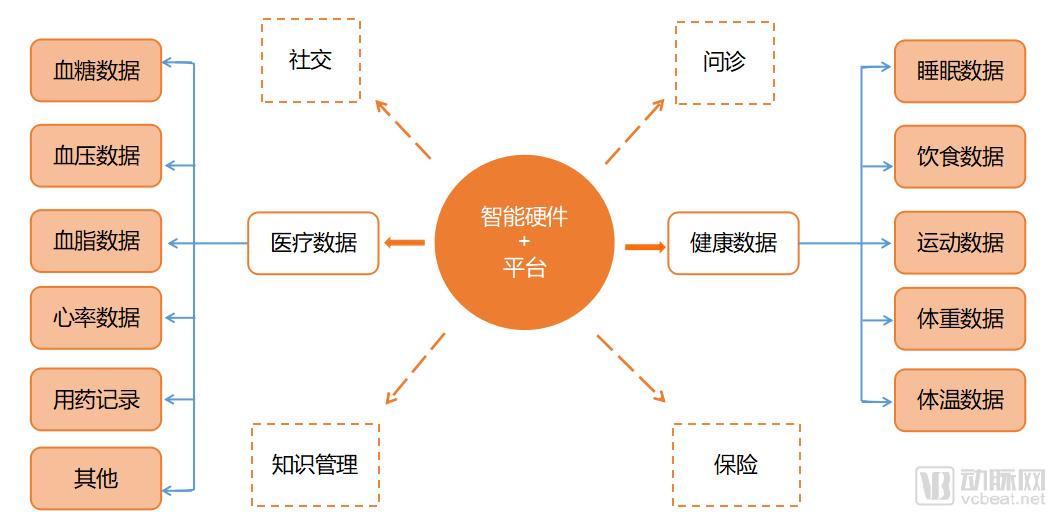
Data Collection via Smart Hardware as the Entry Point
Xikang Medical has deployed over 20,000 terminals for stroke prevention and treatment across six major end-user scenarios, serving a population of 20 million. This includes more than 2 million members and over 17 million non-members, with projected revenue reaching RMB 150 million in 2018.
The chronic disease management market has currently formed an industry landscape primarily anchored by health checkup services, smart hardware manufacturers, and medical device manufacturers as entry points.
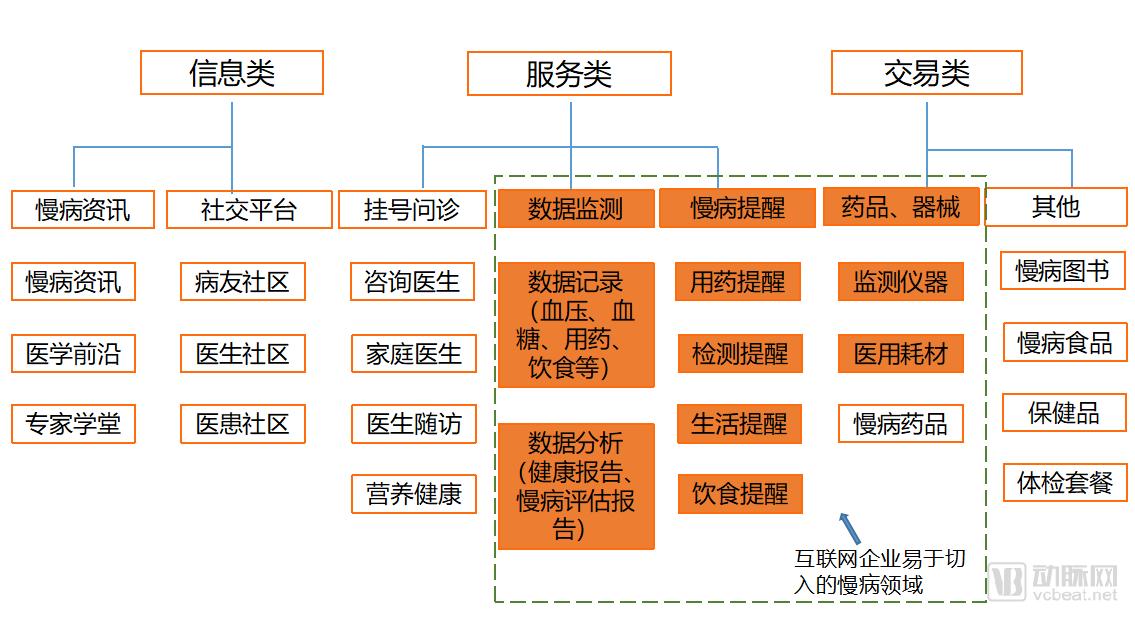
Schematic Diagram of Internet-Based Chronic Disease Management Enterprise Classification (Source: iResearch; partially edited by VCBeat)
As shown in the figure above, we believe that the primary focus for enterprises leveraging internet technologies to enter the chronic disease management sector lies in data monitoring, chronic disease reminders, and pharmaceuticals and medical devices. This encompasses a wide range of internet-based models—including smart hardware, health cloud services, big data, online consultations, patient communities, telemedicine, appointment registration and triage, and e-pharmacy—making it the optimal domain for internet companies to collaborate with offline medical institutions and health management organizations to establish comprehensive management systems.
Among these, companies specializing in chronic disease medications typically fall into the traditional category. Drug R&D requires substantial financial strength, making it difficult for internet-based enterprises to enter this space. However, digital marketing for chronic disease medications represents an innovative pathway following drug development and market launch.
Additionally, some argue that the core foundation of future chronic disease management still lies in data accumulation; therefore, digital transformation is an inevitable trend.
From the perspective of application models, common Internet-based chronic disease management applications in China and abroad mainly include the single-app model, the “smart hardware + app” model, the chronic disease informatization model, and the O2O model that integrates online and offline resources. In addition, collaborative models between Internet-based chronic disease management and insurance are also included but are not listed in the table.
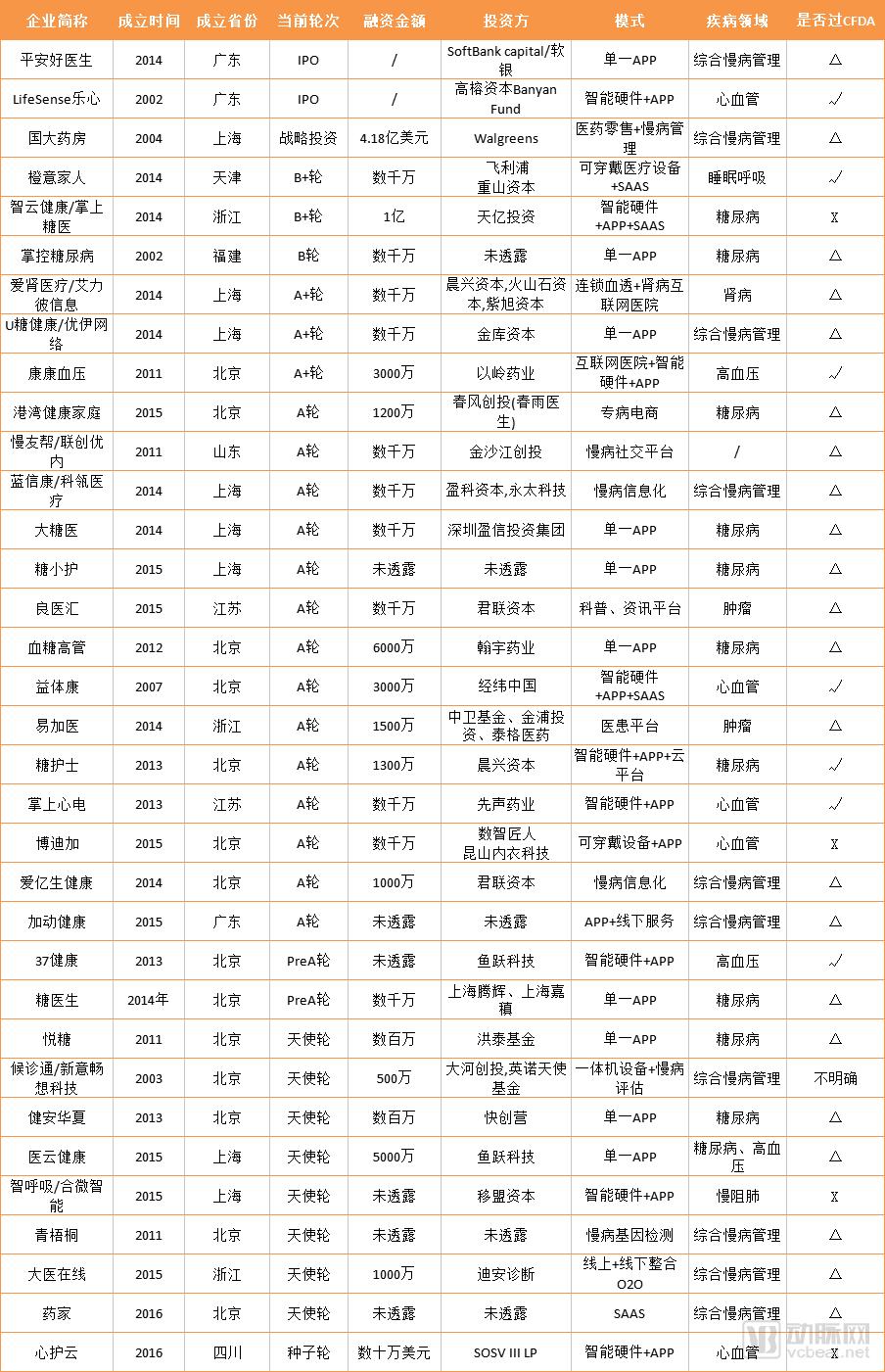
Note: In the column indicating whether CFDA approval has been obtained, “"√" represents ""Yes",“"X" stands for "No," "△” indicates not required
Statistics on Internet-Based Chronic Disease Management Companies That Have Secured Financing (Data Sources: VCBeat Database, Official Website of the State Administration for Market Regulation)
Online Platform for Chronic Disease Management: B-Side Focuses on Medical Institutions, C-Side Enters via Smart Hardware
ToB:Serving healthcare institutions, leveraging informatization as a breakthrough to build internet/cloud platforms that connect healthcare providers with patients, thereby enhancing the efficiency of chronic disease management in hospitals and primary community health service centers.
Case
Ai Yisheng: GDS National Guideline AI-Powered Chronic Disease Management System
The GDS National Guideline-Based AI Chronic Disease Management System currently covers seven major conditions: hypertension, diabetes, dyslipidemia, coronary heart disease, cerebrovascular disease, gout, and hyperhomocysteinemia. It comprises five core modules: individual management, population management, collaborative management, patient guidance, and medical administration. Across three key application scenarios—community hospitals, regional medical consortia, and urban chronic disease ecosystems—the GDS system assists physicians as a clinical decision-support tool, guides patients, and acts as a virtual nurse for patients. It supports hospital administrators, health commissions, and social security agencies by providing a comprehensive healthcare management platform. Furthermore, it fosters an integrated ecosystem linking healthcare services, health insurance, and pharmaceuticals (“Three-Medical Linkage”), while offering operational platforms for commercial insurance and pharmaceutical companies. The GDS system supports contracted population management by community family doctors and facilitates collaboration among specialists, general practitioners, and health managers to enhance the effectiveness of tiered diagnosis and treatment within medical consortia.
Blood Sugar Guardian: Building a Diabetes Management Information Platform via Cloud Technology
"Blood Sugar Guardian" is a chronic disease management information platform built on cloud technology, addressing the pain points in communication between diabetic patients and specialist physicians. The physician-facing interface of "Blood Sugar Guardian" primarily connects with endocrinology departments and adopts a B+B2C business model to provide daily diabetes management and remote consultations for patients. Additionally, a mobile application has been developed to enable mobile-based diabetes management.
ToC:End-to-End Chronic Disease Management Services: Leveraging Smart Hardware as the Data Collection Entry Point to Deliver Care
The key to the development of chronic disease management lies in the devices themselves. The core issue is whether the monitoring data obtained from the chips and algorithms of smart devices can serve as a basis for clinical decision-making. As shown in the figure above, some smart hardware has already received certification from the China Food and Drug Administration (CFDA), with minimal error rates between their collected data and clinical examination results. For enterprises, adopting a chronic disease management model centered on medical devices—deploying equipment across various scenarios and leveraging data collection to deliver services—represents a significant advantage.
Case
Xikang Medical: Entering Chronic Disease Management Services Through End-User Products
Xikang Medical has deployed over 20,000 stroke prevention and control terminals across six major settings: township health centers, village clinics, community clinics, pharmacies, community health service centers, and community health service stations. The services cover a population of 20 million, including more than 2 million members and over 17 million non-members. The company’s revenue is projected to reach RMB 150 million in 2018.
Wanda Telemedicine: Smart Hardware - Patients - Medical Institutions
Wanda Telemedicine utilizes the “Resident Health Management Information Platform” as its primary tool, integrating emerging information technologies such as cloud computing, the Internet of Things (IoT), and mobile internet into both the community-based basic public health management system and residents’ self-health management systems. By interfacing with Shanghai Shenkang’s Medical Consortium Project and regional health information platforms, it enhances resident health records and establishes an integrated service workflow encompassing “resident pre-screening, platform-based early warning, clinical reference, and physician management,” thereby launching a comprehensive intelligent health service model known as “Holistic Health.” In addition to providing chronic disease management services for the elderly, Wanda Telemedicine’s chronic disease management information system leverages its IT platform to offer health management packages, physical examination services, and genetic testing for adults and children, thereby enriching the scope of Wanda Telemedicine’s health management offerings.
Chronic Disease Management + Insurance: Launching Chronic Disease Insurance under the HMO Model
From the perspective of chronic disease startups, integrating with insurance systems and breaking away from the traditional model that prioritizes financial management over protection not only expands service capabilities and attracts more users but, more importantly, provides users with much-needed medical insurance coverage. This helps reduce their financial burden and lower healthcare costs, aligning with national health insurance policies while truly demonstrating the valuable role of internet-based participation in chronic disease management.
From the perspective of commercial insurance companies, collaborating with internet healthcare enterprises can, on one hand, facilitate the development of new insurance products to attract more policyholders, and on the other hand, enhance cost containment measures and reduce the disease risk among insured individuals. Such partnerships also contribute to enhancing the social value of the insurers’ brands.
There are two primary models for integrating commercial insurance with chronic disease management: first, combining pharmaceutical sales with commercial medical insurance to enter the field of chronic disease management; and second, partnering medical informatics companies with commercial insurers to enhance the level of health management provided to policyholders.
Case
"RetireSugar Drum": Palm Sugar Doctor + Taiping Insurance
At the end of 2015, Zhangshang Tangyi partnered with China Taiping Insurance to launch an insurance product for diabetes complications—Taiping Diabetes Complications Insurance, also known as “Tui Tang Gu.” As an internet-based chronic disease management service platform, Zhangshang Tangyi serves as the exclusive provider of customized chronic disease management services for this insurance product, enabling unified management of China Taiping Insurance policyholders. All insured individuals will have access to high-quality blood glucose management services provided by Zhangshang Tangyi, thereby optimizing self-management of blood glucose levels and reducing the incidence of complications.
In terms of collaboration, Taiping’s Diabetes Complications Insurance has chosen to integrate exclusively with Zhangshang Tangyi, a single diabetes management platform. Zhangshang Tangyi is a diabetes management platform equipped with a comprehensive service system. Its multi-faceted, customized service framework centers on a mobile app, complemented by a WeChat service account, a call center, and offline clinics, forming a three-dimensional and complete service ecosystem. This integrated approach delivers a seamless, customized medical service experience that combines online and offline resources for policyholders.
Pathways for Listed Healthcare Companies to Enter Chronic Disease Management
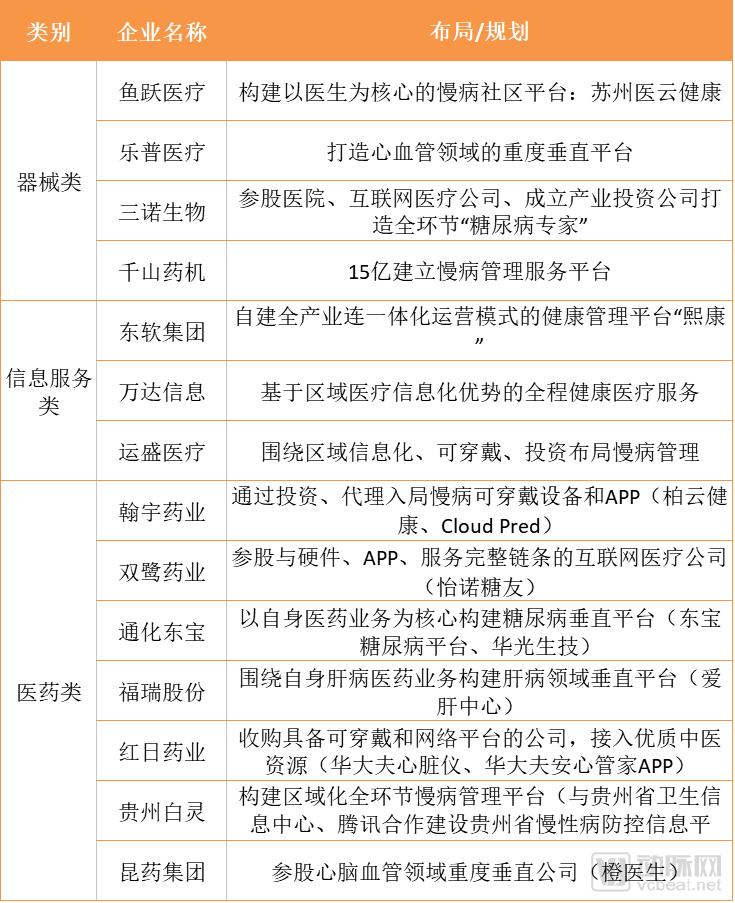
14 Listed Healthcare Companies Involved in Chronic Disease Management (Incomplete Statistics)
Previously, VCBeat compiled the pathways through which 14 listed healthcare companies have entered chronic disease management and summarized four major directions:
1. Private Placement: Securing Substantial Capital
2. Self-developed end-to-end chronic disease management service system and platform
3. Take equity stakes in companies related to mobile health and wearable devices, as well as specialized hospitals
4. Establish an investment company to implement strategic investment planning
The defining characteristics of internet-based tools are rapid dissemination and replicability. In contrast, the business models of publicly listed healthcare companies remain relatively traditional. Therefore, leveraging digital platforms to enter the chronic disease management sector serves two primary purposes: first, it extends existing business lines and creates new revenue streams; second, it addresses substantial market demand. The core of healthcare services lies in connecting patients, physicians, and medical institutions, necessitating tools that can effectively integrate these three stakeholders. For pharmaceutical companies, medical device manufacturers, and health IT firms alike, the specific characteristics and core needs of chronic disease management serve as key drivers for expanding into new business areas, enabling them to rapidly reach their target markets.
In The Innovator’s Prescription, the following viewpoint is presented: Although chronic diseases impose substantial costs and suffering, few healthcare business models today optimize the process of determining diagnostic and treatment plans, and there are virtually no business models capable of improving adherence among patients with chronic conditions or guiding them to persist with their treatment.
Based on this, our observations indicate that the core of current "Internet + Chronic Disease Management" still lies in the following three aspects:
1. The primary role of smart hardware intervention is monitoring, with its core lying in simplifying labor costs and improving management efficiency through multi-dimensional data collection;
2. The probability of resolving patient adherence in chronic disease management solely through the Internet is low; data monitoring requires follow-up services to form a closed loop.
3. Acquiring precise user traffic and creating value chains for chronic diseases fundamentally rely on human services, with physicians remaining the core element across all stages.