

WeHealth Completes Pre-A Round of Tens of Millions RMB to Accelerate 'Internet + Maternal and Child Health' Initiative
On April 28, the General Office of the State Council officially released the “Opinions on Promoting the Development of ‘Internet + Healthcare’.”
On May 3, the National Health Commission issued the Action Plan for Maternal and Infant Safety (2018–2020) and the Action Plan for Healthy Children (2018–2020).
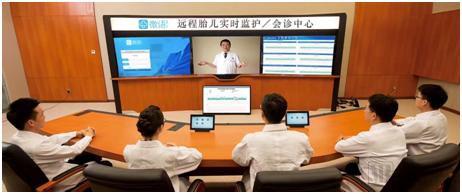
On May 23, riding the tailwinds of favorable policies, Weiyu Medical announced the completion of its Pre-A financing round, raising tens of millions of RMB. The investors were the China Academy of Science and Technology Development and Shandong Shuyu Civilian Pharmaceutical Co., Ltd. 2018 marked a leap-forward year for Weiyu Medical in comprehensively advancing its “Internet + Maternal and Child Health” solutions. Weiyu Medical will collaborate with hospitals in Shenzhen, Beijing, Chengdu, Suzhou, and other cities to establish 24/7 remote maternal-fetal monitoring centers, further promoting the clinical application of this technology in maternal and child healthcare. Furthermore, in partnership with relevant national authoritative institutions, leading domestic obstetrics hospitals, and experts, Weiyu Medical will conduct in-depth research on clinical big data related to mothers and fetuses, driving the intelligent, networked, and professional development of remote maternal monitoring and risk assessment in China.

On April 12, Premier Li Keqiang presided over an executive meeting of the State Council, which deliberated and approved in principle the “Opinions on Promoting the Development of ‘Internet + Healthcare’.” The meeting determined measures to develop “Internet + Healthcare,” emphasizing the need to accelerate its growth in order to alleviate difficulties in accessing medical care and improve the health of the population.
To unlock policy dividends and stimulate the innovative development vitality of various participating entities, the document clearly proposes a number of incentive-based policy measures. For instance, it encourages medical institutions to leverage information technologies such as the Internet to expand the scope and content of medical services, thereby establishing an integrated online-offline healthcare service model that covers pre-diagnosis, during-diagnosis, and post-diagnosis stages. It permits the development of internet hospitals based on medical institutions, supports healthcare institutions and qualified third-party organizations in building internet information platforms to provide telemedicine, health consultation, and health management services, and encourages the use of wearable devices to collect vital signs data for health monitoring and management of pregnant and postpartum women.
Since 2018, the Action Plan for Maternal and Infant Safety (2018–2020) has been implemented nationwide. With the core objective of preventing and reducing maternal and infant mortality, the plan focuses on implementing the maternal and infant safety assurance system, enhancing the service capacity of medical institutions, and strengthening quality and safety management. It aims to provide the public with safe, effective, convenient, and compassionate maternal and child health services. Meanwhile, it requires the optimization of diagnostic and therapeutic resource allocation. Medical personnel and equipment must be fully staffed in accordance with the number of open beds and configuration standards to ensure that service resources match service volume. In outpatient settings, equipment such as ultrasound scanners should be reasonably arranged, and wearable devices like fetal heart rate monitors should be increased to gradually reduce waiting times for examinations. The layout of obstetric consultation rooms and service processes should be optimized by centralizing key steps—including obstetric outpatient consultations, ultrasound examinations, fetal heart rate monitoring, blood sampling, urinalysis, and payment—to strive to provide “one-stop” services.
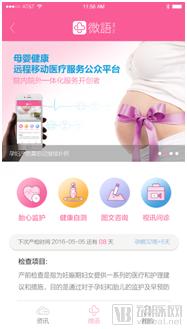
Weiyu Medical is a remote maternal and infant health monitoring service platform built on cloud computing and Internet of Things (IoT) technologies. Pregnant women can conveniently connect to professional medical-grade monitors via terminals such as smartphones and tablets, enabling them to access various fetal growth data during pregnancy anytime and anywhere (e.g., fetal heart rate monitoring, blood pressure, blood glucose, nutritional weight, and ultrasound examination data). Platform data is directly uploaded to hospital systems and physicians’ personal terminals, allowing medical staff to monitor each pregnant woman’s records and real-time data. By integrating with Hospital Information Systems (HIS), the platform delivers an integrated real-time monitoring and management service for perinatal care both inside and outside the hospital. This solution optimizes the allocation of hospital resources, alleviates doctor-patient conflicts, improves resource utilization efficiency, and reduces consultation time for both physicians and patients. Furthermore, it lowers the incidence of physiological abnormalities in the perinatal period and birth defects in newborns through early intervention and emergency response, thereby realizing the research value of big data in healthcare.
Our goal is to connect doctors, hospitals, and pregnant women through a platform and smart medical devices, establishing a comprehensive real-time monitoring ecosystem for prenatal health that spans both in-hospital and out-of-hospital settings. In an era where health and medical information is readily accessible via the internet, users need more than just easily obtainable medical资讯; they require direct communication and interaction with doctors and specialists to receive the most precise healthcare solutions. The Weiyu Maternal and Infant Health Remote Monitoring Service Platform decentralizes certain routine prenatal check-ups from hospitals, transforming the traditional model of hospital-only consultations into an integrated service that combines equipment, monitoring, and consultation in one step—eliminating the need for queuing or appointments. This provides pregnant women with high-frequency daily monitoring and management, allowing them to enjoy hospital-equivalent services from the comfort of their homes.