

PVmed's Dr. Huang Haibin: Only AI Radiotherapy Solutions Capable of Simultaneously Delineating GTV and CTV Deliver True Clinical Value
PVmed
AI-Assisted Diagnosis Service Provider
May 2018,VCBeat has learned that AI company PVmed has completed a Series A financing round worth tens of millions of yuan. Prior to the announcement, PVmed had been riding a wave of positive news.。
In October 2017, PVmed won the championship at the Hong Kong leg of the GMIC 2017 G-Startup Worldwide Global Entrepreneurship and Innovation Competition;
In November 2017, Dr. Xu Chenyang, an IEEE Fellow, was appointed as a Director and Partner at PVmed;
In December 2017, the automated delineation system for radiotherapy target volumes in nasopharyngeal carcinoma became the only third-party AI product embedded in Philips’ ISD 2.0 artificial intelligence platform;
In April 2018, Dr. Huang Haibin, former Director of the Clinical Applications and Training Solutions Department for the Asia-Pacific region at Elekta, assumed the roles of Director of Clinical Solutions and Vice President at PVmed;
In May, secured tens of millions in financing...
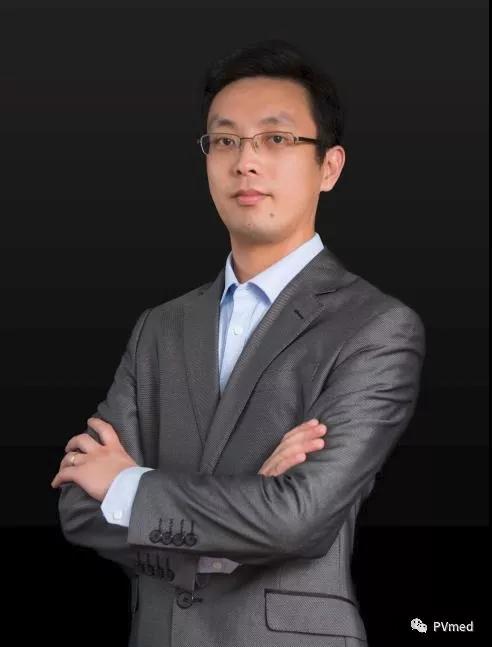
PVmed Vice President Huang Haibin
As a startup founded only in 2017, PVmed has rapidly attracted industry leaders, gained recognition from top-tier medical equipment manufacturers, and become a favorite among investors, undoubtedly due to its exceptional strengths. To explore this further, VCBeat interviewed Huang Haibin, who recently joined PVmed as Vice President after leaving Elekta, a leading radiotherapy equipment manufacturer, to gain insights into the clinical pain points in the field of radiotherapy and his perspective on PVmed.
Pain Points in Radiotherapy: Shortage of Physicians and Significant Disparities in Expertise
There are approximately three main modalities for cancer treatment: radiotherapy, pharmacological therapy (chemotherapy), and surgery. Compared with chemotherapy and surgical intervention, radiotherapy offers a broader range of indications, well-established efficacy, reliable techniques, minimal invasiveness, and relative cost-effectiveness. Consequently, the use of radiotherapy for malignant tumors is being promoted worldwide.
According to data published by the WHO, approximately 70% of cancer patients require radiotherapy during their treatment course, and about 40% of cancers can be cured with radiotherapy. The role and significance of radiotherapy in oncology are becoming increasingly prominent, making it one of the primary modalities for treating malignant tumors.
According to the “Survey on the Basic Status of Radiotherapy in Mainland China in 2015,” there were approximately 4.29 million new cancer cases in China in 2015, among which more than 3 million newly diagnosed cancer patients required radiotherapy. However, fewer than 920,000 patient visits actually received radiation therapy, accounting for only 30% of the new patients who needed radiotherapy (see Figure 1), whereas the corresponding proportion in the United States reached as high as 65% in the same year. This indicates that the domestic demand for radiotherapy services remains far from being met.
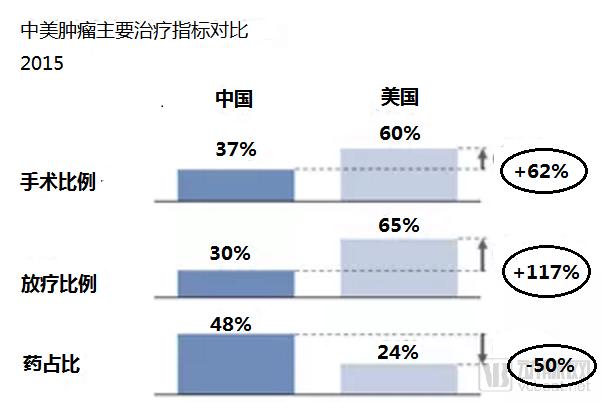
Figure 1 Comparison of Key Oncology Treatment Indicators Between China and the United States
One of the major reasons for the low penetration rate of radiotherapy is the scarcity of specialized medical and technical personnel. Radiotherapy requires target volume delineation, yet there are few experts capable of performing this task with precision. During the treatment process, the formulation of radiotherapy plans and target volume delineation are the most time-consuming tasks. The current number of radiation oncology professionals falls far short of meeting the demands of the radiotherapy market.
Taking nasopharyngeal carcinoma as an example, radiotherapy is a treatment modality capable of achieving a complete cure. For a single patient with nasopharyngeal carcinoma, the number of CT or MR images requiring delineation can reach as high as 300–400. Physicians with standard qualifications typically require 4–6 hours to delineate the Gross Tumor Volume (GTV) and Clinical Target Volume (CTV), whereas even top-tier experts need 2–3 hours to complete the target volume delineation for one patient.
Only AI products capable of simultaneously delineating both GTV and CTV hold clinical value.
Huang Haibin, who began his career as a radiation physicist, pointed out that in actual clinical practice, radiation oncologists need to delineate both the GTV (Gross Tumor Volume) and the CTV (Clinical Target Volume).
CTV refers to the area that is not visible on radiological images but has already been infiltrated by tumor cells. CTV delineation is critical for controlling tumor recurrence and metastasis in radiotherapy, and it represents the most technically challenging and time-consuming aspect of target volume delineation. Inadequate CTV delineation may result in insufficient treatment coverage, leading to tumor recurrence and significantly reducing the likelihood of cure. Therefore, only AI products capable of simultaneously delineating both GTV and CTV hold clinical value.
Reasons for Joining PVmed: Globally Leading Technical Strength in Radiotherapy Products
Huang Haibin is a former executive at Elekta, a world-leading provider of radiotherapy equipment, and has amassed extensive expertise in biomedical engineering, artificial intelligence, and radiation therapy. As the former Director of Clinical Applications and Training Solutions for the Asia-Pacific region at Elekta—a Swedish multinational medical technology group that offers advanced clinical solutions for cancer and brain disorder treatment, as well as oncology care information management—Mr. Huang has long been engaged in research and development related to AI and radiation therapy.
Interdisciplinary talents like Huang Haibin, who combine medical expertise with engineering skills, are in high demand amid the current AI boom. When asked why he chose to join PVmed, he explained that he was primarily drawn by the company’s technical strengths in the field of radiotherapy.
The World’s Only AI Company Capable of Tumor CTV Delineation. As an industry-leading medical AI company, PVmed has accumulated years of technical expertise in the application of artificial intelligence within the field of radiotherapy. It holds an international leading position in the automatic delineation of target volumes for nasopharyngeal carcinoma and is the only AI company globally capable of performing Clinical Target Volume (CTV) delineation. Its automatic delineation system for CTV in nasopharyngeal carcinoma radiotherapy not only enables automatic Gross Tumor Volume (GTV) delineation but also achieves automatic CTV delineation—a challenge that other AI companies have yet to overcome.
The product truly addresses the critical pain points in clinical radiotherapy. PVmed’s automated clinical target volume delineation system reduces the time required to contour the GTV and CTV from 3–6 hours to under one minute, allowing radiation oncologists to spend just a few minutes making adjustments and confirming the results after the system completes its automatic delineation.
The product has been endorsed by top experts in the industry. Huang Haibin stated that the barrier to entry for PVmed’s automatic delineation technology lies not only in technical aspects but, more importantly, in clinical thresholds. This requires continuous communication with physicians to understand their workflows and acquire sufficient high-quality data for training. The primary collaborator in PVmed’s product development process is Sun Yat-sen University Cancer Center, a globally leading institution in the treatment of nasopharyngeal carcinoma. PVmed insists that all data be annotated by chief physicians at Sun Yat-sen University Cancer Center, thereby creating the highest-quality dataset in the industry and ensuring that its delineation results gain recognition from radiation oncology experts.
PVmed is the first AI vendor to be integrated into a top-tier medical equipment manufacturer’s system. Owing to its superior product performance, PVmed became the first third-party AI company selected for Philips’ artificial intelligence platform, IntelliSpace Discovery 2.0 (ISD 2.0). Its automated contouring system for clinical target volumes in nasopharyngeal carcinoma radiotherapy has been embedded into the ISD platform and has been featured multiple times at Philips’ national flagship summits in China, drawing significant attention from oncology treatment experts.
Post-Joining PVmed Plan: Accelerating Product Commercialization and Clinical R&D
After joining PVmed, Huang Haibin took charge of product implementation and clinical operations, forming a complementary partnership with CEO Shen Shuo, who oversees management, and partner Xu Chenyang, who is responsible for corporate strategy.
Huang Haibin began his engagement with the field of radiation therapy in 1995, by which time many of his colleagues and friends had already made significant contributions to the industry. After joining PVmed, Huang leveraged his extensive professional network in radiation therapy and radiology—cultivated through his collaborations with Siemens, Philips, and Elekta—as well as his deep clinical insights accumulated over the years, to support PVmed in developing products that address clinical challenges and achieve large-scale commercial implementation.
Huang Haibin believes that regulations and pricing standards related to medical AI are still under development; therefore, the current priority for medical AI companies is to develop products that truly address clinical pain points. As PVmed’s partners include hospitals with world-leading expertise in nasopharyngeal carcinoma treatment, the company is poised to play a pivotal role in future market commercialization and the establishment of industry standards, emerging as a leader in the field of AI-powered radiotherapy.
According to Huang Haibin, in addition to the automatic delineation system for clinical target volumes in nasopharyngeal carcinoma radiotherapy, PVmed aims to cover all diseases related to radiotherapy in the future. Radiotherapy planning and treatment for nasopharyngeal carcinoma are among the most challenging aspects of malignant tumor management. Leveraging the technological accumulation and extensive experience gained from developing nasopharyngeal carcinoma radiotherapy products, PVmed can avoid many pitfalls when developing radiotherapy solutions for other diseases. Provided that data quality and quantity are sufficiently assured, it may take only six months to one year for PVmed to develop radiotherapy products for new disease indications.