

SINOSEEDS 'Shennong-1': China's First Independent Medical Imaging AI Supercomputing Center Built by Hisense Hetero Achieves 200x Speed Boost
On June 8, 2018, the “SINOSEEDS” supercomputing center—the most powerful dedicated R&D platform for artificial intelligence in medical imaging currently available in China—was officially launched and unveiled in Chengdu.
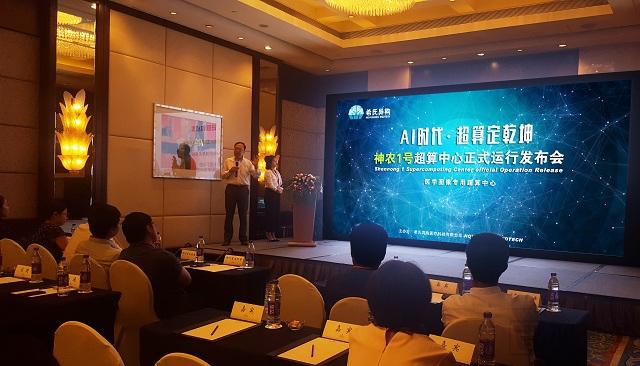
What Is Supercomputing? According to reports, the core elements of artificial intelligence (AI) application technology research and development are algorithms, data, and computing power. With the advancement and widespread adoption of AI technologies, algorithms are no longer a barrier to entry; instead, data resources and computational capabilities have become the most critical competitive advantages. If big data is likened to a “mine,” then supercomputing power is the “excavator.” Without sufficiently powerful “excavators,” even the richest “mines” cannot be exploited quickly and effectively.
It is reported that in the research and development of medical artificial intelligence application technologies, China possesses unique advantages in medical data resources. However, substantial computational power is required to transform valuable medical data into actionable medical intelligence, thereby accelerating the clinical deployment of medical AI technologies and enabling artificial intelligence to genuinely elevate the overall standard of healthcare.
The newly released Shennong-1 supercomputing platform was designed by a heterogeneous computing team led by Dr. Wu Ren, a board member of Xici Heterogeneous Computing, chair of its expert committee, and an internationally renowned AI scientist and high-performance computing expert, with support from NVIDIA.
According to reports, the Phase I project of this supercomputer employs 64 of NVIDIA’s latest Tesla V100 GPUs. Coupled with high-speed networking, a unique system design, and specialized algorithmic and software optimizations, the entire system is capable of efficiently executing various medical artificial intelligence training tasks.
Dr. Wu Ren introduced that training an ImageNet model during the Phase I stage of Shennong-1 took only 52 minutes, whereas traditional server-based training typically requires around ten days. The system runs on a self-developed supercomputing parallel training software that maintains 90% linear acceleration on a 1,024-GPU cluster. He stated that the computational power of this robust system can accelerate the training of various models related to medical imaging, and he expressed confidence that more medically valuable artificial intelligence models with practical applications will be rapidly launched in the near future.
Dr. Wu Ren has long maintained that “big data + deep learning + high-performance computing = greater intelligence.” The debut of Shennong-1 is a prime example of his advocated one-stop AI solution combining “ASIC chips + training models,” which will see broader application and promotion across more specialized fields.
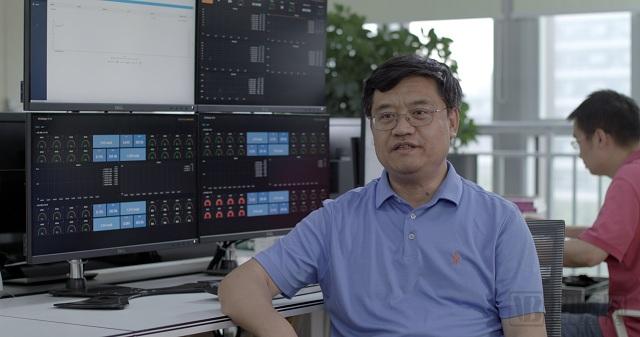
Dr. Wu Ren
The “Shennong-1” Supercomputing Center was built and deployed with significant investment by Xishi Heterogeneous Computing. Xishi Heterogeneous Computing is a company specializing in the research and development of artificial intelligence (AI) applications across multiple specialized medical fields. It holds an internationally leading position in AI technology for digestive endoscopy. In 2017, in collaboration with West China Hospital of Sichuan University, it launched the world’s first AI-powered digestive endoscope. The company is also dedicated to R&D of AI applications in computed tomography (CT), ultrasound, dermatology, electrocardiography (ECG), and other areas.
Song Jie, founder of Xishi Yigou, stated that as a company with abundant medical data resources, the successful operation of Shennong No. 1 will enable a leap forward in the efficiency of AI-based medical image data training, and is expected to achieve greater breakthroughs in multiple specialized medical fields in the short term.
As the GPU chip provider for Shennong-1, Liu Tong, General Manager of High Performance Computing and Emerging Business at NVIDIA China, stated: “As a member of the NVIDIA Inception program, Cixi Heterogeneous has demonstrated strong innovation capabilities based on its GPU platform. Supported by the NVIDIA AI computing platform, Shennong-1 fully showcases the powerful performance of the Tesla V100 in artificial intelligence and the endless possibilities for innovation that GPUs bring to the healthcare industry.”
In recent years, Xishi Heterogeneous Computing has achieved remarkable success in the field of medical AI. Last year, it established the “West China–Xishi Medical Artificial Intelligence R&D Center” in collaboration with West China Hospital of Sichuan University, fostering deep cooperation and joint research and development across multiple medical disciplines. With the successful deployment of “Shennong-1,” Xishi Heterogeneous Computing has emerged as a top-tier medical AI enterprise, boasting both extensive healthcare resources and robust computational capabilities.