

How to Enhance Patient Trust? DXY Project Director Liao Linli on Building a Closed-Loop Hospital Service System
How Should Hospitals Earn Patients’ Trust? By Relying on Disciplinary Strength and Cutting-Edge Medical Equipment? You May Not Realize That Blind Confidence in Technology and Excessive Expectations of Medicine Can Actually Widen the Gap Between Doctors and Patients.
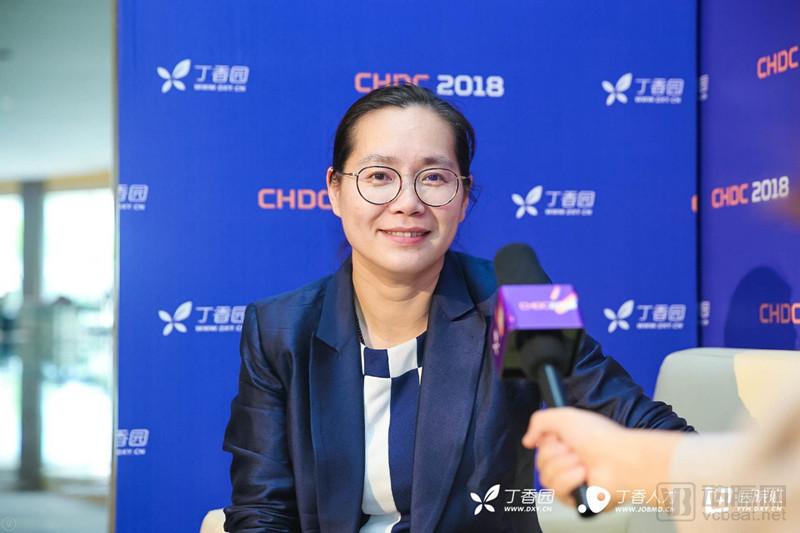
Liao Linli, Project Director at DXY, stated in an exclusive interview at the 2018 China Hospital Development Conference that hospitals can truly enhance patient trust only by adopting an integrated marketing approach centered on “patients and employees” and guided by service excellence.
“A common misconception in hospital communication is that we often promote the advanced nature of our technologies and equipment, yet fail to inform patients that, in reality, we only occasionally cure, but frequently comfort.” Discussing hospital communication, Liao Linli stated that hospitals must strive to ensure that information is conveyed 100% effectively to patients.
So, how can hospitals ensure that 100% of the information they wish to convey is accepted by patients? Liao Linli applies an integrated marketing perspective and proposes a triangular integrated marketing framework comprising “hospital, employees, and customers.” On this basis, hospital integrated marketing can create a favorable external environment, attract and retain talent, and simultaneously expand market reach.
A hospital is akin to a small society. How can it effectively integrate its resources? Liao Linli proposes that the key areas of focus for hospital integration are resource integration, human capital integration, and communication channel integration.
“Resource integration begins with data integration. Hospitals have accumulated vast amounts of data, but the structure is often unreasonable,” said Liao Linli. She believes that medical data interoperability should be implemented based on customer needs. Additionally, hospitals need to externally integrate the upstream and downstream service chains, spanning from communities to households and from prevention to treatment. Internally, they should focus on integrating and empowering physicians and healthcare professionals.
What approach should be taken to integrate data, external resources, and internal resources? Liao Linli stated that resource integration should differentiate between online and offline services and incorporate third-party services into the scope of integration. This involves leveraging community hospitals, insurance, pharmaceutical care, and telemedicine services, while also integrating various in-hospital and out-of-hospital services based on the specific circumstances of the hospital.
In addition to resource integration, human resource integration is another critical aspect that hospitals must consider. “China faces a scarcity of overall medical resources and a vast population in need of services. We need to use machines to screen issues first, resolving the majority of problems automatically, then employ customer service representatives to handle consultation inquiries, and escalate cases to the medical and health management teams when customer service cannot provide answers,” proposed Liao Linli. She suggested that, given the current shortage of medical resources, clearly delineating the roles between customer service teams and medical and health management teams can help hospitals achieve effective human resource integration.
In addition to resources and manpower, communication channels also play a crucial role in building a hospital’s brand. Liao Linli proposes that hospitals should establish their own communication platforms. She cites examples such as WeChat Official Accounts, Alipay accounts, Weibo, 24-hour call centers, and official websites, all of which constitute a hospital’s proprietary communication platforms and should be integrated into a unified user service system. “Once these communication channels are established, they will create a ‘content plus traffic’ model, enabling us to better understand patients and effectively enhance user retention,” Liao Linli explained.
Establish a Closed-Loop Service System
Having mastered the three key elements of hospital integration, how can a hospital truly establish a strong brand? Liao Linli proposes that hospitals should create a closed-loop service system both within and outside the institution to effectively retain patients while also serving their employees.
What Are the Components of a Closed-Loop Service System? The first step is to provide high-quality services to patients and their families. Liao Linli proposes that patients and their families often submit requests through official hospital channels, such as the hospital’s website or call center. These official channels should assume responsibility for marketing and promotion, continuously follow up on service delivery, and retain customers, thereby enabling the backend medical health management team to establish a closed-loop service system.
Secondly, support should be provided to healthcare professionals. As hospitals serve patients, healthcare staff are an indispensable link; only by offering full support to frontline medical personnel can patient care be optimized. Liao Linli pointed out that many healthcare workers dedicate their time to patients, often at the expense of adequately caring for their own families. Hospitals should therefore provide support in areas such as relationship counseling and parenting education, for example, by establishing specialized management solutions, offering resources for marriage and child-rearing, and cultivating internal “Happiness Ambassadors.”
Finally, Liao Linli proposed that medicine is an art grounded in science, and only by adhering to the principle of being “patient- and employee-centric, with service as the benchmark” can hospitals truly earn patients’ trust.