

DXY Group Strengthens Hospital Branding Amid Intensifying Healthcare Competition with Integrated 'Three-Line' Strategy
In an era of increasingly homogenized strategies and intensifying competition, healthcare institutions are placing greater emphasis on brand building.
Hospital branding is a long-term endeavor. A key factor that enables top-tier hospitals, both domestically and internationally, to distinguish themselves from others is the establishment of a reputable hospital brand through sustained development.
So, how can hospitals build their brands? To explore this question, the reporter interviewed Wang Hui, Head of the Brand Marketing Division within DXY’s Hospital Business Unit; Jia Kan, Senior Director of Market Operations at DXY and Deputy Secretary-General of the China Healthcare Human Resources Managers Alliance; and Han Xian, Senior Director of Talent Development at DXY and Secretary-General of the China Healthcare Human Resources Managers Alliance, to hear their insights on helping hospitals establish strong brand identities.
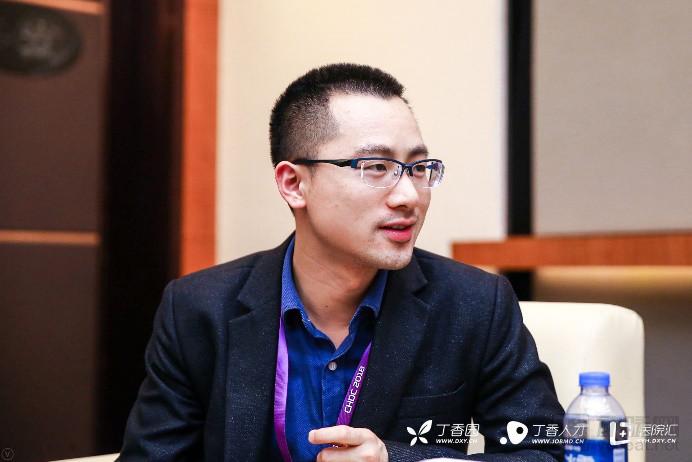
Wang Hui, Head of the Brand Marketing Business Group, Hospital Division, DXY (Image source: Provided by the company)
“The Brand Marketing Business Group of DXY comprises three product lines: ‘Dingxiang Tong’ (biomart.cn), which focuses on large-scale scientific research procurement and brand marketing; ‘Hospital Hub’ (yyh.dxy.cn), which specializes in professional brand marketing for medical institutions; and ‘DXY Health’, which targets employee health within enterprises. These three product lines collectively provide comprehensive coverage from the perspectives of users, enterprises, and employees,” stated Wang Hui, Head of the Brand Marketing Business Group within DXY’s Hospital Division, in an interview with reporters.
Wang Hui further deconstructed the connotation of hospital branding. He stated that brand is empowerment, a form of trust, and also a manifestation of differentiated advantages. Branding directs attention to elements beyond material value; it carries greater depth, enabling people to recognize the true value—particularly the social value—of a hospital, an enterprise, or a platform.
“Medical care cannot be segmented into isolated steps,” said Wang Hui. As a company dedicated to hospital brand building, DXY has constructed a logically rigorous closed loop of medical value around this goal, leveraging three distinct product lines with different positioning. Dingxiangtong is positioned in the realm of biological and clinical research services, assisting professionals from the early stages of academic and pharmaceutical research by providing procurement of laboratory supplies and academic support. Hospital Hub helps medical institutions understand, define, and sustain their brand operations. Meanwhile, DXY Health focuses on employees’ physical and mental well-being, driving overall brand development from within the organization. All three components are indispensable to the process of hospital brand building.
Hospital brand building requires both standardization and personalization, yet striking the right balance between the two demands considerable expertise. In this regard, DXY holds a significant advantage.
Wang Hui noted that while many hospitals possess a wealth of compelling story material, their efforts in discovering, organizing, and disseminating these narratives remain inadequate. Such storytelling often remains confined to internal communications, failing to generate significant brand influence. Hospital brand building is a comprehensive system that requires structured modules spanning brand positioning, strategy, and execution. It also demands that hospitals proactively and skillfully engage with media, particularly new media—a capability at which many hospitals fall short, but where DXY excels.
Addressing the current challenge in hospital brand building characterized by “market saturation and intense competition,” Wang Hui stated that DXY holds absolute advantages in content, data, and operational experience—a level of capability that many institutions cannot hope to match.
Specifically, DXY’s 18 years of continuous operations have accumulated a substantial repository of high-quality content. Whether in professional medical fields or popular science communication, DXY has established a comprehensive operational framework, ensuring that partners can access the most optimal and valuable operational resources. Secondly, DXY has amassed extensive industry data. With over 5 million professional members to date, DXY leverages big data analytics to generate insights that are more precise and closely aligned with industry trends. Finally, DXY boasts robust content and media operations teams, backed by rich operational experience. Its 18 years of academic operational experience and 11 years of commercial operational experience have fostered a powerful operational system and team, ensuring that brand-building initiatives are implemented with clear direction and targeted precision.
Regarding DXY’s future development plans for hospital brand building, Wang Hui stated that DXY will focus on cultivating its “Hospital Hub” product, which is positioned to provide professional brand marketing services to medical institutions. In the future, Hospital Hub will leverage DXY’s strong influence, content advantages, data resources, and operational expertise to deliver high-quality brand marketing services to medical institutions. Additionally, it will deepen brand marketing efforts through the “China Medical Brand Management Alliance,” enhancing the brand operation and market operation capabilities of healthcare brand managers.

Jia Kan, Senior Director of Market Operations at DXY and Deputy Secretary-General of the China Healthcare Human Resources Managers Alliance (Image source: Provided by the company)
Jia Kan believes that, from a positioning perspective, China’s top-tier tertiary hospitals (Grade 3A) have already achieved robust development. However, looking beyond these elite institutions, the development of medical facilities in the middle and lower tiers remains uneven, indicating significant room for growth. In fact, from a broader perspective, only by helping the majority of hospitals—those in the middle and lower tiers—achieve better development can we substantially improve the overall healthcare environment and the quality of medical care available to the public in China. This aligns with national policy directions and the evolving trends in the social healthcare landscape.
Jia Kan stated that China’s healthcare industry is currently undergoing a period of profound transformation, which has also given rise to numerous opportunities. In fact, both the advent of population aging in China and the release of the “Healthy China 2020” initiative indicate that domestic demand for medical services is experiencing substantial and continuous growth.
In fact, some prefecture-level hospitals are not only facing the “siphon effect” from large tertiary Grade A hospitals but will also encounter patient diversion pressure from lower-tier medical institutions as the tiered diagnosis and treatment system is gradually implemented. As noted by renowned economist and U.S. National Academy of Sciences member Hsiao Ching-Luen at this conference, each tier of hospitals must clarify its positioning and address key issues within the tiered diagnosis and treatment framework to achieve better development. As Jia Kan stated, these hospitals will undoubtedly become the backbone of China’s healthcare system in the future. However, many similar conferences currently cater primarily to large tertiary Grade A hospitals, which represent only a tiny fraction of the nearly 30,000 hospitals and over one million medical institutions across China. This Hospital Development Conference specifically targets these numerous hospitals with promising development prospects.
Since the beginning of this year, second-tier cities such as Nanjing, Xi’an, and Xiamen have successively introduced policies to attract talent, sparking a fierce nationwide competition for human resources. Similarly, for hospitals, talent is the key factor underpinning their sustainable development. This is particularly challenging for regions with relatively weaker economies, which already face regional brain drain. Consequently, retaining existing staff and attracting new talent has become a significant hurdle.
Talent, as one of the key themes of this Hospital Development Conference, is also a focal point through which the conference aims to support hospital development. Jia Kan stated that DXY and the Hospital Development Conference are currently working to establish industry-wide standards for hospital human resources. These standards will comprise three components: first, the employer dimension, which encompasses six major aspects, including environment, medical quality, and a range of other services; second, compensation, defining appropriate benchmarks for hospitals of different tiers and regions; and third, recruitment standards, addressing the challenges hospitals face in matching with suitable talent. This initiative will be a key priority for DXY Talent this year. By establishing these standards, we aim to foster a healthy ecosystem for talent mobility, ultimately helping hospitals and physicians realize their value in the future.
In fact, as restrictions on private hospitals continue to ease and industry competition intensifies, some large public hospitals that previously did not worry about talent acquisition or patient volume have also begun to recognize the importance of talent and hospital branding.
Jia Kan believes that initially, the greatest demand for hospital branding came from private hospitals, which needed to build a reputation to attract top-tier physicians and drive patient volume. In recent years, under pressure from private hospitals, public hospitals have also significantly increased their demand for brand marketing.
Jia Kan stated that talent and branding are the core of hospital development. Future Hospital Development Conferences may also cover multiple dimensions, including medical internationalization, hospital scientific research and supply chain management, and clinic development, thereby providing robust support for advancement across all aspects of healthcare.

Han Xian, Senior Director of Talent Development at DXY and Secretary-General of the China Healthcare Human Resources Managers Alliance (Image source: Provided by the company)
“A hospital’s brand is not merely its institutional image; it is built upon the genuine experiences of its employees, generating cohesion and appeal from the inside out.” Han Xian believes that effective promotion of a strong hospital brand not only helps healthcare institutions attract highly sought-after talent but also streamlines their talent acquisition channels.
In the process of emphasizing hospital brand building, how to use hospital brand construction as a tool and strategy for human resource development.
“People focus on different aspects—some prioritize workspaces, others leisure areas, and still others place great emphasis on team morale. Regardless of what stands out, these elements collectively convey a company’s vision while showcasing its office environment, compensation and benefits, workplace atmosphere, corporate culture, and more. In a word, it’s all about ‘appeal.’” Han Xian stated that healthcare employers can leverage employer branding to conduct long-term talent acquisition and attract candidates who align with the organization’s values.
According to a LinkedIn survey, 71% of professionals are willing to receive job updates from companies with successful employer branding. In terms of enhancing job appeal, the impact of employer branding is twice that of corporate branding.
“A strong employer brand can reduce talent acquisition costs by up to 50%, effectively halving expenses. Ninety-one percent of hiring leaders believe that building an employer brand significantly enhances recruitment capabilities,” said Han Xian. She noted that during the recruitment process, if companies proactively communicate aspects beyond compensation and benefits—such as corporate culture, emotional engagement, and future development prospects—they can boost candidates’ interest in the organization. Overall, employer branding is becoming a crucial piece of the talent strategy puzzle for many companies.
Currently, employer branding has become a prevailing trend in the healthcare industry. She presented a series of data points, noting that a review of the award-winning organizations from the 2012–2017 Best Employers lists reveals many insights worth sharing. In terms of geographic distribution, 12 hospitals in East China were recognized as Best Employers, along with 3 in North China, 4 in Central China, 4 in Northeast China, 4 in South China, and 2 in Southwest China; there were currently none from Northwest China. Compared with 2016, the overall scores for the 2017 Best Employers showed a general upward trend.
So, how can you build your own employer brand?
Han Xian believes that,First, the development of a commercial brand and an employer brand is fundamentally similar; building an employer brand also requires drawing on the logical framework used in commercial branding.
Second, precise positioning is required to make the employer brand more accurate;
Third, achieve comprehensive penetration to activate the employer brand.For brands, building an employer brand also calls for a subtle approach—“moistening things silently”—gradually nurturing and permeating the organization by showcasing real-life cases and firsthand testimonials to demonstrate “we are excellent.” Fourth, interaction and integration bring the employer brand to life. In particular, HR professionals need to leverage internet-based communication channels to identify content suited to their context and encourage active employee participation. At the same time, this helps enterprises establish a company-wide mechanism for brand communication.
Han Xian emphasized that building an employer brand is not an overnight endeavor and cannot be rushed; it may take one, two, or even three years, as it is a continuous, long-term process. Nevertheless, given that time is of the essence, it is a critically urgent initiative that demands immediate attention and action from enterprises.