

Xikang Medical: Leveraging Smart Devices to Serve 20 Million Patients and Build 200 Ischemic Preconditioning Training Centers in Grassroots China
As the most critical component in implementing primary healthcare services within the tiered diagnosis and treatment system, chronic disease management is an unavoidable topic for all stakeholders. Consequently, healthcare reforms from the central to local governments have adopted a “chronic disease first” strategy, with key systems such as tiered diagnosis and treatment, separation of prescribing and dispensing, and medical insurance payment becoming pivotal factors influencing the diagnosis, treatment, and management of chronic diseases.
In the current healthcare structure, issues such as data silos and imbalanced allocation of medical resources persist. Primary care facilities serve as the broadest coverage network for patients with chronic diseases, yet they remain the most under-resourced segment of the healthcare system.
Xikang Medical, established in 2014 as a subsidiary of Hebei Evidence-Based Medical Technology Co., Ltd., initially adopted the conventional R&D–production–sales business model typical of companies engaged in research, development, and commercialization. Following the introduction of national policies such as the “Four National Measures” for the Health Service Industry in 2014 and other grassroots healthcare reform initiatives, the Chinese government allocated RMB 3.8 billion to upgrade primary care medical equipment across 22 provinces.
Leveraging Hebei Xunzheng’s advantages in medical device R&D centers, production bases, and supply chain management accumulated over more than a decade, Xikang Medical has established representative offices in multiple provinces and municipalities, including Hebei, Henan, Shandong, Heilongjiang, Sichuan, Hunan, and Shaanxi. Targeting stroke and cardiovascular diseases—the leading causes of mortality and disability among chronic conditions—and drawing on its intelligent detection equipment with over 80 patents and software copyrights, as well as a top-tier domestic medical team of chronic disease experts, Xikang Medical has pioneered a new approach to chronic disease management.

Chen Lifeng, Founder and CEO of Xikang Medical
Three Major Business Segments: Pre-hospital, In-hospital, and Post-hospital Care, Facilitating the Implementation of the Medical Consortium Model
Medical Community (i.e., Healthcare Consortium) is the primary model for developing medical alliances at the county and township levels. It focuses on exploring integrated county-township management characterized by “county hospitals as the lead, township health centers as the hub, and village clinics as the foundation,” thereby establishing a three-tiered, coordinated county-level healthcare service system linking county, township, and village levels.
According to Chen Lifeng, founder and CEO of Xikang Medical, the company’s business development strategy is built upon a multi-tiered medical service system extending across the pre-hospital, in-hospital, and post-hospital stages of the healthcare ecosystem. By integrating diverse service offerings, Xikang Medical aims to deliver personalized health management solutions.
Pre-hospital care consists of health assessments and early detection services based on intelligent diagnostic devices. In-hospital care focuses on departmental support and the establishment of Ischemic Preconditioning Centers, providing clinical departments with assistance and systematic solutions for the diagnosis and treatment of stroke and cardiovascular diseases. Post-hospital care includes health management services such as postoperative rehabilitation, training, physical therapy, and follow-up visits. The integrated service system spanning pre-hospital, in-hospital, and post-hospital stages connects all links in the chronic disease management process, involving patients, hospitals, physicians, and families.
Chronic diseases encompass a wide variety of conditions. In the market, companies are most inclined to focus on metabolic chronic diseases, primarily diabetes, with countless enterprises adopting platform-based models for diabetes management. Xikang Medical has chosen to target stroke and cardiovascular diseases, which have a large patient base among the chronic disease population and exhibit the highest rates of mortality and disability.
Chen Lifeng introduced that the incidence and disability rates of these two diseases are the highest among all chronic diseases, and patients face the greatest financial burden. Therefore, Xikang Medical focuses on stroke and cardiovascular chronic diseases. By conducting early screening before hospitalization, providing standardized treatment during hospitalization, and offering early rehabilitation guidance after discharge, the company can effectively alleviate the burden on patients and address the phenomena of “poverty caused by illness” and “return to poverty due to illness.”
Xikang Medical’s business spans diverse scenarios both within and outside hospital settings. Within hospitals, it undertakes the construction of Ischemic Preconditioning Training Centers. Leveraging expert resources from Xuanwu Hospital of Capital Medical University and using the deployment of intelligent terminals for chronic disease prevention and control as an entry point, the company provides hospitals with services such as stroke prevention and screening, as well as the development of chronic disease management data centers.
Outside hospital settings, Xikang Medical has partnered with the China Foundation for Development of Health and Medicine to launch the “Good Morning Project: Heartwarming Health Pavilion,” a public welfare initiative aimed at poverty alleviation. This project provides community residents with health check-ups and health guidance services. By delivering personalized health services, it establishes comprehensive personal health records for residents. Through education and popularization of health concepts, the initiative enables individuals to scientifically understand their physical conditions and areas needing improvement, thereby fully meeting the diverse, health-focused needs of community residents.
The aforementioned projects interconnect medical institutions at the national, provincial/municipal, and district/county levels, playing a significant role in the government-promoted Medical Community. Chen Lifeng stated that Xikang Medical’s primary objective is to serve as a bridge between secondary hospitals and primary care institutions, aiming to enhance the diagnostic and treatment capabilities at the grassroots level by addressing pain points such as limited clinical proficiency among primary care physicians and inadequate doctor-patient communication.
By integrating service modules across diverse in-hospital and out-of-hospital scenarios, Xikang Medical has established a full-lifecycle health management service and a closed-loop medical ecosystem spanning pre-diagnosis, intra-diagnosis, and post-diagnosis phases. Furthermore, by providing portable smart terminal devices to primary care institutions, the company has advanced the state-advocated tiered diagnosis and treatment system as well as family doctor contract services.
Grassroots Pilot Practices: Breaking Down Barriers Between Hospital and Home-Based Chronic Disease Services
Wu Jing, Director of the Division for Chronic Disease Prevention and Control and Community Health at the Chinese Center for Disease Control and Prevention, mentioned the “six shifts” in chronic disease management at the Primary Healthcare Conference hosted by VCBeat in 2017. One of these shifts is that “chronic disease management places greater emphasis on transitioning from treatment to prevention.” Front-loading clinical processes and prioritizing assessment and screening represent an effective approach to reducing the incidence of chronic diseases.
Therefore, through a series of grassroots-level practices, Xikang Medical addresses the pain points in chronic disease prevention and rehabilitative care during the post-treatment phase of chronic disease management.
In March 2018, Xikang Medical participated in the pilot program for community health services in Jiangsu Province, delivering services such as the establishment of resident health records, family doctor contract services, and appointments with renowned specialists at tertiary hospitals through an “Internet + Healthcare” model.
Currently, Xikang Medical has launched primary healthcare services in cities across Jiangsu Province. By deploying intelligent health terminals, the company has enabled a range of medical services for the public, including on-site health record creation and examinations in rural areas, data retrieval and inquiry, online appointment booking with renowned specialists, and remote medical consultation guidance.
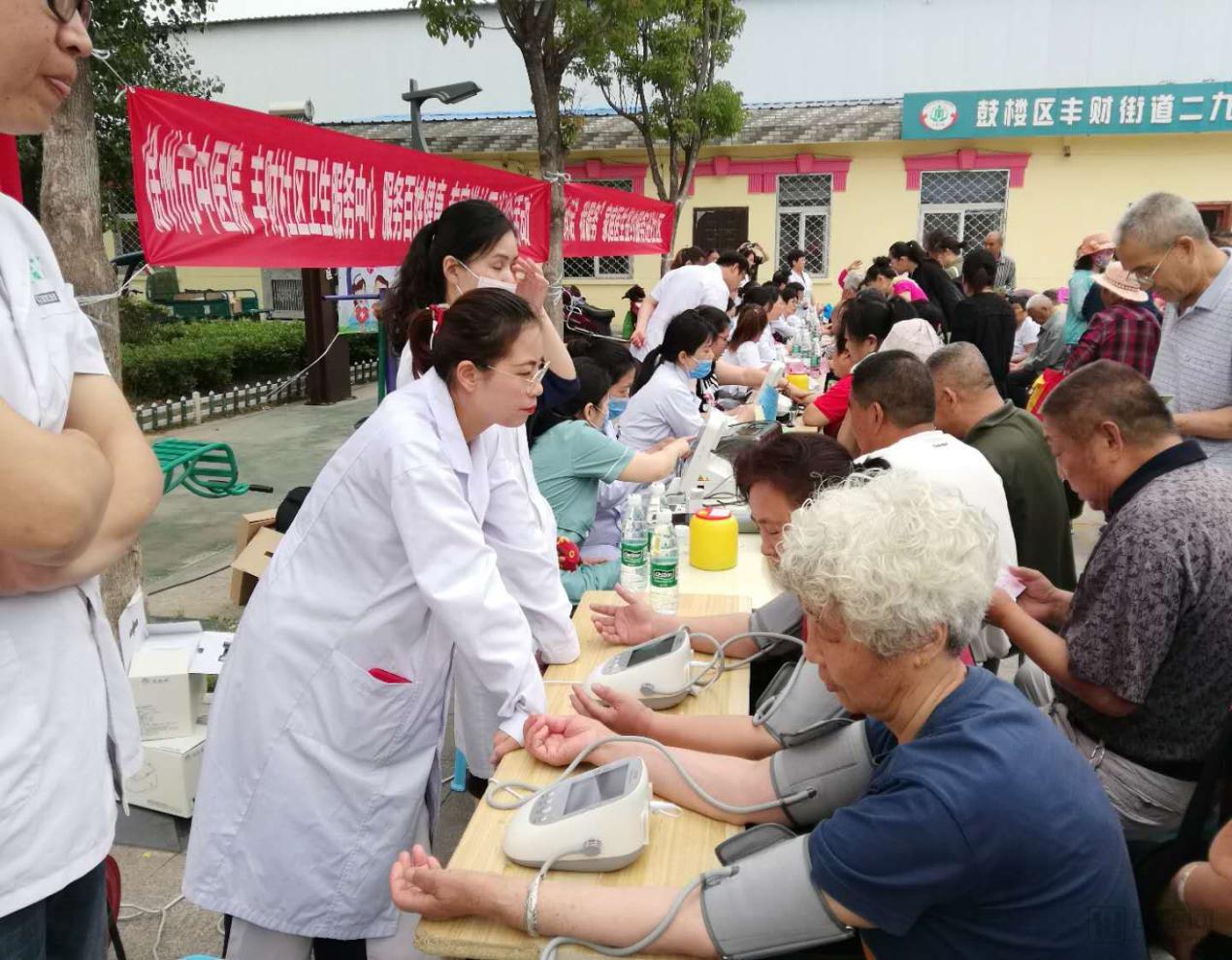
The image above shows a photo from the community screening event.
The implementation of practices across a series of primary healthcare institutions has established a closed-loop healthcare service system connecting health service stations, community health service centers, and secondary hospitals.
Chen Lifeng strongly endorses the “Internet + Healthcare” model. He believes that applying internet technologies to the healthcare sector is an inevitable trend, and that “Internet + Healthcare” is a model vigorously promoted by the state. This approach can effectively address the critical shortage of medical resources at the primary care level. “Traditional medical device companies that fail to transform, or do so too slowly, will inevitably be eliminated by the market.”
The terminals have been deployed across nine provinces and municipalities, covering six major scenarios.Projected 2018 Revenue to Exceed RMB 100 Million
Xikang Medical currently operates across six major regions in China: Central China, North China, Northeast China, Northwest China, Guangdong, and Guangxi. The company has deployed over 20,000 stroke chronic disease screening terminals across nine provinces, including Hebei, Jiangsu, Shandong, Henan, Shaanxi, Shanxi, Heilongjiang, Yunnan, and Guangxi. Xikang Medical has established partnerships with more than 200 collaborators at the provincial, municipal, and county levels, cooperated with over 100 medical institutions at Level II or above, and serves a patient base of 20 million individuals with chronic diseases.
In the product’s implementation scenarios, Chen Lifeng repeatedly emphasizes Xikang Medical’s six key terminal settings, covering community health service centers, community health service stations, township health centers, village clinics, private clinics, and pharmacies.
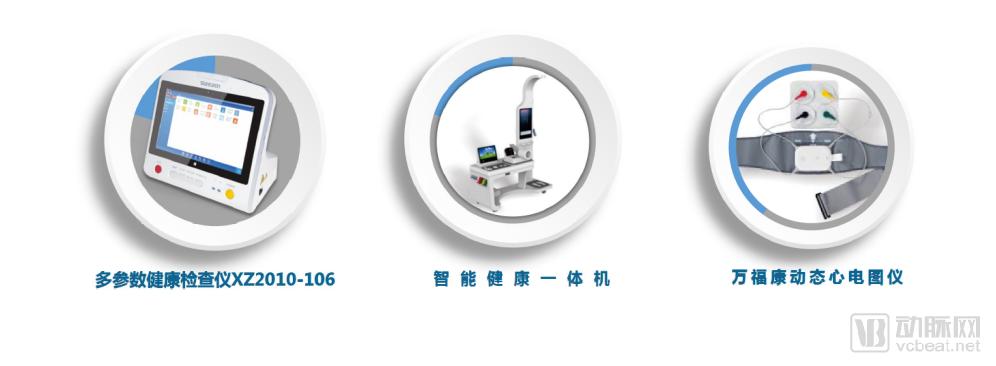
Selected Devices Developed by Xikang Medical
Over the four years since Xikang Medical was founded, Chen Lifeng has built a team of more than 200 people. When speaking about his operations team, he appears quite confident.
In the nine provinces and municipalities covered by more than 20,000 endpoints, although spanning from Heilongjiang in the north to Guangxi in the south and covering most of China’s territory, Xikang Medical’s operational team remains “dispersed in form but united in purpose.” The deployment of local endpoints is managed at the provincial level, where teams led by general managers establish operational and channel teams under the overall direction of headquarters, aggressively expanding their presence in the chronic disease management market across China. According to Chen Lifeng, Xikang Medical plans to establish 200 in-hospital ischemic preconditioning training centers nationwide by 2020.
Based on the deployment of products such as all-in-one health kiosks and other smart terminal devices, its revenue streams can be divided into three major segments:
First, product revenue is generated by using basic testing, rehabilitation equipment, and wearable devices as entry points to deliver services; meanwhile, various medical devices are provided to meet the capacity-building needs of hospital clinical departments. The primary payers include hospitals, various terminal sites, and patients with chronic diseases.
Second, service revenue: by developing chronic disease management projects through the establishment of Ischemic Preconditioning Training Centers and designing corresponding service packages, revenue is generated by providing members with comprehensive, full-cycle services.
Chen Lifeng stated, “In the current market, a single product can achieve superior returns only through the layering of services.”
Third, data monetization: by covering 20 million patients and collaborating with medical institutions to build terminal resources, we will collect comprehensive big data on chronic diseases spanning from in-hospital to out-of-hospital settings. Through systematic data mining, we will establish robust personal health records, thereby facilitating more precise chronic disease management and medication management.
Furthermore, Xikang Medical has developed the “Xikang Cloud” intelligent consultation platform. Leveraging internet-based big data analytics and the physician resources of the Wanfukang Physician Group, it delivers precise medical services to patients in home settings and formulates proactive intervention and treatment plans.
Chen Lifeng stated that among the six major scenarios involved, Xikang Medical primarily focuses on promoting services. “The company’s core profit model is to shape projects through a combination of products and services, thereby maximizing product value. This enables patients to fully experience intelligent and convenient health management services.”
For healthcare institutions, Xikang Medical’s services not only enhance the effectiveness of chronic disease prevention and control but also improve physicians’ professional competencies; for patients, they deliver a more convenient and optimized healthcare experience.
In terms of development, over the next three years, Xikang Medical will establish 200 in-hospital ischemic preconditioning training centers across China and complete the deployment of stroke chronic disease screening equipment terminals at 150,000 primary healthcare institutions.
Xikang Medical has launched its Pre-A financing round and plans to file for an IPO within three years to enter the capital markets.
By 2022, Chen Lifeng aims to build Xikang Medical into a chronic disease health management company with a market capitalization exceeding RMB 10 billion, planning to serve over 70% of the population in China.
Despite demonstrating considerable ambition, Chen Lifeng emphasized at the end of the interview: “Truly addressing the difficulties and high costs faced by the general public in accessing medical care, and genuinely resolving the pain points in healthcare, has always been the vision of Xikang Medical.”