

KangYiHeng Files IPO Prospectus: Pioneering China's First Robotic Smart Community to Serve 240 Million Seniors
When Huang Jianfeng mentioned that his company, Kangyiheng Technology, aims to go public within five years, I was not at all surprised.
Huang Jianfeng, a calm and low-key native of Maoming, Guangdong, can be considered a veteran player in the artificial intelligence circle. His first job after graduation was related to artificial intelligence, where he worked7years. When he first entered the industry, artificial intelligence was still referred to as automation. By the time Huang Jianfeng resigned, the company he served had become a major domestic supplier of robot chassis, machine vision, and motion control systems. Subsequently, he successfully managed “OneTouch,” which was later fully acquired by Alibaba.
Prior to founding Kangyiheng, Huang Jianfeng served as Vice President at a large senior living real estate group, where he spearheaded an international senior wellness city project and more than 50 adult day care centers. It was this experience that exposed the practical challenges of delivering elder care through traditional models, motivating Huang to leverage artificial intelligence to drive innovation in the senior care industry.
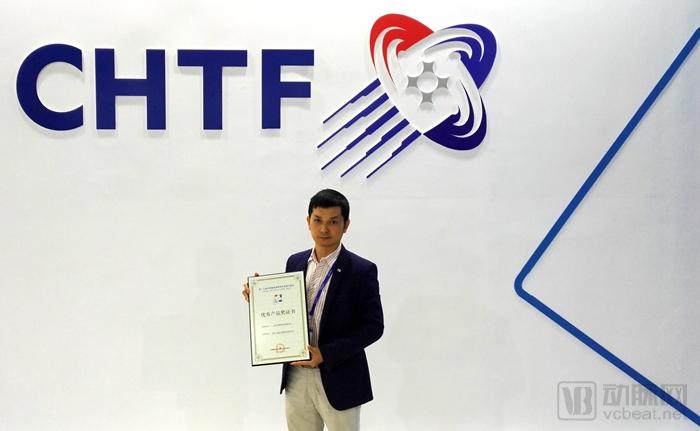
Huang Jianfeng, Founder of Kangyiheng Technology. Photo provided by Kangyiheng Technology.
His solution was to establish wellness service robots and an integrated smart community health service platform. From the inception of the idea to the implementation of the first project, Huang Jianfeng’s Kangyiheng took less than3years. By June 2018, Kangyiheng had launched six pilot projects in cities such as Beijing, Guangzhou, and Shenzhen, serving tens of thousands of elderly individuals, with an additional 29 reserve projects awaiting sequential implementation.
Recently, VCBeat (WeChat ID: vcbeat) conducted an exclusive interview with Huang Jianfeng, founder of Kangyiheng, to hear his perspectives on primary healthcare and Kangyiheng.
Solution2.4The Elderly Care Challenge for Hundreds of Millions: A Return to Community-Based Solutions
Based on the data from the Sixth National Population Census, by2017At the end of the year, China60population aged above years reaches2.58billion. From a statistical perspective, the last century90Decade, Average5Per-Capita Labor Force Dependency1an elderly person;2016In the year, the labor force size changed to2.6; to2050years, this figure will decrease to1.3, the pressure of elderly care is evident. Huang Jianfeng believes that the biggest pain point in primary healthcare, both currently and for a long time to come, lies in the health and wellness care of the elderly.
Traditional institutional elder care lacks practical feasibility in China. On one hand, both the elderly and their children believe that placing seniors in nursing homes contradicts traditional virtues, which hold that old age should be spent enjoying the company of children and grandchildren. On the other hand, to reduce costs, most elder care facilities are located far from city centers and away from high-quality medical resources; in the event of a sudden illness, the long distance often leads to delays in accessing the critical window for emergency treatment.
Therefore, community-based elderly care and home-based elderly care are receiving increasing attention. Jiao Yahui, Deputy Director of the Bureau of Medical Administration and Hospital Management under the National Health Commission, once stated at the National Health Commission5It was stated at the monthly meeting that institutional care is not the primary focus,2.4Hundreds of millions of elderly individuals are better suited for community- or home-based care.
However, after returning to the community, the highly fragmented nature of elderly care needs makes it extremely difficult to ensure an adequate supply of elderly care services. In this regard, there are no referenceable cases either domestically or internationally. Kang Yiheng precisely addresses this challenge by focusing on the high degree of fragmentation in community-based elderly care demand.
Robots Break Down Service Barriers, Enhancing the Quality of Life for the Elderly with Big Data
Using wellness robots and smart home devices as data entry points, Kangyiheng has builtSaasThe cloud platform consolidates fragmented elderly care needs, with a specialized medical-care team providing differentiated and precisely matched health and wellness services.
Medical, nursing, and elderly care services are provided by a health and wellness robot named “Kangyi Xiaobao,” with a market price of1Priced at around RMB 10,000, it is significantly lower than similar robots. Huang Jianfeng stated that the goal of this pricing strategy is to enable every household to own a health and elderly care service robot, allowing each family member to access primary medical and wellness services. Kangyi Xiaobao offers four categories of functions.
First,Companionship. Kangyi Xiaobao comes with a wealth of entertainment resources, enabling it to sing songs, perform dances, deliver crosstalk comedy routines, and tell stories in response to voice commands from the elderly, thereby providing spiritual enjoyment for seniors living alone at home.
Second,Health Management.Kangyi Xiaobao will emulate general practitioners in collecting health data from the elderly, covering blood pressure, blood oxygen saturation, pulse, questionnaire responses, blood glucose, uric acid, cholesterol, and other parameters, totaling18Key Indicators for Geriatric Diseases. Every day, Kangyi Xiaobao uses big data analytics to determine the optimal time and prompts elderly users to measure specific health indicators.
This feature aligns with the national policy of “seeking hospital care for serious illnesses, primary care at community health centers for minor ailments, and home-based health and chronic disease management for preventive care,” thereby facilitating pre-hospital and post-discharge medical, health, and elderly care services.
Third,Telecommunications.Kangyi Xiaobao meets the real-time communication needs of the elderly and their children, enabling video chats to be initiated at any time through computer vision and motion control.
Fourth,Emergency Assistance.This feature is based onSaasThe cloud platform ensures that, in the event of an accident involving an elderly person at home, Kangyi Xiaobao will immediately alert the community’s integrated service platform. The platform’s medical team will determine the elderly person’s home address based on information provided by the robot and, with the assistance of Kangyi Xiaobao, gain entry to the residence to provide emergency aid.
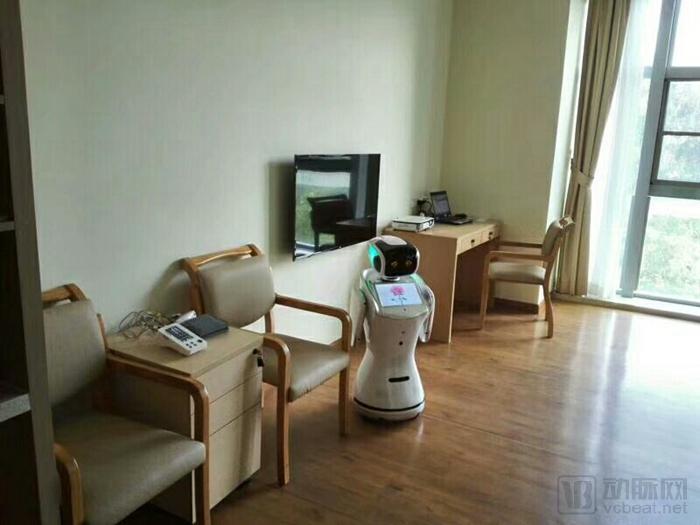
Kangyi Xiaobao Image provided by Kangyiheng Technology
The health data collected by Kangyi Xiaobao, in addition to being used for daily health management and monitoring, will also be integrated as big data into the decision-making systems of government agencies and insurance companies. For example, Taikang Life Insurance can utilize health big data as a parameter to improve claims risk assessment.At the Robotics Conference held in September 2017, Kangyi Xiaobao received recognition from Vice Premier Ma Kai.
Empowering New Real Estate Developments: A Clear Business Model
After completing the product design, Huang Jianfeng took his first step into the elderly care industry. However, a good product must be successfully launched into the market to truly address people’s pain points. In terms of business model, Huang Jianfeng opted for an indirect approach.
Wellness robots struggle to directly engage withChigh-end market. On the one hand, there is a significant technological gap between robots and the elderly; on the other hand, the elderly’s purchasing power and awareness make it difficult for them to accept robots. Therefore, Huang Jianfeng’s choice is to empower the real estate sector.
Developers purchase equipment and services, with Kangyiheng providing the integrated smart community service platform. According to Huang Jianfeng, Country Garden proposes “Giving You a Five-Star Home,” optimizing the living experience through a dual approach of software and hardware. In terms of service software provision, Kangyiheng can seamlessly integrate with this system. Furthermore, Kangyiheng has established partnerships with real estate developers such as Agile Group, Kaisa Group, and Wannian Jiyie, which are preparing to make significant inroads into the elderly care market, by delivering professional medical, nursing, and caregiving services to them.
Empowered by Kangyiheng, new residential developments have enhanced their competitiveness, while seniors have improved their quality of life without incurring additional costs, achieving a win-win outcome. Looking ahead, Huang Jianfeng plans to expand Kangyiheng’s coverage comprehensively across second-tier cities, while also extending its reach to first- and third-tier cities. “A larger number of seniors reside in second-tier cities, and they are reluctant to relocate to first-tier cities to live with their children,” Huang explained.
The team is small and elite, with more than half of its members being R&D personnel.
Huang Jianfeng’s team consists of 35 members, half of whom are R&D personnel. As the first smart community integrated platform of its kind in China, its software was developed entirely in-house by the R&D team. To date, Kangyiheng has been granted seven invention patents and has eight additional invention patent applications pending.
Huang Jianfeng candidly admitted that more than half of the initial capital investment was allocated to research and development. “Maintaining an R&D team is costly, with monthly payroll constituting a significant expense.” After three years of entrepreneurship and the successful implementation of six projects, Kangyiheng has not yet achieved financial profitability. Some members of his team were once pessimistic about the prospects of a startup developing health and elderly care robots, arguing that under the encroachment of internet giants such as BAT (Baidu, Alibaba, and Tencent), Kangyiheng would have virtually no room for survival.
But Huang Jianfeng is very confident, “We understand artificial intelligence, healthcare, and elderly care better than those who only focus on the internet, and we also understand artificial intelligence and real estate better than those in the healthcare field.” He believes that Kangyiheng has successfully implemented the technology of health and wellness robots into community-based elderly care scenarios and seamlessly integrated it into the real estate industry chain, making it scalable to serve more families.
Currently, Country Garden, Agile Group, H&T, Zhongzhu Holdings’ Yitai Medical, UK-based TPP, CITIC Industrial Fund’s Zhongtian Yixin, Yi Ling Hou, Ruisheng Hospital Investment Group, and Canada International Nursing Group have successively become strategic partners of Kangyiheng, seemingly validating Huang Jianfeng’s confidence.
Absolute Holding with Own Funds, Approaching Elderly Care with a Philanthropic Mindset
Huang Jianfeng is well aware of the challenges inherent in the elderly care industry. To maintain absolute control over Kangyiheng and ensure sufficient R&D investment, he did not bring in external investors during the initial phase, despite spending over ten million yuan. “Capital is profit-driven, but providing elderly care requires a public-welfare mindset and a commitment to using technology for social good.”
To date, Huang Jianfeng believes it is time to begin engaging with investors, stating, “The senior care and health market offers broad prospects, and Kangyiheng’s business model has already gained market recognition.” In Huang Jianfeng’s view, entering the market at this juncture demonstrates responsibility toward both investors and Kangyiheng.
Looking ahead, Kangyiheng plans to achieve annual revenue of RMB 602 million within three years and pursue an initial public offering (IPO) within five years. As the interview drew to a close, Huang Jianfeng sighed softly, “The health and elderly care industry is a venture that demands significant time and substantial capital. Kangyiheng’s goal in going public is to serve a larger number of seniors.”