

AI-Powered Diabetic Retinopathy Screening: Global Challenges and Innovations by Google, IBM, and IDx
According to a report from the World Health Organization, there are approximately 420 million people with diabetes worldwide. One-third of these patients will develop diabetic retinopathy as a complication, and 10% of those cases will result in complete blindness. Globally, 2.6% of blindness can be attributed to diabetes. Vision loss caused by diabetes is irreversible, even with surgical intervention. Early screening for diabetic retinopathy can prevent blindness and involves lower treatment costs. However, diabetes is managed within endocrinology, while retinal diseases are typically assessed through fundus photography in ophthalmology departments. Traditionally, physicians have advised diabetic patients to undergo fundus examinations in ophthalmology departments. Nevertheless, more than 50% of diabetic patients still fail to undergo regular eye screenings, missing the optimal window for intervention and consequently suffering blindness. AI-based initial screening for diabetic retinopathy can meet the needs for primary screening and subsequent follow-up in internal medicine settings, addressing the shortages of fundus imaging equipment and specialized personnel in endocrinology departments.
As early as 2016, companies like Google announced that artificial intelligence could be used for diabetic retinopathy screening, achieving an accuracy rate of over 90%. In today’s era of rapid technological iteration, at the Google I/O conference just a few weeks ago, CEO Sundar Pichai specifically reviewed Google’s AI-driven diabetic retinopathy screening and highlighted further advancements of this technology in the detection of cardiovascular and cerebrovascular diseases. This demonstrates that the implementation of AI abroad is not merely a breakthrough in medical image recognition technology, but also a process of entering the healthcare sector and integrating various nodes. As technical challenges continue to evolve, what new pain points have emerged in the AI diabetic retinopathy screening industry? Why is it that, despite years of R&D investment by major foreign companies, only one product has received FDA approval for commercialization in the field of AI-based diabetic retinopathy screening?
1. AI Technical Challenges in Diabetic Retinopathy Screening. In AI-assisted image recognition for diabetic retinopathy screening, a balance must be struck between sensitivity and false-positive rates. High sensitivity, accompanied by a large number of false-positive results, would impose an excessive subsequent screening workload on physicians. Furthermore, the medical field imposes stringent requirements on algorithms. AI technologies must also address challenges related to natural language processing and unstructured data. IBM’s Watson system, for instance, encountered difficulties in hospital settings where physicians were required to input structured data; however, not all clinical data is structured, thereby increasing the burden on healthcare providers.
Forbes magazine once wrote: “Watson requires months of intensive training, and experts need to feed the platform with massive amounts of well-structured data to enable it to draw useful conclusions. For the Watson system, meeting the requirement of being ‘well-structured’ is difficult; therefore, unorganized data is generally unusable. As a result, Watson users have had to hire teams of consulting experts to refine and organize their datasets, a process that is both time-consuming and costly.”
II. Product Certification Issues: Although new technologies and products often claim to address diabetic retinopathy, currently, only IDx-DR has received FDA approval in the international market.
III. Any deep learning and big data applications require substantial amounts of open data. In the medical field, data involves privacy and security concerns. The source of data for artificial intelligence deep learning will directly determine the quality of the outcomes. Images used for diabetic retinopathy screening must ensure image quality and accurate grading, guaranteeing that they are not compromised by variations in equipment or data sources. Diabetic retinopathy is classified into the following categories: NPDR (Non-Proliferative Diabetic Retinopathy); PDR (Proliferative Diabetic Retinopathy); DME (Diabetic Macular Edema); VEGF (Vascular Endothelial Growth Factor); and PRP (Panretinal Photocoagulation). These six categories impose stringent requirements on image grading.
AI-assisted screening for diabetic retinopathy has been developing for several years, with companies abroad continually announcing new advancements. Their experiences may offer insights into how the practical implementation challenges of diabetic retinopathy screening have been addressed. VCBeat (WeChat ID: vcbeat) has compiled an overview of these developments.
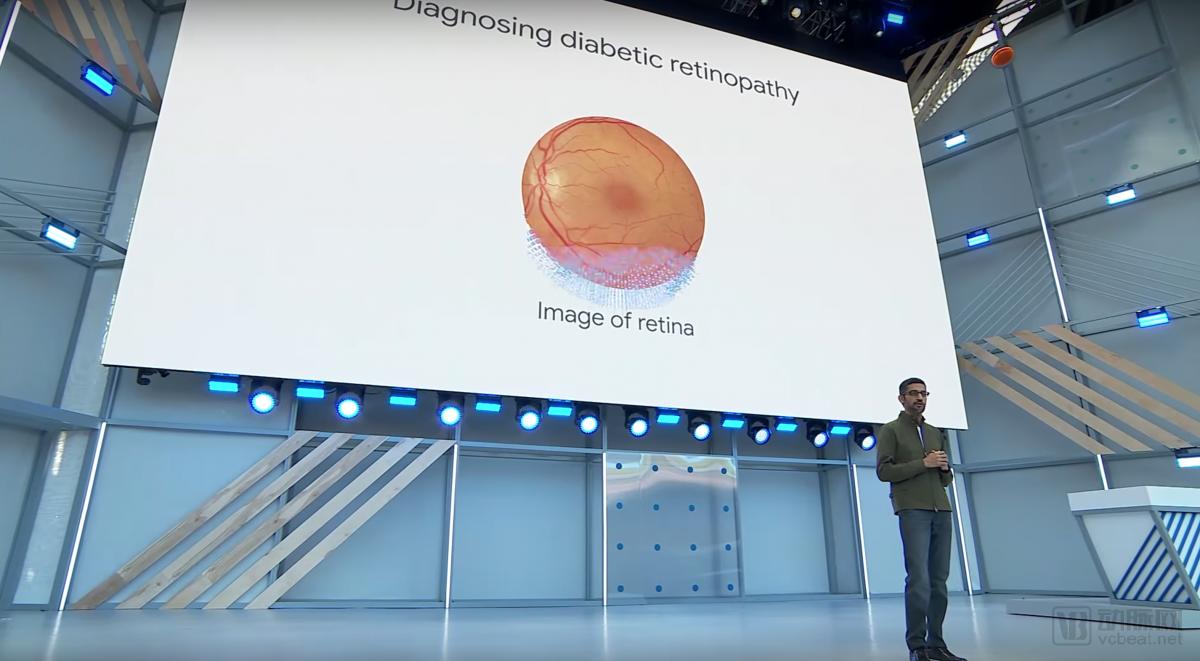
As early as 2016, Google announced that it could use neural network algorithms to detect diabetic retinopathy with an accuracy rate of up to 90%. Until this year's Google I/O conference, Google CEO Sundar Pichai continued to introduce the development of this technology. At this year's Google I/O conference, Sundar Pichai announced that cardiovascular diseases can be screened through fundus examination.
At the 2017 Google I/O Conference, Google CEO Sundar Pichai stated, while announcing Google’s AI initiatives, that the company aimed to leverage AI technology for the benefit of humanity, identifying healthcare as the most significant domain where AI could drive transformation. At this year’s Google I/O Conference, Sundar Pichai highlighted Google’s breakthrough in using AI for diabetic retinopathy detection. He further pointed out that while human physicians might overlook subtle correlations, Google has successfully developed a system capable of predicting patients’ five-year risk of cardiovascular disease using the same ocular screening tool employed for diabetic retinopathy screening.
At the Google conference, Sundar Pichai stated: “Last year, we announced progress in screening for diabetic retinopathy, a leading cause of blindness. We have developed AI technology to assist physicians in the early screening of diabetic retinopathy. Google subsequently conducted clinical trials in multiple locations, such as hospitals in India. The clinical trial results were highly favorable, demonstrating that AI technology can leverage expert-level diagnostic capabilities to support regions with scarce medical resources.”
Although studies as early as 2016 demonstrated that AI could assist in diabetic retinopathy screening, Google made significant efforts to refine and implement this technology. To enhance the accuracy and reliability of its AI system, researchers utilized 128,175 images sourced from U.S. diabetic retinopathy screening websites and Indian ophthalmology hospitals. Each image was graded by three to seven ophthalmologists or ophthalmology residents to ensure that the results were not confounded by variations in imaging equipment or data sources.
In early April this year, researchers at Google reported in the journal *Ophthalmology* that AI-based screening for diabetic retinopathy had achieved performance on par with medical experts. The Google AI team found that they could enhance their AI disease-monitoring software by using images annotated by ophthalmologists specializing in retinal diseases.
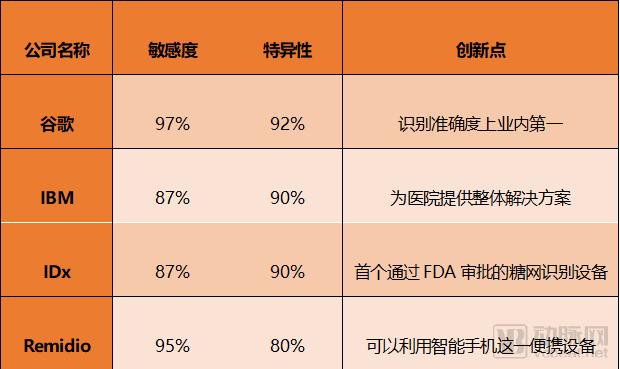
In the initial 2017 test, machine learning techniques were able to identify cases of diabetic retinopathy (DR) with a sensitivity of 90.5% and a specificity of 91.6%. Sensitivity refers to the ability to correctly identify individuals who have the disease, while specificity is the probability of correctly identifying those who do not. However, by using newly graded images—jointly certified by board-certified ophthalmologists and retina specialists in the United States—before feeding them into the artificial intelligence system, researchers were able to improve the algorithm’s sensitivity to 97% and its specificity to 92%. Furthermore, the AI outperformed most ophthalmologists in decision-making; the physicians achieved an overall sensitivity of 84% and a specificity of 98%.
Google believes that manually adjusted images have improved the accuracy of artificial intelligence. This work lays the foundation for further research and provides a reference standard for the application of deep learning in the medical field. In this study, images were simultaneously identified and graded by algorithms, US-certified ophthalmologists, and retinal specialists, with the consensus of retinal specialists serving as the reference standard for training the algorithm. The results showed that the accuracy of Google’s AI algorithm was slightly higher than that of ophthalmology experts. It is evident that after years of investment in technology, Google has not only achieved technological accumulation and progress but has also begun to establish industry standards. Although there is no shortage of participants in the field of artificial intelligence, few companies are able to publish rigorous evaluation systems and standards. Whether in clinical trials or academic validation, Google AI has demonstrated its capabilities. Through specific medical projects such as diabetic retinopathy screening, it has achieved the practical implementation and commercialization of its AI.
Regarding FDA review and certification, Lily Peng, former head of Google’s medical imaging pathology division, previously stated that the FDA’s stringent regulatory stance stems from its view that new technologies or devices are merely upgraded versions of existing medical imaging and processing equipment. As long as there is sufficient evidence to support their publicly claimed functionalities, FDA approval can be obtained. However, Google has not yet announced any progress in FDA approval processes. It is possible that Google may choose to provide outsourced prototypes and R&D engines to large medical device manufacturers and pharmaceutical companies through commercialized outsourcing arrangements. These industry giants can pay for the intellectual property and technology behind new inventions, leverage their commercialization expertise, and bring these innovations to market. For example, Verily licensed its smart contact lens technology to Novartis in 2014.
In diabetic retinopathy (DR) screening, IBM also leverages deep learning technology to assist in the process. By employing a hybrid approach based on deep learning, convolutional neural networks, and visual analysis techniques, and training on more than 35,000 ocular images from EyePACS, IBM’s technology can be trained to identify lesions such as microaneurysms, hemorrhages, and exudates. This enables the visualization of retinal damage and the assessment of the presence and severity of the disease. The algorithm developed by IBM’s team classifies retinal images into five levels according to the International Clinical Diabetic Retinopathy Disease Severity Scale: no DR, mild, moderate, severe, and proliferative DR. This method achieves an accuracy of 86% within 20 seconds when evaluating DR, indicating that physicians and clinicians can use this technology to better understand disease progression and identify effective treatment options.
IBM has now seen its projects implemented in the real world. At the Los Angeles County Department of Health Services, by leveraging a hybrid approach combining in-office visits, telemedicine, and web-based screening software, the Department has been able to significantly expand the patient volume at its safety-net hospitals. The adoption of IBM’s system has reduced redundant administrative workload for healthcare staff, cut screening wait times by nearly 90%, increased the overall screening rate for diabetic retinopathy by 16%, and eliminated the need for approximately 14,000 visits to specialist care providers through its digital initiative.
As research advances, IBM also seeks to collaborate with ophthalmologists, with its Watson Health division dedicated to introducing cognitive imaging into the field of eye health.
Although Google and IBM each have their strengths in diabetic retinopathy screening, neither company’s medical AI has received FDA clearance. Currently, IDx is the only vendor with an FDA-approved device.
In April, the FDA approved a self-service AI diagnostic device for diabetic retinopathy screening. Also applied to diabetic retinopathy screening, IDx’s successful experience may offer some insights to companies seeking to implement AI solutions. According to the FDA’s statement, the agency primarily valued its collaboration with physicians, rather than the approach Google has taken by pitting itself against doctors.
IDx spent two years navigating the approval process, with seven of those years dedicated to communicating with the FDA on how to evaluate the system and ensure its accuracy and safety. Recently, the FDA approved the commercialization of an AI software capable of automatically screening for diabetic retinopathy. The company, IDx, operates under the philosophy of transforming healthcare through automation. Its product for diabetic retinopathy screening, IDx-DR, marks the first FDA-cleared commercialized diagnostic system based on artificial intelligence. A key feature of this product is its ability to provide screening diagnoses without requiring interpretation by a clinician. According to specifications from the official website, IDx-DR achieves a sensitivity of 87%, a specificity of 90%, and an imageability rate of 96%.
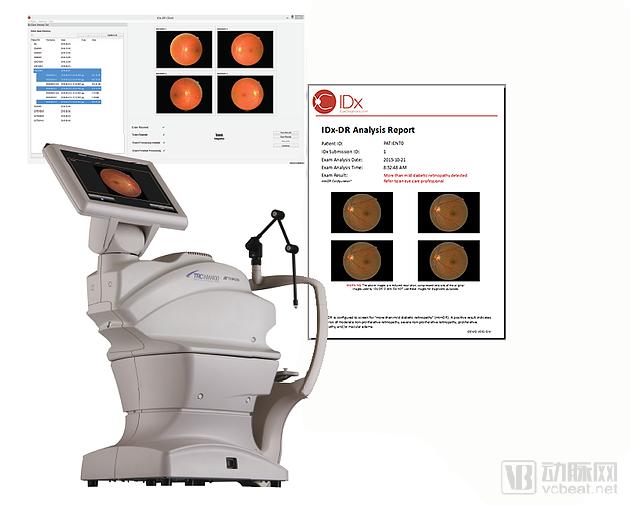
IDx’s original vision dates back 20 years, when its founder, Dr. Michael Abramoff, was practicing as an ophthalmologist in the Netherlands. Dr. Abramoff observed that he spent considerable time screening patients who did not have diabetic retinopathy, thereby causing those at risk of blindness to experience delays of several months in receiving care. In addition, IDx-DR partnered with IBM Watson for product distribution in Europe. In an FDA statement, Dr. Malvina Eydelman, Director of the Division of Ophthalmic and Ear, Nose, and Throat Devices at the FDA’s Center for Devices and Radiological Health, noted that this technology is particularly useful for the early detection of retinopathy. This addresses a major obstacle in the current management of the disease, as half of all patients with diabetes do not see their eye care professionals annually.
IDX’s disruptive technology provides primary care physicians with tools for clinical decision-making. The FDA’s description states that a positive result recommends that patients seek care from an “eye care specialist.” This is an interesting development, as much of the attention in the debate over whether artificial intelligence will replace doctors has focused on the field of radiology. In contrast, IDX’s test is designed to streamline the screening process in primary care settings, thereby reducing wait times for patients seeking specialized treatment from ophthalmologists.
There is another outstanding company abroad that conducts diabetic retinopathy screening and macular disease screening by combining lightweight devices with smartphones.
Remidio is an Indian company dedicated to designing and developing intelligent, innovative, and disruptive imaging technologies for eye care. In March this year, Remidio announced that diabetic retinopathy screening could be performed by combining AI with smartphones. The study, published in *Nature Eye*, was conducted by researchers from the Madras Diabetes Research Institute in Chennai, India. They found that an AI-enabled smartphone device called “Fundus on Phone” demonstrated high sensitivity in monitoring diabetic retinopathy, with 95% sensitivity and 80% specificity. The authors of the study wrote that automated software such as AI, combined with telemedicine, can facilitate faster, real-time screening of large populations of patients with diabetes.
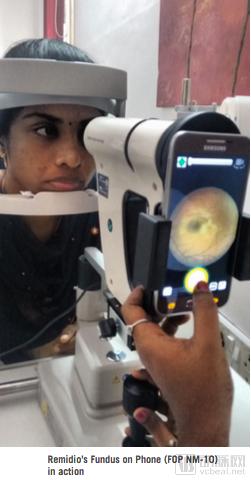
Although it lags behind industry giants in terms of sensitivity and specificity, Remidio’s advantage lies in its utilization of smartphones as convenient devices. In addition to leveraging portable hardware, Remidio has established a reading center staffed by senior retinal specialists from renowned hospitals, who provide real-time image-based diagnoses through telemedicine solutions.
According to its official website, the Indian company’s fundus screening solution is characterized by moving away from bulky and expensive traditional equipment, focusing instead on portability, mobility, patient-friendliness, and relatively low cost. The company believes that while consumer devices such as smartphones have introduced many innovative technologies and enriched the functionalities of medical devices, these advancements do not necessarily translate into simplicity and ease of use.
“Given the alarming rise in the number of patients with diabetes and the shortage of retinal specialists trained to interpret fundus photographs, an automated approach based on computer analysis of fundus images will reduce the burden on healthcare systems for diabetic retinopathy (DR) screening,” the researchers wrote. “Consequently, there is growing research interest in using deep learning and artificial intelligence neural algorithms to automatically analyze retinal images in diabetes.”
Meanwhile, Remidio from India has also clearly expressed its hope to achieve cost control by developing disruptive products, thereby addressing the weak infrastructure and shortage of human resources faced in healthcare in developing countries. There are approximately 285 million people with visual impairment worldwide, and 80% of these cases could be avoided through early screening, with 90% of them occurring in low-income populations.
In summary, both industry giants and startups have invested heavily in the field of diabetic retinopathy. After several years of development, tangible results are beginning to materialize. Progress has been made in both practical efficacy and technological capabilities, advancing diabetic retinopathy screening. However, challenges in clinical implementation and regulatory approval have gradually come to light. The performance records of several companies in diabetic retinopathy screening indicate that these obstacles are being addressed. Technological iterations are accelerating; Google took only two years to surpass human-level performance in diabetic retinopathy screening after its initial announcement, while advancements in cardiovascular care achieved similar milestones in just one year. Both IBM and India’s Remidio serve as exemplary cases of successful implementation tailored to local conditions and national contexts. More patients with diabetic retinopathy and healthcare professionals will benefit from these technological advances.
Further Reading:
Leveraging AI to Address Five Major Pain Points in Diabetic Retinopathy Screening: Nine Startups Eye This Nearly RMB 10 Billion Market
http://vcbeat.top/NTJlYjI3MDllY2JkZmFlZWU4ZThiMjNjNmQ2OGVlOGY=