

900-Day Journey from Wuzhen Pilot to Nationwide Expansion: Internet Hospitals Spearheaded by Wuzhen Lead China's Digital Healthcare Revolution
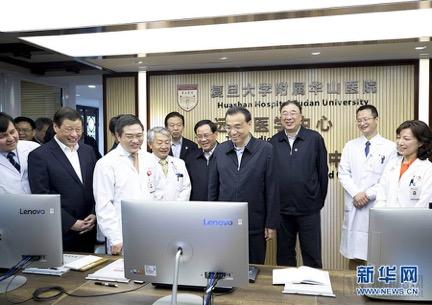
On April 11, Premier of the State Council Li Keqiang inspected Huashan Hospital
This marks Premier Li Keqiang’s second investigation into “Internet + Healthcare” in 53 days, following his visit to the Air Hospital at Huashan Hospital in Shanghai on April 11. This demonstrates the state’s high priority attached to vigorously developing “Internet + Healthcare” and its affirmation of internet hospitals as a new business model under the “Internet +” initiative.

On May 21, 2018, Vice Premier of the State Council Sun Chunlan conducted a field survey at the Wuzhen Internet Hospital.
Over 900 days, internet hospitals, a new “Internet Plus” business model, have expanded from Wuzhen’s “Xiaogang Village” to more than 20 provinces and municipalities across China, ultimately gaining recognition from governments at all levels and major medical institutions, thereby becoming an innovative practice of “Internet Plus Healthcare” with Chinese characteristics.
In July 2015, the State Council issued the “Guiding Opinions on Actively Promoting the ‘Internet Plus’ Action,” proposing to prioritize the development of internet-based healthcare services and encouraging internet companies to collaborate with medical institutions in establishing medical network information platforms.
On December 7, 2015, the Tongxiang Municipal Government partnered with WeDoctor to establish the Wuzhen Internet Hospital. Leveraging offline physical hospitals, the Wuzhen Internet Hospital connects doctors and patients across China via the internet, becoming the first internet healthcare service platform in China to achieve large-scale online follow-up consultations, enable electronic medical record sharing, and implement online medical orders and prescriptions on a comprehensive scale, thereby pioneering a new model of “Internet+” healthcare.
Three days later, Professor Wang Jian’an, President of The Second Affiliated Hospital of Zhejiang University School of Medicine and a renowned cardiovascular expert, issued China’s first electronic prescription via the Wuzhen Internet Hospital to Ms. Huang, a follow-up patient in Binjiang District, Hangzhou. This milestone, together with Didi Chuxing, was featured on the 2016 CCTV Online Spring Festival Gala, becoming an iconic example of how the internet is innovatively addressing challenges in healthcare access and transportation.
Zhang Qunhua, Dean of Wuzhen Internet Hospital, stated in an interview with the media that two core operational principles were established at the inception of the hospital: first, to provide only follow-up consultations, remote consultations, and family doctor contracting services, while strictly refraining from conducting initial diagnoses; second, to remain anchored in physical medical institutions and deliver integrated “online + offline” medical services. Innovations in medical services pioneered by Wuzhen Internet Hospital, such as online follow-up consultations, remote consultations, and remote outpatient services, have transformed the internet from an initial informational tool for enhancing hospital service efficiency into a new model enabling physicians to deliver “online + offline” medical care.
Internet Hospitals Propel China’s Internet Healthcare Industry Forward by a Major Leap.
Since 2016, Wuzhen Internet Hospital has successively launched internet hospitals in 19 provinces and municipalities, including Shanghai, Guangzhou, Sichuan, and Ningxia. It has signed agreements to establish “Internet+” medical consortiums with over 100 hospitals across 30 provinces and municipalities, such as Beijing Tiantan Hospital, Guangdong Provincial Hospital of Chinese Medicine, and the Affiliated Hospital of Qingdao University. The network connects 1,187 member institutions of medical consortiums and 5,850 primary healthcare facilities, while linking up with 19,000 offline pharmacies.
According to media reports, starting with the Wuzhen Internet Hospital, a surge in the establishment of internet hospitals has emerged across China. In February 2016, The First Affiliated Hospital of Zhejiang University launched the “Zhejiang First Internet Hospital.” On December 10, 2016, the “Yinchuan Smart Internet Hospital,” positioned as the first fully online internet hospital, commenced operations. In April 2017, the “Wuhan Central Hospital Online Hospital,” jointly established by Ali Health and Wuhan Central Hospital, was officially unveiled.
In March 2017, the Yinchuan Municipal Government of Ningxia launched the “Signing Ceremony for the Yinchuan Internet Healthcare Industry Project,” introducing 15 internet hospitals to Yinchuan in a single move. Combined with the Ningxia Internet Hospital and Yinchuan Smart Internet Hospital established in December 2016, the total number reached 17. The registration of these 17 internet hospitals in Yinchuan, Ningxia, briefly dominated headlines across the healthcare sector.
According to the “2016 Internet Hospital White Paper” released by Tencent Research Institute and VCBeat, as of November 2016, the number of internet hospitals across China had grown to approximately 36, with 25 already in operational service. Consequently, 2016 was dubbed the “Year One of the Internet Hospital Boom.”
The true test for internet hospitals lies in the value this new business model brings to the existing healthcare system. Leveraging internet hospitals, residents in remote mountainous areas can access specialists from developed regions, primary care physicians receive assistance and guidance from leading experts, and the diagnostic and treatment efficiency of these specialists has significantly improved. Meanwhile, hospitals that have integrated with internet hospital platforms have seen improvements in traditional consultation processes and patient experience.
On April 20, 2017, Shanghai Huashan Hospital and Wuzhen Internet Hospital jointly established an internet-based medical consortium and conducted a multidisciplinary consultation for complex cases spanning five provinces and autonomous regions. One year later, on April 11, Premier Li Keqiang visited the Telemedicine Center at Shanghai Huashan Hospital, stating that “‘Internet + Healthcare’ can effectively alleviate the difficulties people face in accessing medical care and improve the health and well-being of the population.”
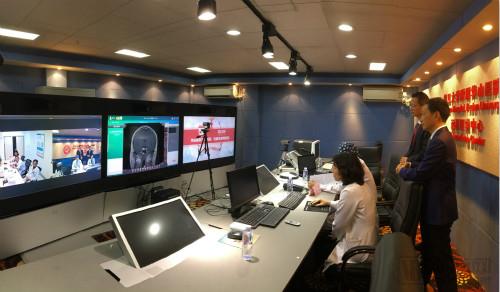
On April 21, 2017, Huashan Hospital and Wuzhen Internet Hospital jointly established a medical consortium, enabling remote consultations across six internet-based medical consortium platforms.
The day after concluding the Shanghai inspection, the State Council’s executive meeting approved three measures to promote “Internet + Healthcare,” marking the first time that new business models such as internet hospitals have gained national recognition following market exploration. On April 28, the General Office of the State Council issued the “Opinions on Promoting the Development of ‘Internet + Healthcare,’” explicitly permitting new initiatives including the establishment of internet hospitals based on physical hospitals, online follow-up consultations, prescription sharing, and intelligent healthcare.
Looking back at its origins, internet hospitals are undergoing an upgrade from standalone online consultation platforms to comprehensive tiered diagnosis and treatment platforms. As of December 2017, the Wuzhen Internet Hospital had surpassed 60,000 daily patient visits, established more than 100 regional medical service bases comprising internet hospitals, medical consortia, and WeDoctor General Practice Centers, and built a nationwide network of grassroots medical service outlets including community health service centers and pharmacy-clinics, thereby becoming China’s largest telemedicine collaboration network.
According to a previous report by Xinhua News Agency, on May 21, Sun Chunlan, Vice Premier of the State Council, inspected the Wuzhen Internet Hospital and conducted field research on the “Internet + Healthcare” initiative. Vice Premier Sun investigated the application of the internet hospital platform in family doctor contract services in Pingdingshan, Henan Province, boarded a mobile cloud consultation vehicle to understand the use of internet technologies at the grassroots level, and spoke highly of the practices implemented by Wuzhen Internet Hospital in strengthening primary healthcare. She called for the vigorous development of “Internet + Healthcare,” promoting online services such as appointment-based consultations, follow-up visits for chronic diseases, and telemedicine.
After nearly three years of development, internet hospitals have continuously upgraded. In addition to providing basic remote diagnosis and treatment services, they have also driven the “three-medical linkage” reform integrating medical care, pharmaceuticals, and health insurance. Bolstered by policy support, market forces, and technological advancements, and building on their ability to connect supply and demand, internet healthcare has entered its “second half.” By leveraging technologies such as the internet, big data, and AI to enhance medical service capabilities and improve patient experience, internet hospitals have embarked on an “accelerated run” in this new competitive landscape.