

2018 Primary Healthcare Innovation Summit Ushers in the 'New Structure' Era with Over 1,000 Industry Leaders
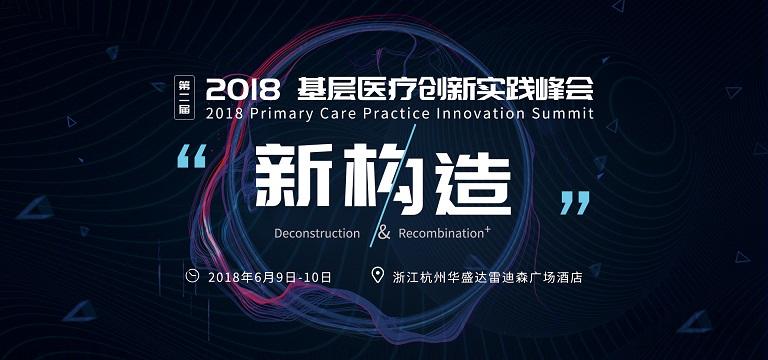
Against the macro backdrop of the new healthcare reform vigorously promoted by the government, and driven by the dual forces of innovative technologies and capital momentum, China’s primary healthcare service system is undergoing profound and far-reaching changes. This systemic transformation will inevitably lead to the deconstruction and reshaping of China’s primary healthcare industry. Primary healthcare is poised to become the key traffic gateway for future medical services. Its industrial upgrading and leapfrog development follow the initial trajectory of plate tectonics—through evolution, distribution, and structural combination—to form a new industrial paradigm.
Against this backdrop, the 2018 Summit on Innovative Practices in Primary Healthcare was held in Hangzhou, Zhejiang Province, on June 9–10, 2018. The event was jointly hosted by the National Engineering Laboratory for Internet Medical Systems and Applications, Sir Run Run Shaw Hospital Affiliated to Zhejiang University School of Medicine, the Internet Medical Health Industry Alliance, and VCBeat. It was co-organized by Legend Capital, Probes Capital, Health Intelligence Valley, VCBeat Research Institute, and Future Healthcare Academy, with support from the Smart and Mobile Medical Branch of the China Association for Medical Devices Industry and the Medical and Health Industry Branch of the China Information Association.
Themed “New Structure,” this summit focuses on the transformation of China’s healthcare service system and the development of technology platforms under the Healthy China strategy and the tiered diagnosis and treatment framework. It explores how to fully leverage technologies such as the Internet, Internet of Things (IoT), big data, and artificial intelligence to improve the quality of healthcare services and reconstruct the healthcare delivery system in the current industrial landscape.
The summit brought together more than 1,000 top experts, scholars, industry leaders, and investors from China’s healthcare sector, and attracted coverage from over 30 industry media outlets. Focusing on hot topics such as the comprehensive upgrading of primary care and core technologies, the summit held thematic discussions and selected 26 outstanding innovative practice cases across eight categories in primary care. It has become one of the most watched conferences for innovation and development in the primary care field this year.
Guests' Key Insights
The “Sir Run Run Shaw Hospital Model” is patient-centered and staff-centered, leveraging advanced technologies and concepts to deliver high-quality medical services to society. In 2015, Sir Run Run Shaw Hospital launched the Sir Run Run Shaw Health Cloud Platform, becoming one of the first cloud hospitals in China backed by a physical hospital.
Cloud hospitals not only integrate resources from medical institutions at all levels within the region but also connect with third-party healthcare industry resources, including pharmaceutical distribution, laboratory and diagnostic testing, financial payment services, and medical insurance. This integration enables collaboration among medical institutions in areas such as information sharing, diagnostics, treatment, referrals, and medical education. Physicians can conduct online remote consultations, case conferences, and outpatient duty checks, facilitate two-way referrals, and issue internet-based prescriptions, greatly enhancing convenience for the public and improving operational efficiency.
Furthermore, Sir Run Run Shaw Hospital has actively engaged in the “Double Sinking, Two Improvements” initiative, establishing paired assistance partnerships with more than 30 hospitals in Zhejiang, Xinjiang, and other regions. Through this approach, the hospital has helped local hospitals enhance their management models.
——Li Qiang, Deputy Secretary of the Party Committee of Sir Run Run Shaw Hospital, Zhejiang University School of Medicine
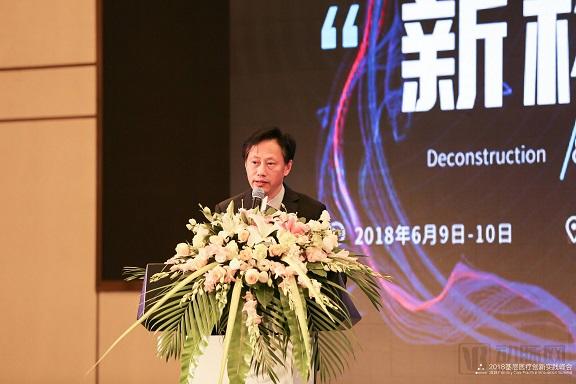
The tiered diagnosis and treatment system implemented in Hangzhou is not a simple hierarchical model; rather, it aims to achieve initial consultation at the primary care level. Patients first consult general practitioners at primary healthcare institutions, where physicians manage cases based on the urgency and severity of conditions, as well as the prevalence of common and frequently occurring diseases. If further treatment is required, bidirectional and precise referrals are facilitated, thereby truly realizing the goal of “managing minor illnesses at the primary care level and serious illnesses at hospitals.”
Hangzhou was the first city in China to introduce the concept of family doctor contracting in 2004. We have defined three core responsibilities for family doctors: First, to provide healthcare consultation services and serve as trusted confidants for enrolled residents. Second, to establish a tiered diagnosis and treatment system based on basic medical services. Hangzhou has created a government-managed closed-loop pool of appointment slots, which are made available to community health centers in real time, thereby equipping family doctors with access to specialist resources. Third, to advance “Internet+” medical insurance settlement services. The Information Center of the Hangzhou Health Bureau and the Information Center of the Medical Insurance Bureau have achieved integration and data sharing, enabling time-segmented settlement.
—— Zhou Hua, Director of the Division of Primary Health Care and Maternal and Child Health, Hangzhou Municipal Health and Family Planning Commission
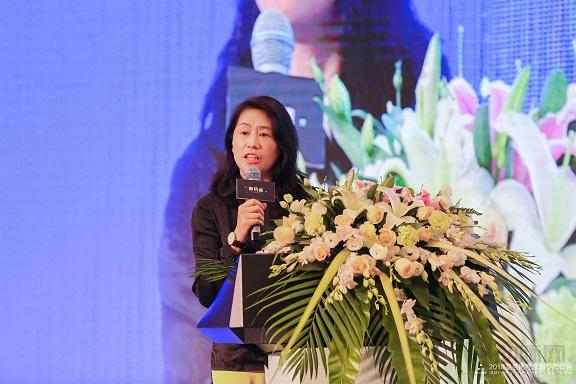
——Miao Yanqing, Associate Research Fellow at the Health Development Research Center of the National Health and Family Planning Commission
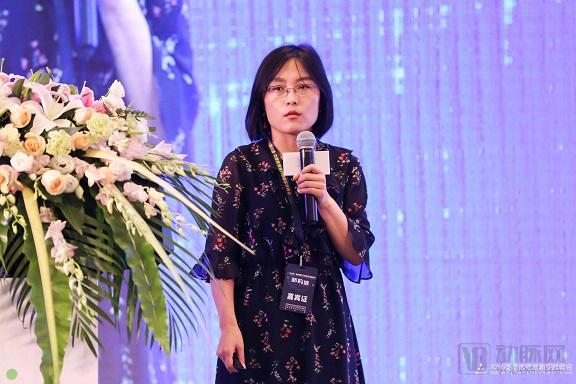
—— Lin Hui, Deputy Director of the Party and Administration Office, Sir Run Run Shaw Hospital, Zhejiang University School of Medicine
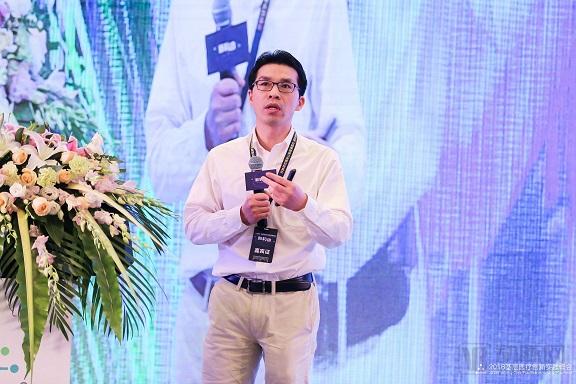
— Zhai Yunkai, Deputy Director of the National Engineering Laboratory for Internet Medical Systems and Applications
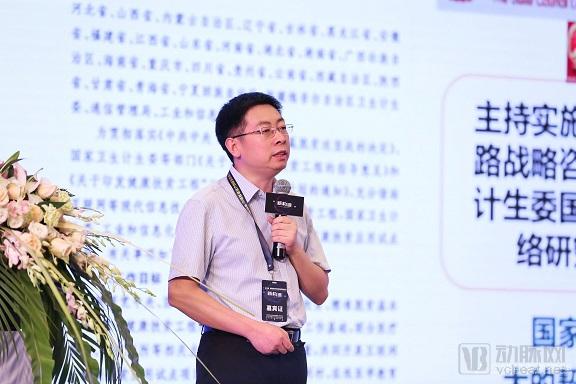
The foundation of Traditional Chinese Medicine (TCM) lies at the grassroots level, where TCM must have its own dedicated physicians. However, when these practitioners are separated from senior experts and no longer able to rely on copying their prescriptions, they often feel hesitant or lack the competence to perform syndrome differentiation and prescribe treatments independently. How can this challenge be addressed? By integrating TCM with the Internet of Things (IoT), medical consortiums, and artificial intelligence (AI), the field is poised to achieve significant advancements.
— Ni Rong, Secretary-General of the Zhejiang Health Information Society
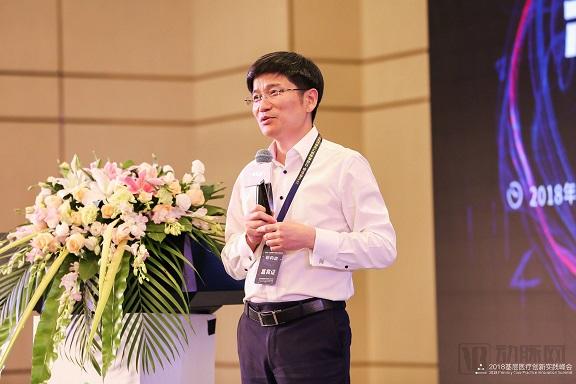
In 2018, our assessment highlighted several key points. First, the realization of affordability stems from reduced management costs achieved by decomposing and simplifying demand satisfaction from the user’s perspective. For a growing number of new healthcare service providers, this is based on standardized processes, protocol-driven treatments, and relatively predictable therapeutic outcomes. Because these models are standardized and replicable, they facilitate the integration of platform information through mergers and consolidations, indicating that synergies across the upstream and downstream ecosystem will become increasingly important in the future. Additionally, the value of electronic medical records (EMR), Software-as-a-Service (SaaS) solutions, precision diagnostic equipment, and third-party services provided to primary care institutions is becoming increasingly prominent.
— Li Datao, Founder of VCBeat
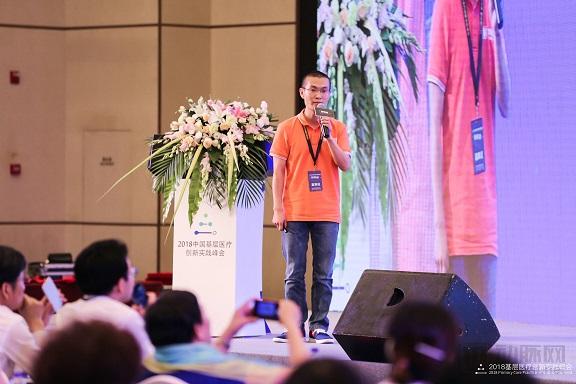
Three Major Industry Reports
During the conference, VCBeat and VBInsight jointly released three major reports: “Reconstructing Healthcare Production Relations to Foster a New Ecosystem: A Report on the Commercial Value of Medical Consortia,” “2018 China New-Type Clinic Operations Report,” and “White Paper on China’s Third-Party Medical Services Industry.”
Major transformations within healthcare institutions, particularly in their internal relationships, will inevitably impact external suppliers, payers, and various service providers. The report “Restructuring Healthcare Production Relations to Create a New Ecosystem: A Report on the Commercial Value of Medical Consortia” primarily explores how medical consortia are reshaping the healthcare ecosystem and the commercial value they generate. By examining the flow of medical resources, our research team delves into the essence of medical consortium reforms, provides an in-depth analysis of the future business opportunities and new healthcare ecosystem they foster, and supports enterprises in upgrading their strategic frameworks.
To compile the "2018 China New-Type Clinic Operations Report," researchers from VCBeat Institute collected data from over 200 clinics of various types over a two-month period, conducted on-site visits to more than 80 well-known new-type clinics in the industry, held face-to-face interviews with founders and managers, designed questionnaires covering more than 30 dimensions related to clinic operations, and performed detailed data analysis and research. This report provides an in-depth analysis of the current state of clinic operations in China, focusing on the development status, configuration, operational performance, and business strategies of new-type clinics.
In February 2017, the former National Health and Family Planning Commission issued the “Decision on Amending the Detailed Rules for the Implementation of the Regulations on the Administration of Medical Institutions,” adding five categories of medical institutions: medical laboratory testing centers, pathology diagnosis centers, medical imaging diagnosis centers, hemodialysis centers, and hospice care centers. Six months later, the authorities once again released the “Notice on Deepening the ‘Streamline Administration, Delegate Power, Improve Regulation, and Upgrade Services’ Reform to Stimulate Investment Vitality in the Healthcare Sector,” expanding the types of third-party medical service providers from the previous five categories to ten.
Based on extensive research, VCBeat Eggshell Research Institute summarizes the characteristics of these ten types of institutions in this report, presents their current development status, and analyzes the industry’s future growth potential by exploring the factors influencing corporate development.
In-Depth Exploration Across Six Major Forums
Medical consortiums, chronic disease and health management, new-type clinics, third-party imaging centers, third-party hemodialysis centers, and pharmaceutical retail have become the key terms of transformation, with “new structure” emerging as the main theme of the comprehensive upgrade of primary healthcare in 2018.
As the core component of this summit, six major forums have been established: Forum on Innovation and Practical Development of Medical Consortiums; Frontier Forum on the Development of New-Type Clinics; Frontier Forum on Chronic Disease Management and Health Management; Forum on the Development of Pharmaceutical Retail and Distribution; Forum on the Development of Third-Party Medical Imaging; and Forum on the Development of Third-Party Hemodialysis Centers.
The field of medical consortiums primarily explores how tertiary hospitals, secondary hospitals, and community hospitals can effectively fulfill their respective roles while maintaining close collaboration under four models: urban medical groups, county-level medical communities, cross-regional specialty alliances, and telemedicine collaboration networks. Against the backdrop of the new healthcare reform, this discussion also examines which scenarios innovative enterprises will leverage to enter the medical consortium market.
New clinics are rapidly expanding into chains. How can they expand their reach? How can they build an IT platform to become a gateway for online traffic? The forum will feature one-day discussions on topics such as expansion and standardization of new chain clinics, business models, and customer acquisition costs.
The Forum on Chronic Disease and Health Management explored hot topics such as “the implementation of community health management” and “insurance + health management.” Particularly under the national priority focus on chronic and critical diseases, this sector has rapidly become a focal point for stakeholders across the entire industry chain.
China’s Pharmaceutical Retail Industry Enters a Pivotal Year of Opportunity: The Pharmaceutical Retail Forum Focuses on Business Opportunities Arising from Information Sharing Among Medical Insurance, Hospitals, and Pharmacies, with a Half-Day Discussion Centered on Capturing the Outflowing Prescription Market and Exploring the “Pharmaceutical Retail + Commercial Insurance” Model
The Intelligent Medical Imaging Development Forum primarily explores how to overcome three major barriers—medical licenses, equipment configuration permits, and patient acquisition—as well as the current state and future trajectory of the third-party medical imaging market. It places particular emphasis on the development status and business models of third-party medical imaging services, and the challenges faced as “AI + Imaging” enters a more complex and mature phase.
What are the chain cooperation models for hemodialysis centers? What are the key points in the approval and operational acceptance processes for hemodialysis centers? How can customer acquisition strategies for hemodialysis centers be developed? To address these questions, the Private Hemodialysis Forum has invited leaders from relevant government agencies, managers of hemodialysis centers, senior executives of listed companies involved in the hemodialysis sector, as well as founders of foreign-funded enterprises and industry startups. The half-day discussion will focus on themes such as the construction and development of hemodialysis centers, and their collaboration and growth with hospitals, pharmaceutical companies, and medical device manufacturers.
Top 26 Best Cases Across 8 Categories
Driven by policy initiatives and following years of industrial upgrading and transformation, the foundational infrastructure of primary healthcare has been initially established. This has given rise to innovative industrial models represented by medical consortia, third-party medical services, pharmaceutical distribution and retail, new-type clinics, and community health management. These models are dedicated to resource sharing and addressing the lagging development of primary healthcare. They constitute a vital component in building core competitiveness in primary care and are key to strengthening the primary healthcare service system.
For the second time since 2017, VCBeat and Eggshell Research Institute jointly launched the initiative to identify the Best Cases of Innovative Practices in China’s Primary Healthcare in 2018. Over a two-month period, a total of 142 primary healthcare project cases were collected from 27 provinces and municipalities across China. The selection committee screened the submitted cases based on multiple dimensions, including industrial policy, technological evolution, business models, and industry collaboration. Ultimately, 26 best practice cases across eight categories were selected. This initiative aims to provide more reference cases and benchmarks for industry innovators, thereby promoting progress and development in the field of primary healthcare.

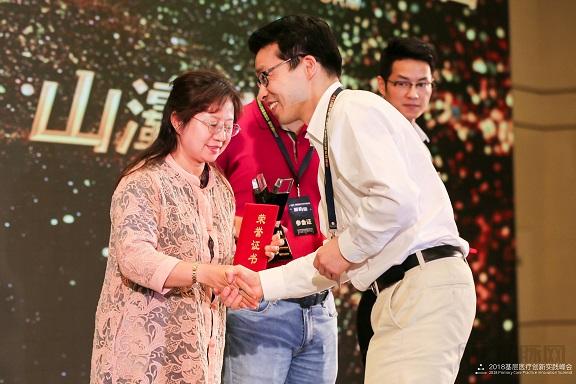
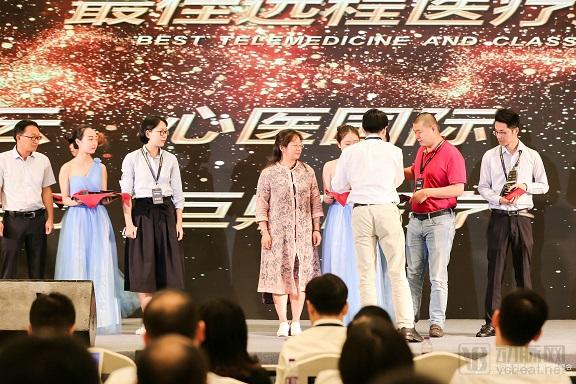
The award-winning companies and projects are as follows:
Best Telemedicine and Tiered Diagnosis and Treatment Platforms: Mindray International, Shanba Group, Chenrui Medical, Juding Medical, WeDoctor Cloud;
Best Specialized Medical Consortium Platforms: Ruikang Yixin, Huiyi Huiying, Mingyi Zhudao, and the Second People's Hospital of Dafang County, Bijie City, Guizhou Province;
Best Primary Care Informatics Platforms: Mingyi Zhonghe, Xingren Doctor, Xingshulin;
Best Chronic Disease and Health Management Platforms: Gairui, Xikang Medical, Aishen Medical;
Top Cloud Clinic Platforms: Ping An Wanjia Medical, DXY Clinic, Aokao Technology;
Top Specialty Clinics: Meiwei Dental Care, Weirnuo;
Best Commercial Insurance and Innovative Payment Platforms: Ping An Medical Insurance Technology, Weimai, Edong Medical Group;
Best Pharmaceutical Distribution and Retail Innovation Platforms: KuaiYiJian, SPH Cloud Health, LanXinKang.