

Opportunities, Challenges, and Solutions for Stakeholders in Medical Consortiums under China's New Healthcare Reform: Insights from 14 Experts
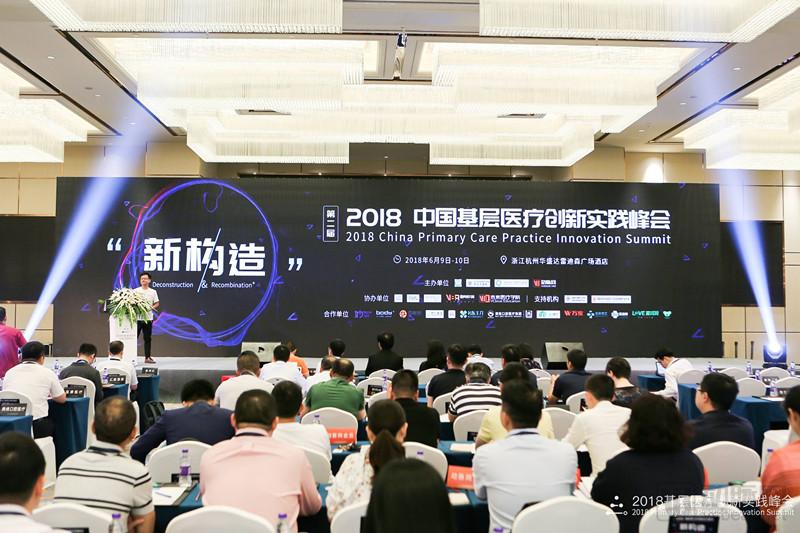
Last year, VCBeat launched the first Primary Healthcare Innovation Practice Forum in Chengdu under the theme “The Power of Downward Reach.”
Over the past year, VCBeat has gained deeper insights and discovered that the foundational industrial architecture of primary healthcare has been initially established, giving rise to innovative industry models such as medical consortia, new-type clinics, community health management, pharmaceutical distribution and retail, third-party imaging services, and third-party hemodialysis centers.
To this end, on June 9, VCBeat held the Second 2018 Primary Healthcare Forum in Hangzhou, themed “New Structure.” The conference invited hundreds of guests, including leaders from national government departments and prominent figures in China’s healthcare industry, to deliver keynote presentations. With over 1,600 attendees, the forum focused on exploring innovation and practice in medical consortia. Discussions centered on themes such as the construction and development of medical consortia, collaboration and development among healthcare institutions at various levels within these consortia, and the advancement of information technology infrastructure in medical consortia.
Against the backdrop of China’s new healthcare reform, Medical Alliances have been entrusted with significant responsibilities in the new era as key drivers for the implementation of tiered diagnosis and treatment. Under the four models of Medical Alliances—urban medical groups, county-level medical communities, cross-regional specialty alliances, and telemedicine collaboration networks—how can tertiary hospitals, secondary hospitals, and community hospitals effectively fulfill their respective roles while maintaining close collaboration? From which scenarios will innovative enterprises enter the Medical Alliance market?
Primary healthcare accounts for as high as 95% of China’s entire medical and health system, encompassing community health service centers (stations), township (subdistrict) health centers, village clinics, and outpatient departments (clinics).
With the gradual implementation of healthcare reform policies, China’s primary healthcare system has seen significant improvements in scale, workforce size, and service capacity. However, compared with tertiary hospitals, primary care institutions still face deficiencies in bed supply, equipment performance, and the professional competence of medical staff, while the imbalance between urban and rural development remains a prominent challenge.
In recent years, the government has introduced a series of policies, including medical consortiums, tiered diagnosis and treatment, and family doctor contracting, aimed at promoting the downward flow of high-quality medical resources, achieving resource sharing, and improving the lagging development of primary healthcare. Primary healthcare has gained new momentum and entered a new stage of development.
Due to disparities in regional economic development and the urban-rural economic divide in China, there is an inherent shortage of high-quality medical resources at the grassroots level in rural areas, leading to pronounced imbalances in primary healthcare development. Therefore, medical resources must be reallocated with greater emphasis on supporting grassroots facilities to achieve the healthcare reform goal of equalizing access to basic medical services.
In terms of decentralizing high-quality medical resources and enhancing the accessibility of premium healthcare services,Zhou Hua, Director of the Division of Primary Health Care and Maternal and Child Health, Hangzhou Municipal Health and Family Planning CommissionIt is believed that healthcare must leverage internet technology to gain efficiency, making the “Healthcare + Internet” model a more scientific approach. To strengthen primary care, it is essential to clarify the concepts of general practice and specialty care. General practice is patient-centered, aiming to address individuals’ overall health concerns, whereas specialty care is disease-centered, focusing on the treatment of specific diseases.
Beyond the diagnosis and treatment of diseases, the most significant health challenge is elderly care. Elderly individuals invariably present with multiple comorbidities. To effectively manage all their health conditions, physicians must leverage internet-based healthcare services and adopt a collaborative model integrating general practice with specialized care, providing targeted support for each condition.
Reforming Healthcare Delivery Models: Four Key Areas to Focus On
1. Shift from a disease-centered approach to truly adopting a health-centered approach;
Second, transform fragmented healthcare service delivery into an integrated model that combines disease prevention, treatment, rehabilitation, and management into a unified offering for the public, while implementing ongoing tracking and evaluation to continuously introduce new intervention strategies;
3. Achieve people-centered integrated health services;
Fourth, for primary healthcare institutions, in addition to the national basic contracted service package, it is necessary to develop personalized contracted service packages tailored to the general public.
“I believe that the day when tiered diagnosis and treatment succeeds will surely be the day when healthcare succeeds, and we must continue along this path,” said Zhou Hua.
andMiao Yanqing, Researcher and Director of the Rural Health Research Office at the Health Development Research Center of the National Health and Family Planning Commission, during her field research on their medical consortium in Funan, Anhui Province, she discovered that they provided genetic testing services for individuals aged 85 and older. This initiative aims to more accurately identify potential health issues in their descendants, anticipate the family’s genetic history in advance, and implement preventive measures to safeguard individual health.
In Miao Yanqing’s view, the state should position primary healthcare institutions to be managed as Category I public institutions while operating as Category II public institutions.
Why are primary healthcare institutions managed as Category I public institutions? From the government’s perspective, these institutions are classified as Category I public institutions, meaning that governments at all levels are responsible for covering basic salaries, staff headcount quotas, and infrastructure development. This constitutes the government’s fundamental obligation to provide a safety net. In contrast, Category II operations imply that primary healthcare institutions must generate additional revenue through the provision of medical services and market competition.
In the field of primary healthcare, Traditional Chinese Medicine (TCM) is an indispensable specialty. Currently, many TCM hospitals in China have established TCM medical consortia. Examples include the nation’s first TCM medical consortium formed by WeDoctor, Guangdong Provincial Hospital of Chinese Medicine, and Shenzhen Bao’an Traditional Chinese Medicine Hospital (Group), as well as the Danzhou Traditional Chinese Medicine Hospital within the Hainan Medical Consortium.
Ni Rong, Secretary-General of the Zhejiang Health Information Societystates,“Internet + Medical AI Technology Can Boost the Development of Traditional Chinese Medicine Medical Consortiums.”He previously served as the principal Party and administrative leader of the Gongshu District Health Bureau in Hangzhou and the Zhejiang Provincial Health Information Center. He founded “Lianxin Health,” developed the “Xuanhu Tai System,” and was awarded First Prize in the 2017 National Primary Healthcare Innovation Competition. Additionally, he served as the chief designer and led the construction of the “Wuzhen Internet Traditional Chinese Medicine Clinic.”
Xuanhu Tai is a traditional Chinese medicine (TCM) application platform developed based on big data and artificial intelligence technologies. Centered on the core principle of syndrome differentiation and treatment, it consolidates 1,441 syndrome types, 1,528 drug contraindications, thousands of prescriptions, and tens of thousands of knowledge entries into a cloud-based solution covering disease syndromes, therapeutic methods, body constitutions, prescriptions, and herb compatibility. With this system, every primary-care TCM practitioner has the support of a wise and erudite renowned TCM expert behind them, integrating the experience of countless TCM masters from ancient times to the present. The system provides guidance and assistance in prescribing, while also enabling flexible modifications to formulas based on individual patient conditions.
The platform has currently integrated more than 300 institutions, comprehensively covering all 11 prefecture-level cities in Zhejiang Province, with a cumulative total of nearly 2.2 million prescriptions. In the future, it will continue to expand its scope of application and gradually develop into the most widely used “Cloud-based TCM Brain” across China, effectively enhancing the service capacity of primary care traditional Chinese medicine practitioners.
Previously, on May 12, the Taizhou Municipal Health and Family Planning Commission published an article on its official WeChat account, “Healthy Taizhou,” announcing the designation of 36 departments across 32 primary-level institutions as specialized departments with distinctive features in primary healthcare. Ni Rong found it particularly noteworthy that 70% of these 36 departments across the 32 institutions included the term “Traditional Chinese Medicine” in their names.
He has always believed that the vitality of Traditional Chinese Medicine (TCM) lies at the grassroots level, and that grassroots TCM services must have their own dedicated physicians. However, once these grassroots physicians are separated from the practice of copying prescriptions from senior experts, they become afraid to perform syndrome differentiation, lack the competence to do so, and hesitate to prescribe treatments. What is the solution?
"In departments like this, traditional Chinese medicine stands to gain significantly by integrating with the Internet of Things, medical consortiums, and artificial intelligence; its future prospects are undoubtedly promising. Ni Rong believes that such an opportunity will arrive very soon."
Driven by the government’s vigorous promotion of new healthcare reforms, and amplified by the dual forces of innovative technologies and capital momentum, China’s primary healthcare service system is undergoing profound and far-reaching transformations. This systemic shift will inevitably deconstruct and reshape China’s primary healthcare industry. Primary care is poised to become the key entry point for patient flow in the future healthcare landscape. Its industrial upgrading and leapfrog development follow an initial trajectory akin to plate tectonics—evolving, distributing, and combining structurally—to forge a new industrial paradigm.
To capture the new traffic gateways of future healthcare, enterprises are empowering primary care from various angles—some focus on digitalization, others on platform development, while some target county-level hospitals and others concentrate on rural markets. The differing needs across institutions at various levels have naturally given rise to distinct business logics.
First, let us examine county-level hospitals. The principle that “stable counties bring stability to the nation” applies equally to the healthcare and health system. County-level hospitals serve 900 million people across China and constitute the backbone of the national healthcare and health service system. Therefore, enhancing the medical service capacity at the county level is a critical step in improving China’s healthcare and health service system and establishing a tiered diagnosis and treatment framework.
In response to the national call for a tiered diagnosis and treatment system, in June 2017, Mingyi Zhudao upgraded its business model: by partnering with top-tier experts from Beijing, Shanghai, and Guangzhou, it leveraged the “Mingyi Zhudao” approach to mentor and guide local practitioners, effectively channeling high-quality medical resources down to city- and county-level institutions. It has since established strategic collaborations with nearly 1,000 primary-care hospitals, empowering every physician to deliver high-quality care.
Founded in 2014, Mingyi Zhudao is a professional mobile surgical platform headquartered in Shanghai, with branches in Beijing, Hangzhou, Tianjin, Guangzhou, Nanjing, Jinan, Chengdu, and other cities, providing services across China.The platform aggregates high-quality medical experts and underutilized hospital bed resources from both domestic and international sources. It aims to help patients with surgical needs promptly schedule appointments with renowned specialists across China, while mobilizing and optimizing the allocation of idle bed resources. This facilitates timely hospital admission and surgery for patients, effectively addressing their practical need for accessible and high-quality medical care.
On March 18, 2018, Mingyi Zhudao entered into a strategic cooperation agreement with Huaining County People's Hospital in Anqing City, Anhui Province, establishing the Huaining Renowned Physicians Studio led by Professor Zheng Zhi and Professor Fu Peiliang, and signing an agreement to jointly build a closely integrated specialized medical consortium for ophthalmology between Shanghai and Anhui.
Founder and CEO of Mingyi ZhudaoSu Shu stated,Following the collaboration, Huaining County People's Hospital became the only county-level hospital in Anhui Province with the capability to perform posterior segment eye surgeries.
During the collaboration period, Director Zheng Zhi from the Department of Ophthalmology at Shanghai General Hospital and Professor Fu Peiliang from the Department of Orthopedics at Shanghai Changzheng Hospital regularly conducted outpatient clinics at Huaining County People's Hospital, providing expert and operational support to the institution.
Since then, the total revenue of the Ophthalmology Department at Huaining County People's Hospital increased by 3.5 times year-on-year, while the revenue of the Orthopedics Department grew by 1.6 times year-on-year.
Next is the rural grassroots healthcare market, where “vast opportunities abound.”Jiang Qiang, Founder of Mingyi ZhongheSo certain.He hopes to leverage internet technology to bridge the "last mile" of primary healthcare services.
Mingyi Zhonghe EstablishedThese Attempts Made Over the Past Three Years, or it can be demonstrated that this approach is feasible.Jiang Qiang has developed these four core capabilities by building a SaaS cloud platform for the Yidebang Clinic Ecosystem, comprehensively empowering primary healthcare institutions: first, knowledge and management capabilities; second, pharmaceutical supply capabilities; third, outpatient diagnostic and testing capabilities; and fourth, intelligent and remote diagnosis and treatment capabilities.
Its revenue streams are derived from the following areas: shared savings from comprehensive medical cost reduction, pharmaceutical supply chain management services, outpatient laboratory testing services, and intelligent and telemedicine services.Currently, Mingyi Zhonghe has expanded its coverage to 12 provinces and over 100 prefecture-level cities, with a field service team of more than 10,000 members, over 100 pharmaceutical and healthcare partners, and more than 50 suppliers consisting of nationally renowned pharmaceutical manufacturers.
Throughout history,Shortage of Talent in Primary Healthcare Institutions。Wang Haitao, Dean of the School of Continuing Education, Peking Union Medical CollegeIt is believed that the following approaches may help break the deadlock in grassroots talent development.
First, regarding the personnel system, with the county level as the foundation, the talent assessment and appointment systems urgently need to be reformed; only when these systems are changed will people be willing to go there.
Second, in terms of on-the-job training,Leverage modern internet-based approaches to promote vertical coordination and expert mentorship, thereby innovating the traditional model of paired assistance. Prioritize breakthroughs in key departments by decentralizing medical resources—such as gynecology, pediatrics, and emergency and critical care centers—to the county level. Only in this way can medical alliances and medical communities effectively channel high-quality resources downward to meet the healthcare needs of the general public.
Third, regarding family doctor contract services, many healthcare institutions have innovated their contracting models. A qualified general practitioner manages a panel of 1,000 patients, thereby improving efficiency and truly fostering doctor-patient collaboration, bringing services into communities and households.However, patients still have to make repeated phone calls in their quest to see renowned specialists, which reflects the absence of health gatekeepers. This has led to a chaotic pattern of patient flow, resulting in extreme difficulties in securing appointments and hospital beds at prestigious institutions such as Peking Union Medical College Hospital and Sir Run Run Shaw Hospital.
In this regard, internet-based technologies can be leveraged for improvement.For example, experts from Peking Union Medical College Hospital participated in the pilot program of the “Angel Robot” in Anhui Province. This initiative leverages technological means to enhance physicians’ diagnostic and treatment outcomes, reduce contracting costs, and facilitate the big-data integration and modularization of doctor-patient relationships, thereby improving the knowledge structure and clinical proficiency of primary care physicians through intelligent approaches.
andChen Jin, Founder of Mingyi Chuanshi, he attempted to“Medical Training Videos + SaaS Platform” provides comprehensive training solutions for healthcare professionals at all levels, primarily leveraging a training management platform to deliver systematic, standardized, and homogeneous online training, combined with offline practical exercises to help consolidate and enhance the skills of grassroots medical personnel.The target population includes all healthcare personnel at the county level and below, not just physicians.
Taking a city in Guangdong Province as a case study, over 1,900 personnel from medical and health institutions of various levels participated in platform-based training using the "Mingyi Chuanshi" (Famous Doctors’ Legacy) platform. The entire training was completed within 10 days at zero cost with controllable outcomes. Subsequently, the Municipal Health Bureau adopted this platform for the training of 4,323 staff members across 30 medical and health institutions throughout the city, officially implementing it starting in May. Each participant was assigned an average of 28.57 courseware modules, with the total training duration exceeding 200,000 hours. Both the Health and Family Planning Bureau and managers of medical and health institutions, as well as the trainees, expressed satisfaction with the training effectiveness.
“We have been widely adopted in more than ten cities and counties across China, and two provinces have now explicitly committed to full-scale coverage, leveraging our platform to train grassroots medical and health technical personnel,” said Chen Jin.
The platform currently brings together more than 6,000 renowned medical experts from across China, offering over 2,600 medical training courses. The course library is expanded and updated at a rate of more than 100 titles per month, covering more than 30 medical specialties. It includes diagnosis, treatment, and procedural case studies for common diseases, frequently occurring conditions, chronic diseases, infectious diseases, and complex or rare disorders.
“Let data do the running, so people have to run less.” This is what entrepreneurs in the medical technology sector have been striving to achieve.Dong Yu, Director of the Future Hospital Business Unit at Alibaba HealthShe stated that she had worked at Alibaba Group for nearly 12 years, progressing from cross-border e-commerce to Tmall and Taobao, and then to Rural Taobao, where she honed her expertise in the e-commerce sector. Now, having joined AliHealth, she is ready to cultivate a new core competency.
Alibaba has proposed the “Double H” strategy, namely Health and Happiness.Within Alibaba, there is a concept known as the “Caterpillar Track Strategy,” whereby different business units of Alibaba take turns leading the charge at various stages, driving the entire conglomerate forward in a manner akin to a caterpillar track. Health and happiness will be the strategic focus of Alibaba over the next decade.
Alibaba Group’s greatest strength lies in building platforms.Leveraging 19 years of accumulation on the Alibaba platform, Alibaba’s healthcare business boasts abundant platform resources,Including 600 million real-name online users, over 14 million pharmaceutical and healthcare products and services, more than 3,500 partner hospitals, over 150,000 pharmacies, and partnerships with government departments in more than 60 prefecture-level cities.
Alibaba Health is currently collaborating with Alibaba Cloud, DingTalk, Alipay, Tmall, and Taobao to integrate group resources and offer the “Future Hospital” initiative to external partners.
“We hope to leverage Alibaba’s cutting-edge technologies, products, and services in the internet and artificial intelligence sectors, while collaborating with its healthcare ecosystem, to deliver integrated internet-based big data solutions that address hospital needs across clinical care, teaching and research, patient services, and hospital management,” said Dong Yu.
This comprehensive internet-based solution can be summarized as follows:Clinical & Academic—Leveraging AI to position hospitals at the forefront of clinical academia;Hospital Management—Leveraging DingTalk’s robust intelligent office system to equip hospitals with efficient management tools;Precision Patients, Brand Building—Through our internet hospital, we screen for precise patients and build the hospital's brand image;Credit-Based Medical Care—Leveraging Alipay’s credit and payment capabilities to provide patients with a convenient and inclusive healthcare environment;Secure Storage and Computing Capabilities—Leveraging Alibaba Cloud’s capabilities in cloud computing and big data to ensure hospital data security, enhance their information protection levels, and facilitate the implementation of personalized services.
In the context of medical consortiums, artificial intelligence is leveraged to facilitate their intelligent upgrading.Dong Yu referred to this as“Cloud Medical Consortium”, she believes this isAn important means of linking medical institutions and implementing tiered diagnosis and treatment.
By integrating temporal, spatial, and information flows, this approach connects medical institutions across different regions and administrative levels, facilitating the effective decentralization of high-quality medical resources. It enhances the clinical skills of primary care physicians and addresses the imbalance in medical resource distribution. Meanwhile, real-time sharing of medical information improves the accuracy and efficiency of physician consultations, while real-time doctor-patient interaction enables efficient management of complex and refractory diseases.
In the Cloud Medical Consortium, artificial intelligence will play a very important role.Alibaba Health is developing a clinical diagnosis-based clinical decision support system that distills the expertise of numerous specialists for application at the primary care level. This initiative aims to enhance the quality of medical services at grassroots facilities, optimize the allocation of high-quality healthcare resources, and facilitate the intelligent upgrading of medical consortia.
"Dong Yu stated, 'We have co-developed several products with authoritative medical institutions.'". For example, a big data platform for medical scientific research to advance medical studies; a medical education simulation platform to train and assess the clinical competencies of young grassroots physicians; and an intelligent imaging detection engine to assist radiologists in image interpretation, among others.Currently, Alibaba Health has begun to export its specialized disease engine for diabetes to medical consortia, and will roll out more practical intelligent clinical decision support engines in the future.
According toMao Ji, Chief Commercial Officer of XingshulinIntroduction: Their mobile digital services are also applied in the field of primary healthcare. The platform already has 1.02 million registered doctors, 63,000 registered medical institutions, and 15,000 collaborative groups. A significant proportion of the doctors registered on the platform are from primary care settings. Meanwhile, user engagement is very high, with weekly search volume reaching 690,000, equivalent to approximately 100,000 searches per day. Doctors on the platform have also collected 3.5 million patient medical records.
To address the three major challenges faced by primary care physicians—difficulty in memorization, inability to apply knowledge effectively, and lack of oversight—Xingshulin has introduced a comprehensive solution primarily built on two mobile applications: "Bingli Jia" (Medical Record Clip) and "Yi Koudai" (Physician’s Pocket). The solution supports physicians throughout the pre-consultation, intra-consultation, and post-consultation phases of clinical practice, helping them enhance their professional skills.
““We aim to integrate into physicians’ daily workflows, so that when they encounter questions, they can receive near real-time feedback on the Xingshulin platform.”Mao Ji stated that a wide range of challenges faced by primary care hospitals, such as the diagnosis and testing of complex and rare diseases, referral decisions, and medication-related issues, can all be addressed on the platform.
Capital has also been closely monitoring primary healthcare,Gao Yi, Partner at Yuan Yi CapitalIt is believed that medical alliances represent an advanced business model of chain clinics. Why?
From a business perspective, “Lian” and “Lian” refer respectively to medical consortia and chain clinics. The chain expansion of clinics and the group-based consolidation of healthcare services represent two distinct trends, both of which continue to evolve and develop.
From the perspective of core competitiveness, if one operates a chain of clinics, the primary imperative is standardization and scalability of services; if one pursues a group-based model, the focus shifts to professional specialization and influence across the entire industry value chain, which constitute its core capabilities.
When discussing the “integration” in medical consortiums, given that the landscape is currently evolving, we must identify which forms of integration are most critical.
The first is to link electronic health records with electronic medical records; if this can be documented, it would be highly beneficial for both physicians and insurance institutions.
Second, the capacity to establish interoperability can be developed both within and beyond the medical consortium.This includes remote consultations, referrals, and training, which help cultivate personnel within the Medical Consortium. We recognize that talent constitutes a significant component of the Medical Consortium. A large portion of our work is dedicated to training. We understand that top-tier physicians are unlikely to remain content with long-term placements at primary care facilities. After five or ten years at the grassroots level, they will undoubtedly seek advanced training and temporary assignments at higher-level medical institutions. Therefore, it is essential to provide such opportunities to establish a robust talent pipeline and attract professionals to engage in this model.
Third-party medical laboratories and physician groups both approach talent acquisition from the perspective of attracting external candidates.In terms of collaborative services, chronic disease management, integration of medical and elderly care, continuous follow-up, family doctor contract services, and digital health management systems can be leveraged to connect with external resources for such initiatives.
In terms of payment, medical consortia have a higher probability and greater likelihood of success than chain clinics or other business models in securing connections with public health insurance or commercial insurance.to drive innovation in medical practice.In practice, this is also quite interesting. Payment is a critical issue. If payment merely refers to coverage scope, it becomes evident that patients are reluctant to pay out-of-pocket for value-added services. However, with the involvement of a third-party payment system, such as insurance, where patients do not need to spend money directly, there will be a fundamental shift in both the convenience of payment and the willingness to pay.
Finally, regarding the supply chain: once a medical consortium is established and its operational scale becomes sufficiently large, it is possible to establish a centralized bidding system for pharmaceuticals, social insurance categories, and medical consumables at the backend, thereby reducing procurement costs through secondary price negotiations.Therefore, he believes that if medical consortia play a certain role in these connections, they will trigger chain reactions of change at the fundamental, structural, and model innovation levels—akin to more than just a simple “1+1=2” equation. Of course, this process will involve extensive exploration.
At the hospital level, many large tertiary Grade A hospitals are also establishing medical consortiums, such asHuang Weihong, Deputy Director of the Joint Laboratory of Mobile Medical Education and China Mobile at Xiangya Hospital of Central South UniversityIntroduction: Xiangya Hospital of Central South University (hereinafter referred to as “Xiangya Hospital”) is one of the earliest Western-style hospitals established in China. Founded in 1906 by the Yale-China Association, which shares its origins with Yale University, the hospital has undergone more than 110 years of development. It has now become a national-level large general hospital integrating medical care, teaching, scientific research, prevention, healthcare, and rehabilitation. Currently directly administered by the National Health Commission, it serves as an important center for medical diagnosis and treatment, medical education, and medical research in Central and Southern China.
In building medical consortiums, the tactical highlight lies in the flexibility and diversity of approaches.In terms of collaborative hospital operations, they operate Xiangya Bo’ai Hospital, which specializes in rehabilitation; Xiangya Weiming Health Valley, which focuses on integrated medical and elderly care services; and maintain connections with community health centers, regional medical consortia, and specialty alliances. They also have an International Medical Department that collaborates with the University of Pittsburgh Medical Center (UPMC) in the United States.
This initiative effectively bridges advanced international technologies while extending its reach to hospitals at the national, provincial, and local levels. Owing to Xiangya Hospital’s renowned reputation and clinical expertise, numerous patients with complex and refractory conditions from provinces outside Hunan—including Guizhou, Jiangxi, and Guangxi—seek treatment at Xiangya Hospital.
The strategic highlights are the three channels: “dispatching down, sending up, and remote guidance.”For example, in addition to their work at the grassroots level in Hunan and in Xinjiang, they also engage in medical poverty alleviation in the Bijie region of Guizhou Province. Each year, they dispatch medical teams to places such as Guizhou and Xinjiang.
When providing assistance to subordinate hospitals, Xiangya Hospital focuses on key initiatives, such as disseminating its management philosophy and concepts of discipline development, conducting extensive training to enhance their disciplinary capabilities, and cultivating more medical talent at the primary care level.The implementation pathway involves leveraging a remote medical consortium to construct an integrated scenario encompassing telemedicine, teaching, and training activities.The hospital will also welcome more medical institutions to join this medical consortium model through referrals or participation in training programs, with an open mindset.
Li Qiang, Deputy Secretary of the Party Committee of Sir Run Run Shaw Hospital, Zhejiang University School of MedicineIt was stated that, as a young hospital, Sir Run Run Shaw Hospital has developed rapidly under the successive guidance of the Zhejiang Provincial Committee of the Communist Party of China, the Zhejiang Provincial People's Government, Zhejiang University, and the Zhejiang Provincial Health and Family Planning Commission. Over its 24-year history, the hospital has established a comprehensive set of innovative management concepts and models, known as the “Sir Run Run Shaw Model.” At its core, this model is patient-centered and staff-oriented, leveraging advanced technologies and concepts to deliver high-quality medical services to society.
To this end,They have also exported the “Sir Run Run Shaw Hospital Model.” In 2015, Sir Run Run Shaw Hospital launched the SRRSH Health Cloud Platform, becoming one of the first cloud hospitals in China backed by a physical hospital. This platform not only integrates service resources from medical institutions at all levels within the region but also connects with third-party healthcare industry resources, including pharmaceutical distribution, laboratory and diagnostic testing, financial payment, and medical insurance. It enables collaboration among medical institutions in areas such as information sharing, examinations, diagnosis and treatment, referrals, and teaching. Physicians can conduct online remote consultations, case discussions, outpatient supervision, two-way referrals, and issue internet-based prescriptions, greatly facilitating public access to care and improving transaction efficiency.
Additionally,Sir Run Run Shaw Hospital has also actively engaged in the “Double Sinking, Double Improvement” initiative, establishing paired assistance partnerships with more than 30 hospitals in Zhejiang, Xinjiang, and other regions.The hospital model has been implemented in many local hospitals through this approach, helping them achieve an upgrade in their management models.Practice has proven that the “Shao Yi Model” is replicable; high-quality medical resources can be extended to the grassroots level through effective methods and channels, enabling local residents to access high-quality medical services via the Shao Yi Cloud Platform.
andZhai Yunkai, Deputy Director of the National Engineering Laboratory for Internet Healthcare Systems and Applications, it leverages a telemedicine model to extend high-quality medical resources to grassroots levels. The platform is also China’s premier national-level scientific and technological platform in the fields of internet-based healthcare and medical big data. It is dedicated to conducting research on key technologies and their clinical translation, developing and promoting standards, building and servicing industrial innovation platforms, and facilitating industry exchange and talent development in the internet healthcare sector.
“We also hope to further gather superior resources from both domestic and international sources through this series of national-level platforms, actively promote collaborative innovation among government, industry, academia, research, and application sectors, and adhere to the principles of openness, sharing, and coordinated development. We welcome the experts, peers, and enterprises present here to join us in jointly advancing the innovative development of China’s healthcare sector,” said Zhai Yunkai.
InGanyu District People's Hospital, Lianyungang City, Jiangsu Province, theirThe Medical Consortium Information Platform was built by Chenrui Technology., its organizational structure isLed by Ganyu District People’s Hospital, with township health centers as members, a medical consortium was established, achieving 100% inclusion of public primary healthcare institutions in the consortium.MedicineThe consortium implements a system in which the Chairman assumes overall responsibility under the leadership of the Council, with separation among decision-making, execution, and supervision. The legal entity status of each member unit remains unchanged, and each operates with relative independence.
Established in 1949, this hospital is currently a national Grade III general hospital, a National Baby-Friendly Hospital, an affiliated hospital of Kangda College of Nanjing Medical University, and a teaching hospital of Xuzhou Medical University. In May 2015, it relocated entirely to its new campus, which covers a total area of 142 mu with a building area of 126,000 square meters.Designed bed capacity: 1,200 beds.
According to Du Chuanlin, Vice President of Ganyu District People's Hospital in Lianyungang City, Jiangsu ProvinceIntroduction: The hospital has established a Medical Consortium to achieve resource integration and data sharing, enabling information to flow seamlessly while minimizing the need for patients to make multiple visits. This framework fosters five core operational mechanisms: division of labor and collaboration, tiered diagnosis and treatment, talent development, quality management, and technology sharing. By connecting medical institutions, physicians, nurses, and patients within the consortium, it facilitates the sharing of healthcare resources across the region. Five major centers—teleconsultation, imaging (including electrocardiography), laboratory testing, pathology, and sterile supply—are networked to ensure integrated operations.
Data from the hospital between May 1, 2018, and June 4, 2018, show that the system facilitated 539 upward referrals of outpatient visits and 150 upward referrals of inpatient admissions; downward referrals (including both outpatients and inpatients) totaled 406 cases. Additionally, it provided 5,645 imaging report interpretations and 3,838 laboratory tests for lower-tier hospitals, and supplied 8,084 sterilized instruments, 1,907 dressings, and 5,522 plastic-sealed items.
Going forward, in accordance with the new requirements and tasks of healthcare reform, the hospital’s overall strategy is to build upon its existing information platform and further explore innovative applications of informatics in the development of medical consortiums, so as to meet the needs of establishing tightly integrated medical consortiums.
1. Establish a larger information platform within the medical consortium to better achieve information sharing and mutual recognition of medical data across the city.FollowingContinue to improve the system with electronic medical records as the core, integrating platforms such as PACS, RIS, anesthesia and perioperative care, hospital infection control, supply chain management, finance, and collaborative healthcare. It promotes the implementation of information-based collaborative management within medical consortia for clinical care, finance, human resources, public health services, chronic disease management, pharmaceutical supply, and performance evaluation.
Second, implement the "Internet + Basic Public Health Services + Chronic Disease Management" model.Promote the deep integration of electronic medical records and health archives to build a bridge for interaction between physicians and contracted families. By leveraging health diagnosis and treatment data along with cloud video conferencing, better connect households and facilitate improved family doctor contracted medical services through this instant and rapid connectivity. Expand family doctor contracted services via the Family Doctor Health Management Platform, establish private health advisory services, and gradually extend health management services from key populations—such as the elderly, patients with chronic diseases and severe mental disorders, pregnant and postpartum women, children, and individuals with disabilities—to the general population.
Promote and improve Internet+ artificial intelligence application services.Explore the promotion and application of smart healthcare in regional medical services, Internet-plus healthcare, emergency response networks, and medical artificial intelligence.
Third, leverage information technology to implement "extended prescriptions,"Extend the prescription of drugs from superior hospitals in medical consortia to primary care institutions, establish a unified mechanism for drug allocation and distribution, organize and implement group procurement of drugs on a consortium basis, provide drug distribution services to primary care institutions, and achieve coordinated drug utilization between upper- and lower-level institutions. Establish a "long-prescription" system for chronic diseases, allowing primary healthcare institutions within medical consortia to prescribe conventional doses for 1–3 months per visit for patients with chronic conditions who meet specified criteria. Establish a remote pharmaceutical care system from superior hospitals to primary care institutions to improve the rational use of medicines at the primary care level.