

Capturing the Trillion-Yuan Prescription Diversion Market: How SPH Cloud Health, Sinopharm Online, and Akon Health Are Leading the Charge
Driven by the continuous advancement of the separation between medical services and pharmaceutical sales, prescription outflow is on the verge of a full-scale explosion. Prescription outflow is essentially a process of redistributing profits from drug sales, naturally attracting various market players to compete. In response to this trend, pharmaceutical manufacturers, distributors, and retailers have made numerous attempts and begun to aggressively capture market share.
What is the policy basis for prescription outflow, what are its primary forms, how can it be accommodated, and what issues remain to be resolved? At the “2018 Primary Healthcare Innovation Practice Summit” hosted by VCBeat (WeChat ID: vcbeat), a special sub-forum on pharmaceutical distribution and retail innovation was convened, inviting representatives from relevant enterprises and industry experts to jointly discuss this topic.
Ji Jun, General Manager of Shanghai Pharma Cloud Health; Wang Letian, General Manager of Sinopharm Online; and Wang Lijue, Chairman of Akang Health, shared their perspectives on the outflow of prescription drugs from hospitals, as well as their respective companies’ practices in this area.
Shanghai Pharma Cloud Health: Integrating Hospital HIS Systems to Enable New Retail of Prescription Drugs Centered on E-Prescriptions
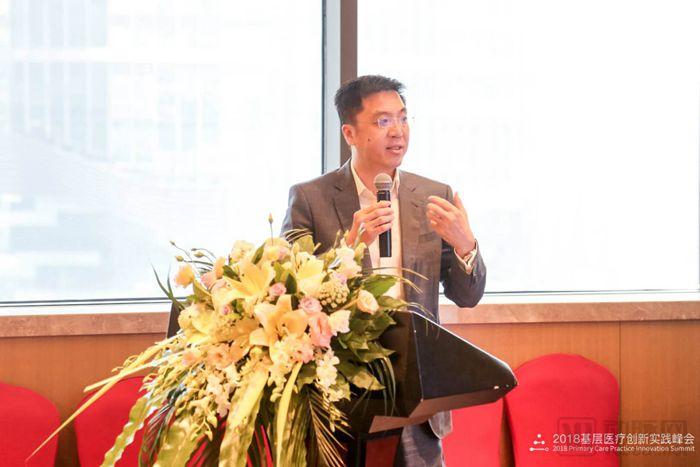
Shared by Mr. Ji Jun, General Manager of Shanghai Pharma Cloud Health
Shanghai Pharma Cloud Health was established in March 2015 as Shanghai Pharmaceuticals’ “Internet+” development platform for new retail of prescription drugs. In August 2015 and March 2016, it secured Series A and Series A+ financing rounds, respectively, with major investors including JD.com, Softbank China Capital, IDG, and the Shanghai Charity Foundation. Its current registered capital stands at RMB 1.333 billion.
Shanghai Pharmaceuticals is a leader in China’s pharmaceutical industry. In 2017, the Group achieved total operating revenue of RMB 130.847 billion, becoming the first A-share listed pharmaceutical enterprise with a scale exceeding RMB 100 billion. Its pharmaceutical distribution network covers 24 provinces, with distribution operations generating RMB 116.150 billion in revenue, a year-on-year increase of 6.93%. Meanwhile, it operates more than 2,000 retail pharmacies, among which its most distinctive feature is the nearly 70 DTP (Direct-to-Patient) pharmacies under Shanghai Pharma Cloud Health, constituting the largest new and specialty drug service network in China.
In recent years, the Chinese government has introduced a series of healthcare reform policies that have profoundly reshaped the industry landscape. For instance, the policy of “separating pharmaceuticals from medical services” has transformed hospital pharmacies from profit centers into cost centers, posing challenges to how hospitals distribute medications to patients and manage their drug supply chains. Meanwhile, the “tiered diagnosis and treatment” system aims to direct patients to primary care institutions; however, the drug supply at the grassroots level fails to meet patients’ medication needs. Against the backdrop of reforms in health insurance payment methods, mounting pressure on insurance funds has intensified the demand for cost containment, creating an urgent societal need for innovative payment models and cost-control measures.
In response to new policies and emerging pain points, Shanghai Pharmaceuticals (SPH) is actively transforming by establishing SPH Cloud Health to explore innovative opportunities. SPH Cloud Health aims to build an end-to-end full-process pharmaceutical system, facilitate the implementation of the policy separating prescribing from dispensing, and provide comprehensive solutions.
Shanghai Pharma Cloud Health’s business model centers on the circulation of electronic prescriptions, spanning multiple stages—including prescription acquisition and management, payment processing and rational use oversight, and prescription fulfillment and delivery—thereby establishing a new retail ecosystem for prescription drugs under the “Yi Yao” brand.
In terms of prescription acquisition and management, Shanghai Pharmaceuticals Cloud Health has established an open, comprehensive electronic prescription platform—the “Yiyao Electronic Prescription Platform”—which directly interfaces with hospital HIS systems to facilitate the orderly outflow of prescriptions. In 2017, the platform connected with 214 medical institutions, covering public hospitals, community health service centers, private clinics, and mobile healthcare providers across multiple major cities in China, and processed over 2 million electronic prescriptions.
In prescription fulfillment and delivery, “Yi Yao · Cloud Pharmacy” serves as an innovative pharmaceutical warehousing and logistics distribution center. Located adjacent to transportation hubs such as airports, it leverages a comprehensive transportation network to reach across China, providing rapid medication delivery services to hospitals and patients.
The “Yiyao E-Prescription Platform,” integrated with the “Yiyao Cloud Pharmacy,” has established a highly cohesive “Internet+” new retail model for prescription drugs. As part of Shanghai’s community-based comprehensive reform project for extending prescription services, it supports tiered diagnosis and treatment and has brought significant convenience to chronic disease patients in Shanghai. By 2017, the platform had cumulatively served 152 community hospitals and 129,000 patients in Shanghai, delivering medications to homes on 920,000 occasions. Its pharmaceutical delivery network covers all of Shanghai, ensuring next-day delivery for prescriptions issued the same day.
Shanghai Pharmaceuticals Cloud Health’s “separation of prescribing and dispensing” solution represents a win-win model: For the government, it facilitates the implementation of national healthcare reform policies, coordinates hospitals, medical insurance, and pharmaceuticals to achieve integrated collaboration among these three sectors, enables effective monitoring of drug distribution channels, and provides public health data for analysis. For hospitals, it supports the separation of prescribing and dispensing, helps establish benchmark institutions, effectively reduces the proportion of drug revenue, lowers pharmacy operational costs, and ensures full traceability while facilitating the orderly outflow of prescriptions. For patients, it provides safe, affordable, and convenient access to medications, along with online and offline long-term disease management and health services. For pharmaceutical companies, it strengthens connections with patients and promotes more precise medical and health management services. For retail pharmacies, it assists in adapting to policy changes and achieving overall resource optimization.
Similarly, in prescription fulfillment and delivery, Shanghai Pharmaceuticals Cloud Health operates the largest DTP pharmacy network in China. It will subsequently integrate with Cardinal Health’s DTP pharmacies, which are also under the Shanghai Pharmaceuticals umbrella, extending its footprint to 20 provinces and municipalities across China and increasing the total number of pharmacies to nearly 70. This will create a mega-scale service network for specialty and innovative drugs, positioning the company as the preferred partner for international pharmaceutical manufacturers seeking to introduce their novel therapies into the Chinese market.
In the realm of prescription payment and rationalized cost control, Shanghai Pharma Cloud Health is also actively exploring innovative business areas such as health insurance payment innovations and the management of out-of-pocket medical expenses for self-paying patients.
Furthermore, the company is further incubating other “Yi Yao” series products to provide a “one-stop” experience for patients’ prescription drug purchases and health services, delivering professional, convenient, and value-driven solutions.
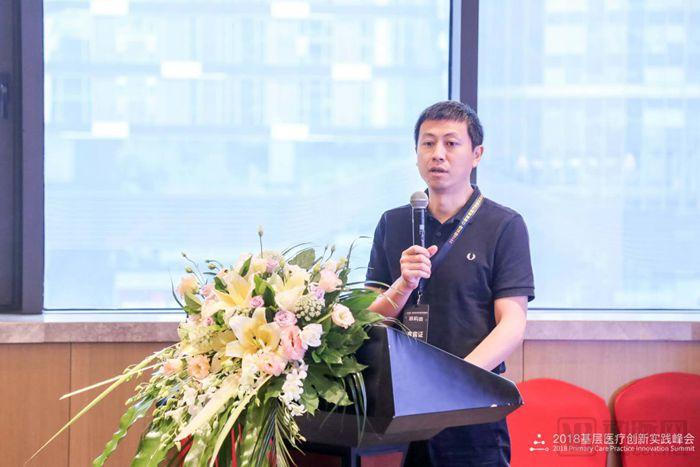
Mr. Wang Letian, General Manager of Sinopharm Online, Shares Insights
Sinopharm Online, fully named Sinopharm Health Online Co., Ltd., was established on June 28, 2015, in the Shanghai Zhangjiang Free Trade Zone, with a registered capital of RMB 100 million. The company currently maintains two office locations in Beijing and Shanghai, and has subsidiaries in Shenyang, Jinzhou, Nanchang, and Shijiazhuang.
Sinopharm Online is the vehicle for Sinopharm Group’s retail transformation strategy and serves as the group’s online external cooperation portal for its more than 400 retail and distribution subsidiaries. In terms of management structure, it operates under Sinopharm Holdings and is positioned on par with Sinopharm Accord, Sinopharm Shares, and provincial distribution companies.
Sinopharm Group is a national comprehensive pharmaceutical supply chain service provider, offering distribution and delivery services for pharmaceuticals, medical devices, diagnostic reagents, and more. As of the end of 2017, Sinopharm Group’s distribution network had covered all 31 provinces, autonomous regions, and municipalities directly under the central government in China. It served 15,032 direct customers (referring exclusively to tiered hospitals, including 2,301 tertiary hospitals, which are the largest and highest-level facilities), 128,000 small-scale end customers (including primary healthcare institutions), and 87,000 retail pharmacies.
In this regard, Sinopharm Online leverages its parent company, Sinopharm Group Co., Ltd., to benefit from profound industrial and resource backgrounds. Furthermore, Sinopharm Online has introduced strategic and industrial investors through financing rounds; for instance, Fosun Pharma invested in 2016, and Yunfeng Capital and Longshine Investment completed a RMB 120 million Series A investment in Sinopharm Online in March 2017.
In March 2017, Sinopharm Online launched its cloud pharmacy business, with the first cloud pharmacy commencing operations in Jinzhou. In May 2017, Sinopharm Online’s monthly turnover (including GMV) surpassed RMB 60 million. By November 2017, the company had five self-built cloud pharmacies in operation.
As the "Supply Chain + Internet" pharmaceutical platform under Sinopharm Group, Sinopharm Online is committed to building China’s most comprehensive in product specifications, widest in distribution, and largest in transaction volume new retail platform for pharmaceuticals based on the "Supply Chain + Internet" model. Sinopharm’s distribution and retail operations provide comprehensive category coverage, regional reach, and quality systems, while also collaborating with specific medical services to create an integrated "Pharmaceutical New Retail" platform.
Sinopharm Online’s “Supply Chain + Internet” platform primarily operates two business lines: cooperative warehouses and cloud pharmacies. As of September 2017, Sinopharm Online’s “Retail+” business had established 32 cooperative warehouses across 19 provinces and municipalities in China, with sales coverage nationwide; eight provinces had already achieved annual sales exceeding RMB 100 million, and the layout was essentially completed by the end of 2017. The cloud pharmacy business had expanded into 13 provinces, with future plans to enter a market encompassing 100 cities, 100 stores, and RMB 10 billion in sales.
The collaborative warehouse model involves integrating Sinopharm Online with the Sinopharm distribution network to conduct B2C business, extending the supply chain to the last mile and directly to consumers. Currently, Sinopharm Online has consolidated approximately 50,000 SKUs of pharmaceutical products by specification. When end patients have demands, medications can basically be delivered to their homes within T+1 to T+2 days.
The “Cloud Pharmacy” business model involves partnering with distribution companies in various provinces to establish retail outlets. These outlets leverage pharmacy channels and last-mile delivery technology to distribute products from the distributors’ warehouses directly to end consumers’ homes. The model also includes assisting local distributors with extended delivery services for prescription drugs, delivering medications directly to consumers’ households. This approach aims to address medication access challenges in third- and fourth-tier cities, as well as in primary healthcare institutions and even rural medical facilities.
Sinopharm Online believes that the healthcare and pharmaceutical industries should adopt an “Internet Plus” model rather than an “Plus Internet” approach. The healthcare industry is a serious sector dedicated to life and health. While “Internet Plus” can only address information asymmetry, it cannot resolve service delivery issues. The foundation of medical institution services and pharmaceutical supply must remain rooted in offline operations, although internet technologies can be leveraged to optimize processes and enhance efficiency.
Sinopharm and Alibaba Collaborate to Advance Future Healthcare InitiativesSinopharm and Alibaba are collaborating to promote future healthcare projects, integrating Sinopharm’s pharmaceutical supply chain services, Alibaba’s internet hospital and Alipay healthcare platform, the Cloud Pharmacy supply chain service platform, and last-mile delivery services. This partnership offers fresh perspectives and a comprehensive, practically viable solution package for medical institutions, health insurance providers, and local health authorities to respond to the national new healthcare reform policies and the macro-level guidance of the “Internet Plus” initiative.
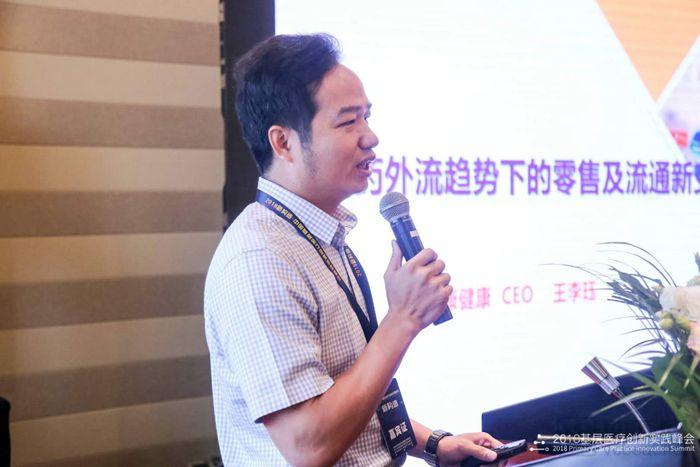
Mr. Wang Lijue, CEO of Akang Health, Shares Insights
Although the separation of medical services from pharmaceutical sales and the outflow of prescriptions have been discussed for many years, the proportion that has actually materialized remains low. Moreover, only a few large enterprises, such as Sinopharm and Shanghai Pharmaceuticals, have benefited; the vast majority of chain pharmacies and “grassroots” distribution companies have yet to reap any benefits from this separation.
The underlying “crux” lies in the entrenchment of existing interest chains. After years of drug tendering and bidding, pharmaceutical sales channels have become largely entrenched: tiered hospitals dominate the market, while retail pharmacies and primary healthcare institutions account for a very small and fragmented share. The outflow of prescriptions aims to break this established channel structure and establish a new distribution order, with the restructuring of interest chains serving as the foundation for this transformation.
For prescription outflow, the first priority is to identify suitable products. Not all prescriptions are appropriate for dispensing outside hospitals; chronic disease prescriptions should be the initial focus, followed by high-value prescriptions.
The small “B” segment, which includes retail pharmacies, community health service centers, village clinics, and private clinics, is the closest to chronic disease prescription services. With their extensive coverage, they are better positioned to ensure the supply of medications and deliver related services for chronic disease prescriptions.
Prescription outflow will bring about changes in the market behavior of pharmaceutical manufacturing enterprises, including academic systems, distribution channels, benefit allocation, and even R&D and production.
The outflow of prescriptions will reshape the landscape of the pharmaceutical retail industry and accelerate the consolidation of existing players in the retail pharmacy sector. Currently, the pharmaceutical retail industry is characterized by “low purchase frequency, high gross margins, and stringent regulation,” offering favorable profit margins and entry barriers compared to other retail formats. However, it is important to note that the number of retail pharmacies has approached saturation, and competition has become intensely fierce. Therefore, while prescription outflow will bring substantial incremental growth, it will also accelerate industry reshuffling.
Retail pharmacies focusing on prescription outflow should have a well-designed product structure. Currently, there are nearly 180,000 drug approvals in China, including 60,000 OTC varieties and 120,000 prescription drug varieties. After layer-by-layer screening, only a small number of prescription drugs suitable for retail pharmacy focus remain. The emphasis should be on DTP (Direct-to-Patient) medication varieties targeting severe diseases, chronic conditions, and rare diseases, with annual treatment costs exceeding RMB 8,000–10,000. Based on the number of patients, this population is estimated to be around 80 million people.
Therefore, DTP pharmacies are gradually becoming an upgraded version of retail pharmacies. The superiority of the DTP model is reflected in its ability to greatly satisfy the shared interests of patients, manufacturers, hospitals, and distributors.
The emergence of the DTP model has provided an outlet for prescription drugs, serving also as a pressure-relief channel for hospitals;
DTP pharmacies enable manufacturers to rapidly reach end users and provide them with continuous education through the pharmacies, thereby securing a stable customer base;
For retail pharmacies, adopting the DTP model to provide value-added services and opening up differentiated channels are essential pathways to gaining market share and unlocking new profit margins;
For patients, DTP pharmacies provide the autonomy to choose where to purchase prescription drugs, enhance medication accessibility, and deliver professional medication guidance along with personalized health services.
Overall, the outflow of prescriptions will usher in a new era dominated by retail pharmacies.
However, the outflow of prescriptions also requires “empowerment,” necessitating support from professional enterprises to establish product portfolios and service systems. Aikang Health is dedicated to empowering prescription outflow, including implementing an off-hospital Contract Sales Organization (CSO) model for prescription drugs targeting pharmaceutical manufacturers, facilitating Direct-to-Patient (DTP) pharmacy fulfillment of prescriptions, and providing chronic disease management and care services.
Empowering Endpoints: Providing Integrated Prescription Drug Supply Chain ServicesOnline Endpoint Resource Integration: E-commerce CSO, Mobile Health, and Chronic Disease Management PlatformsOffline Endpoint Resource Integration: Proprietary DTP Pharmacies, Hospital-Adjacent Pharmacies, and Primary Care InstitutionsEmpowering C-End Chronic Disease Patients: Core Disease Categories, Disease-Specific Solutions, Data Management, and Commercial Insurance (PBM)
A-Kang Health aims to realize six key objectives for the outflow of prescriptions: “successful release, effective reception, clear classification, sound management, volume growth, and data availability.” “Let medical services return to their essence, and let pharmaceutical professionals regain their dignity.”
From the perspective of policy evolution trends, the separation of medical services and pharmaceutical sales will continue to advance, making the outflow of prescriptions an irreversible trend. Retail pharmacies and enterprises with integrated wholesale and retail operations, which have long been at the forefront of pharmaceutical distribution and retail, possess extensive experience in pharmaceutical distribution, logistics, and pharmaceutical care services; therefore, they will be the first to benefit from prescription outflow. Other emerging models, such as Direct-to-Patient (DTP) pharmacies, electronic prescription circulation platforms, and online delivery services, are concomitant phenomena of prescription outflow and also present significant development opportunities.
VCBeat will continue to closely monitor innovative business models in pharmaceutical distribution and retail, as well as policies and practices related to prescription outflow, providing the industry with more cutting-edge insights and compelling perspectives on the prescription outflow sector.