

Elekta and BaYi Smart Technology Forge Strategic Partnership to Empower AI-Driven Precision Radiotherapy in China

Baheal Medical
Health Brand Commercialization Platform
On June 11, VCBeat learned that Baheal Intelligent Technology, a subsidiary of Baheal Medical Group, and Elekta jointly announced the signing of a strategic cooperation agreement on Watson for Oncology (WfO). The two parties will work together to promote the application of medical artificial intelligence in the field of oncology treatment, providing patients with personalized and standardized treatment plans.
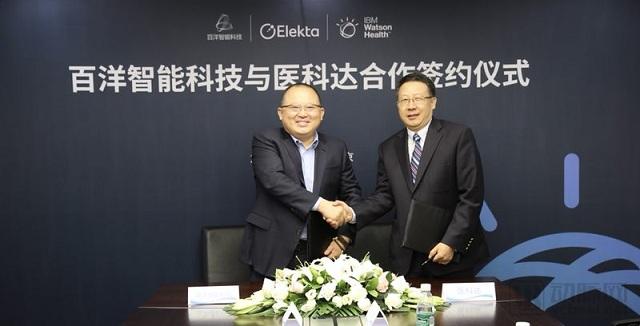
Fu Gang, Chairman of Baheal Medical Group, stated that the group’s “Grand Oncology” strategy aims to provide comprehensive solutions for cancer patients at different stages, thereby making the ecosystem of oncology treatment increasingly robust and mature. Recognizing that this cannot be achieved by a single company, Baheal has partnered with industry leaders across every segment—from IBM, Oracle, and Philips to Elekta—leveraging these strategic alliances to build more comprehensive solutions.
Low Radiotherapy Utilization in China: Bridging the Gap by Introducing Mature Medical AI Products
Among the three major treatment modalities for cancer, therapeutic approaches can be preliminarily categorized into surgical treatment, radiation therapy, and chemotherapy.
According to data released by the WHO, approximately 70% of cancer patients require radiation therapy during their treatment course, and about 40% of cancers can be cured with radiotherapy. The role and significance of radiation therapy in oncology are becoming increasingly prominent, making it one of the primary modalities for treating malignant tumors.
In China, there were 4,292,000 new cancer cases in 2015, of which 3,004,400 required radiotherapy. According to the “Survey on the Basic Situation of Radiotherapy in Mainland China in 2015,” a total of 919,339 patient visits for radiotherapy were recorded throughout 2015, accounting for 30.5% of the newly diagnosed patients who required radiotherapy.
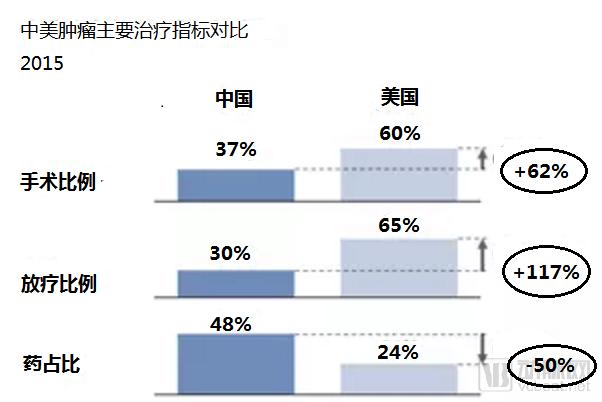
Sources: National Cancer Institute, California Cancer Registry, literature search
Compared with developed countries such as the United States, cancer treatment in China is characterized by a high proportion of pharmaceutical expenditures, low surgical rates, and low radiotherapy utilization. Data from 2015 show that the share of drug costs in cancer care in China was significantly higher than that in the United States, whereas the rate of radiotherapy use in the United States far exceeded that in China. In the United States, at least 65%–80% of patients receive radiotherapy during their course of treatment, while the corresponding figure in China is only 30%.
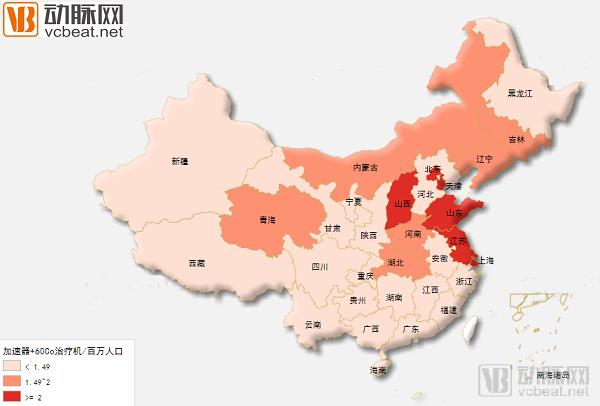
The low proportion of radiotherapy is partly due to the fact that China has only 1.49 linear accelerators per million people, falling short of the WHO’s recommendation of 2–3 units per million. In addition, bottlenecks constraining cancer radiotherapy include a shortage of specialized medical and technical personnel and relatively lagging treatment technologies. There is an urgent need to strengthen the systematic, standardized, and streamlined development of the radiation oncology discipline.
With regard to radiotherapy itself, due to significant individual variability in sensitivity among patients with malignant tumors, administering a standard radiation dose may constitute overtreatment for some patients, while others may receive insufficient therapeutic intensity. The introduction of WfO, an artificial intelligence solution at the forefront of global healthcare, serves as a critical foundation for achieving precise and personalized radiotherapy for cancer patients.
AI-Empowered Oncology Radiotherapy: Boosting Physician Confidence
Fu Gang stated, “Artificial intelligence is merely a component; it can only form a holistic solution and unlock its value when integrated into various medical scenarios. WfO has demonstrated significant value in optimizing efficiency and enhancing outcomes in scenarios such as radiotherapy time management, multidisciplinary team (MDT) consultation communication, physician training during ward rounds, and providing patients with second diagnostic opinions. Therefore, we are honored to collaborate with Elekta to integrate WfO, a world-leading medical AI product, into oncology radiotherapy. This partnership aims to help Chinese physicians provide more appropriate treatment plans for patients and jointly promote the comprehensive development of China’s healthcare sector toward greater precision and intelligence.”
As previously mentioned, the shortage of specialized medical technicians and the relatively lagging treatment technologies are significant reasons for the low proportion of radiotherapy.
In 2015, the total number of radiotherapy professionals in China was 50,736, including 15,841 physicians (including oncologists in general hospitals), 3,294 medical physicists, 23,152 nurses, and 8,454 technicians. This represented a 63.74% increase compared to 2011. However, the ratio of radiation oncologists to medical physicists was only 4.81:1. In developed countries and regions such as the United States, this ratio is approximately 1:1, indicating a significant gap. The relationship between radiation oncologists and medical physicists is akin to that between surgeons and anesthesiologists. Adequate anesthesia is a prerequisite for successful surgery, just as medical physics ensures the safe and effective delivery of radiotherapy. Each plays a distinct yet complementary role, both being indispensable.
It is extremely difficult to increase the volume of radiotherapy in China in the short term by expanding the workforce of physicians and technicians. However, leveraging artificial intelligence to assist physicians in quality control is a feasible approach that can bolster the confidence of radiotherapy professionals nationwide.
In fact, WfO has stored and learned from a vast amount of MSKCC tumor cases, over 300 medical professional journals, more than 250 oncology monographs, and over 15 million research paper data, as well as cancer treatment guidelines based on NCCN and years of clinical cancer treatment experience from MSKCC. Currently covering 13 types of tumors, WfO’s treatment plans have achieved a compliance rate of over 90% compared to those provided by top expert groups. It is gradually becoming an important intelligent assistant for oncologists and has been implemented in 68 medical institutions across 39 cities in 22 provinces in China, successfully providing standardized and personalized treatment plans for nearly 20,000 cancer patients.
Elekta is a pioneer in radiation oncology and neuroscience solutions, with a portfolio that includes world-class linear accelerator series, dedicated radiosurgery devices, brachytherapy systems, oncology information management systems, and treatment planning software solutions. To date, Elekta’s solutions in oncology, neurosurgery, and oncology information management software have been deployed in more than 6,000 hospitals worldwide, providing diagnostic and therapeutic services to over 100,000 patients daily. MOSAIQ® is a leading digital platform both in China and internationally, integrating digital equipment, clinical workflows, and healthcare resources within modern radiotherapy centers. This platform continuously supplies high-quality data to support clinical research, deep learning, and artificial intelligence.
Radiotherapy is a complex engineering process that encompasses treatment planning, plan review, and treatment delivery. This process generates vast amounts of data and involves numerous healthcare professionals, including physicians, therapists, and nurses. Any issue at any stage can compromise the efficacy of radiotherapy. The collaboration between Baheal Medical and Elekta will provide services to healthcare professionals throughout the entire radiotherapy workflow, thereby enhancing their confidence.
However, Fu Gang also emphasized that Baheal Medical’s collaboration with a specialized company like Elekta is driven by the fact that mature AI products such as WfO and WfG (Watson for Genomics) are merely components. Much like an automobile, what we need is a car that can run, not just an engine. A standalone component cannot save patients on its own; it can truly save lives only when integrated into clinical scenarios, combined with various other components and services, and operated under the guidance of physicians.
Watson Sales Expected to Surpass 500 Million
Grounded in more precise, personalized, evidence-based cancer diagnosis and treatment, the first phase of collaboration between Baheal Medical and Elekta will focus on maximizing the application of WfO’s advantages in intelligent decision-making to precision radiotherapy for oncology.
In response, Gong Anming, Global Executive Vice President and President of China Region at Elekta, stated, “We are delighted to enter into a strategic partnership with Baiyang Intelligent Technology to introduce and develop AI-driven Workflow Optimization (WfO) applications in the Chinese market. This collaboration will particularly enhance personalized treatment planning for radiation oncology, further strengthening our comprehensive capabilities in this field and bringing intelligent treatment solutions to more patients in China. We believe that this partnership will comprehensively advance China’s healthcare sector toward”Precision, Personalization, and Intelligencethe direction of development, thereby benefiting more Chinese cancer patients.”
Regarding the model of cooperation, Fu Gang stated that the partnership between the two parties would deepen gradually. In the first phase, Elekta would purchase Baheal Medical’s WfO (Wholesale for Operators) services, becoming a distributor for Baheal to provide products to physicians, thereby enabling more accurate determination of radiotherapy timing and treatment plans. From a longer-term perspective, Baheal Medical and Elekta will engage in deeper collaboration, including mutual procurement of each other’s products. Baheal advocates an ecosystem-based approach to cooperation, leveraging complementary strengths to achieve synergistic integration of ecological resources.
As a pioneer in China’s new wave of healthcare informatization, Baiyang Intelligent Technology is committed to leveraging technology to improve health, taking the lead in achieving SaaS-based software, mobile HIS (Hospital Information System), and intelligent decision-making. In particular, regarding the rapid deployment of Watson for Oncology, the company is dedicated to localizing the platform in alignment with China’s national conditions, making it better suited to the usage habits of Chinese patients and physicians, and providing personalized diagnosis and treatment services. It is expected that by the end of this year, Watson for Oncology will cover nearly 100 distributors nationwide, with overall sales projected to exceed RMB 500 million.