

How Xiangya Hospital of Central South University Builds a Data-Driven and Intelligent System for Medical Consortiums: Insights from the 2018 Grassroots Healthcare Innovation Summit
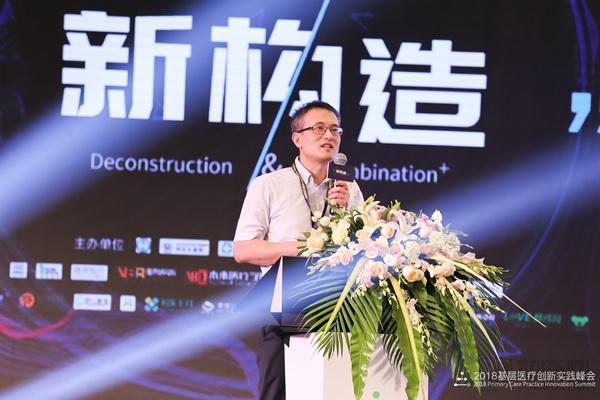
Conference: 2018 Summit on Innovative Practices in Primary Healthcare
Location: Radisson Plaza Hotel Huashengda, Hangzhou, Zhejiang
Presenter: Huang Weihong, Deputy Director of the MOE-China Mobile Joint Laboratory for "Mobile Healthcare" at Xiangya Hospital, Central South University
Below is a summary of Huang Weihong’s key insights, as compiled by VCBeat (WeChat ID: vcbeat), primarily covering three main areas:
I. Three Major Strategies of the Xiangya Hospital Medical Consortium: Deploying Resources Downward, Referring Patients Upward, and Providing Remote Guidance.
I. Staying True to the Original Mission of Medical Consortia: IT Is Not Meant to Disrupt Healthcare, but to Better Serve It
III. Leveraging Healthcare Informatics to Serve the Diverse Needs of Physicians, Patients, and Primary Care Institutions
First, let me briefly introduce Xiangya Hospital. As one of the earliest Western-style hospitals established in China, it was founded in 1906 by the Yale-China Association, which shares its origins with Yale University. After more than 110 years of development, Xiangya Hospital has evolved into a large-scale national comprehensive hospital integrating medical care, teaching, scientific research, disease prevention, healthcare, and rehabilitation. Currently directly affiliated with the National Health Commission, it serves as a major center for medical diagnosis and treatment, medical education, and medical research in Central-South China.
The Mobile Medical Ministry of Education–China Mobile Joint Laboratory at Xiangya Hospital of Central South University is currently the only key laboratory of the Ministry of Education in the field of medical informatization that is established based on a hospital. The laboratory adheres to the administrative regulations for key laboratories of the Ministry of Education and operates as a joint laboratory between the ministry and an enterprise. China Mobile Group Corporation, as a partner, provides us with research funding and operational support.
Regarding the medical consortiums discussed today, our scale is somewhat smaller than that of the First Affiliated Hospital of Zhengzhou University, which operates as a “super-carrier fleet.” While we have fewer subordinate hospitals, our approaches are more flexible and diverse.
In terms of collaborative hospital operations, we have Xiangya Bo’ai Hospital, which specializes in rehabilitation, and Xiangya Weiming Health Valley, which focuses on the integration of medical care and elderly care. We also engage with community health centers, regional medical consortia, and specialty alliances, and operate an International Medical Department that collaborates with the University of Pittsburgh Medical Center (UPMC) in the United States. This structure enables us to both introduce advanced international technologies and extend our services domestically and within Hunan Province. Leveraging Xiangya’s strong reputation and technical expertise, many patients with complex and refractory conditions from provinces outside Hunan, such as Guizhou, Jiangxi, and Guangxi, seek treatment at Xiangya Hospital.
Xiangya Hospital has a very clear strategy for building its medical consortium, focusing on three channels: “sending experts down, referring patients up, and providing remote guidance.” For instance, in addition to supporting grassroots healthcare in Hunan and Xinjiang, we are also engaged in medical poverty alleviation in the Bijie region of Guizhou Province. Our hospital dispatches medical teams to Guizhou, Xinjiang, and other areas annually. When assisting lower-tier hospitals, we prioritize several key initiatives: transferring our hospital’s management philosophies and disciplines construction concepts, conducting more training sessions to help enhance their disciplinary capabilities, and mentoring grassroots physicians to foster talent development. This approach is, in fact, integral to Xiangya’s strategic framework for constructing its remote medical consortium.
We aim to disseminate Xiangya Hospital’s management philosophy and discipline development concepts, enhancing the disciplinary capabilities of primary healthcare institutions through training, thereby constructing a medical consortium framework that integrates telemedicine, teaching, and training. With an open mindset, Xiangya Hospital also welcomes more healthcare institutions to join this medical consortium model through referrals or participation in training programs.
Ultimately, whether we are engaged in big data, mobile health, or support for primary care, we have never lost sight of our original aspiration. What is this aspiration? It is to treat healthcare as a sacred and fundamental endeavor. Health informatization serves healthcare; it is not intended to disrupt it. Xiangya Hospital established its medical consortium to respond to the national call for the downward allocation of high-quality resources and technology. Moreover, we frequently give thorough consideration to the operational aspects of telemedicine.
In organizing the tasks of our mobile medical laboratory, we place particular emphasis on user experience, which sets us somewhat apart from companies that specialize exclusively in off-site software development. Although we are a laboratory under the Ministry of Education, our primary focus is on application-oriented technology and product research and development. Being situated within a hospital environment allows us to directly perceive the needs of healthcare professionals, pinpointing their specific requirements and pain points. Our goal in developing any system is to ensure it is appealing and intuitive for users. To achieve this, we have specifically recruited professional researchers specializing in design and user experience.
Overall, even in the realm of health informatics, our efforts revolve around the core of “medicine.” We aim to optimize services for healthcare professionals and medical workflows, empowering them to better serve a larger patient population and truly achieve patient-centered care.
In terms of big data infrastructure, our understanding is that medical big data should achieve “Four Completes”: full-process coverage, comprehensive data integration, nationwide reach, and multi-dimensional analysis.
We can ask ourselves a series of questions, such as: What if we do not have sufficient data? What if we only have data from our own hospital and lack data from external institutions? Guided by the patient-centered philosophy, we should assemble technical and expert teams around specific projects to jointly develop new initiatives. The goal is to better implement smart healthcare solutions, leveraging information technology to make our medical services more efficient and of higher quality.
Here are a few case studies to share with you. In the process of moving from big data architecture to practical application, the first issue we addressed was data-related. We developed an intelligent medical history collection app to enhance the comprehensiveness and utility of patients’ medical history data. In terms of workflow, we shifted data collection upstream, integrating data channels both within and outside the hospital. In the future, by combining this system with triage services, we can assist primary care physicians and patients in achieving more effective auxiliary diagnosis.
Another initiative is related to the clinical application of big data. We developed a data-driven solution based on the needs of nephrologists to enhance in-depth analysis of clinical data. By integrating text analysis of patients’ electronic medical records with laboratory test results, we constructed an early warning model. The system automatically monitors and identifies patients who are approaching peak risk levels or nearing critical thresholds, as well as those under a physician’s care who have exceeded peak risk levels and require urgent intervention. Physicians receive alerts via SMS or mobile app notifications. This feature has proven highly useful and is currently performing well in both the inpatient and outpatient departments of our hospital’s Nephrology Division.
Another aspect is the mobilization and intelligent transformation of remote pathology, which addresses the challenge of training pathologists in primary care hospitals. Our intraoperative rapid frozen section remote reporting service at Xiangya Hospital is among the most advanced in China, handling approximately 6,000 cases annually.
By leveraging digital scanning, remote and mobile sharing, and remote reporting models, the traditional pace of pathology report generation has been transformed, with most reports now completed within 30 minutes. In the future, intelligent approaches—specifically artificial intelligence (AI) technologies for initial screening and annotation in certain specialized pathology areas—will further enhance the efficiency of pathologists, reducing this process to just a few minutes.
Finally, I’d like to share a new development related to intraoperative imaging. As everyone knows, due to infection control requirements, it is inconvenient for surgeons to view medical images in the operating room; typically, they must rely on others to operate the imaging systems. We aim to enable physicians to directly control the required image functions—such as zooming, panning, contrast adjustment, and 3D reconstruction—using voice commands and gestures.
We have developed a comprehensive hardware and software system for this purpose, with demonstrations scheduled for the appropriate time in the second half of this year. We hope that this system will improve the informatization and intelligent ecosystem of hospital operating rooms in the future, while also providing an interesting model for remote surgical teaching systems oriented toward primary healthcare institutions.