

ASCO 2018 Highlights Surge in Innovative Oncology Therapies, Signaling a Breakthrough Era for Cancer Drugs
Last week, the American Society of Clinical Oncology (ASCO) Annual Meeting was held in Chicago. This grand annual event attracted hundreds of investment research institutions, healthcare companies, pharmaceutical firms, and technology companies from around the world. Over the course of five days, the conference presented numerous exciting achievements and advances in the conquest and treatment of non-small cell lung cancer, breast cancer, gastrointestinal cancers, genitourinary tumors, and hematologic malignancies.
At the conference, Merck’s Keynote immunotherapy unsurprisingly became the focal point of the meeting.
Non-small cell lung cancer (NSCLC) accounts for 80% of all lung cancer cases, with the majority diagnosed at an advanced stage. The five-year survival rate falls below 5% when effective symptomatic treatment is unavailable. This latest breakthrough offers new hope to patients hanging by a thread.
Results from Merck’s first-line Phase III clinical trial, KEYNOTE-042, demonstrate that compared with conventional therapy, treatment with the immune checkpoint inhibitor pembrolizumab (brand name Keytruda) in patients with advanced non-small cell lung cancer (NSCLC) is associated with fewer adverse effects and significantly improved survival rates.
In this large Phase III randomized controlled trial involving more than 1,200 patients with non-small cell lung cancer, those who were PD-1 positive and received pembrolizumab as first-line therapy had a median overall survival that was 4–8 months longer than that of patients receiving conventional chemotherapy.
Merck’s formidable competitors, Bristol-Myers Squibb and Roche, also presented relevant research findings at the conference. Roche released clinical data on Tecentriq, its drug for advanced squamous non-small cell lung cancer (NSCLC). The study demonstrated that adding Tecentriq to chemotherapy reduced the risk of death or disease progression; this combination therapy was associated with a 29% lower mortality rate compared to chemotherapy alone.
In the realm of other targeted therapies, Loxo Oncology, a company that drew significant attention at the ASCO 2017 annual meeting, has once again delivered a breakthrough. Their highly selective novel target—the RET proto-oncogene—has become the primary inhibitory target of the new drug LOXO-292 (the RET gene is expressed in 2% of non-small cell lung cancers, 10–20% of papillary thyroid carcinomas, and other thyroid cancers). In this Phase I trial involving 82 patients, 77% of patients with RET-fusion-positive cancers exhibited tumor reduction in response to the new drug. Among patients with medullary thyroid cancer harboring RET mutations, the response rate was 45%.
As major pharmaceutical companies continue to advance the development of targeted therapies, the ASCO Annual Meeting is also leveraging its platform advantages to participate in this effort. ASCO TAPUR is a Phase II clinical trial led by the conference, aiming to provide precision targeted therapy using FDA-approved drugs for cancer patients who have responded poorly to standard chemotherapy, based on their genetic mutation profiles. Notably, researchers involved in the trial stated that although there is no U.S. citizenship requirement for patient enrollment, all participants enrolled to date have been from the United States, due to the current lack of a suitable platform for recruiting and referring patients globally. They expressed hope that the availability of an appropriate platform capable of effectively connecting with patients worldwide would significantly advance the ongoing clinical trial.
Regarding the challenges in targeted drug development, Dr. Michelle Hermiston from Benioff Children’s Hospital at the University of California, San Francisco, stated in an interview at the ASCO dinner hosted by the cross-border healthcare institution MORE Health: “For certain tumors, patients in China and the United States may have different genetic profiles; therefore, exchanges between experts in both countries are of significant guiding value for clinical guidance on the use of certain targeted therapies and for new drug development.”
China has long demonstrated robust capabilities in new drug development. For nearly all popular targets, domestic developers can produce equivalent drugs within 6–9 months; some of these originate from independent R&D, while others are the result of “Chinese adaptation.”
Judging from the stock performance of WuXi AppTec since its May listing, both investors and the company itself have high expectations for new drugs. It is highly likely that more pharmaceutical giants with valuations in the hundreds of billions will emerge in China in recent years.
At the conference, CAR-T (chimeric antigen receptor T-cell immunotherapy) companies Celgene and Bluebird Bio also presented their results on personalized immunotherapies.
These therapies modulate the human immune system through various approaches—including small molecules, macromolecules, and T cells—enabling it to mount targeted attacks against cancer cells.
These companies are developing CAR-T (chimeric antigen receptor) T-cell immunotherapy, which involves modifying patients’ own normal T cells ex vivo by introducing a chimeric antibody that can recognize tumor cells and simultaneously activate T cells, followed by extensive expansion in vitro. Once the cells reach a certain quantity, they are infused back into the patient to eliminate tumor cells bearing the corresponding specific antigens.
At this year’s conference, Celgene and Bluebird Bio announced that their jointly developed bb2121 CAR-T therapy achieved a median progression-free survival (PFS) of 11.8 months in multiple myeloma patients who had previously undergone multiple lines of treatment. Nick Leschly, CEO of Bluebird Bio, stated at the conference that they would submit an application to the FDA by the end of 2019.
In February, Nektar signed a $1.85 billion agreement with Bristol to combine the drug NKTR-214 with the immunotherapy Opdivo to enhance its efficacy.
The results of collaborative research have been mixed. For instance, in melanoma, 11 out of 13 patients in the Phase I trial responded to the combination therapy. However, in the subsequent, shorter-duration Phase II trial, only 14 out of 28 patients receiving the combination therapy responded to treatment.
Nevertheless, Dr. Fouad Namouni, Head of Oncology Development at Bristol-Myers Squibb, described the experimental results as “encouraging” at the conference. The two companies have joined forces to expand the scale of the trial, aiming to achieve more robust drug efficacy data in a shorter timeframe.
Sino-US cooperation was another prominent trend highlighted at the conference. The Chinese Thoracic Oncology Group (CTONG), led by Professor Wu Yilong, Chairman of the Chinese Society of Clinical Oncology (CSCO) and a leading figure in targeted therapy for lung cancer in China.
At the conference, Professor Wu Yilong not only participated in the implementation and reporting of the aforementioned KEYNOTE-042 trial as the East Asia Principal Investigator but also engaged in in-depth discussions with Dr. Bob T. Li, an oncology expert at Memorial Sloan Kettering Cancer Center, a top-tier U.S. cancer institution, regarding opportunities in cross-border healthcare between China and the United States. Dr. Li had previously delivered an oral presentation at the conference on a new drug trial for patients with HER2-amplified breast cancer.
At this stage, China’s substantial demand for physicians aligns well with the patient needs arising from the United States’ abundant medical resources. In response to this demand, new cross-border healthcare companies have adopted data-driven platforms to facilitate online consultations between experts in China and the U.S., thereby providing remote second-opinion services to Chinese patients.
Taking MORE Health, a cross-border healthcare company founded by Dr. Robert Warren, as an example, the company has contracted with over 700 U.S. medical professors and experts ranked in the top 1% since its establishment. It provides remote consultations between China and the U.S. for Chinese patients and legally issues prescriptions for new drugs approved by the FDA.
Dr. Warren is a specialist in gastrointestinal and hepatic tumors. He was consecutively named a “Top Doctor in America” by the authoritative U.S. organization U.S. News for 14 years and previously served as the Director of Surgical Oncology at the University of California, San Francisco Medical Center. After being diagnosed with liver cancer himself and undergoing chemotherapy and liver transplantation, he decided to establish a cross-border healthcare platform to expand the reach of high-quality U.S. medical resources.
“In China, patients with cancer and other critical illnesses have very limited access to high-quality medical resources in first-tier cities. We can change this through technology and superior medical resources, thereby improving their chances of survival,” said Dr. Warren.
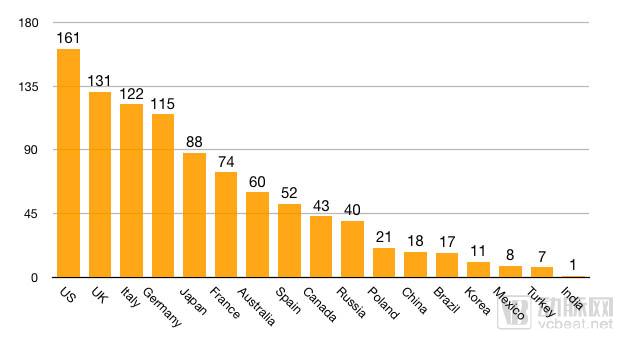
Number of Oncologists per Million Population by Country
Data source: IQVIA OneKey, April 2018
At the conference, several physicians and oncologists collaborating with MORE Health presented research findings in multiple fields, including recurrent ovarian cancer, cervical cancer, liver cancer, and lung cancer. Notably, the oral presentation titled “Hematologic Malignancies – Lymphoma and Chronic Lymphocytic Leukemia,” delivered by Dr. Ann S. LaCasce from the Dana-Farber Cancer Institute at Harvard University, was featured as a Daily Focus Session of the conference and garnered widespread attention.
In China, MORE Health has adopted a model of collaborating with top-tier domestic hospitals and physicians. Currently, its partner physicians and hospitals are concentrated in first-tier cities, including Peking Union Medical College Hospital, China-Japan Friendship Hospital, West China Hospital, Xiangya Hospital, The First Affiliated Hospital of Sun Yat-sen University, and The First Affiliated Hospital of Zhejiang University School of Medicine.
“I am highly eager to expand collaborations with top-tier hospitals and medical schools in China and the United States through cross-border platforms like MORE Health, thereby better serving Chinese patients,” said Dr. Michelle Hermiston, a contracted physician with MORE Health, in an interview. “China’s large population base yields a greater number of rare disease cases, whereas the United States often lacks sufficient patient enrollment for clinical research on certain rare diseases. Therefore, medical exchanges between China and the U.S. can foster bilateral cooperation in this area.”
Nasdaq-listed Novocure has been dedicated to treating tumors with electric fields. At the conference, Novocure announced the results of a Phase 2 clinical trial evaluating the combination of its Tumor Treating Fields therapy with standard chemotherapy in patients with recurrent ovarian cancer. The trial results demonstrated that this regimen more than doubled patients’ progression-free survival.
In the PRODIGE 24/CCTG PA.6 clinical trial, patients with non-metastatic pancreatic ductal adenocarcinoma (PDAC, the most common type of pancreatic cancer) received a novel chemotherapy regimen known as mFOLFIRINOX. Follow-up data indicated that this new chemotherapy extended patient survival by nearly 20 months compared to previous chemotherapy regimens.
Seattle Genetics and Astellas presented the latest Phase I clinical data for their investigational new drug, enfortumab vedotin, at the ASCO Annual Meeting: the antibody-drug conjugate (ADC) demonstrated a response rate of up to 40%. This study holds significant promise for delivering a breakthrough therapy to patients with metastatic urothelial carcinoma who currently lack effective treatment options.
Over the past decade, direct-to-consumer (DTC) advertising expenditures have continued to rise, driven by breakthroughs in immunotherapy that have opened new avenues for cancer treatment. Pharmaceutical manufacturers need to sustain marketing momentum throughout the sales process, imprinting the specialized term “immunotherapy” in consumers’ minds while emphasizing its association with lower side effects.
To a certain extent, this demonstrates that immunotherapy has indeed made significant progress, giving pharmaceutical companies the confidence to invest substantial funds in promoting their immunotherapy products. Consumers can directly perceive the therapeutic effects; if a drug’s efficacy fails to surpass the limitations of previous treatments, excessive promotion may adversely impact the company.
The surge in drug development is bound to attract numerous speculators. According to conference attendees, new drug development in China has begun to follow a standardized, mass-production model; simply recruiting a few foreign R&D professionals to establish a company can secure a valuation exceeding 100 million yuan. However, whether this value can ultimately be realized depends on the outcomes of the company’s clinical trials.