

Shao Yifu Hospital Launches Health Cloud Platform with Five Core Functions to Empower Primary Healthcare – Insights from the 2018 Primary Healthcare Innovation Summit
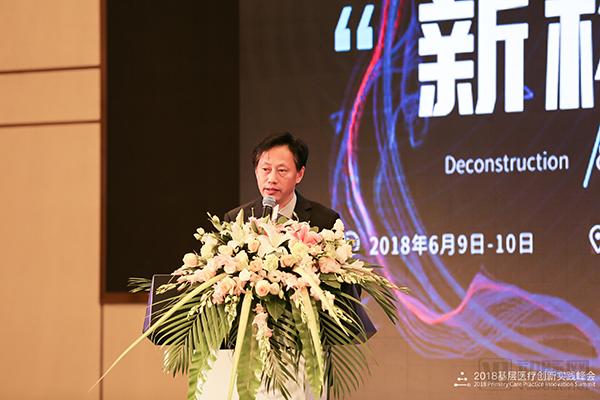
Li Qiang, Deputy Secretary of the Party Committee of Sir Run Run Shaw Hospital, Zhejiang University School of Medicine
Conference: 2018 Summit on Innovative Practices in Primary Healthcare
Location: Radisson Plaza Hotel, Huashengda, Hangzhou, Zhejiang
Speakers: Li Qiang, Deputy Secretary of the Party Committee of Sir Run Run Shaw Hospital, Zhejiang University School of Medicine; Lin Hui, Deputy Director of the Party and Administration Office of Sir Run Run Shaw Hospital, Zhejiang University School of Medicine
Sir Run Run Shaw Hospital, Zhejiang University School of Medicine, is a household name. Founded in 1994, it became the first public hospital in mainland China to achieve Joint Commission International (JCI) accreditation in 2006. It has since grown into a public, comprehensive, Grade III Class A hospital integrating medical care, teaching, and research. As a relatively young institution, Sir Run Run Shaw Hospital has developed rapidly under the guidance of the Zhejiang Provincial Party Committee and Provincial Government, Zhejiang University, and successive Zhejiang Provincial Health and Family Planning Commissions. Over the past 24 years since its establishment, the hospital has pioneered the unique “Shaw Medical Model” within the industry and remains committed to building a “Hospital of the Future,” having launched the Shaw Medical Health Cloud Platform to serve grassroots healthcare providers.
At the 2018 China Summit on Innovative Practices in Primary Healthcare, Li Qiang, Deputy Secretary of the Party Committee of Sir Run Run Shaw Hospital, Zhejiang University School of Medicine, and Lin Hui, Deputy Director of the Hospital’s Party and Administration Office, provided a detailed explanation of how the “Shao Yi Model” addresses critical pain points in the healthcare industry, such as uneven resource allocation, weak service capacity at the primary care level, and escalating doctor-patient conflicts. The model aims to facilitate the downward distribution of high-quality medical resources and enhance the accessibility of premium healthcare services.
Below is a compilation of the insightful perspectives shared by Li Qiang and Lin Hui, as presented by VCBeat (WeChat ID: vcbeat), primarily covering three key areas:
I. The Historical Challenge of Weak Primary Healthcare: A Critical Issue That Future Medical Systems Must Address
II. The Shaoyi Health Cloud Platform Achieves Comprehensive Integration Across All Healthcare Sectors
III. Five Major Functions of the Shaoyi Cloud Platform: Decentralizing Medical Resources to Enhance Primary Healthcare Services
1. The Two-Way Referral Platform Enables Precise Patient Referrals
2. Regional inspections to share medical resources and achieve business integration
3. Remote Joint Outpatient Clinics: Enabling the Downward Flow and Sustainability of Medical Resources
4. Internet Education Academy: Enhancing the Service Capabilities of Primary Care Physicians
Mr. Lin Hui, Deputy Director of the Party and Government Office, stated on-site that grassroots levels are medically underserved areas, and the essence of health-focused poverty alleviation lies in enhancing primary healthcare service capacity. While significant achievements have been made in general poverty alleviation, health-focused poverty alleviation is just beginning. Currently, China’s medical resource allocation exhibits an inverted pyramid distribution, which fails to match the substantial healthcare demands of the grassroots population. Early market-oriented reforms in healthcare did not resolve this issue due to the bureaucratic administration of public hospitals—the main providers of medical and health services—and instead exacerbated the siphoning effect of tertiary Grade A hospitals on primary healthcare resources.
Tier-3 hospitals are expanding aggressively, yet the public’s difficulty in accessing medical care has not been fundamentally alleviated. The reason is that the current distribution of medical resources has distorted the public’s essential health needs, forcing people to seek care at large hospitals even for common medical issues. Mr. Lin Hui cited data from a new media platform, where the most searched term by the public was surprisingly “family doctor,” indicating that the core desire of patients is still for accessible, community-based physicians. Therefore, the fundamental issue in healthcare reform lies in the allocation of medical resources. Achieving rational resource allocation guided by public demand is essentially a supply-side structural reform.
Tiered diagnosis and treatment is the core of China’s deepening healthcare reform, with its key lying in enhancing the service delivery capacity of primary healthcare; “Healthy China” is the current priority national strategy, whose foundation also rests on the level of primary medical and health service assurance. Although improving primary medical services is an inevitable trend, the current state of primary healthcare remains far from optimistic.
Li Qiang, Deputy Secretary of the Party Committee, stated in his opening remarks: Primary healthcare accounts for as much as 95% of China’s overall medical and health system, encompassing community health service centers, township health centers, village clinics, and outpatient departments. With the gradual implementation of healthcare reform policies, there has been significant improvement in the scale, staffing levels, and service capacity of primary healthcare in China. However, compared with higher-tier hospitals, primary healthcare institutions still face deficiencies in bed supply, equipment and facility performance, and the professional competence of medical staff. Moreover, the imbalance between urban and rural development remains particularly pronounced. In recent years, policymakers have introduced measures such as medical consortia, tiered diagnosis and treatment, and family doctor contracting services, aiming to facilitate the downward allocation of medical resources, promote resource sharing, and address the lagging development of basic healthcare.
Primary healthcare has gained new momentum and entered a new stage of development. However, disparities persist in regional economic development and between urban and rural areas in China. Rural primary care inherently lacks high-quality medical resources, leading to pronounced imbalances in the development of primary healthcare. To achieve the healthcare reform goal of equalizing access to basic medical services, it is essential to redistribute medical resources and increase support for the primary care level.
Mr. Li Qiang introduced the “Sir Run Run Shaw Hospital (SRRSH) Model,” the core of which is to provide high-quality medical services to society by placing patients at the center and empowering staff as the main body, leveraging advanced technologies and concepts. The “SRRSH Model” has gradually begun to be exported. In 2015, Sir Run Run Shaw Hospital launched the SRRSH Health Cloud Platform, becoming the first medical cloud platform in China依托ing on a physical hospital. This platform not only integrated service resources from medical institutions at all levels within the region but also connected with third-party medical industry resources, including pharmaceutical distribution, laboratory and diagnostic testing, financial payment, and health insurance. It achieved collaboration among medical institutions in areas such as information sharing, examinations, diagnosis and treatment, referrals, and teaching. Physicians can conduct online remote consultations, case discussions, outpatient services, ward rounds, two-way referrals, and issue electronic prescriptions via the internet, greatly facilitating public access and improving transaction efficiency.
The Shaoyi Health Cloud Platform adopts a model architecture of “Internet + Hospital Alliance + Physicians + Health Industry.” Leveraging the Internet as its technological foundation, it connects physicians, hospitals, and healthcare-related industries, breaking through constraints of physical space and time. This enables seamless connectivity and comprehensive business integration among hospitals, among physicians, and between healthcare and other industries, thereby advancing the goals of vertical tiered diagnosis and treatment and the decentralization of medical resources, while fostering collaborative development among regional medical institutions. Mr. Lin Hui believes that the characteristics of the cloud platform—openness, integration, sharing, and collaboration—are not inherent to the platform itself, but rather reflect the essential nature of the Internet. The Shaoyi Cloud Platform can achieve
Currently, the Shaoyi Cloud Platform has established four types of service terminals: the patient portal, the physician portal, the third-party institution access portal, and the platform operations and management portal. It delivers three basic functions (including remote consultation, appointment registration, and online payment) and seven core functions, five of which facilitate collaborative coordination with primary care institutions.
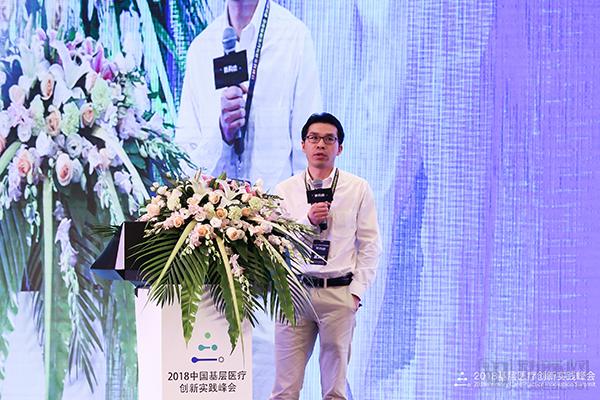
Lin Hui, Deputy Director of the Party and Administration Office at Sir Run Run Shaw Hospital, Zhejiang University School of Medicine, Delivered a Speech
Sir Run Run Shaw Hospital was among the first in China to implement hospital information systems, making it relatively straightforward for the institution to achieve its own digitalization and intelligent transformation. But how has Sir Run Run Shaw Hospital addressed the challenge of empowering grassroots healthcare providers? In addition to enabling seamless integration across various medical processes and service models, the Sir Run Run Shaw Hospital Cloud Platform offers four additional key functionalities. Lin Hui, Deputy Director of the Party and Administration Office at Sir Run Run Shaw Hospital, provided a detailed introduction.
Bidirectional Referral Platform Enables Precise Patient Referrals
Since the implementation of national tiered diagnosis and treatment policies, numerous two-way referral platforms have emerged across China. However, these platforms essentially function as appointment registration services facilitated by primary care physicians, resulting in low referral precision. As primary care physicians are general practitioners, while tertiary hospitals (Grade III Class A) have developed increasingly specialized sub-disciplines, mismatches frequently occur when primary care physicians refer patients to incorrect specialties. This leads to appointment cancellations, generating significant patient complaints and undermining public trust in both primary care physicians and the tiered diagnosis and treatment system.
Therefore, to improve the precision of referrals, patients can use the platform to locate specialist or subspecialist physicians and submit a referral request. Upon receiving the request, the specialist can review the patient’s medical records. If a referral is deemed necessary, the specialist can directly schedule the time and location for either inpatient or outpatient referral. The existing model of remote consultation is suitable for academic discussions among large medical institutions but is not feasible for addressing practical clinical issues encountered at the primary care level. Why? Because there is often a mismatch between patient needs and the availability of senior physicians. How can this issue be resolved? Sir Run Run Shaw Hospital (SRRSH) leverages mobile internet technology to enable remote mobile consultations, making consultative services responsive anytime and anywhere. When primary care physicians encounter any clinical uncertainties, they can initiate a consultation request to specialists. Upon receiving the request, the specialists provide diagnostic and treatment recommendations to the primary care physicians. Currently, the SRRSH platform supports text, voice, and real-time video consultations, as well as point-to-point and cross-hospital Multidisciplinary Team (MDT) consultations, thereby coordinating various stakeholders to serve primary care facilities.
Regional Inspection Collaboration: Achieving Shared Medical Resources
The second is regional examination collaboration, also known as business integration between hospitals. Primary care hospitals lack medical resources, forcing many patients to transfer to large hospitals when local resources are insufficient. Upon arrival at these larger institutions, patients must undergo the standard medical service process again, causing significant inconvenience. Regional examination collaboration enables the shared regional access to core diagnostic and testing equipment at large hospitals, fulfilling the primary care sector’s desire for “access over ownership” and strongly supporting grassroots medical services.
Mr. Lin Hui illustrated this with an example: When primary care physicians encounter the need for such examinations, they can directly initiate a request through the platform for any qualified hospital, whether listed on the platform or located near the patient’s residence. The platform reviews the patient’s examination needs and arranges the time and location. After the examination is completed, the report is uploaded to the cloud, allowing primary care physicians to access it. If there are any uncertainties, collaboration is facilitated through remote consultations between primary and tertiary care providers.
These are all the specialized examinations conducted at Sir Run Run Shaw Hospital, delegated to primary care hospitals; in fact, this has no impact on large hospitals. While the concept of internet decentralization is prevalent, the opposite is true: the internet has significantly enhanced regional influence and reach.
Remote Joint Clinics: Making Medical Resources More Accessible and Sustainable
The Chinese government has been promoting the decentralization of medical resources. Zhejiang Province has put forward a prominent slogan: “Double Decentralization, Dual Enhancement.” Mr. Lin Hui stated that the current approach to decentralizing high-quality medical resources is unsustainable, as it relies heavily on administrative directives. This is largely due to the scarcity of premium medical resources, such as senior specialists. With advances in medical technology, many issues can be addressed online, rather than requiring specialists to perform hands-on procedures at the grassroots level. The government is now vigorously promoting multi-site practice for physicians. However, if multi-site practice continues in the traditional manner, existing medical resources will be insufficient to meet demand. Remote collaborative consultations can save specialists’ time and improve diagnostic and treatment efficiency.
This is the "Shaoyi Model" of remote collaborative consultation: specialists operate online while primary care physicians work offline, jointly providing consultations to the public, thereby making healthcare resources more sustainable and efficient.
Internet Education Academy: Enhancing the Service Capabilities of Primary Care Physicians
As long as primary care physicians on the platform demonstrate such motivation for professional growth, Sir Run Run Shaw Hospital (SRRSH) can unhesitatingly provide them with all available resources through its Internet Education Academy. Currently, SRRSH has established the Internet Education Academy, which leverages online platforms to broadcast live surgeries and other content, allowing primary care physicians to access daily educational materials via their mobile devices. Users can watch the live streams, and if they miss a broadcast, they can view the recorded playback. The platform was launched in 2015, and its Version 2.0 was released on October 17, 2016, at the 3rd World Internet Conference; this Version 2.0 remains the current standard version. In 2017, to support the “Belt and Road Initiative,” SRRSH developed the SRRSH–Xinjiang Telemedicine Collaboration Platform.
Mr. Lin Hui concluded his summary of the value that the internet brings to primary healthcare by stating, “Through internet-based approaches and information connectivity, we can generate value addition. What lies behind this value addition? It breaks through the constraints of physical space and even time, enabling business collaboration and strengthening primary care.”
In fact, artificial intelligence can rapidly elevate the professional competence of healthcare providers at the primary care level. Enhancing the skills of primary care physicians necessitates a fundamental reform of the physician training system, a century-long endeavor. However, AI accelerates the training and professional development of physicians; by providing auxiliary support, it enables primary care doctors to improve their clinical proficiency within a short period.
Artificial intelligence will bring revolutionary changes to the healthcare sector. Mr. Lin Hui stated bluntly, “As everyone knows, when the industrial age arrived, many people did not even have exploitable labor value. This statement also applies to the healthcare field. With the emergence of artificial intelligence, AI will raise the baseline performance across various areas of medicine. When physicians perform below this baseline, they lose their core professional value; such physicians would be better suited to providing peripheral health services. AI-assisted diagnosis in medical imaging is likely to be the first area to achieve a breakthrough. Why? Because imaging data is currently the most standardized form of medical data. There are now numerous founding teams and startups in China focused on AI for medical imaging. We have personally recognized the strengths of AI in imaging and have conducted our own explorations. The preliminary results are very promising: our diagnostic accuracy for liver cancer has reached 92%–95%.”
Leveraging its electronic medical records and artificial intelligence, Sir Run Run Shaw Hospital has developed a general practice-oriented clinical intelligent decision support system. This system assists primary care physicians throughout the entire diagnostic and treatment process, enabling end-to-end closed-loop management of chronic diseases for patients.
The Shaoyi Health Cloud Platform assists primary care physicians in conducting consultations, providing clinical guidance, and facilitating diagnostic evaluations by recommending appropriate follow-up tests, potential diagnoses, and available treatment options. Recognizing its significance, the Chinese government has designated this system as a key initiative for health-focused poverty alleviation, and it has successfully passed the acceptance review conducted by the National Health and Family Planning Commission.
Through internet-based vertical integration and horizontal business collaboration, augmented by artificial intelligence technologies, Sir Run Run Shaw Hospital (SRRSH) has significantly helped primary care physicians improve their service capabilities over an extended period. Furthermore, SRRSH has actively advanced the “Double Sinking, Double Improvement” initiative, establishing paired assistance partnerships with more than 30 hospitals in Zhejiang, Xinjiang, and other regions. By embedding its hospital management model into numerous local hospitals, SRRSH has facilitated improvements in their operational management. Practice has demonstrated that the “SRRSH Model” is replicable; high-quality medical resources can be effectively decentralized to the grassroots level through appropriate methods and channels, enabling local communities to access high-quality medical services via the SRRSH Cloud Platform.