

MedAI Challenge at World AI Innovation Tournament Launches in Shanghai, Focused on Clinical Needs
On June 13, the World Artificial Intelligence Innovation Competition (2018 AI-WIN) was officially launched at the Shanghai Mart Exhibition Hall. Gu Honghui, District Mayor of Changning District; Zhang Ying, Chief Engineer of the Shanghai Municipal Commission of Economy and Informatization; Shi Wenjun, Director of the Shanghai Economic and Informatization Development Research Center; along with representatives from the event’s organizing entities—including iFlytek, International Automobile City, Shanghai Jiao Tong University, and Weineng—lit up the launch button through human-machine interaction.
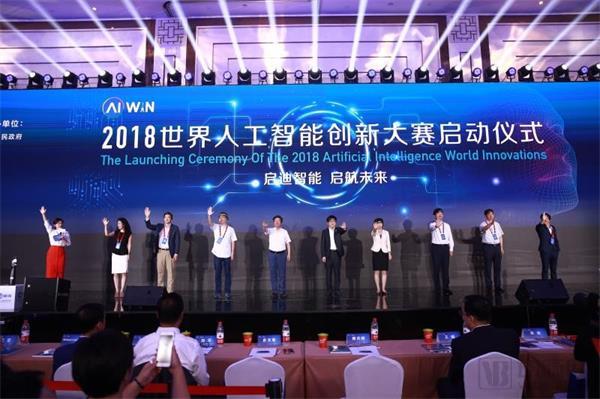
On-Site Launch Ceremony
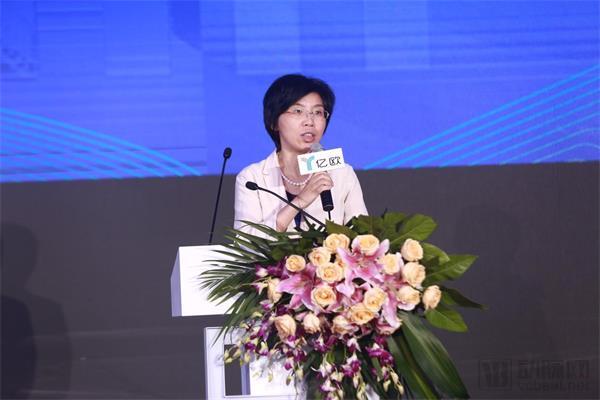
Zhang Ying, Chief Engineer of the Municipal Commission of Economy and Informatization
Themed “Inspiring Intelligence, Embarking on the Future,” the competition featured four tracks: human-computer interaction services, AI in healthcare, autonomous driving, and the robotic innovation ecosystem.
This competition is jointly hosted by relevant national ministries and commissions and the Shanghai Municipal People’s Government; organized by the Shanghai Municipal Commission of Economy and Informatization, the Shanghai Economic and Informatization Development Research Center, iFLYTEK Co., Ltd., Shanghai International Automobile City (Group) Co., Ltd., the Institute of Artificial Intelligence at Shanghai Jiao Tong University, and WeNeng Venture Capital Accelerator; and co-organized by Shanghai Moni Artificial Intelligence Technology Co., Ltd., the Shanghai Information Service Industry Association, and the Shanghai Internet of Things Industry Association. The competition has also received strong support from the district governments of Jiading, Xuhui, and other districts.
The application of technologies such as big data and artificial intelligence (AI) in the healthcare sector has become a prevailing trend. AI is most extensively applied in niche markets such as drug development and medical imaging. Drug development accounts for the largest share of the global medical AI market. In the coming years, AI technology will play an increasingly important role in target identification, drug discovery and design, and high-throughput compound screening. The growing adoption of AI in medical imaging can help improve the early diagnosis of tumors. Multiple studies have indicated that the use of AI can effectively increase diagnostic accuracy by 60%–70% among clinicians in computed tomography (CT) scans, magnetic resonance imaging (MRI), and Picture Archiving and Communication Systems (PACS). Furthermore, AI applications are becoming increasingly widespread in clinical research, robotic personal assistants, genomics, and precision medicine.
To promote technological advancements and industrial upgrading in the healthcare sector, and to accelerate the deep integration of the medical industry with artificial intelligence technologies, the competition has specially established a medical track—the MedAI Challenge. The challenge is hosted by the Xuhui District People’s Government and the Shanghai Jiao Tong University Institute for Artificial Intelligence, organized by the Shanghai Institute for Urban Sensing and Data Science, and co-organized by the Xuhui District Science and Technology Commission, BioValley, and Fenglin Group.
This challenge will focus on key areas in the medical field: pathology, electrocardiography (ECG), and diabetic retinopathy.
Pathological diagnosis is universally recognized by the global medical community as the most reliable, reproducible, accurate, and authoritative form of diagnosis, serving as the cornerstone of all diagnostic methods. However, China currently faces a significant shortage of pathologists, making artificial intelligence (AI) a crucial means to bridge this gap. Furthermore, there is an urgent need for intelligent equipment in pathological examination to streamline processes and accelerate differential diagnosis; yet, this technology remains an unexplored field globally. A breakthrough in this area would position the pioneer at the forefront of worldwide R&D in pathological equipment. This track focuses on integrated AI-powered imaging and auxiliary diagnosis all-in-one machines for pathology. It primarily evaluates the accuracy and speed of AI software systems, while also considering the usability and market promotion potential of hardware systems, with the positioning of “clear visualization and precise identification.” Specifically, it aims to achieve integrated operations of AI and digital pathology analysis by combining digital slide scanners with AI algorithms.
The ECG Diagnosis Track aims to apply artificial intelligence to enhance the overall level of cardiovascular disease monitoring, improve primary healthcare capabilities in remote areas, and elevate the general standard of electrocardiographic diagnosis. The ultimate goal is to achieve early detection of cardiovascular risk events and reduce mortality rates. Cardiovascular diseases (CVDs) are the leading cause of death globally and in China. According to estimates from the "Report on Cardiovascular Diseases in China 2016," the number of prevalent CVD cases in China has reached 290 million. Dynamic, long-term electrocardiogram (ECG) monitoring is a crucial method for the early detection of cardiovascular risk events, such as myocardial ischemia and malignant arrhythmias, and is key to improving resuscitation success rates and reducing mortality. However, there are significant regional disparities in medical care standards in China, particularly with low levels of CVD diagnosis and monitoring in rural areas. Junior physicians in major cities and those in primary healthcare institutions also face challenges in accurately interpreting ECGs promptly. Therefore, this track will focus on mobile ECG monitors for cardiovascular risk event monitoring. It will explore the application of AI technologies in ECG diagnosis, with an emphasis on the rapid intelligent identification and diagnosis of cardiovascular risk events, marking a new milestone in AI-driven cardiovascular scientific research.
For diabetic retinopathy, early diagnosis and treatment, along with long-term monitoring, are critical measures to prevent severe outcomes such as blindness. However, current awareness and treatment rates for diabetes itself remain low, and the diagnostic rate for its ocular complications is even lower. More than 50% of patients with diabetes fail to undergo timely screening for retinal complications, primarily due to insufficient resources among endocrinologists, limited proficiency in fundus image interpretation by physicians, and a lack of effective physician follow-up during the treatment process. Therefore, leveraging advanced technologies to enable one-stop management of diabetes and its ocular complications; empowering endocrinologists with AI to enhance their capacity for long-term patient management and improve the efficiency of diagnosing retinal complications; achieving automated follow-up for patients at different disease stages; monitoring complication risks; and timely adjusting treatment regimens can effectively address these pain points.
This challenge is open to participants worldwide, encouraging cross-disciplinary collaboration between medical experts and physicians from the healthcare sector and AI specialists from universities, research institutions, and startups in the field of artificial intelligence.
Registration for the Challenge will open on June 13, with team formation closing on July 20. Participating teams must submit their entries by July 31, and the Organizing Committee will announce the finalists on August 10. The finals will be held on August 25.
The competition offers substantial prizes, including RMB 350,000 in cash rewards and a RMB 200 million AI investment fund jointly established with renowned investment institutions. Winning teams will receive priority access to startup funding support. In addition, winners will benefit from comprehensive incubation services, including access to incubation bases, mentorship from entrepreneurship experts, resource matchmaking, and policy guidance.
The Organizing Committee cordially invites professionals and enthusiasts from all sectors who are passionate about big data, artificial intelligence, healthcare, and wellness to register for the competition. Join us to showcase your expertise, foster collaborative growth, and drive technological advancement and industrial upgrading in the healthcare sector through technological innovation and novel business models, thereby accelerating the deep integration of the healthcare industry with AI technologies!
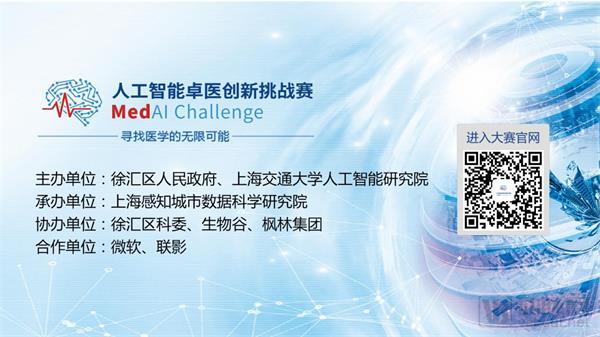
MedAI Challenge: AI Excellence in Medical Innovation Competition
World Artificial Intelligence Innovation Competition Official Website Link:
http://www.aiwin.org.cn
MedAI Challenge: AI Excellence in Medicine Competition Official Website Link:
http://www.med-ai.org.cn