

Weimai CEO Qiu Jialin: 'Internet + Healthcare' Needs Greater Tolerance for Innovation to Empower Localized Services in Mid- and Lower-tier Markets

Weimai
Digital Health Service Platform Provider
June 9–10, 2018: The 2018 Summit on Innovative Practices in Primary Care was held in Hangzhou, Zhejiang Province. Co-hosted by the National Engineering Laboratory for Internet Medical Systems and Applications, the Internet Healthcare Industry Alliance, and other organizations, the summit featured six specialized sub-forums. It brought together more than 70 distinguished experts and attracted over 1,000 senior professionals from the healthcare industry to discuss hot topics such as medical consortia, new-model clinics, and health management.
As a leader among China’s third-generation “Internet + Healthcare” platforms, Qiu Jialin, founder of the quasi-unicorn enterprise Weimai, delivered a keynote address titled “Making Primary Healthcare Services More Accessible” at the conference, sharing his insights and experience on innovative applications of “Internet + Healthcare.”
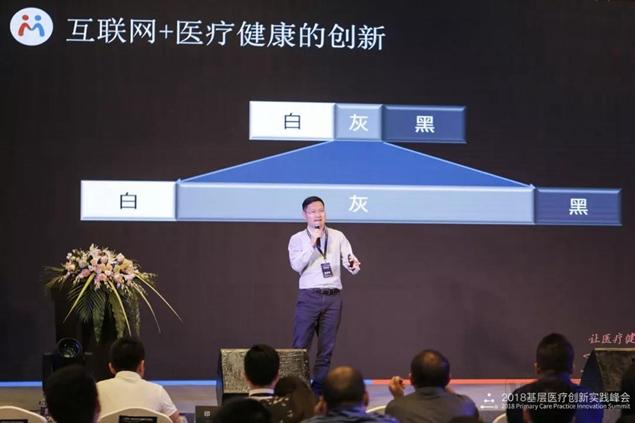
At the outset of his speech, Qiu Jialin posed a question to the audience: “What are the determining factors of innovation?” He answered by citing Edmund Phelps’ perspective in *Mass Flourishing*: the four key elements of innovation are the drive for change, the capacity for innovation, supportive institutional frameworks, and tolerance for innovation. The last factor constitutes the most critical prerequisite for innovation in the current “Internet Plus” wave. The healthcare industry requires greater space and opportunities for innovation, which is precisely why the State Council issued documents such as the *Guiding Opinions on Promoting the Development of “Internet Plus Healthcare”*.
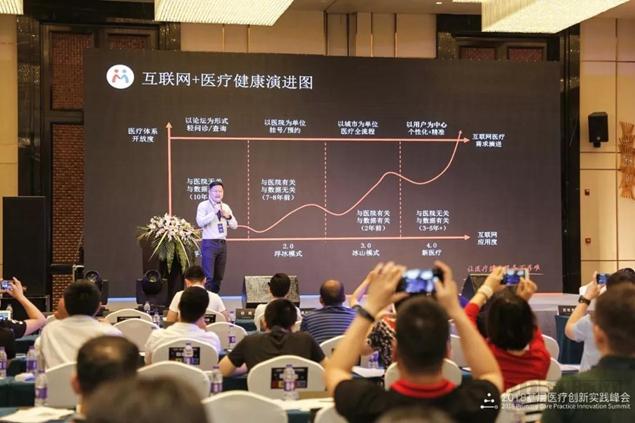
When it comes to the openness of the internet healthcare sector, Qiu Jialin summarizes the evolution of “Internet + Healthcare” into four stages:
1.0 Cloud-based Model: Built on physician-to-physician and physician-to-patient communication platforms and communities, it is characterized by being independent of hospitals and unrelated to specific data sets.
2.0 Floating Ice Model, represented by numerous local appointment registration platforms, is characterized by its association with hospitals rather than data, as it lacks integration with hospital data and payment systems, with the hospital serving as the unit of service;
3.0 The Iceberg Model: City-based online platform enabling appointment scheduling, medical payment, health insurance settlement, report and prescription inquiries, and online consultations with attending physicians. This model extends beyond hospital operations to encompass data and payment integration, digitizing regional healthcare resources. Leveraging big data in health and medicine, it delivers precise “Internet + Healthcare” services to the local population.
4.0 New Healthcare: Establishing a User-Centric Personalized and Precision Service System.
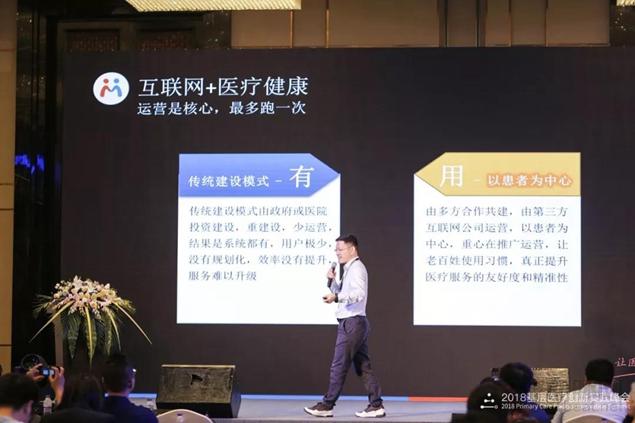
In response to skepticism regarding the fact that many medical institutions have already implemented products with similar functionalities, Qiu Jialin proposed the theory of “availability” versus “utilization” in internet-based medical services. The traditional construction model, funded by the government or hospitals, prioritizes infrastructure development over operations. As a result, while system functions are technically “available,” user engagement remains minimal, activity levels are low, efficiency fails to improve, and service upgrades are difficult to achieve. In contrast, Weimai’s patient-centric new healthcare model emphasizes the importance of in-depth operational management. Explaining how to encourage actual “utilization” by users, Qiu Jialin stated that by integrating all localized medical resources—including those of medical institutions and physicians—and focusing on user experience and promotional operations, Weimai has enhanced trust and diversification in medical services. This approach has cultivated a regional habit among users of “turning to Weimai for medical consultations,” thereby further improving hospital management efficiency and the level of mobile informatization.
He further cited a set of data to underscore the breakthrough achievements of Weimai’s new medical practices: In a city in Zhejiang Province with a permanent population of 700,000, the Weimai app has registered 200,000 users. Data from April this year shows that Weimai’s penetration rate for medical services in the city reached as high as 22.38%, making it effectively the largest local entry point for “Internet + Healthcare” services. In its operational practice within another Medical Consortium, Weimai enabled medical service visits and payment volumes through its platform to account for 27% of the consortium’s total, significantly enhancing both operational efficiency and user experience.
On that day, in exclusive interviews with reporters from Economic Observer, Caixin Health Point, and TMTPost, Qiu Jialin further elaborated on Weimai’s core positioning: a localized, trust-based doctor-patient service platform that makes it easy for doctors to provide medical and health services and for patients to access them.
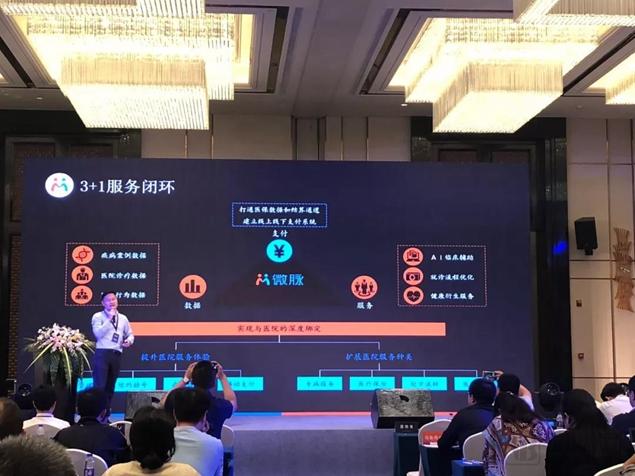
In addition to digitizing three core in-hospital services—appointment scheduling, report retrieval, and integrated payment—Weimai breaks through the constraints of space, time, and service delivery by extending medical care to broader out-of-hospital scenarios. By offering diversified services such as exclusive post-consultation and post-discharge support, online consultations, report interpretation, video-based telemedicine, off-site house calls, e-prescriptions, and medication delivery, Weimai expands the scope of physicians’ practice. Face-to-face consultations facilitate communication between local doctors and patients, fostering a strong chain of trust. This approach establishes a closed-loop healthcare service model centered on doctor-patient trust, as advocated by Weimai.
When asked about Weimai’s city-level strategy, Qiu Jialin candidly stated, “Given the landscape of healthcare services in China, Weimai primarily focuses on deploying its ‘Internet + Healthcare’ platform in third- and fourth-tier cities. By covering more than 60% of local medical institutions on a city-by-city basis, we can maximize user coverage density and platform recognition, thereby providing efficient and convenient connectivity and matching for both users and hospitals. Our emphasis on operational efficiency and depth, along with a focus on user experience and satisfaction, enables us to establish a deeper presence and achieve greater long-term success in each individual city.”
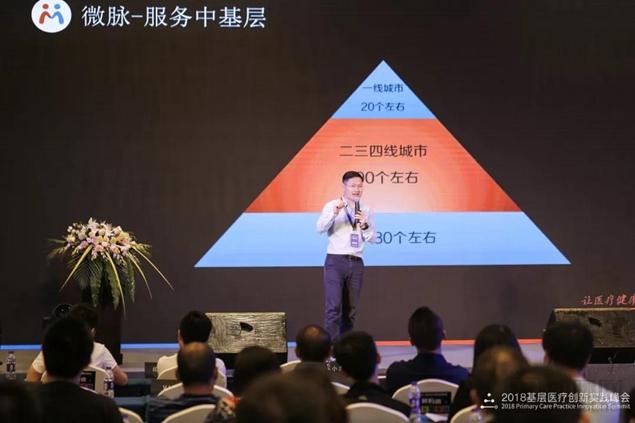
Currently, Weimai has expanded its coverage to 17 provinces, partnering with nearly 500 hospitals across 70 cities. In the more than 40 cities where services have been launched, user penetration exceeds 20%, and 40,000 local physicians have come on board to provide comprehensive care. Qiu Jialin stated that Weimai will continue to focus on serving primary and secondary healthcare institutions, remaining committed to its mission of “making healthcare and medical services more accessible” through sustained and in-depth efforts.

It is worth highlighting Weimai’s innovative practices in financial technology. Its platform supports various payment processes, including registration fee payments, point-of-care payments, and hospitalization prepayments. By integrating multiple payment channels and connecting medical insurance payments with online commercial insurance claims settlement, the platform offers flexible API access for external applications. This enables patients to choose services according to their needs, promotes business synergy and process optimization, further enhances the convenience of medical care for patients, and improves hospital operational efficiency and management standards. At this summit, Weimai’s product “eMaiPay” won the award for “Best Commercial Insurance and Innovative Payment Platform,” jointly with its partner, Edong Medical Group, thanks to its innovation and practice in card-free medical insurance payments based on a unified payment platform.