

Mingyi Zhonghe: Empowering Rural Healthcare for 600 Million through Internet-Enabled Primary Care Innovation
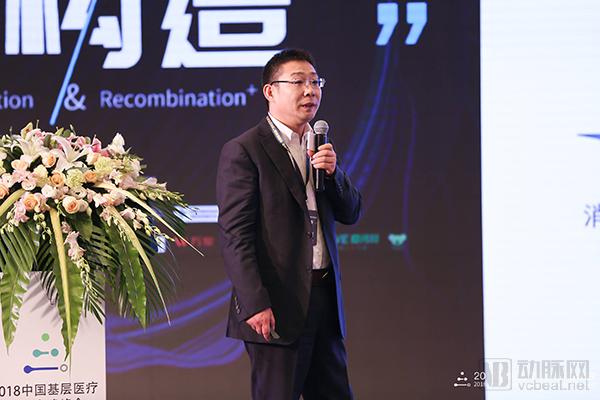
Jiang Qiang, Chairman of Mingyi Zhonghe
Conference: 2018 Summit on Innovative Practices in Primary Healthcare
Location: Radisson Plaza Hotel Huashengda, Hangzhou, Zhejiang
Speaker: Jiang Qiang, Chairman of Mingyi Zhonghe
Starting from providing a comprehensive suite of services—including operational management, pharmaceutical supply, and tiered diagnosis and treatment—to primary healthcare institutions (primarily in rural areas), Mingyi Zhonghe secured RMB 60 million in Series A financing in its third year of establishment. Over the past three years, Mingyi Zhonghe has established a strong presence in central China, operating more than 80 cloud pharmacies and covering over 100 prefecture-level cities. At the Second Summit on Innovation and Practice in Primary Healthcare in 2018, Mr. Jiang Qiang, Founder and Chairman of Mingyi Zhonghe, shared insights on leveraging the internet to empower rural medical services and enhancing the diagnostic and treatment capabilities of small and micro healthcare institutions based on the existing primary care infrastructure. VCBeat (WeChat ID: vcbeat) has compiled and summarized his presentation.
Below is a summary of Jiang Qiang’s insightful perspectives by VCBeat (WeChat ID: vcbeat):
I. The centralization of healthcare consumption has resulted in a distorted healthcare system
II. Structural Contradictions in the Current Healthcare System Are More Severe Than Quantitative Ones
III. Leveraging the Power of the Internet to Empower Grassroots Micro-Institutions Holds Great Promise for Meeting the Basic Healthcare Needs of 600 Million Rural Residents
As a participant in the exploration and practice of “primary healthcare + internet” in China, I would like to share with you all the progress we have made over the past three years in the most grassroots (rural) healthcare sector in China, as well as our perspectives on the entire industry. China’s greatest contribution and institutional innovation to global healthcare is the village doctor system, which trains primary-level personnel to become competent in addressing healthcare supply challenges in remote areas. However, due to certain institutional factors, the functionality of this system has been continuously weakening in the past. As a result, it has become increasingly difficult for people at the grassroots level to access medical care, with the radius of healthcare access expanding significantly. China’s existing healthcare system suffers from serious structural issues.
The first major issue is that healthcare consumption in China follows an inverted triangular distribution. The total size of China’s healthcare market reaches RMB 4.61 trillion, yet hospitals—which account for less than 3.2% of all medical institutions—consume over 74% of healthcare spending. This indicates that the vast number of primary care institutions, which are closest to the general public, remain underutilized or semi-idle, making it difficult to meet people’s demand for accessible medical services and resulting in poor patient experiences. Thus, after years of accumulated healthcare reforms, insufficient attention has been paid to primary care, effectively hollowing out the foundation of the healthcare system. As a result, the geographic radius for seeking medical care has continued to expand, with patients often delaying treatment for minor illnesses until they develop into serious conditions. In the next phase of healthcare reform, many experts have proposed “strengthening primary care” with county-level hospitals as the central focus. However, this approach warrants caution to prevent county-level hospitals from once again disrupting grassroots medical services, akin to the “siphon effect” that tertiary hospitals have exerted on county-level hospitals over the past many years. It is crucial not to deplete the foundational layer of healthcare that is closest to the people.
The second issue is the structural problem of healthcare expenditure, where the value of physicians is not adequately reflected. What is the distribution structure of healthcare consumption? In terms of household healthcare spending, inpatient care accounts for 53%, outpatient care for 36%, and retail purchases for 11%. Within the outpatient market, hospitals capture 80% of the share. Combined, outpatient and inpatient services provided by hospitals in China account for 71% of total healthcare consumption. This reflects the current concentration of healthcare spending. From a broader categorization perspective, healthcare consumption can be divided into three components: pharmaceuticals, diagnostics, and medical services. The most concerning aspect in China is that pharmaceuticals and diagnostics together constitute 83% of total healthcare expenditure, while medical services account for only 17% of the overall pie.
Within the current distorted healthcare architecture, many startups claim to leverage “Internet + Healthcare.” Calculations show that, against the backdrop where “medical services” account for only 17% of the entire healthcare market, the power of the Internet in enhancing efficiency within the “medical services” segmentis very difficultMaking a Difference. The structural breakdown of healthcare spending—covering medical services, pharmaceuticals, and technology—indicates that the value of “medical services” has not been duly recognized, even though China already achieves high efficiency in this area. The power of the internet should focus more on enhancing the efficiency of “pharmaceuticals” and “diagnostic tests” within healthcare expenditure, providing internet-based solutions to help transform the current “drug-revenue-dependent” model of hospital compensation.
Next, let us examine the distribution of healthcare expenditures at the national level and explore the disparities among different resident groups. These are somewhat sobering figures. Currently, China has a rural population of over 600 million and an urban population of over 700 million. However, within the total healthcare consumption expenditure exceeding RMB 3 trillion, the more than 700 million urban residents accounted for RMB 2.4 trillion, while the more than 600 million rural residents spent only RMB 0.68 trillion.
Let’s take another look at this over 3 trillion yuan: who is footing the bill? As we discussed earlier, expenditures are distributed on a per capita basis with a 1:1 population ratio. Within the healthcare sector, funding comes from two main sources: the medical insurance pool and individual out-of-pocket payments. From the perspective of medical insurance participants, we can calculate that the total amount covered by medical insurance reimbursements stands at 180 million yuan. However, nearly all of this coverage is concentrated in urban areas; less than 15% of the funds in the actual medical insurance accounts are allocated to support rural residents.
From the perspective of the healthcare burden, we have long discussed the issues of accessibility and affordability. However, these are relative concepts that depend on the basis of comparison. Over the years, with economic development and sustained government investment in healthcare, the growth rate of per capita income among urban residents has exceeded the growth rate of their healthcare expenditures. In contrast, there has been little significant change in rural areas: while incomes have risen, medical costs have increased even more sharply. Consequently, the majority of healthcare expenses in rural areas are still paid out-of-pocket. As a result, minor ailments often escalate into serious conditions, partly because seeking medical care may require traveling hundreds of kilometers. Therefore, gradually increasing appropriate support for rural residents through health insurance reimbursement should be a key consideration in the reform of the basic medical insurance system.
Therefore, my assessment of the current state of healthcare in China is that supply is inadequate and unbalanced, with significant disparities in payment capacity between urban and rural areas. In terms of effective medical supply, structural contradictions are more severe than those related to sheer volume. This structural imbalance on the supply side results in indirect costs for grassroots patients far exceeding direct costs; while medical expenses at a hospital might amount to only 100–200 yuan, additional costs such as transportation and waiting time can add another 100–200 yuan. Regarding payment capacity, rural residents, who already have lower ability to pay, face higher out-of-pocket ratios, which further exacerbates the difficulties and high costs they encounter in accessing medical care. Thus, over the past three years, we have consistently explored and practiced leveraging the power of the internet to drive medical resources down to the grassroots level, enabling data to travel more so that villagers need to travel less, thereby systematically reducing the cost of healthcare access for rural residents.
Addressing the supply of primary healthcare and enhancing the capabilities of grassroots medical institutions, which are closest to the public, is likely an inevitable path for future development. By leveraging the Internet, we can promote the digitalization of “diagnosis” and the localization of “treatment.” We aim to enable small, micro-level grassroots medical institutions to serve as execution points at the frontline of healthcare, integrating them with upstream medical resources to reduce the distance patients need to travel for care. Currently, Mingyi Zhonghe has focused on four key areas of development, building a SaaS-based architecture to empower grassroots medical institutions: first, knowledge and management capabilities; second, pharmaceutical supply capabilities; third, outpatient clinical examination capabilities; and fourth, intelligent and remote diagnosis and treatment capabilities. By using the Internet to connect upstream medical resources with grassroots diagnostic and treatment needs, we equip village doctors as “Javelin Doctors,” enabling them to address local primary healthcare demands conveniently by simply using a mouse and a barcode scanner (the “javelin”) plus Internet connectivity.
In March 2016, we launched version 1.0 of the Yidebang platform, centralizing medical records, prescriptions, and patient files to address informatization and standardization in daily practice management during the first phase. In the second phase, we introduced the Yidebang 2.0 Cloud Platform to help primary-care physicians resolve issues such as pharmaceutical procurement. Moving forward, we are advancing the development of “Shared Outpatient Clinical Laboratory Centers,” leveraging the internet to enhance laboratory testing and diagnostic capabilities at primary healthcare institutions, while preparing medical data to facilitate integration and connectivity with upstream medical resources. Mingyi Zhonghe has now established a presence in China’s central region; we have built more than 80 cloud pharmacies, covering over 100 prefecture-level cities, and already provide multi-dimensional services to nearly 60,000 clinics.
Regarding profitability, we derive revenue exclusively from comprehensive medical cost savings, including income from pharmaceutical supply chain management services, outpatient laboratory testing services, and intelligent and telemedicine services. After more than three years of exploration and practice, our early pilot regions have achieved profitability, significantly enhancing primary healthcare capabilities and reducing medical costs.
China’s grassroots market is substantial, capable of serving the primary healthcare needs of 600 million rural residents. I believe this is a meaningful and valuable endeavor. More than three years of practice and exploration have demonstrated that empowering grassroots medical institutions with internet technology is both feasible and profitable. In the future, we can further enhance the diagnostic and treatment capabilities of existing small and micro grassroots medical institutions across broader dimensions, thereby facilitating access to care for rural populations and improving their health outcomes.
Mingyi Zhonghe: Making It Easy to Open Clinics EverywhereWe provide comprehensive solutions to challenges such as licensing and certification, health insurance integration, pharmaceutical supply, laboratory testing capabilities, professional skills development, and IT system management. We offer a full-system support and service platform for individuals and institutions aspiring to establish clinics, particularly in rural areas, and to serve primary healthcare and local communities, thereby strengthening grassroots medical services. We invite those committed to serving rural areas to partner with us. Thank you all!