

MicuRx Pharmaceuticals Files for Hong Kong IPO After Raising $100M to Combat Superbugs
Image from the official website of Micurx Pharmaceuticals
Founded in 2007, Micurx Pharmaceuticals is an innovative pharmaceutical company dedicated to discovering and developing safer and more convenient antibacterial agents for the treatment of drug-resistant bacterial infections. Since its establishment, the company has completed three rounds of financing, raising a total of approximately USD 100 million. Its investors include well-known venture capital firms both in China and abroad, such as Morningside Venture Capital, BioVenture Partners, and Delian Capital.
Recently, Micurx Pharmaceuticals officially submitted itsfiled for an IPO, becoming the third pre-revenue biopharmaceutical company to submit a listing application to the Hong Kong Stock Exchange. It is understood that,Micurx Pharmaceuticals’ first product entered Phase III clinical trials as early as 2016,It is expected that the marketing application for the new drug will be ready for submission in 2019.
But the company remains quite low-key externally., among the records retrieved from VCBeat, founder Yuan Zhengyu accepted only one media interview during the 11 years since the company’s establishment.
Driven by curiosity, VCBeat ultimately reached Yuan Zhengyu, founder of Micurx Pharmaceuticals, through its investor, Delian Capital. During an interview lasting over an hour, Dr. Yuan—a renowned scientist with more than 20 years of professional experience—provided VCBeat with a detailed account of the origins and development of Micurx Pharmaceuticals, as well as its future vision.
When Yuan Zhengyu returned to China in 2007 to found Micurx Pharmaceuticals, it was his third time participating in a startup company.
In 1993, Yuan Zhengyu left the multinational pharmaceutical company where he had worked for many years to join a startup called Affymax. A pioneer in combinatorial chemistry and high-throughput screening technologies, Affymax was one of the numerous startups spurred by the genetic technology revolution of the 1990s.
The company was acquired by GlaxoSmithKline in 1995, whereupon Yuan Zhengyu and his then-boss, Eric Gordon, left to co-found a new venture, Vicuron. Their goal was to translate combinatorial chemistry technology into pharmaceutical products, thereby maximizing the value of the technology.
Five years later, the company went public on the NASDAQ. In 2005, Vicuron’s two new drugs entered the marketing application phase. Subsequently, the company was acquired by Pfizer for $1.9 billion, with GlaxoSmithKline, as previously mentioned, also competing in the bidding.
“Later, my partner Mike Gordeev, who is now the Chief Scientist at Micurx Pharmaceuticals, and I founded this company with the aim of continuing to develop new drugs against drug-resistant bacteria,” Yuan Zhengyu told VCBeat. “Perhaps there are still many unfulfilled dreams.”
They aimed to engage in new drug development while also reducing its costs. Given that R&D expenses in the United States had already become prohibitively high, China emerged as the natural choice, informed by their own experiences.
However, China at that time was absolutely unable to provide the fertile ground for innovative drug startups that exists today. The United States has already formed a biotechnology startup ecosystem centered around universities such as Harvard University/MIT and UCSF/Stanford University.
In China, CRO companies like WuXi AppTec are only just beginning to scale up, the hardware infrastructure for biopharmaceutical R&D is still in its early stages of development, let alone the soft capabilities required for new drug discovery.
Funding is the Biggest Challenge
Biopharmaceutical companies are typically unprofitable in their early stages, with funding being the primary obstacle to advancing the industry.
“If we fail to secure funding and our capital chain breaks, it will be extremely difficult for the company to survive,” said Yuan Zhengyu. “This is the greatest challenge: persuading investors to commit real money and share the risk with us.”
In 2007, when few were attempting pharmaceutical innovation, they also encountered such difficulties. The previous company was sold at the end of 2005, and Micurx Pharmaceuticals was not established until the second half of 2007.
“It took us more than a year to secure our first round of funding,” he recalled.
At that time, most domestic investors they encountered showed little interest in new drugs, as the prevailing market environment favored generic drugs and distribution channels. Investors generally perceived the R&D cycle for novel drugs as too long, making few willing to invest in this area.
By chance, Dr. Yuan Zhengyu met Dr. Chen Lezong, the founder of Morningside Group. At that time, Morningside Venture Capital, a subsidiary of Morningside Group, had already begun to invest in early-stage biomedical R&D enterprises in China, attempting to introduce overseas venture capital models into the domestic market.
Around 2007, Dr. Chen believed that China did not yet fully possess the soft power required for innovative drug R&D. Therefore, he sought to leverage U.S. soft power and infrastructure to establish new drug development capabilities in China, assembling a team there to turn ideas into reality.
This was also Yuan Zhengyu’s thinking at the time. He and Mike aimed to leverage their experience and soft power in the United States, along with their understanding and practical expertise in new drug development, to conduct new drug R&D in China in accordance with international standards. Meanwhile, they sought to utilize China’s human resources and hardware infrastructure, combined with U.S. technology, to develop innovative drugs for the global market.
"It was a meeting of minds, as if we had met too late. Without prior knowledge, our philosophies and ideas aligned perfectly. Within 48 hours of meeting, Dr. Chen finalized the decision to invest in this project."
“The process went quite smoothly. Micurx was also fortunate to have crossed paths with Dr. Chen and Morningside Venture Capital at a time when there were very few institutions investing in innovative drugs,” recalled Yuan Zhengyu. Compared with most other companies, they benefited from the halo of success, making their initial steps somewhat easier.
Chenxing skipped the angel round in this financing and went directly into Series A. “But in fact, this project was at the earliest possible stage,” said Yuan Zhengyu. Having just returned from the United States, they had neither a laboratory nor a team; the entire company consisted of only him and Mike.
Continue Antibiotic R&D
Similar to Vicuron, after establishing Micurx Pharmaceuticals, Yuan Zhengyu still intended to continue the research and development of novel antibacterial agents. This field differs from many others in that market demand is remarkably similar in both China and the United States. Micurx Pharmaceuticals is positioned to focus its research on drug-resistant bacteria.
“Based on the data we have accumulated, we observed that, with the exception of a few specific bacterial strains, the profiles of drug-resistant bacteria and their resistance rates in China are largely consistent with those in the United States,” Yuan Zhengyu told VCBeat. They viewed this as an opportunity, as it implies that new drugs developed in either China or the United States would find market demand in both countries.
After the previous company was sold to Pfizer, antibiotic resistance had not yet garnered significant attention from governments worldwide, and few researchers were engaged in related studies. However, the escalating severity of drug resistance is an indisputable fact, presenting both challenges and opportunities for them.
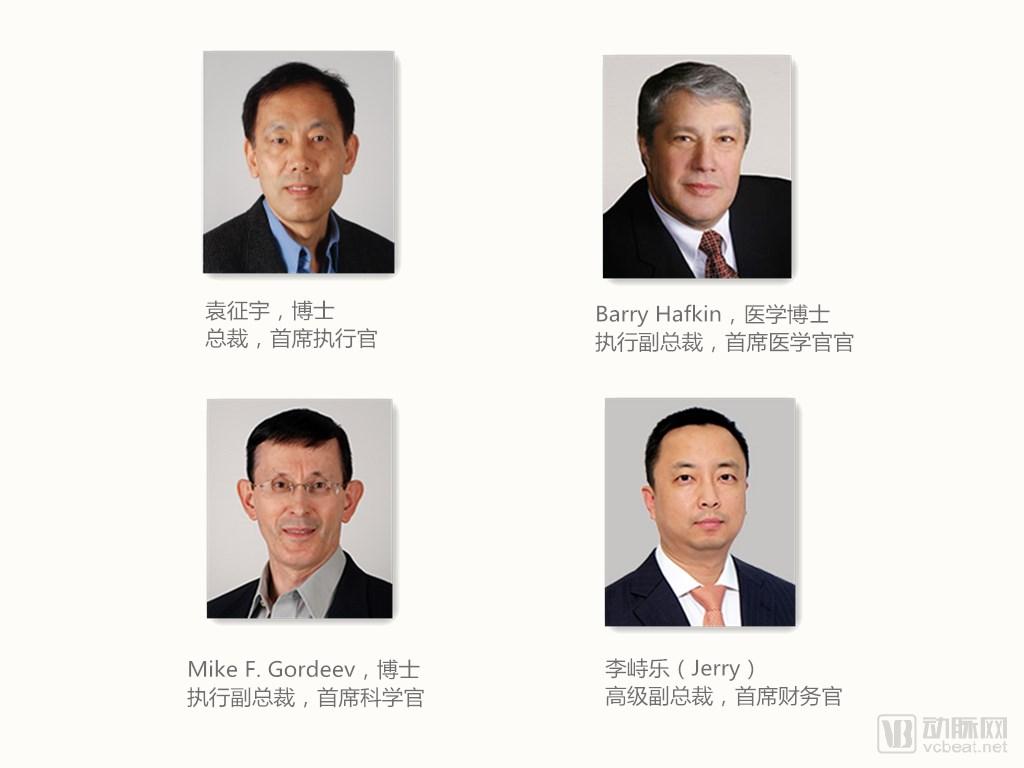
Micurx Core Team
“We must press on, as we have prior experience,” emphasized Yuan Zhengyu.
Developing Products That Meet Clinical Needs
There are numerous antibacterial products currently available on the market; however, they can be summarized into only a dozen or so chemical structure classes, each of which encompasses dozens to hundreds of individual agents.
Micurx Pharmaceuticals’ most advanced investigational product is an oxazolidinone antibacterial agent. This class of molecules has a discovery history spanning more than 30 years and represents one of only two new classes of antibacterial drugs introduced in the past three decades.
It is well known that prolonged use of the same class of antimicrobial agents inevitably leads to the emergence of similar resistance mechanisms. For instance, widely used cephalosporins and penicillins have shown diminishing therapeutic efficacy over time due to the development of drug resistance.
Oxazolidinone antibiotics have been in use for 18 years and remain susceptible to 99% of current Gram-positive bacteria, with resistance still rarely observed.
For drug-resistant bacteria, most medications on the market are injectable products. Micurx Pharmaceuticals has chosen to develop oral drugs targeting drug-resistant bacteria. Although intravenous injection is generally effective, it is not very convenient for clinical use because it requires hospitalization.
“The Ministry of Health has also long hoped that oral medications would be used to replace injectables as much as possible in clinical practice, thereby reducing the use of intravenous injections,” he added. “In this regard, we are aligned with the broader direction being promoted across the nation’s clinical sector.”
Equally Effective, with a Better Safety Profile
Leveraging its proprietary drug discovery platform, Micurx has established a comprehensive pipeline of potential best-in-class oxazolidinone and polymyxin candidates developed to address critical clinical needs for the treatment of infections caused by drug-resistant Gram-positive and Gram-negative bacteria, respectively.
The first products, contezolid (also known as MRX-I) and contezolid acefosamil (also known as MRX-4), demonstrate excellent efficacy against multidrug-resistant Gram-positive bacteria, including methicillin-resistant Staphylococcus aureus (MRSA) and vancomycin-resistant Enterococci (VRE).
In April 2012, the Phase I clinical trial of MRX-I was completed. This marked another critical milestone for the company following the completion of its Series A financing round.
The Phase I clinical trial, designed as a double-blind, placebo-controlled study, evaluated the safety, tolerability, and pharmacokinetic properties of MRX-I. The regimen included single ascending doses up to 1,800 mg and multiple ascending doses of 600 mg and 800 mg administered twice daily for 15 days. The results demonstrated that MRX-I exhibited favorable safety and tolerability profiles across all tested doses in 112 healthy male and female volunteers. Notably, no myelosuppressive adverse effects commonly associated with linezolid, such as thrombocytopenia, were observed.
“Phase I clinical trials have demonstrated the potential of MRX-I, which may represent a new generation of safer oxazolidinone antibiotics,” Yuan Zhengyu explained to VCBeat. Existing data indicate that the failure rate for Phase I clinical trials in antibacterial drug development is as high as 67%, due to factors such as drug intolerance or poor absorption. A successful Phase I clinical trial signifies that Micurx has passed the most challenging hurdle in clinical development.
The Phase I clinical trial results of MRX-I were encouraging. Subsequently, Micurx Pharmaceuticals initiated Phase II clinical trials in China and the United States to determine its efficacy and optimal dosing regimen.
The Phase II clinical trials conducted in the United States and China were both double-blind, multicenter, active-controlled studies using approved standard-of-care drugs as comparators. These two trials treated patients with complicated skin and skin structure infections (cSSSI) across multiple medical centers in both countries.
In 2015, Phase II clinical trials in both China and the United States were successively announced as completed. Furthermore, the results of the two trials conducted separately on either side of the Pacific Ocean were largely consistent, further indicating the potential for MRX-I’s success.
“This demonstrates that the clinical trials conducted by our Chinese team and collaborators have reached international standards, as both trials were double-blind,” Yuan Zhengyu revealed.
Prior to Phase II clinical trials, the company completed its Series B financing. After completing Phase II clinical trials, Micurx closed a $55 million Series C financing round in 2016, led by Jinpu Health Fund, with participation from Jinpu Internet Fund, Bencao Capital, and Delian Capital.
Compared with the Series A round, both the capital and policy environments underwent earth-shaking changes in 2016, attracting more funding and investors. “Since clinical trials were also conducted in the United States, the funds from the Series C round are expected to be consumed relatively quickly,” he told VCBeat.
Following this round of financing, Micurx Pharmaceuticals rapidly advanced the Phase III clinical trials of MRX-I in China, with results expected in 2019. Meanwhile, the company is also progressing its clinical trials in the United States.
“This is likely our third milestone event; we are still waiting,” he disclosed to VCBeat.
The first product will be launched in China; how should sales be planned?
In December 2017, Micurx Pharmaceuticals completed another round of private financing amounting to RMB 100 million. This round was led by existing investor Delian Capital and the China branch of BioVeda Capital Fund (BVCF). The funds will be used to complete Phase III clinical trials of MRX-I, submit the New Drug Application (NDA) in China, promote market launch, and support other business operations in China.
Regarding post-launch sales planning for new drugs, Yuan Zhengyu considers this a profoundly complex commercial issue. “For a novel drug with a completely new structure, the original R&D team still needs to continue driving its market adoption,” he added. “However, China is highly unique, currently undergoing significant transformation, so we are still in the process of planning and evaluating our final approach.” Given China’s vast territory, with each province and municipality directly under the central government operating as distinct markets, a single sales force may not be able to cover the entire region.
“We are currently studying policies, analyzing the market, and developing future sales strategies. The final plan may involve us handling part of the operations independently, while collaborating with others on the remainder,” he added.
Next Step
In addition to MRX-I, its water-soluble prodrug, MRX-4, is also poised to enter Phase II clinical trials in the United States shortly, while the polymyxin drug MRX-8 is currently in the preclinical trial stage.
For most new drug development companies, their primary task in the early stages is to bring their first product to market. Once the product generates revenue after entering the market, the company will have the capability and funding to undertake other projects.
The same applies to Micurx Pharmaceuticals. In addition to projects within the same therapeutic class, the company does not rule out expanding into adjacent but distinct new areas, nor does it exclude licensing in what it considers the best-in-class global products to enrich its product portfolio.
“This is how we can gradually build the company into a larger and stronger enterprise, thereby realizing our aspirations,” summarized Yuan Zhengyu.
Postscript
After returning to China to start a business more than a decade ago, when asked about the changes over these ten years, Yuan Zhengyu joked, “Another decade has gone by.”
Certainly, this has undoubtedly been a decade of profound significance. Over these ten years, he has witnessed the transformative journey of China’s pharmaceutical innovation from inception to maturity, as well as the bold and inspiring reforms undertaken by regulatory authorities.
It is precisely due to the efforts of him and numerous pharmaceutical innovators that China’s pharmaceutical innovation industry has experienced rapid growth over the past decade. Although no Chinese-developed drugs have yet entered the global Top 100 best-selling medications, this group of innovators and disruptors fills the future with hope and promise.