

Two Innovators in China's Primary Healthcare: One Praised by the King of Morocco, the Other Paid Willingly by Clinics
One company earned a “like” from the King of Morocco, while another persuaded grassroots clinics to willingly pay for its services. At the 2018 Summit on Innovative Practices in Primary Care, Feng Nanhai, founder of Li’an Technology, and Zhang Yu, founder of Aokao Medical, though operating in different fields, each carved out their own niche by addressing two long-standing challenges in primary healthcare: operational management and data collection.
Conference: 2018 Summit on Innovative Practices in Primary Healthcare
Location: Landison Plaza Hotel, Hangzhou
Speaker: Feng Nanhai, Founder of Li'an Technology
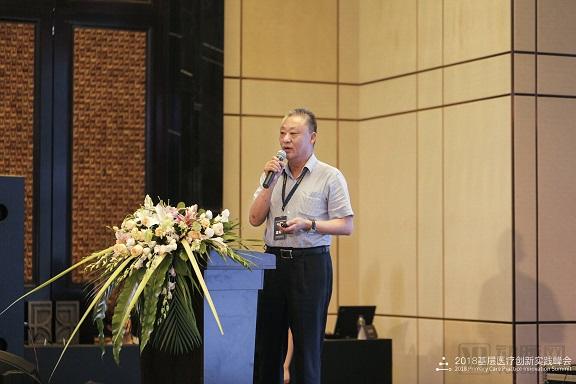
Feng Nanhai, Founder of Lian Technology
When Li'an Technology was first established, Feng Nanhai did not gain widespread understanding.
“I remember that seven years ago, when Lean Technology first began developing IoT-enabled wearable devices, people called me crazy. But I knew that to truly empower patients, primary healthcare institutions, and grassroots physicians, the key lay in having access to household health data. That is why the state now advocates for the active use of mobile internet and wearable devices,” said Feng Nanhai with a smile.
What would it be like to have an IoT product that can detect multiple health parameters and is easy to operate?
In 2016, Li’an Technology launched a wearable multi-parameter health monitor and a cloud-based platform for population-wide health management, establishing a complete closed-loop system ranging from home-based health data collection to health intervention services. This smart multi-parameter health monitor, smaller than a smartphone, can measure 18 physiological indicators—including blood pressure, blood glucose, blood oxygen saturation, heart rate, body temperature, respiratory rate, body mass index (BMI), basal metabolic rate (BMR), and body fat percentage—within minutes. Meanwhile, it has implemented a “one-cloud, three-terminal” service architecture, comprising the population-wide health management cloud service, the physician PC terminal, the client PC terminal, and the WeChat push notification service.
By the end of 2017, Li’an Technology obtained the Class II Medical Device Registration Certificate from the China Food and Drug Administration (CFDA) for this product. “When we customized the design solution, we first established our benchmarks: multi-parameter capability, high precision, compact size, ultra-low cost, and intelligent data transmission. Securing a Class II medical device license in 2017 was a significant challenge. We are deeply grateful to our R&D team,” said Feng Nanhai.
Lian Technology focuses on personal (household) health management services, building a personal health information platform. It is a provider of multi-parameter home monitoring terminals and a supplier of personalized health content services. The company has created a “mobile internet + health” dual-entity model to benefit the public. Its products are applied in several scenarios, including collaborations with insurance companies that leverage collected data to develop personalized insurance products, shifting the focus from post-event claims reimbursement to pre-event preventive interventions.
Second is smart cities. Lian Technology has participated in the construction of projects such as Smart Yinchuan, Smart Qinghai, and Smart Shuangluan.
Third is chronic disease follow-up. Family contract doctors can send invitations via WeChat to conduct follow-ups for hypertension and diabetes among their managed patients. Leveraging Lian Technology’s products, the services following resident health data collection can be effectively integrated, thereby empowering grassroots family doctor contracting through follow-up care.
Another aspect is the integration of medical care and elderly care. In China, 90% of elderly care will be provided at home rather than in institutional facilities. Without data collected from seniors at home, effective health management cannot be achieved.
Lian Technology has partnered with several real estate and property management companies to provide Health Hut services. The property management firms provide the premises free of charge, enabling Lian Technology to deliver health management services to tens of thousands of residents in the communities.
“Many companies that sell electronic health monitoring devices offer no follow-up services, resulting in poor user adherence. In contrast, Lian Technology sells services rather than devices; this is the most significant difference between the two,” said Feng Nanhai.
As standalone devices, Lian Technology’s products are sold exclusively to B-end clients—namely enterprises and government agencies—to help them manage employee health. This follows a B2B2C model, where C-end users receive quality services while B-end clients bear the costs.
Furthermore, Lian Technology maintains strong collaborative relationships with health examination institutions. Its devices enable examination centers to access residents’ pre-examination data, thereby facilitating the customization of personalized examination goals and out-of-hospital health management services based on these household health metrics.
Currently, health management centers such as the Third Xiangya Hospital and check-up institutions like iKang Guobin are all partners of Li’an Technology. These check-up institutions bundle Li’an Technology’s products into their health examination fees.
Next is the collaboration with telecom operators. China Mobile has developed “He Jiankang,” China Unicom offers “Wo Jiankang,” and China Telecom provides “Yi Jiankang.” However, they lack truly medical-grade wearable devices. By integrating Lian Technology’s devices with the operators’ offerings, complementary services and data plans can extend the scope of device-based services, while also fostering innovative synergies in initiatives such as health-focused poverty alleviation and corporate employee health care programs.
Not long ago, Feng Nanhai flew to Morocco at the invitation of the “Second China-Morocco Friendship Forum.” The current director of King Mohammed VI Hospital told him, “Our country is in great need of such health management services.” In response, Feng Nanhai spontaneously composed a verse: “The lights of myriad households illuminate the land; the Belt and Road Initiative spreads friendship; cooperation and consultation seek common well-being; building a community with a shared future.” Shortly thereafter, Li’an Technology received an order request for 20,000 units from Morocco.
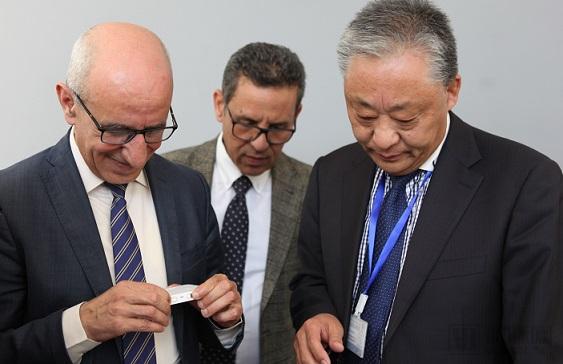
Morocco’s King Mohammed VI Hospital Director Experiences Smart Health Wearable Multi-Parameter Monitor
Currently, Lian Technology’s products have entered markets in Ningxia, Qinghai, Gansu, Hebei, Shanxi, Beijing, Zhejiang, Nanjing, Shenyang, Xinjiang, and other provinces and cities. The retail price of this product is RMB 3,680, equivalent to the price of an ordinary smartphone.
Today, Lian Technology has assembled an R&D team of over 40 members. Looking ahead, Feng Nanhai, a graduate of Beijing University of Posts and Telecommunications with a major in communications, plans to collaborate with smartphone manufacturers to launch a “dual-certified” smart health phone. According to his plan, in addition to the mandatory network access license, the device will also obtain medical device certification. Technological innovation is an ongoing journey; empowerment is paramount. His enduring goal is to enhance the public’s sense of gain.
Conference: 2018 Summit on Innovative Practices in Primary Healthcare
Venue: Landison Plaza Hotel Hangzhou, Zhejiang
Presenter: Zhang Yu, Founder of Aokao Technology
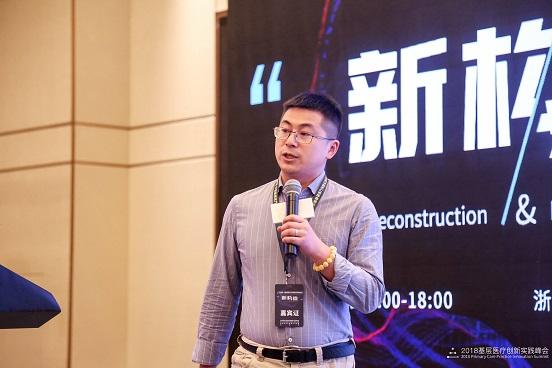
Zhang Yu, Founder of Aokao Technology
In their previous conversation, VCBeat and Zhang Yu discussed the five key principles guiding private clinics’ willingness to pay for information technology solutions:
First: Requirements for Health Insurance Integration. Clinics must have an information system in place to apply for designation as a designated health insurance provider.
Second: Operational management needs. For chain clinics or individual clinics (outpatient departments) with more than ten staff members, information systems can enhance management transparency, reduce labor costs, and simplify the calculation of physicians’ performance metrics;
Third: Learn from the expertise of specialists. The key distinction between Aokao Technology’s information system and similar products lies in its integration of renowned specialists’ outpatient clinical experience into the system, thereby empowering primary-care physicians to engage in self-directed learning during their daily practice.
Fourth: The need to align with the management standards of large hospitals. For physicians who leave the public healthcare system to start their own ventures, they are already accustomed to using information technology systems, which are essential tools for establishing their clinics.
Fifth: Clinic Marketing Needs. Private clinics place greater emphasis on service and marketing, all of which are grounded in patient visit data; this, too, requires the support of an information system.
At this summit on innovative practices in primary healthcare, Zhang Yu provided a more detailed answer.
He believes that in the healthcare industry, the primary lifeline is the quality and safety of medical care, which is ultimately determined by talent; followed by brand, finance, management, and pharmaceuticals.
To achieve standardized and normalized solutions across these five areas, healthcare institutions must first demonstrate sustained commitment and provide ongoing training; second, possess the capacity for dissemination; third, have the capability to collect, analyze, and process data; and finally, establish process-oriented management capabilities. These four capabilities are precisely what health information technology offers.
Therefore, informatization is an excellent tool for standardizing and normalizing clinic operations.
The Aokao Medical Steward Cloud HIS Platform was developed specifically to address the needs for informatization and standardization in clinics. It offers the following nine core features: modular electronic prescriptions and medical records, intelligent pharmacy management, clinical decision support systems, smart marketing management, flexible scheduling and appointment booking, multi-channel payment options, and a comprehensive medical knowledge base.
According to Zhang Yu, during the process of digital transformation, Aokao Technology identified another major issue in clinic operations—talent.
AoKao Medical Manager provides question banks and mock exams for licensed physicians in traditional Chinese medicine, Western medicine, dentistry, and other specialties. It also compiles classic case studies from renowned experts at top-tier tertiary hospitals, offers drug formulation information lookup, and strives to establish a learning pathway for doctors and nurses within a single professional environment.
Additionally, AoKao Medical Steward also provides an intelligent pharmacy management system. For instance, it automatically matches against a backend database of hundreds of thousands of medications using both Chinese and English drug names, enabling automatic autocomplete functionality. The system offers automated reminders and early warnings for low-stock or near-expiration medications, thereby reducing medication waste in clinics.
Establishing a proprietary CRM system to create patient profiles is fundamental for primary care clinics. Aokao Technology aims to provide a channel that enables marketing campaigns to reach target users rapidly. To this end, Aokao Medical Steward offers functionality similar to bulk SMS messaging.
Meanwhile, Aokao Medical Steward also offers a variety of customizable questionnaires, enabling clinics to conduct diverse marketing and survey activities based on their specific needs.
“We’ve encountered many doctors before who all assumed that once they applied for and obtained medical insurance reimbursement status, the revenue and government subsidies would automatically follow. In reality, that’s not the case,” said Zhang Yu.
With the integration of medical insurance payment systems, clinics’ service offerings will also evolve. Aokao Technology not only provides system integration for its clients but also assists them with drug registration, service item registration, and bundled package registration. Furthermore, Aokao Technology offers end-to-end services to support clinics in adjusting their operational strategies.
Many traditional clinics still rely on pharmaceutical sales for profitability, whereas some mid-to-high-end "key opinion leader" (KOL) clinics charge physician service fees. However, with the integration of medical insurance, the future trend will undoubtedly see an increasing proportion of revenue derived from laboratory and diagnostic testing services.
Aokao Technology offers multi-category, multi-terminal reporting and statistical analytics, including data reports for PC, mobile, and tablet devices. Whether it concerns clinic costs or revenue—such as revenue composition—Aokao Technology provides comprehensive data statistics and comparative reporting, enabling clinic managers to monitor operational performance anytime, anywhere.
According to Zhang Yu, during actual market expansion, Aokao Technology encounters various types of clinics with differing needs for information-based management.
For instance, traditional Chinese medicine (TCM) clinics are characterized by frequently inviting specialists for consultations or conducting marketing-oriented activities. Consequently, they have stringent requirements for appointment scheduling and place significant emphasis on appointment accessibility rates. While most general practice, pediatric, and Western medicine clinics do not involve surgical anesthesia, it is a fundamental requirement for dental clinics.
In addition, Aokao Medical Steward offers several value-added services for clinics, including basic medical equipment and an outsourced laboratory testing system. For clinics, diagnostic equipment is prohibitively expensive, while patient volume and testing demand are typically low. Aokao Technology assists clinics in sample collection and transports blood specimens to third-party laboratories via cold-chain logistics. Once the test reports are generated, they are automatically transmitted to the Hospital Information System (HIS), enabling efficient, zero-investment value-added services.
Currently, 2,800 clinics have partnered with Aokao Technology, primarily comprising individual/chain clinics, outpatient departments, and traditional Chinese medicine (TCM) clinics.