

Panorama Medicine: Seizing Opportunities in the Medical Imaging Development Window — Speech at the 2018 Primary Healthcare Innovation Summit

Li Chengzhou, Dean of Hangzhou Panorama Medical Imaging Diagnostic Center
“Opportunities and Challenges for Independent Diagnostic Imaging Centers” Speech
Conference: 2018 Primary Care Practice Summit
Location: Landison Plaza Hotel, Huashengda, Hangzhou, Zhejiang
Presenter: Li Chengzhou, President of Hangzhou QuanJing Medical Imaging Diagnostic Center
Below is a compilation of Li Chengzhou’s key insights from VCBeat (WeChat ID: vcbeat):
I. The Huge Potential of the Chinese Market from the Perspective of the US Market;
II. Multiple forces will jointly drive healthcare reform and the development of the artificial intelligence market;
III. Analysis of the Operational Status of Independent Diagnostic Imaging Centers from Three Perspectives: Cost Control, Patient Acquisition, and Physician Resources.
From June 9 to 10, the “New Structure – 2018 Summit on Innovative Practices in Primary Healthcare,” co-hosted by the National Engineering Laboratory for Internet Medical Systems and Applications, Sir Run Run Shaw Hospital affiliated with Zhejiang University School of Medicine, the Internet Medical Health Industry Alliance, and VCBeat, was grandly held in Hangzhou. The event featured six specialized forums, bringing together more than 1,000 top experts, scholars, outstanding industry professionals, and investors from across China, and attracted coverage from over 30 industry media outlets.
Independent diagnostic imaging centers in developed countries and regions have been developing for nearly 30 years. In the United States, there are more than 6,800 imaging centers, which perform 40% of all imaging examinations nationwide. The largest imaging center employs over 400 radiology experts, provides services to 3,000 hospitals, and generates 20,000 imaging diagnostic reports daily.
A single imaging center can provide imaging examination and diagnostic services to ten large hospitals, significantly optimizing physician resources and costs while enabling shared allocation of medical resources. Imaging centers can offer more flexible and specialized subspecialty interpretation and consultation of imaging data.
This also presents a significant opportunity for insurance companies. With relatively low fees, professional image interpretation can effectively reduce examination costs and minimize diagnostic errors to the greatest extent possible. Insurance companies can offer such services to patients, creating a win-win scenario.
In China, it is possible to draw on overseas service models and pricing strategies by unbundling certain existing hospital functions, with independent imaging centers serving as an excellent starting point.
Demand is a key driver of market development. According to statistics, approximately 700,000 Chinese residents traveled abroad for various medical examinations in 2017. They prioritized high-quality medical care and premium services. This necessitates the cultivation of more high-quality healthcare providers within China. Meanwhile, both patients and physicians need to embrace the concept that “healthcare is a service,” which will facilitate coordinated development between the two parties and help alleviate doctor-patient tensions.
The Chinese government has consistently maintained a supportive stance toward third-party imaging centers, introducing a series of policies to bolster their development. However, these reforms are still ongoing; further policy support and structural changes are needed to advance medical standards. Having previously learned from international experiences in implementing tiered diagnosis and treatment systems, we can once again look overseas—adopting best practices while discarding less effective ones—to study the management and operational models of independent diagnostic imaging centers abroad.
Capital investment is also a core driver for the development of independent diagnostic imaging centers; projects are pursued only when they are profitable. Li Chengzhou stated, “Independent diagnostic imaging centers in China currently account for approximately 10% of the total medical imaging market share. The current market size for diagnostic imaging centers is around RMB 30 billion. Over the next five years, the overall healthcare market is projected to double, reaching a scale of RMB 60–80 billion. This estimate assumes that the diagnostic imaging center segment will merely double at its current growth rate. However, if independent diagnostic imaging centers in China could capture a 40% market share, similar to the United States, the total market size could potentially reach RMB 240–320 billion. This represents a substantial market opportunity with significant room for growth.”
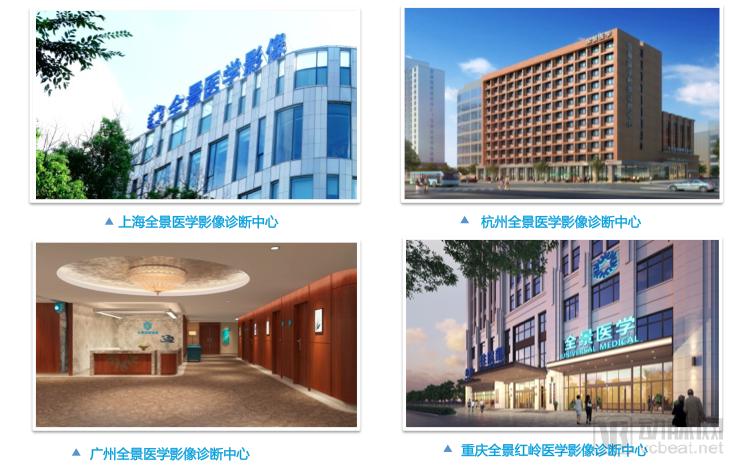
Hangzhou Quanjing Medical Imaging Diagnostic Center is an innovative institution truly dedicated to precision medicine, primarily specializing in high-end imaging examinations and diagnostics. It operates Zhejiang Province’s first officially commissioned PET/MR system, along with other advanced equipment such as PET/CT, 3.0T MRI, and 256-slice CT. Hangzhou Quanjing is committed to the early diagnosis and staging of tumors, as well as targeted screening for malignant cancers such as lung cancer and breast cancer.
During the establishment and operation of Hangzhou Quanjing, Li Chengzhou summarized three key points to consider in operations, including cost control, patient acquisition, and physician resources.
In China, there has been a severe shortage of physician resources, particularly of multidisciplinary imaging diagnostic specialists, who play a crucial role in the development of imaging diagnostic centers. Li Chengzhou remarked, “Unlike public hospitals, physicians in non-public medical institutions typically hold multiple roles. Senior physicians are often required to engage in administrative management, handle medical malpractice incidents, and manage day-to-day interpersonal relations, which poses a significant challenge for most doctors.” This multi-role burden places considerable pressure on physicians and is detrimental to the long-term development of the industry. It is therefore necessary to strengthen management in areas such as medical administration and logistical support.
Therefore, to address this issue, it is essential to take a holistic approach by striving to enhance the professional pride of physicians in non-public medical institutions, extend their career longevity, standardize hospital management, and prioritize research and academic endeavors to strengthen their sense of belonging.
Cost control is also a critical component for healthcare institutions. With the continuous development of the hospital market and factors such as the shortage of physician resources, labor costs are bound to rise. In some overseas peer institutions, labor costs account for more than 50%, posing significant challenges to the management and operations of domestic healthcare institutions.
Currently, the accuracy of AI-based image detection has reached a highly impressive level. Hangzhou Panoview is also committed to collaboration and research in this area, particularly in the screening and diagnosis of pulmonary nodules.
Unlike typical non-public medical institutions, Hangzhou Panview places significant emphasis on scientific research collaborations with major local hospitals, particularly university-affiliated hospitals. To date, Panview Medical Imaging Diagnostic Center has secured more than ten new patents and over thirty software copyrights, and has submitted applications for more than ten research projects. This year, two papers from Hangzhou Panview were accepted as oral presentations at the Annual Meeting of the Society of Nuclear Medicine and Molecular Imaging (SNMMI) in North America, one of which received the Outstanding Paper Award.
Furthermore, Panovue has established research collaborations with multiple Grade A tertiary hospitals in Shanghai, Hangzhou, Guangzhou, and other cities. Notably, its joint research project with Changzheng Hospital of the Second Military Medical University in Shanghai, titled “Construction of Highly Targeted PET/MRI Dual-Modal Molecular Imaging Probes and Their Application in the Early Diagnosis of Lung Cancer,” has been designated as a Key Program of the National Natural Science Foundation of China.
Driven by multiple converging forces, the initiatives of Panorama Medical Imaging Diagnostic Center in the field of medical imaging may reshape the industry and pave new pathways. While the market prospects are vast, the road ahead will undoubtedly be challenging.