

Exploring Standardized Commercialization and Cost-Operational Pathways for General Practice, Specialty, and Community Clinic Models
As one of the most fundamental and core forces in primary healthcare, clinics have attracted a growing number of entrepreneurs, driven by the mobility of medical talent and the influx of capital.
On June 10, in Hangzhou, at the Frontier Forum on New Clinics held as part of the 2018 Summit on Innovation and Practice in Primary Care hosted by VCBeat, discussions centered on topics such as the expansion and standardization of new chain clinics, business models, and operational costs.
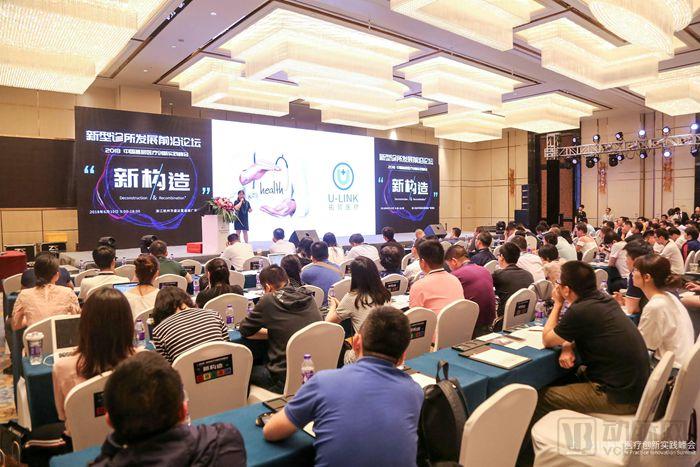
Guests participating in this forum include practitioners from the clinic industry, industry experts, and investors. With years of deep-rooted experience in the clinic sector, they aim to make a modest contribution to primary healthcare in China, while also sharing their experiences and lessons learned from past missteps to serve as reference for future entrepreneurs.
To this end, we have categorized the guests into five groups: general practice clinics, specialty clinics, community clinics, model innovation, and clinic empowerment, each of which will discuss how they operate within their respective categories.
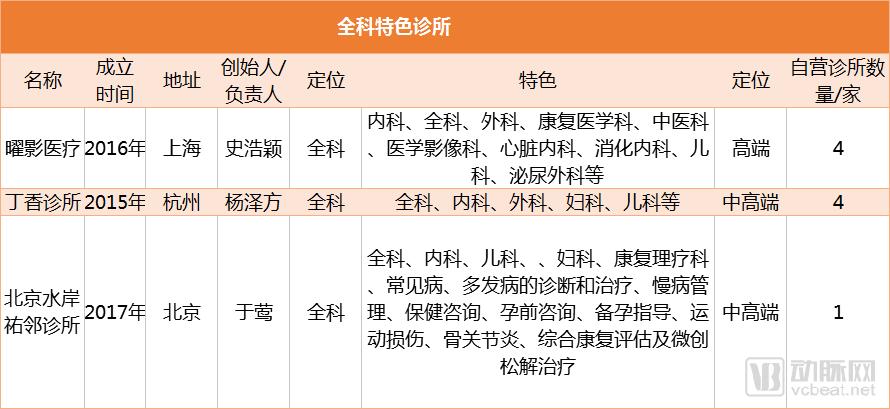
We selected SinoUnited Health, DXY Clinic, and Beijing Shui'an Youlin Clinic for analysis among general practice specialty clinics.
In terms of establishment dates, these three clinics were founded in 2015, 2016, and 2017, respectively, coinciding with the rise of the clinic sector. Regarding scale, both SinoUnited Health and Dingxiang Clinic operate four locations each; however, all four SinoUnited Health facilities are located in Shanghai, whereas Dingxiang Clinic’s locations are distributed across Fuzhou and Hangzhou.
According to Xiong Ying, Medical Director at SinoUnited Health, the private high-end healthcare sector was highly active during a year marked by the booming and rapid emergence of premium clinics. SinoUnited Health’s swift breakthrough was driven by three key factors: first, a clear upward trend in healthcare expenditure; second, a surge in the number of middle- and high-net-worth individuals; and third, excessive strain on public hospitals coupled with bottlenecks faced by some private medical institutions.
In response to these factors, SinoUnited Health adheres to the concept of being “patient-centric” and maintains an operational management system that is “physician-centric,” thereby delivering high-quality services. Such high-quality medical care is inseparable from exquisite clinical expertise and compassionate, patient-centered service.
Excellence in medical technology is inseparable from authoritative medical talent. SinoUnited Health not only boasts an outstanding team of physicians but also features top-tier general practitioners, such as Dr. Frank from the United Kingdom, Dr. Stephen from the United States, and Dr. Wanda from Australia.
“True high-end healthcare lies not in hardware specifications, but in the intangible aspects invisible to the naked eye.” Therefore, in the clinic’s design, physicians were personally involved throughout the entire process, overseeing overall hardware configuration, operational workflows, and patient service protocols. Every detail was meticulously considered and refined, ranging from the safe height of countertops and potential hazards for children to whether the checkout process was overly cumbersome or redundant.
In Yu Ying’s view, if a clinic is operated solely for profit, it is easy to run: profits will naturally follow from prescribing more medications, administering more intravenous infusions, and engaging in overtreatment. However, if physicians are launching their own clinics, they must carefully consider several questions before leaving public hospitals: What will attract patients? Where should the clinic be located? Should it target the high-end or low-end market?
Using the operation of Beijing Shui’an Youlin Clinic as an example, she addressed these questions one by one. The first aspect is the site selection logic. For instance, in Beijing, my clinic is located outside the Fifth Ring Road. Development in that area only began in 2016, but it is already adjacent to a high-end villa community and many newly constructed residential complexes. Most units in these developments are large-sized, with an average floor area of approximately 160 square meters per household and a unit price of RMB 80,000 per square meter. Individuals capable of purchasing property in this area possess considerable spending power.
Meanwhile, we conducted preliminary surveys with the nearby neighborhood committees and real estate agencies to assess the average rental occupancy rates, rental prices, second-hand housing prices, commercial property prices, and parking facility configurations in the surrounding area. According to statistics, the neighboring residential communities (excluding Tiandu Yuan) have a capacity of 200,000 residents across 40,000 households, with an occupancy rate exceeding 70% at that time. The average value of private cars owned by residents was over RMB 500,000, and a significant proportion of households had children. Therefore, we decided to select this location.
Furthermore, it has been observed that the majority of residents are young families born in the 1990s, resulting in a low utilization rate of commercial health insurance. Coupled with the prolonged reimbursement cycle for commercial insurance claims, this places significant pressure on the clinic’s cash flow. Therefore, during the clinic’s establishment phase, we opted to forgo integration with commercial insurance providers, thereby substantially reducing labor costs.
Second, the average transaction value is a determining factor. My clinic charges a registration fee of 199 yuan, which is relatively low compared to public hospitals. We adopt precision marketing strategies to lower the threshold for this fee. Specifically, we establish connections with residential property management companies and neighborhood committees to gain insights into residents’ health conditions, including information on bedridden patients with advanced-stage cancer. This enables us to provide personalized home-care services—a capability that public hospitals lack.
Third, prioritize backend data analytics. For instance, on Mother’s Day, I posted a Weibo message encouraging users to scan a QR code to access health tips related to pregnancy and childbirth. Subsequent analysis of the backend data revealed the number of pregnant followers, their respective stages of pregnancy and postpartum periods, as well as the number of followers who were trying to conceive, out of our 300,000 Weibo fans. This data will be highly valuable for our future online initiatives.
Xu Kenan, Administrative Director of DXY, stated that the sudden surge in outpatient visits at DXY Clinics occurred during last year’s influenza season. At that time, many large tertiary hospitals faced medication shortages, whereas DXY Clinics maintained ample drug supplies, prompting nearby residents to seek medical care at their facilities. “We were initially concerned that patient volumes would decline after the flu season subsided, but this did not happen. Patients developed trust in our clinics and have continued to choose them for subsequent medical consultations and treatments,” said Xu Kenan.
In addition to services for patients, Xu Kenan also introduced services for clinic-based medical institutions.
First is "Easily Open a Clinic", compile the stories of clinic founders to inform the public about where high-quality clinics have been established and share the physicians’ perspectives;
Second, Build the "Micro-Clinic" Brand, leverage the advantages of the internet to help you connect with more users, make it easier for them to share, and enable them to better understand your clinic’s reputation and services;
Third, “Cloud Manager,”An information platform that assists with outpatient management and standardizes doctor-patient interactions through its system;
4. "Business Management" Services; Fifth, it provides online and offline operational management training services, clinic talent recruitment services, and matchmaking for pharmaceutical and medical device resources, among others, to help peers who wish to open clinics establish their practices from the ground up.
Where do these individuals come from? In the early stages, we leveraged DXY’s proprietary online platforms to identify and engage many such professionals, offering online course sharing. We also organized offline seminars to assist clinics with recruitment, brand management, operational management, as well as entrusted management or independent investment. Our goal is to support clinics during their initial setup phase, providing assistance with staffing and funding needs through DXY’s resources.
“Of course, our capabilities as a single entity are limited. We look forward to industry peers and more partners joining the platform to contribute more to primary healthcare,” said Xu Kenan.
In addition to general practice clinics, we have selected Aier Times, Meiwu Dental Care Group, and Meihe Medical Group for specialty clinics.

In the realm of specialized clinics, dental practices are among the earliest established specialties in China. It is reported that the current financing threshold for large-scale dental clinic chains starts at RMB 100 million, indicating a market where capital is actively seeking out investment opportunities in this sector.
According to David Song, Partner and Chief Operating Officer of Meiwei Dental Care Group, Meiwei is currently forging a third development model for the dental industry through its “Business Partner” framework. The group has also proposed a five-pronged empowerment strategy for dental institutions—establishing standards, advancing technology, attracting talent, strengthening operations, and prioritizing digitalization—to help them scale up and become leaders in their respective regions or niche sectors.
The “Business Partner” model is a concept developed by Meiwei based on its existing experience in growing private specialized chain institutions. Under this model, Meiwei collaborates with business partners to integrate leading local dental brands into the Meiwei portfolio. Guided by the principles of “complementary advantages and mutual integration,” it aims to build a stable, win-win community of shared destiny.
While empowering its partners, Meiwei has deeply integrated the upstream and downstream segments of the dental healthcare industry chain, fostering an internally connected, cross-sector collaborative, and co-evolving healthy and sustainable business ecosystem. This strategy gradually establishes and refines a closed-loop service model encompassing dental examinations, disease diagnosis and treatment, health management, and medical security.
In recent years, hearing clinics and ophthalmology clinics have also gained prominence. Liang Qi, who was born into a family of medical professionals and previously worked at West China Hospital, embarked on an entrepreneurial journey after returning from studying abroad, with the aim of establishing the hearing clinics of the future.
How does this differ from traditional methods? It first leverages iPad technology to reduce the workload of audiologists, and then employs semi-intelligent devices to enable automatic hearing screening for children and adults.
She positions the hearing system as a detection tool, emphasizing that patient-provider communication constitutes the healthcare service patients truly value. The hearing care process involves not only technical components but also, more importantly, interpersonal communication to understand patients’ needs. In the future, clinics could be rapidly replicated in many locations, no longer confined to major commercial hubs such as Beijing, Shanghai, and Guangzhou.
In the future, Liang Qi will also build a platform for hearing health management, integrating technologies in testing, acoustics, and e-commerce. The platform will be designed based on consumer habits and best practices suited to the current environment, enabling remote adjustments according to user feedback. For example, if I tell a friend that my grandfather has hearing problems, what should we do? He can either undergo hearing tests remotely or visit the nearest community hospital using our platform. Audiologists can then access his data from the backend, review his hearing test results, recommend suitable hearing products, perform professional fittings, and deliver the devices directly to his home. During use, further adjustments can be made remotely, or he can visit the nearest community hospital. “We are currently collaborating with numerous community hospitals to establish future hearing clinics, helping more patients at the primary healthcare level,” said Liang Qi.
Regarding ophthalmology clinics, Yu Gang, founder of Meihe Medical Group, shared his past entrepreneurial experiences and operational insights.
At the inception of his venture, he clearly defined three strategic directions: first, to pursue initiatives aligned with experts’ aspirations; second, to deliver compassionate healthcare; and third, to enable physicians to earn income with dignity.
First, recruit renowned physicians. At times, recruiting a single renowned physician can cost millions, with such high expenses making it difficult to secure investor approval. Second, retain talent. On one hand, consideration should be given to whether equity incentives should be provided to nurses, physicians, and optometrists; on the other hand, once a certain level of maturity is reached, whether rapid replication can be achieved to ensure sustainable development.
In terms of customer acquisition, he has been undertaking tasks that tertiary Grade A hospitals are unwilling, afraid, or unable to perform, and venturing into uncharted territory. Director Yu mentioned that they have recently attempted to apply concepts from medical aesthetics to pediatric plastic surgery, which will bring new insights and opportunities. Meanwhile, Meihe Medical Group is preparing to establish China’s first consulting and guidance center for pediatric genetic eye diseases, inviting leading domestic and international experts in the field to join.
Regarding financing, he believes that one must first conduct a self-assessment to identify the gap between the project’s current status and its established goals. Secondly, it is important to exercise moderation; one should not overestimate their capabilities but rather proceed in a pragmatic and steady manner. He suggests that when choosing between building a century-old enterprise and seeking capital market involvement, companies should comprehensively consider their own circumstances. If capital is scarce, they should leverage external funding to drive growth; however, if funds are abundant, they should focus on building a sustainable, long-lasting business.
For Meihe Medical Group, the defined scope of business encompasses both medical and surgical pediatric ophthalmology. Pediatric ophthalmic surgeries fall under surgical services, while optometry, glasses dispensing, and common pediatric eye diseases are categorized under medical services. In the future, the group will shift toward more intensive medical care, assuming greater risks and social responsibilities. This year’s objective is to establish day-surgery centers and “Health Huts” for children’s preventive eye care across China.
President Yu believes that pediatric investment in China currently falls into two main categories. Pediatric surgery is largely neglected due to its high barriers, significant risks, and scarcity of specialists. Investment in pediatric internal medicine mostly focuses on light medical services, such as child healthcare, parenting support, and general outpatient convenience clinics. In contrast, their pediatric ophthalmology department pursues a dual strategy, strengthening both medical and surgical ophthalmology. The surgical team performed 500 procedures over the past year. Meanwhile, the medical ophthalmology side handles services such as pediatric optometry, glasses prescription, and myopia prevention and control. These two major service lines complement each other, driving parallel growth.
Regarding community clinic services, He Qin, Chairman of Zhejiang Huafang Medical Care Co., Ltd., stated, “The new model of future community healthcare primarily encompasses the Internet, intelligent AI, family doctors, and related services.”
1. Healthcare will be fully integrated with the internet, leveraging apps, WeChat, and TV platforms to enable telemedicine, remote diagnostic devices, and wearable and home-use devices.
2. In the future, 50% of diagnostic tasks in community healthcare will be performed by robots, 30% of treatment and care tasks will be completed by nurses, and the remaining 20% will involve physicians providing guidance and management to nurses and robots. Currently, AI-assisted diagnostic technologies have already been introduced to the market, and single-disease diagnosis and treatment systems are gradually being refined. Chairman He believes that over the next decade, medical robots will progressively surpass the capabilities of primary care physicians in managing complex diseases, potentially even reaching the level of senior specialists capable of independently handling complex cases without any human assistance.
3. Family doctor services will gradually be dominated by private capital. Chairman He believes that in the future, the ratio of privately operated family doctor membership cards to publicly contracted family doctor services will reach 7:3, thereby providing more convenient family doctor services to residents at the primary care level.
4. Primary healthcare services are commercial services. Community medical institutions will provide services such as online consultations, home visits, chronic disease management, patient education, and home-based rehabilitation. While continuously enhancing their profitability, they are also expanding toward a multi-level, multi-dimensional, and patient-friendly model of care.
Huafang Medical Care is currently exploring a new model for integrated medical, elderly care, and nursing services in community healthcare, creating a “1+30+3+N” service template. This model centers on one hospital as the core, utilizes 30 clinics as terminal nodes, adopts three-tier elderly care institutions as standardized templates, and establishes an ecosystem through N partnerships. By forming a regionalized platform for integrated medical, elderly care, and nursing services, it effectively links all elements of the industry chain—medical treatment, elderly care, and nursing. The model is being replicated nationwide, driving overall integration and transformation within the healthcare industry.
Currently, Huafang has established one secondary hospital, 20 self-operated clinics, and 22 Huafang Health Pharmacies in Hangzhou, while forming partnerships with 27 other clinics. The company is continuously exploring practical innovations in various areas, including talent management, family physician services, clinic intelligence, and new service models.
Daoqin Clinic, based in Chengdu, centers its community clinic operations on family physician services. Like other platform-based companies, it has developed a Hospital Information System (HIS) and built a Software-as-a-Service (SaaS) platform. Furthermore, it places significant emphasis on hardware investments, particularly in laboratory testing equipment and wearable vital-sign monitoring devices, which are essential for future-ready clinics.
“Meanwhile, I also hope to share these resources with everyone in the future—whether doctors or entrepreneurs—so they can start operations with ease. We encourage everyone to participate in family doctor services,” said Wang Rong, CEO of Daoqin Clinic.
Li Zhendong, co-founder of Linjia Haoyi, another community clinic in Hangzhou, however, believes that community clinics should still be operated as chains. The core lies in addressing the relationships between the organization and individuals, the organization and the environment, and individuals and goals.
First, let’s address the positioning of chain clinics. Different brands have distinct market positionings. Taking Linjia Haoyi as an example, it is positioned to serve and engage with local communities, providing professional, convenient, and approachable medical services in second- and third-tier cities, aiming to become the trusted partner that patients think of first when seeking care.
Next is the issue of cost. Li Zhendong presents three viewpoints: First, the greater the cost inefficiency, the greater the loss in competitiveness. Consider the establishment and operation of a clinic: if one party completes the setup in three months with an investment of one million yuan, while another takes a year and spends three million yuan, which entity demonstrates more obvious competitiveness under equivalent positioning and pricing strategies? Second, it is essential to budget not only for costs associated with current performance realization but also for those related to future performance. Current cost budgets cover rent, renovation, procurement, and personnel expenses. In contrast, future cost budgets, within the framework of chain expansion mechanisms, encompass management systems, informatization, talent development, brand operations, and financial standardization—all of which significantly impact future performance. Third, there is no such thing as the lowest cost, only reasonable cost.
Finally, regarding financial revenue, it can be simply summarized as outpatient volume multiplied by average revenue per user (ARPU). Community-based general practice differs from dentistry and ophthalmology; therefore, in project development, Linjia Haoyi’s operational strategy and business philosophy revolve around the following key points. First, we prioritize customers’ health needs, placing medical quality at the core. While environment and convenience are important factors for patients when choosing a healthcare provider, medical quality remains the most critical element. Without a foundation built on high-quality medical care, the clinic will inevitably fail to retain customers for repeat visits and generate positive word-of-mouth referrals. Additionally, regarding the selection of treatment plans within community healthcare settings, how should one choose between Traditional Chinese Medicine (TCM) and Western medicine approaches? We believe that “both pharmaceuticals (capsules and tablets) and TCM therapies (such as acupuncture and cupping) are essential.”
The most complex challenge remains the human element. Linjia Haoyi has established the Linjia Academy to build a tiered talent development system, focusing on continuing education led by distinguished training mentors, complemented by extensive clinical patient training. Currently, its largest clinic serves 90,000 patient visits annually. Furthermore, it collaborates with specialists from Grade A tertiary hospitals to conduct in-depth disease research.
Building on its recruitment and selection framework, Linjia Haoyi prioritizes internal training while supplementing it with externally hired experts. The organization actively recruits young physicians and places particular emphasis on cultivating clinical reasoning and consistency in diagnosis and treatment. In the areas of hospital infection control, nursing, and emergency resuscitation, staff members possess extensive experience in managing common emergency cases, supported by comprehensive standard operating procedures for daily tasks.
With the emergence of the sharing economy model, two companies have attempted to apply this approach in the high-barrier healthcare industry: Xingren Doctor, which enables physicians within the public system to generate added value through multi-site practice; and Penguin Doctor, which shares health equipment.
According to Martin, founder of Almond Doctor, “We co-create a partner clinic model with physicians, featuring shared risk and shared benefits—a physician practice platform.” Its three key success factors are:
1. Outpatient Investment: An investment model that aligns with physicians’ interests.We provide physicians with comprehensive, high-standard medical equipment. All equipment used by Xingren Doctors is domestically leading. In fact, public hospitals possess the best equipment. However, for our shared medical facilities, we can purchase either domestically produced or imported equipment. I do not reject any physician’s requests; however, everyone is rational. If you opt for imported equipment, how much will your cost allocation be? If you choose domestically produced equipment, what will your cost allocation be? It is that simple. You will find that interests become aligned, and physicians’ attitudes change immediately.
This outlines the investment rationale for internal clinic funding. In terms of attracting external financing, our secret lies in the homophonic play on our brand name: “Xingren Yisheng” (Almond Doctor) sounds like “Xinren Yisheng” (Trusted Doctor). Our outpatient partnership recruitment campaign, launched in March 2017, raised RMB 15.96 million from 257 partner physicians within just 30 days. Why did we attract such substantial funding? By aligning platform interests with those of physicians, we earned their financial commitment. It is unprecedented for physicians to invest their own capital into a platform; this demonstrates their trust in us.
2. Clinic Operations: High-Quality Healthcare Affordable for the General Public.Xingren Doctor is positioned for the general public, yet we provide clinic decorations and environments comparable to those of high-end facilities. Regarding physician qualifications, all doctors at Xingren Doctor are active specialists from Grade 3A hospitals, rather than former employees hired after resignation. Xingren Doctor’s positioning centers on multi-site practice for physicians. All fees, excluding the physicians’ own consultation fees, are identical to those at Grade 3A hospitals. Your operational model extends beyond IT systems and Hospital Information Systems (HIS). Software alone cannot resolve any issues; you must apply management thinking. Therefore, I believe that every aspect—from hardware to management models to IT—is crucial. Both management models and strategic approaches must be systematized.
3. Outpatient Services: Build a platform-based clinic capable of delivering closed-loop services.A traditional outpatient clinic might have five physicians with a business target of serving 1,000 patients. In contrast, an Xingren Clinic might have 200 physicians, each seeing five patients, also totaling 1,000 patients, thereby delivering equivalent commercial value. Therefore, what is the prerequisite before we launch any clinic? We must have a sufficient number of physicians in every city. The foundation of our outpatient business is a substantial physician network; having a large pool of physicians in every city constitutes our moat, which is difficult to replicate or surpass.
The 2.0 model of Xingren Clinic further extends the service loop: patients undergo procedures at the Day Surgery Center, while all subsequent follow-up visits and medication management are completed entirely on the platform. Preoperative laboratory tests and examinations are finalized within three days prior to surgery. After discharge, all postoperative care is delivered through the platform. Our pricing is on par with, or even lower than, that of hospitals.
“We only opened our doors at the end of last year, and to date we have broken even, having completed 1,531 surgeries on the platform,” said Martin.
Since the release of the “Healthy China 2030” strategy, the most prominent buzzwords have been: first, sharing; second, clinics; and third, family doctors. What underlies these terms? One key factor is the shift in societal demands in China, which has evolved from basic material needs to aspirations for a better quality of life. This transformation reflects the outcome of consumption upgrading, wherein, beyond the fundamental necessities of clothing, food, housing, and transportation, there is growing demand for health-related services.
When users have health-related needs, whom should they turn to? What is Penguin Doctor’s mission? The logic is simple: for any future health concerns, turn to Penguin Doctor.
Penguin Doctor is Tencent’s strategic initiative in the broader healthcare sector, positioned as a provider of end-to-end health management services. “We are building an integrated online-offline, one-stop health management service platform, which can also be understood as a future high-quality medical service provider and a platform for distributing medical service resources,” said Zhang Shiwei, Executive Vice President of Penguin Doctor.
It has two core competencies: one is internet technology. As is well known, Tencent’s foundation lies in its customer base and the interactive user experience. The other is the integration of industrial resources. Previously, under the Tencent umbrella, there was an entity called Yilian, a platform dedicated to integrating upstream medical resources. It now has 30,000 registered physicians under real-name registration, and major domestic and international medical equipment and device manufacturers are all present on this healthcare platform.
In terms of its service ecosystem, Penguin Clinic has deployed shared health terminal devices. Currently available only in select buildings in Beijing, the company is strategizing a nationwide market rollout and may extensively install health screening devices in first-tier cities. The device’s primary capabilities include urinalysis, early pregnancy detection, ovulation tracking, genetic testing, HPV testing, and gut microbiome analysis—all performed through this compact unit. Users can scan a QR code via WeChat on their smartphones to dispense test strips, collect samples, and have the test reports automatically synchronized to the mobile app.
Penguin Clinic is able to open clinics rapidly because its model differs significantly from conventional practices. It adopts a WeWork-style approach, providing physician groups and individual doctors with a platform and work model for their secondary careers. In the United States, Health Maintenance Organization (HMO) plans are widely prevalent. The current family physician model encompasses everything from general practitioner training to offline infrastructure deployment and the installation of shared medical equipment. Through this “trinity” strategy, Penguin Clinic can reach a broader user base. Users are guided to Penguin Clinic for diagnosis following health screenings conducted via various medical devices, paving the way for the future development of shared hospitals.
With clinics experiencing such high demand, how are the companies that provide services to and empower these clinics performing? This analysis selects enterprises focused on platform-enabled and capital-enabled empowerment, namely Ping An Wanjia Medical, Aokao Technology, Feizhen, and Maixing Investment.
Fan Shaofei stated that the platform should lead the industry’s development, integrate technology into industrial growth, and aggregate high-quality medical resources, thereby driving industry transformation and creating a sustainable new ecosystem for primary healthcare.
As a leader and practitioner in industry innovation, Ping An Wanjia Medical launched its Quick Diagnosis Project in 2016. Through continuous research into the development pathways of quick-diagnosis clinics, Ping An Wanjia Medical creatively introduced the “Smart Quick-Diagnosis Clinic” model, aiming to monetize products and resources and rapidly help medication-and-diagnosis clinics transform their profitability models.
From a practical operational perspective, Ping An Wanjia Medical leverages diversified and intelligent medical technologies to support the clinical practice and operations of pharmacy-clinics.
Intelligent System. Powered by innovative technologies, the Ping An Wanjia Medical Cloud Clinic System leverages information systems and smart devices to help pharmacy-clinics rapidly adopt digital management. The Wanjia Cloud Clinic enables multi-role, cross-platform interaction, offering seamless accessibility across computers, mobile apps, iPads, WeChat, and all-in-one terminals anytime, anywhere. The platform integrates all resources and services required for pharmacy-clinic operations, facilitating lean management and enhancing operational efficiency.
Currently, AI-based clinical decision support systems, intelligent medical image recognition, and pathological classification have been applied in certain disease areas. Ping An Wanjia Medical’s “Yaozhen Dian” (Pharmacy-Clinic) leverages intelligent diagnostics—such as smart fundus examination, skin detection, and remote ECG—to rapidly analyze medical images, thereby assisting physicians in improving diagnostic efficiency and consistency. In formulating treatment plans, the Pharmacy-Clinic will also employ cognitive decision-making technologies to provide decision support for doctors. Research, development, and commercialization of technologies for natural language processing and human-computer dialogue are also being progressively deepened.
Undoubtedly, through the application of intelligent healthcare solutions, pharmacy-clinics will continuously improve medical quality, reduce healthcare costs, and enhance medical efficiency.
Internationally, the new model of pharmacy-clinics has already seen successful cases. Represented by CVS MinuteClinic in the United States, it is highly favored for meeting consumers' needs for convenient and quick medical access, offering a brand-new experience in diagnostic and treatment services. Ping An Wanjia Medical draws on the MinuteClinic model, tailoring it to national conditions and industry pain points to create its "Quick-Clinic" model. In 2018, Ping An Wanjia Medical will continue to actively expand its network of safe, convenient, and intelligent community pharmacy-clinics.
Enrolling as a designated medical insurance provider is one way for clinics to gain the trust of local residents. Aokao Technology has capitalized on this trend by establishing its presence in the Guangdong market, with Shenzhen as its core, and offering an end-to-end (E2E) solution for clinic enrollment in the medical insurance system. By accurately addressing five key needs and entering the market through first-tier cities, the company has already secured over 2,000 clients.
Zhang Yu, General Manager of Aokao Technology, believes that in the healthcare industry, the primary lifeline is medical quality and safety, which are ultimately determined by talent; followed by brand, finance, management, and pharmaceuticals.
To achieve standardized and normalized solutions across these five areas, healthcare institutions must first demonstrate sustained commitment and provide ongoing training; second, they must possess the capacity for effective dissemination; third, they must have the capability to collect, analyze, and process data; and finally, they must be able to establish process-oriented management. These four capabilities are precisely what health information technology provides.
Therefore, informatization is an excellent tool for standardizing and regulating clinic operations. The Aokao Medical Steward Cloud HIS platform was developed specifically to address the needs of clinic informatization and standardization. It offers nine core functions, including modular electronic prescriptions and medical records, intelligent pharmacy management, clinical decision support systems, smart marketing management, flexible scheduling and appointment booking, multi-channel payment options, and a comprehensive medical knowledge base. The platform supports various payment methods, such as WeChat Pay, Alipay, UnionPay, and medical insurance.
“We have encountered many doctors before who believed that once they applied for and obtained medical insurance reimbursement status, the revenue and government subsidies would naturally follow. In reality, that is not the case,” introduced Zhang Yu.
With the integration of health insurance payment systems, clinics must adjust their operational offerings accordingly. Aokao Technology not only provides system integration services but also assists clients with drug registration, service item registration, and bundled package registration. Furthermore, Aokao Technology offers end-to-end support for strategic adjustments in business direction.
There are six major reasons why clients choose the Aokao Medical Steward Cloud HIS Platform: First, automated inventory management with barcode scanning that provides automatic alerts for low stock and near-expiry medications; Second, a modular operational approach featuring click-to-fill and one-click selection; Third, a comprehensive medical question bank for practice and mock examinations to help enhance clinical skills; Fourth, automatic identification and alerts for problematic prescriptions to mitigate medical risks; Fifth, military-grade encryption algorithms combined with carrier-level disaster recovery and backup solutions; Finally, comprehensive payment support.
Clinics using Aokao Medical Manager have seen significant improvements in medical quality, labor costs, talent development, customer satisfaction, and employee satisfaction.
Jin Yuqing, Co-Founder of Feizhen, believes that the value of physicians to clinics lies in the following aspects:
First, the physician’s image. A favorable appearance, youthful age, and gender are all highly significant. Male physicians naturally hold appeal for certain demographics; this is particularly true in the aesthetic medicine sector, where a handsome male physician invariably attracts more clients than an attractive female physician, given that the majority of patients in plastic surgery are women.
Second, regarding physicians’ professionalism: during their years of training—for example, my own 11-year educational journey—the primary focus is on acquiring knowledge, with a portion dedicated to developing technical skills. Within the realm of knowledge, the most critical components are diagnosis and treatment planning, which constitute the core responsibilities of physicians. Beyond medical knowledge, physicians also provide services, which can be categorized into two types: one is professional services, such as performing surgeries and other procedural interventions; the other is non-professional services, which require less specialized expertise and primarily involve communication.
Third, the sales value of physicians. I often tell my classmates who are internal medicine specialists that they are essentially pharmaceutical sales representatives and should treat patients with greater courtesy. For instance, medical products and devices must be sold through licensed physicians; in this context, pharmaceutical representatives actually serve as assistants to the sales force, with the physicians acting as the true salespeople. This also applies to laboratory tests, health check-ups, and peri-medical products. The so-called peri-medical products refer to over-the-counter (OTC) medications and health supplements that can be purchased without a prescription but are recommended by physicians.
In addition to these sales, medical services are also offered. Physicians can refer patients to other doctors; for instance, a physician at a public hospital might state, “We do not provide this service; you may consult Dr. X at Y Clinic.” Such referrals often involve financial incentives. Consequently, the practice involves prescribing at the front end and receiving payments at the back end. This model is predominantly found in Western countries and does not exist in China.
Fourth, physicians possess valuable resources. The most significant of these are patient and client bases, particularly for doctors in public hospitals. Second, they have access to professional networks comprising fellow physicians and peer institutions. Third, they maintain connections with government entities and enterprises; notably, in smaller regions, physicians often hold greater resource influence, a factor that clinics should carefully consider.
How to Engage in Value Exchange with Physicians? Typically, this involves paying a salary, where compensation is based on hours worked and performance-based commissions. Another approach is exchange. Jin Yuqing posits that the scarcity value of a clinic lies in its equity. You can exchange equity for their labor and other contributions. While it is difficult to precisely price equity, it undoubtedly holds value. Therefore, we might as well adopt a model of value exchange.
How can we collaborate on this initiative? Here is one strategic direction: First, pursue differentiation by undertaking services that public hospitals do not provide, dare not provide, are unable to provide, or are unwilling to provide—this constitutes true differentiation. Second, deliver high-quality services.
The operation and expansion of chain clinics are often driven by capital. What are investors’ perspectives on the clinic sector? Li Xin, Managing Director at Maxing Capital, shared Maxing’s views on this field in his keynote speech at the Forum on Frontier Issues of New-Type Clinics, part of the 2018 Summit on Innovative Practices in Primary Care.
Maxing Investment, established in 2004, is a private equity fund management firm specializing in equity investment. Its investment focus centers on consumer-driven products, technology, and services, with a primary emphasis on high-quality enterprises in the growth and early-growth stages within these sectors.
Maixing Investment has consistently approached the healthcare services sector from a consumer-centric perspective. Its investment portfolio includes Mindray’s competitor, Sonoscape Medical Corp., a leading Chinese manufacturer of medical ultrasound equipment; Xinkang Medical, China’s largest chain of primary care service institutions; and Ruibao Pediatrics, a domestically leading high-end chained pediatric healthcare group.
According to Li Xin, Managing Director at Maixing Investment, the supply of medical services in China is severely constrained, particularly within major medical institutions. For these institutions, a critical question worth considering is whether their core competitiveness lies in the institutional brand or in the personal brands of individual physicians. Currently, a significant proportion of patients at large public hospitals are drawn primarily by the reputation of specific doctors. For private medical institutions, the pivotal challenge is whether they can successfully establish and realize their own brand value.
As a healthcare service provider, we have conducted an in-depth review and analysis. Maxing Capital believes that the ultimate conclusion hinges on the categories of services offered; specifically, the types of services and service categories you provide largely determine whether we can establish a partnership, by identifying the core brand value of the healthcare institution.
Taking pediatrics as an example, hospitals often refer to this department as “minor pediatrics” because it generates very low economic returns, a situation shaped by the structure of the public healthcare system. Meanwhile, with the consumption upgrade among the middle class, patients are no longer willing to endure the frustration of waiting three hours in line for a three-minute consultation; they seek better service and experience in this area. Furthermore, primary-level pediatric care addresses basic healthcare needs, and the required clinical skills for physicians are relatively lower compared to other specialties. This makes it easier to build institutional brands rather than having brand recognition tied primarily to individual doctors.
For these reasons, Maixing Investment is highly optimistic about the pediatric clinic sector and has already made strategic investments in this area. Taking Ruibao Pediatrics as an example, it provides primary care services that address fundamental healthcare needs, offering ample potential and room to cultivate customer recognition of the institution’s brand. Meanwhile, physicians also rely on the patient flow generated by the institution. In this way, doctors and the institution form a mutually beneficial symbiotic relationship within an efficient management framework.
In the healthcare services sector, Maixing Investment adheres to another core principle: the necessity of building proprietary core capabilities or resources that extend beyond mere capital support. How should this be interpreted? Entrepreneurship essentially involves extracting existing resources within an industry and reconfiguring them to create greater value. The critical question is whether generic resources (such as capital) can be transformed into proprietary assets or core competencies within the specific time window of an industry. This is fundamentally a matter of establishing core competitive barriers.
Taking Xinkang Medical as an example, its entire management system was built in-house, including a self-developed Hospital Information System (HIS). The strength of the back-end infrastructure ultimately determines how far and how large the front-end operations can scale. This constitutes the core foundation for achieving standardized replication, encompassing organizational structure development, alignment of business information systems, cloud platform Standard Operating Procedures (SOPs), and human resources systems.
Leveraging this continuously strengthened and robust back-end management capability, XinKang Medical expanded its store network from 8 to 160 outlets within just four years, covering five provinces in Southwest China. The company has now developed the capacity for cross-regional, cross-territorial, and inter-provincial expansion, while also accumulating a medical record system comprising one million patient cases.
In summary, Maixing Investment believes that the operational development of chain medical service institutions requires attention to two aspects: first, it is essential to establish an independent brand value unique to the medical institution itself; second, it is necessary to build a proprietary system of core resources and capabilities.