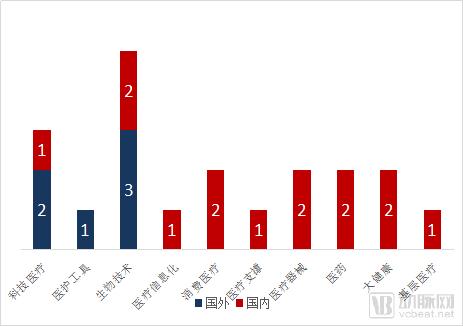
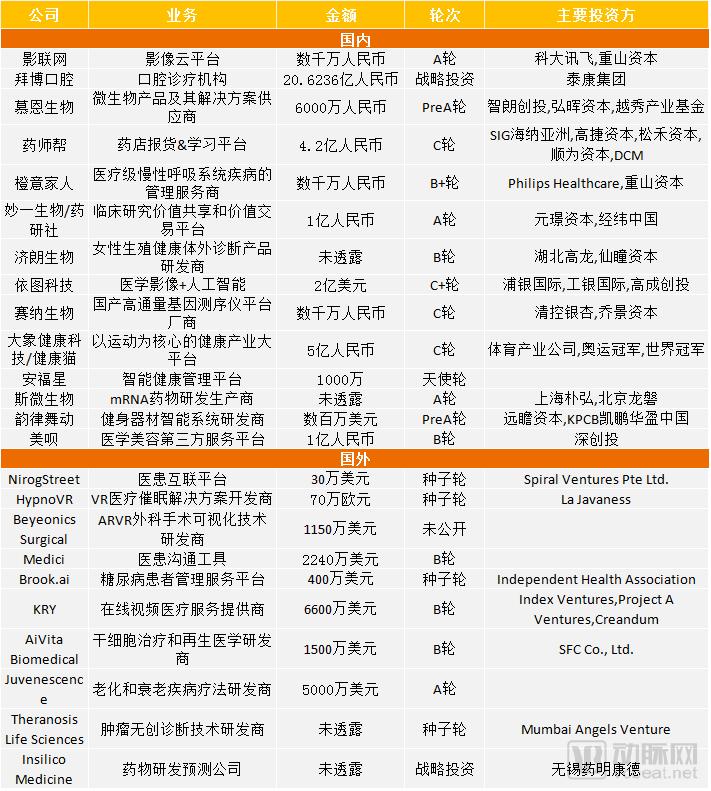
This Week in Healthcare Funding: Baibo Dental Secures RMB 2.062 Billion Investment!

Work | Bust of Dr. Félix Rey
Author | Vincent van Gogh
Visual History of Healthcare | Issue 20180617
What Is the Secret to a Clinic’s Success? Physicians, Products, Services, Management, and Business Model—All Are Indispensable. So How Should Each Segment Be Designed? What Is the Investment Logic? These Answers Were Unveiled at the First China Clinic Conference, Hosted by DXY, Recently.
Under the backdrop of the new healthcare reform, medical consortia have been entrusted with significant responsibilities in the new era as key drivers for implementing tiered diagnosis and treatment. Within the four models of medical consortia—urban medical groups, county-level medical communities, cross-regional specialty alliances, and telemedicine collaboration networks—how can tertiary hospitals, secondary hospitals, and community hospitals effectively fulfill their respective roles while maintaining close collaboration? From which scenarios will innovative enterprises enter the medical consortium landscape?
Wednesday:With Over 6,500 Doctors on Standby: What Medical Gift Has Russia Prepared for the World Cup?
During this World Cup, Russia’s medical team was nothing short of luxurious. According to Russian Health Minister Veronika Skvortsova, approximately 6,500 doctors participated in the 2018 FIFA World Cup, all of whom had received one-on-one expert training covering a wide range of topics.
These medical personnel were equipped with fully stocked first-aid kits and then organized into mobile teams. Each mobile medical team comprised at least three specialists, including an emergency physician responsible for acute care, an orthopedic surgeon, a sports medicine physician, and a medical staff member. The first-aid kits included potent analgesics, anxiolytics, medications suitable for the timely management of stress-related seizures, and defibrillators.
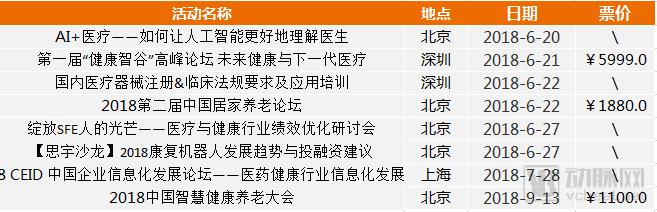
At the Frontier Forum on Chronic Disease and Health Management held on June 10, VCBeat was honored to invite industry experts and innovation practitioners to jointly explore cutting-edge trends in chronic disease management and health care at the primary care level. Following the comprehensive institutional reforms, holistic and full-lifecycle health management has become a key agenda item. What policy changes have been made at the top-level design? How should primary healthcare management systems be constructed? What new technologies are empowering healthcare institutions to improve the efficiency of health management? How are various enterprises carrying out innovative practices? These are the questions we aim to address in depth.
At the 2018 China Summit on Innovation and Practice in Primary Healthcare, Li Qiang, Deputy Secretary of the Party Committee of Sir Run Run Shaw Hospital, Zhejiang University School of Medicine, and Lin Hui, Deputy Director of the Party and Administration Office of Sir Run Run Shaw Hospital, provided a detailed explanation of how the “Sir Run Run Shaw Model” addresses critical pain points in the healthcare industry, such as uneven resource allocation, weak service capacity at the primary care level, and escalating doctor–patient conflicts. The model aims to facilitate the downward flow of high-quality medical resources and enhance the accessibility of premium healthcare services.
As technology continues to evolve, what new pain points have emerged in the AI-based diabetic retinopathy screening industry? Why is it that, despite years of R&D investment by major global companies, only one product has received FDA approval for commercialization in this field?
June 11
The Whistleblowing War Among Pharmaceutical Companies Has Begun!
Shaanxi Provincial Admissions Office Official Website Released a "Notice on the Second Public Announcement of Centralized Procurement Price Information for Drugs in Public Hospitals in Shaanxi Province in 2017": In accordance with the requirements of the "2017 Shaanxi Province Public Hospital Drug Centralized Procurement Document," the lowest national prices from three provinces (winning bids, shortlisted, or listed) submitted by applicants on our province's procurement platform have been verified, and the second price information announcement is now being made.
Keywords: Shaanxi, Pharmaceuticals
June 12
Medlinker and Dingdang Kuaiyao Join Forces: A New Pharmaceutical Distribution Giant Emerges
Medlinker, a real-name physician platform, and Dingdang Kuaiyao, a new pharmaceutical retail platform, have announced a strategic partnership. Leveraging their respective advantageous resources, the two parties will launch a user-centric “Doctor–Diagnosis–Drug” business ecosystem that covers the entire process of medical and pharmaceutical services, including physician services, diagnosis and treatment services, direct drug supply, and home delivery. Together, they aim to create a successful model in China of dual-wheel drive and collaborative operations powered by “New Healthcare + New Retail.”
Keywords: Pharmaceuticals, Distribution, Yilian, Dingdang Kuaiyao
National Health Commission: Number of Public Hospitals Decreases by 411, While Private Hospitals Increase by 2,120
The National Health Commission released the "Statistical Bulletin on the Development of China's Health and Wellness Undertakings in 2017." The data showed that by the end of 2017, there were a total of 986,649 medical and health institutions nationwide, including 31,056 hospitals. The number of public hospitals decreased by 411, while the number of private hospitals increased by 2,120.
Keywords: Hospital
The World Cup Is Here! Hospital’s “World Cup Syndrome” Clinic Opens Today
On June 12, Sichuan News Network reporters learned from Chengdu Third People’s Hospital that, in an effort to safeguard the health of football fans, the hospital’s Emergency Department has officially launched a “World Cup Syndrome Clinic” as of today, opening a green channel for the diagnosis and treatment of patients suffering from “World Cup-related illnesses.”
Keywords: Chengdu, Hospital
June 13
Launch of Direct-Acting Antivirals Developed by Domestic Chinese Companies
Ascletis Pharma Announces NMPA Approval of GonoWeir (Danoprevir, ASC08), the Company’s First Class 1 Innovative Drug for Hepatitis C. GonoWeir is the first direct-acting antiviral agent developed by a domestic Chinese enterprise.
Keywords: Pharmaceuticals, Ascletis
Sanofi and Translate Bio Partner to Develop RNA Vaccines with $800 Million Investment
Sanofi announced that its global vaccines division, Sanofi Pasteur, has entered into a collaboration with Translate Bio to leverage breakthrough mRNA platform technology for the development of mRNA vaccines against multiple infectious diseases. The total potential value of this partnership could reach up to $805 million.
Keywords: Pharmaceuticals, Vaccines, Sanofi
First Immunotherapy for Advanced Cervical Cancer Approved
WuXi AppTec’s partner, Merck & Co. (MSD), announced that the U.S. FDA has approved its blockbuster immunotherapy Keytruda (pembrolizumab) for the treatment of patients with advanced cervical cancer whose disease has progressed after chemotherapy, specifically for recurrent or metastatic cervical cancer. Notably, Keytruda is also the first anti-PD-1 therapy approved for the treatment of advanced cervical cancer.
Keywords: pharmaceuticals, FDA, WuXi AppTec
China’s First Locally Developed Innovative Drug for Hepatitis C Approved for Market Launch
Ascletis Pharma Announces that Genuo® (Danoprevir, ASC08), the Company’s First Class 1 Innovative Drug for Hepatitis C, Has Received Marketing Approval from the National Medical Products Administration. Genuo® is the first direct-acting antiviral (DAA) agent developed by a domestic Chinese enterprise and has been supported under the “Major New Drug Creation” program of the National Science and Technology Major Project during the 13th Five-Year Plan period.
Keywords: Pharmaceuticals, Ascletis
Changling Capital, Jiang Xiaodong
The core issue in China’s current healthcare landscape is the imbalance between supply and demand, primarily driven by a severe shortage of high-quality healthcare resources. As the gap in high-quality supply continues to widen, projects that can enhance personalized and inclusive healthcare delivery are becoming increasingly attractive from an investment perspective. (Source: Health Point)
Genetic Biomarkers for Asthma Diagnosis Discovered, Detectable via Nasal Swab
Scientists at Mount Sinai have identified a genetic biomarker for diagnosing asthma, detectable through a simple nasal swab and basic follow-up data analysis. This low-cost diagnostic test can accurately identify mild-to-moderate asthma and differentiate it from other respiratory diseases. The discovery has the potential to transform the accuracy of asthma diagnosis and enhance physicians’ ability to treat patients. (Source: genengnews.com)
Apple Inc. Files Patent for Blood Pressure Monitoring Device
Apple’s patent application for a wearable blood pressure monitor (potentially Bluetooth-enabled), submitted last week, has been made public and quickly gained attention. The patent describes an improvement over standard inflatable blood pressure cuffs, featuring a more compact design with tighter integration into wearable devices, a touchscreen, and numerous smart functionalities. (Source: healthcareitnews.com)
Digital Health: Using VR to Alleviate Pain
According to Reuters, Saint-Joseph Hospital in Paris is using VR headsets invented by a French startup to alleviate pain among emergency room patients. By connecting the headsets to computers, patients can immerse themselves in realistic natural environments, such as forests or mountain peaks, tailored to their preferences, thereby helping them forget their pain. (Source: mobihealthnews.com)
American Heart Association: Medication Cannot Control Blood Pressure During Exercise
A new study in the United Kingdom suggests that hypertensive patients undergoing pharmacological treatment experience a rise in blood pressure during exercise, which aligns with the peak levels observed in untreated hypertensive patients under similar conditions. This finding offers the potential to tailor antihypertensive therapies to patients’ activity levels, thereby reducing the risk of heart disease and stroke. (Source: consumer.healthday.com)
VCBeat: 2018 Report on the Commercial Value of Medical Consortiums
How Are Medical Consortia Reshaping the Healthcare Ecosystem? What Commercial Value Do They Bring? Starting from the perspective of healthcare resource flow, this report explores the essence of medical consortium reform and provides an in-depth analysis of the future business opportunities and new healthcare ecosystem brought about by medical consortia, helping enterprises upgrade their strategies.
VCBeat: 2018 White Paper on China’s Third-Party Medical Services Industry
VCBeat • VBInsight categorizes third-party medical service providers into two groups—diagnostic/technical medical service institutions and clinical medical service institutions—based on differences in their primary customer types. The report posits that, with the continuous development of China’s healthcare industry, these two types of third-party medical service institutions follow distinctly different development logics, which will be analyzed individually in this report.
Deloitte: The Transformation of Healthcare, from “Scale” to “Value”
China’s healthcare services market is vast in scale and has been expanding rapidly, driven by factors such as population aging, urbanization, rising wealth, and the comprehensive coverage of basic medical insurance. In 2016, China’s total health expenditure reached RMB 4.6 trillion, maintaining a compound annual growth rate (CAGR) of 13.5% over the preceding three years. However, China’s healthcare spending accounted for only 6.2% of its gross domestic product (GDP), below the global average of 10.5%. Given the country’s large population base and substantial consumption volume, it is evident that China’s healthcare services market still holds significant room for future growth.
Shenyin & Wanguo: In-Depth Study on Healthcare Informatics—Favorable Policies and Industry Optimization
In-Depth Research on Healthcare Informatics (Part I): Frequent Policy Benefits and Industry Optimization in 2018.
KingMed Diagnostics: 2017 Corporate Social Responsibility Report
This report provides an in-depth analysis of the current application status, industry chain, and typical corporate case studies of big data in the healthcare sector, while also exploring development trends in healthcare big data. It is hoped that this report will serve as a reference for various market stakeholders to gain a deeper understanding of healthcare big data.
For more content, please visit the VCBeat knowledge base!