

Chengdu Launches 'Medical Beauty Capital' Initiative with 20 Major Projects and $6.3 Billion Investment
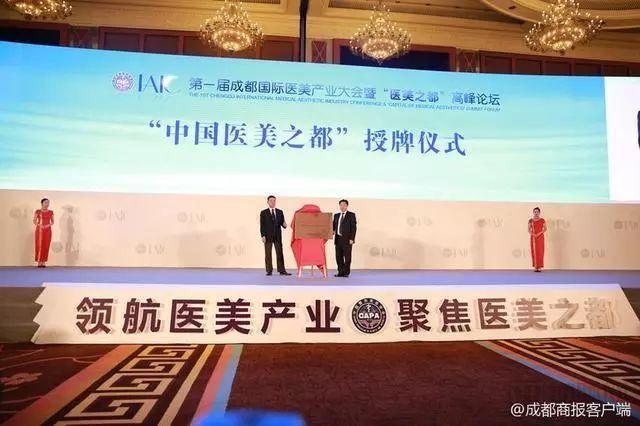
The First Chengdu International Medical Aesthetics Industry Conference and the "Capital of Medical Aesthetics" High-Level Forum Opens | Image Source: Chengdu Business Daily Client
VCBeat (WeChat ID: vcbeat) has learned that the First Chengdu International Medical Aesthetics Industry Conference and the “Capital of Medical Aesthetics” Summit Forum was held in Chengdu from June 8 to 10. During the event, 20 major medical aesthetics projects were signed, with a total agreed investment of RMB 44.06 billion, involving Chengdu High-Tech Zone, Wuhou District, Jinniu District, and Chenghua District.
At the project signing ceremony held during the conference, the Chengdu Municipal People’s Government and the Chinese Association of Plastics and Aesthetics signed a strategic cooperation agreement. Both parties will work together to establish the “China Medical Aesthetics Industry Incubation Center,” set up an industrial development guidance fund for the “Capital of Medical Aesthetics,” found the “First Clinical Specialty Hospital of the Chinese Association of Plastics and Aesthetics,” build a “Medical Aesthetic Product Testing Center,” create a distinctive medical aesthetics town, and develop a high-standard industry standard system for medical aesthetics in Chengdu.
The Administrative Committee of Chengdu High-Tech Zone and Chengdu Medical Health Investment Group Co., Ltd. signed a strategic cooperation agreement for the Medical Aesthetics Town project, with a planned investment of RMB 5 billion. Located within the Chengdu Tianfu International Bio-Town, the “Medical Aesthetics Town” covers an area of approximately 390 mu and will establish an industrial layout featuring “one core, one zone, and two layers.”
Wuhou District has signed strategic cooperation framework agreements with eight domestic and international enterprises, respectively, with total intended investment amounting to RMB 17.21 billion. According to the “Wuhou District Medical Aesthetics Industry Development Plan (2018–2030),” the district is currently collaborating with Sichuan University to jointly plan and build a core hub for the big health industry—the “Huaxi Ring International Smart Medical Valley.”
Chengdu’s robust growth trajectory in the medical aesthetics industry has attracted significant attention and investment from both domestic and international enterprises. On April 28, the General Office of the Chengdu Municipal People’s Government issued the “Support Policies for Accelerating the Development of Chengdu’s Medical Aesthetics Industry,” introducing 19 specific measures covering incentives, subsidies, and regulatory services. Notably, internationally renowned talents (or teams), such as Nobel Laureates, who come to Chengdu to engage in innovation and entrepreneurship within the medical aesthetics sector, are eligible for comprehensive funding of up to RMB 100 million. In line with the overarching goal of accelerating the construction of a city that fully embodies the new development philosophy and striving to achieve Chengdu’s “Three-Step” strategic objectives for the new era, the city is vigorously developing its medical aesthetics industry and accelerating its establishment as the “Capital of Medical Aesthetics.”
At this high-level summit, Chengdu High-Tech Zone, Chengdu Tianfu New Area, Wuhou District, Jinniu District, and Wenjiang District, along with various prospective partner organizations, participated in a centralized signing ceremony. A total of 20 major medical aesthetics projects were signed at the conference, with a total agreed investment of RMB 44.06 billion. Among these, 13 projects were included in the centralized signing, accounting for an agreed investment of RMB 41.2 billion. The signed industrial projects cover enterprises across the entire upstream and downstream value chain of the medical aesthetics industry.
With the advancement of medical technology and the upgrading of consumer spending among the general public, demand for aesthetic services—represented by medical aesthetics—has continued to grow, making it the fourth major consumption hotspot after housing, automobiles, and tourism, beyond basic living expenses.
The medical aesthetics industry is one of the key sectors prioritized for development in Chengdu. So, how is its long-term development planned? The “Chengdu Medical Aesthetics Industry Development Plan (2018–2030),” released on April 13, has provided detailed strategic guidance. Chengdu will focus on enhancing the quality and scale of its medical aesthetics industry, aiming to achieve an annual operating revenue of RMB 100 billion by 2025 and RMB 200 billion by 2030, thereby establishing itself as a nationally leading and globally renowned “Capital of Medical Aesthetics.” The following outlines the key points of the plan:
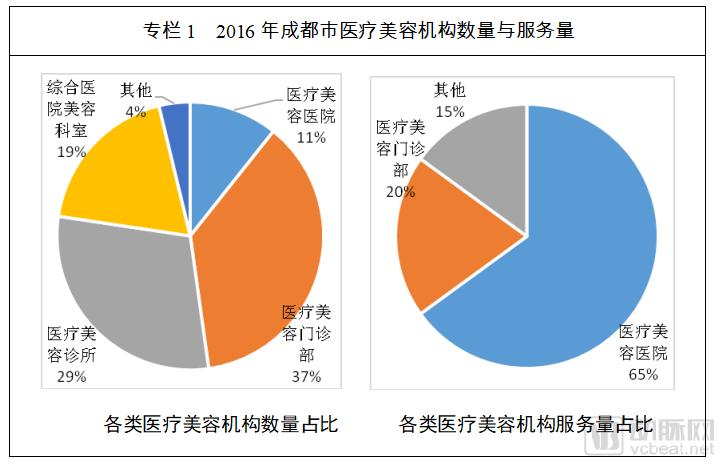
1. The medical aesthetics industry is experiencing robust growth.Currently, the city’s medical aesthetics sector has basically formed a development pattern dominated by medical aesthetics hospitals, with support from medical aesthetics outpatient departments and clinics, as well as cosmetic departments within general hospitals. In 2016, there were 159 medical aesthetics institutions in the city, ranking third nationwide after Shanghai and Beijing. Among these, there were 17 medical aesthetics hospitals and 59 medical aesthetics outpatient departments. Private medical aesthetics institutions accounted for over 90% of the total, primarily offering services such as cosmetic surgery and cosmetic dermatology. The city recorded approximately 500,000 visits for medical aesthetics services, with medical aesthetics hospitals accounting for about 65% of the total service volume.
2. Outstanding advantages in scientific and technological innovation resources.Chengdu is the technological hub of Southwest China, aggregating abundant innovation resources in fields such as medical aesthetics and biopharmaceuticals. Led by prestigious institutions including Sichuan University, University of Electronic Science and Technology of China, Chengdu University of Traditional Chinese Medicine, Southwest Jiaotong University, and Chengdu Medical College, the city has attracted a cohort of top-tier domestic and international leaders in medical aesthetics, securing a leading position nationwide in areas such as cosmetic dentistry and wound repair. Enterprises such as Bluemtn Inno, Dicun Pharmaceutical, and Alltech Medical Systems hold strong competitive advantages in 3D bioprinting, medical materials, and medical imaging equipment.
3. A preliminary pattern of clustered development has taken shape.As of the end of 2016, approximately 70% of the city’s medical aesthetic institutions were distributed in Wuhou District and the Chengdu High-Tech Zone. Among them, Wuhou District had 84 institutions, accounting for about 52.8% of the city’s total, primarily clustered in areas with convenient transportation, well-developed supporting facilities, and high commercial popularity, such as the stretch along Renmin South Road and the Hongpailou business district. The Chengdu High-Tech Zone had 27 institutions, representing approximately 17% of the city’s total, mainly located in areas such as Fangcao Street and Dayuan.
4. Robust support from industries associated with medical aesthetics.Chengdu boasts strong capabilities in industries such as tourism and finance, providing robust support for the medical aesthetics sector. With a business-friendly and livable environment, Chengdu features beautiful surroundings and abundant health, wellness, and tourism resources in its neighboring regions. In 2016, the city received over 200 million tourist visits, ranking second among all sub-provincial cities in China. In 2017, Chengdu’s financial industry achieved a value-added of RMB 160.4 billion, topping the list of cities in central and western China in the “China Financial Center Index.” This positions Chengdu to provide substantial financial resource support for the development of the medical aesthetics industry.
Currently, the development of the medical aesthetics industry in our city still faces some pressing issues that need to be addressed.
First, the industrial chain is not sufficiently developed, with relatively weak manufacturing segments for medical aesthetic drugs and devices;
Second, market order needs to be regulated; the phenomenon of some lifestyle beauty establishments engaging in medical aesthetic services persists, and disputes related to medical aesthetics are relatively prominent.
Third, brand influence is insufficient, with few medical aesthetic institutions possessing strong influence both domestically and internationally;
Fourth, public hospitals are constrained by institutional and systemic mechanisms, failing to fully leverage their advantages in scientific research and talent, thus providing insufficient leadership and driving force for Chengdu’s medical aesthetics industry.
1. The medical aesthetics market boasts broad prospects.Driven by factors such as the rapid advancement of medical aesthetics technologies and the continuous rise in personal income, the market size of the medical aesthetics industry is poised to maintain robust growth. The global medical aesthetics market is expected to expand at a rate significantly higher than that of the overall economy during the same period. China’s medical aesthetics market ranks third globally in terms of size. With the rapid enhancement of residents’ purchasing power and a shift in consumer attitudes, the Chinese medical aesthetics market is anticipated to experience rapid growth in the future.
2. Intensified consolidation of medical aesthetic institutions in China.Currently, China’s medical aesthetics industry remains in its growth phase, with most medical aesthetics institutions being relatively small and lacking competitive strength. As restrictions on privately funded healthcare are fully lifted, more private capital will enter the medical aesthetics sector. Amid intensifying market competition, mergers and acquisitions among medical aesthetics institutions are expected to increase further. In the future, large chain medical aesthetics institutions that leverage brand and scale effects will become the prevailing trend, leading to a gradual rise in industry concentration.
3. Chengdu’s medical aesthetics industry has significant growth potential.Chengdu residents are receptive to new trends and concepts, with generally advanced consumption habits and a strong awareness of medical aesthetics. As a national central city, Chengdu boasts significant radiating influence, with its market hinterland covering nearly 200 million people in Southwest China, including Yunnan, Guizhou, Sichuan, Chongqing, and Tibet, where demand for medical aesthetic services is robust. Amid the comprehensive advancement of the national Belt and Road Initiative, Chengdu, committed to building itself into an international gateway city, is transforming from an inland hinterland into a frontier connecting Europe and Asia. It holds strong competitive advantages in aggregating industrial factors such as talent and capital, as well as in attracting high-end consumers.
Comprehensively implement Xi Jinping Thought on Socialism with Chinese Characteristics for a New Era. In accordance with the overall requirements of accelerating the construction of a city that fully embodies the new development philosophy and striving to achieve Chengdu’s “Three-Step” strategic goals in the new era, we will seize opportunities presented by consumption upgrading, deepen supply-side structural reform, and continuously meet the people’s growing needs for a better life. Focusing on building an ecosystem for the medical aesthetics industry, we will prioritize the prominent development of medical aesthetic services, accelerate the growth of medical aesthetic manufacturing, and extend related industries. Guided by brand building, we will strive to introduce and cultivate market entities, strengthen infrastructure development, innovate the supply of key factors such as talent, technology, and policies, regulate industry development order, and enhance industrial competitiveness. By achieving high-quality development of the medical aesthetics industry, we aim to establish Chengdu as a nationally leading and globally renowned “Capital of Medical Aesthetics.”
1. Adhere to the combination of market-led mechanisms and government oversight.Strengthen the central role of market entities in advancing the development of the medical aesthetics industry, optimize resource allocation, and fully stimulate market vitality. Enhance market supervision, reinforce the primary responsibilities of market entities, investigate and punish illegal and non-compliant activities in accordance with the law, regulate market order, and promote the sustained and healthy development of the medical aesthetics industry.
2. Adhere to the combination of attracting large and strong external enterprises and fostering internal growth.Fully leverage both domestic and international factor resources, deeply engage in global industrial division of labor and cooperation, and accelerate the introduction of a cohort of renowned medical aesthetic institutions and their affiliated enterprises. Strengthen the cultivation of local medical aesthetic institutions (enterprises), enhance brand building, and continuously improve the competitiveness of market entities.
3. Adhere to the combination of clustered development and integrated development.Highlight key areas to promote the clustered development of the medical aesthetics industry, achieving intensive and efficient utilization of production factors. Align with the trend of industrial convergence by integrating medical aesthetics with life beauty services, trade, tourism, and information services, thereby driving the growth of related sectors such as catering, accommodation, and transportation.
We will focus on enhancing the quality and scale of Chengdu’s medical aesthetics industry, accelerate the aggregation of renowned domestic and international medical aesthetics enterprises, institutions, and talent, and continuously strengthen the industry’s competitiveness, influence, and radiating drive. By 2025, the operating revenue of Chengdu’s medical aesthetics industry will reach RMB 100 billion, and by 2030, it will reach RMB 200 billion, establishing Chengdu as a nationally leading and globally recognized “Capital of Medical Aesthetics.”
Seize the opportunities presented by consumption upgrading, align with industrial development trends, prioritize the growth of the medical aesthetics service sector, accelerate the expansion of the medical aesthetics manufacturing industry, extend into related industries such as information services, and strive to build a comprehensive ecosystem for the medical aesthetics industry.
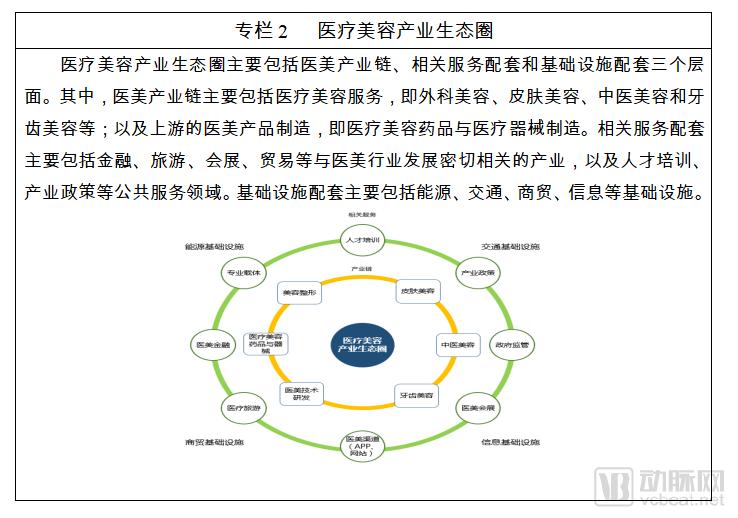
In line with the development trends of medical aesthetic services toward minimally invasive procedures, safety, and precision, we will prioritize the development of surgical aesthetics, dermatological aesthetics, and dental aesthetics, while actively fostering traditional Chinese medicine (TCM) aesthetics. We will accelerate the introduction and cultivation of a cohort of renowned medical aesthetic institutions (enterprises), enhance the service quality and influence of the industry, and improve the citywide medical aesthetic service system.
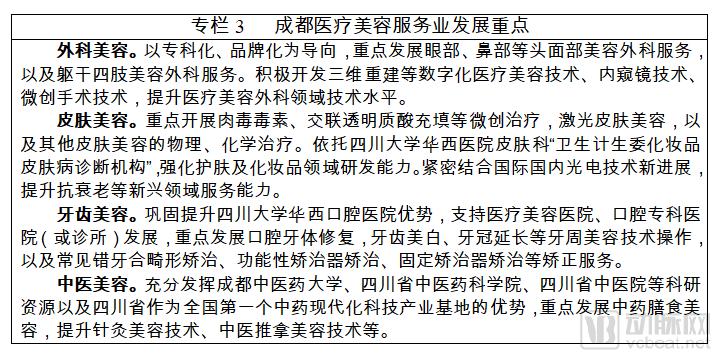
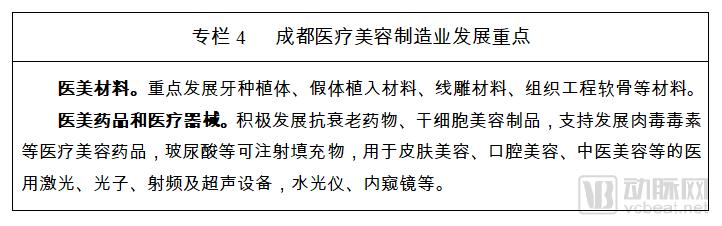
To meet the development needs of the medical aesthetics service industry, leverage the city’s advantages in the biopharmaceutical sector, and actively expand upstream along the medical aesthetics industry chain. Priority will be given to developing medical aesthetics materials, pharmaceuticals, and medical devices relevant to the industry. Support collaborative technological innovation between universities, research institutes, and biopharmaceutical enterprises to achieve breakthroughs in frontier technologies such as stem cell biotechnology, laser technology, and dermal fillers. Additionally, attract a cohort of medical aesthetics manufacturers possessing core technologies.
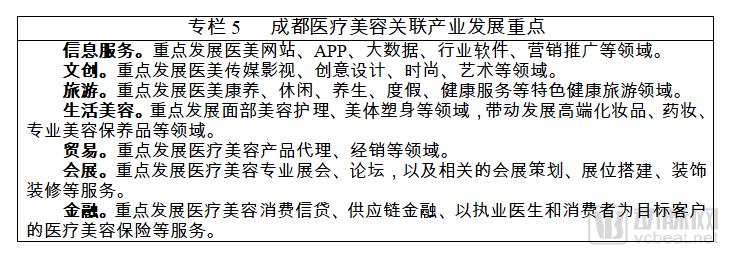
Relying on the medical aesthetics service sector and related manufacturing industries, we will extend our development into associated sectors such as information services, cultural and creative industries, tourism, lifestyle beauty services, trade, exhibitions, and finance. This will promote positive interaction and mutually beneficial symbiosis between the medical aesthetics industry and its related sectors, thereby forming a comprehensive “Big Medical Aesthetics” development pattern.
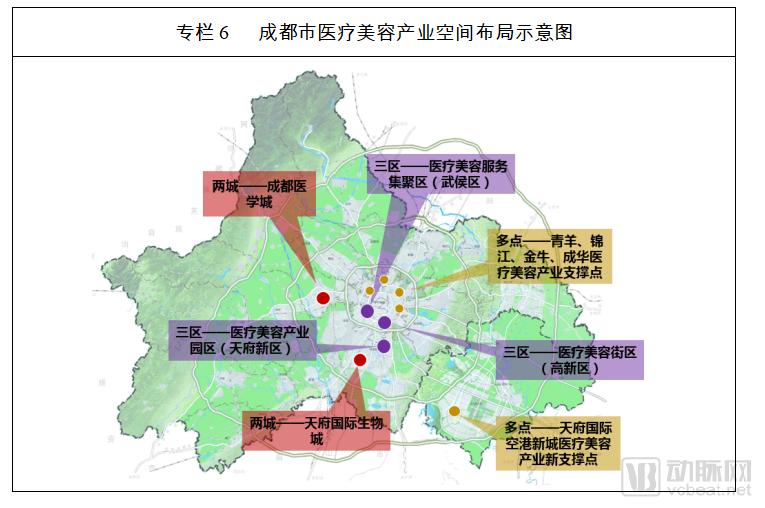
In light of the current status and future development requirements of the city’s medical aesthetics industry, we will adhere to the principles of concentrated, clustered, and intensive development, and accelerate the establishment of a spatial layout system for the medical aesthetics industry characterized by “three zones, two cities, and multiple points.”
Establish nationally leading and globally renowned core clusters for the medical aesthetics service industry in Chengdu Tianfu New Area, Chengdu High-Tech Zone, and Wuhou District, with a strategic focus on medical aesthetics services, technological research and development, and education and training. Chengdu Tianfu New Area will strengthen cooperation with top-tier domestic and international medical aesthetics institutions to promote the development of the entire industry chain—including innovative R&D, incubation, services, and production—thereby creating a nationally leading medical aesthetics industrial park. Leveraging its high level of internationalization and concentration of high-end business resources, Chengdu High-Tech Zone will introduce premium domestic and international medical aesthetics institutions to the Tianfu 1st, 2nd, and 3rd Streets areas in the Dayuan sub-district, aiming to build an internationalized medical aesthetics district. Wuhou District will capitalize on the medical aesthetics expertise and talent advantages of West China Hospital and West China School of Stomatology of Sichuan University, support existing leading medical aesthetics enterprises in expanding their scale and influence, and establish the Hongpailou and Renmin South Road medical aesthetics clusters with prominent domestic and international recognition.
Leveraging their strengths in robust biomedical R&D capabilities, solid manufacturing foundations, and ample room for growth, Chengdu Tianfu International Bio-city and Chengdu Medical City are strategically focusing on sectors such as medical aesthetic pharmaceuticals, medical devices, and medical materials to establish a nationally leading and globally renowned research, development, and production hub for medical aesthetic products.
Qingyang District, Jinjiang District, Jinniu District, and Chenghua District will focus on promoting the transformation and upgrading of existing medical aesthetic institutions to further enhance the level of medical aesthetic services and create distinctive support points for the medical aesthetics industry. Meanwhile, in line with the future development needs of the “Eastward Expansion” area, Tianfu International Airport New City will be designated as a key zone for the proactive introduction of medical aesthetic institutions (enterprises) to establish new support points for the medical aesthetics industry.
1. Cultivate brands for medical aesthetic institutions.Support medical aesthetic institutions in implementing brand development strategies, with enhancing brand value as the core objective, and promote vertical integration of the medical aesthetics industry chain through mergers and acquisitions, holding stakes, equity participation, and other means. Support the group-based development of medical aesthetic institutions, accelerate the creation of large-scale chain groups with nationwide and even global influence, and further enhance brand recognition. Guided by the development direction of specialization, standardization, and differentiation, encourage medical aesthetic outpatient departments and clinics to focus on specialized sub-sectors, thereby cultivating a cohort of distinctive brands.
2. Build brands in the medical aesthetics industry.Encourage medical aesthetic institutions to actively participate in the formulation of industry standards and certification processes, and to develop high-quality local standards, thereby enhancing the quality and influence of Chengdu’s medical aesthetics industry. Support the development of brand service agencies in areas such as consulting, marketing, training, and research and development (R&D), and provide services including brand management consulting and market promotion. Establish mechanisms for protecting consumer rights in medical aesthetics, promote industry collaboration, carry out public welfare and charitable activities, and improve the overall image and brand influence of the industry.
3. Enhance the brand awareness of urban medical aesthetics.Strengthen the promotion of the city’s brand, actively cultivating a high-end, international, and trustworthy medical aesthetics city brand to continuously expand the consumer base for medical aesthetic services. Support the hosting of international and national medical aesthetics industry conferences, forums, exhibitions, talent contests, beauty pageants, and other events to enhance the influence of Chengdu’s medical aesthetics industry. Support the establishment of medical aesthetics journals, strengthen academic exchanges, vigorously popularize relevant knowledge, and foster a favorable environment for industrial development.
1. Implement ecosystem-based investment promotion.Focusing on the medical aesthetics industry ecosystem, we will target critical gaps in the industrial chain to strengthen and supplement it, accelerating the introduction of a batch of leading domestic and international medical aesthetics institutions (enterprises). With industry-leading medical aesthetics enterprises as the core, we will make concerted efforts to attract related supporting companies. Targeting new formats and models in the medical aesthetics sector, we will actively introduce well-known enterprises from related fields such as distribution and trade, information services, and financial services, thereby enhancing our service support capabilities.
2. Transform the approach to investment promotion.Implement vendor and investor selection, strengthen project entry requirements, and ensure the advanced nature of introduced projects. Carry out targeted investment promotion by establishing a database of target enterprises in the medical aesthetics sector, tracking and collecting information and developments in real time, and formulating tailored investment attraction strategies. Promote business-to-business investment referral by establishing liaison mechanisms with industry associations, professional investment promotion agencies, and key medical aesthetics institutions (enterprises) in Chengdu, leveraging their networks and informational advantages to introduce major related projects.
3. Accelerate the construction of signed projects.Formulate annual implementation plans for major projects, improve the linked assessment mechanism for project signing and commencement, and ensure seamless coordination across stages—from signing negotiated projects, to commencing construction of signed projects, and to putting completed projects into operation. Strengthen refined management and services for projects, establish systems for monthly supervision, coordination, and reporting, ensure the provision of essential resources for project construction, proactively address difficulties encountered during implementation, and enhance efficiency from project signing through to completion and operational readiness.
1. Actively recruit talent.Establish liaison mechanisms with world-leading medical aesthetics institutions and enterprises in the United States, South Korea, Japan, Brazil, Switzerland, and other countries, with a focus on attracting leading domestic and international industry talents and distinguished scientists to innovate and start businesses in Chengdu. Improve flexible talent introduction mechanisms; in alignment with industrial development characteristics and trends, support professionals in practicing short-term in Chengdu to carry out cooperation in medical aesthetics research and development, production, and services.
2. Strengthen talent cultivation.Support renowned domestic and international medical aesthetics experts in coming to Chengdu for teaching, visits, and academic exchanges. Encourage universities and colleges to establish schools of medical aesthetics and launch medical aesthetics majors in response to industry and market demands, thereby strengthening the cultivation of reserve talent and enriching the pool of specialized professionals. Vigorously promote university-enterprise collaboration by establishing a two-way talent exchange and cooperation mechanism between academic institutions and medical aesthetics organizations, enhancing professional training and continuous education for practitioners, and steadily advancing the technical standards of the medical aesthetics industry.
3. Optimize the talent environment.Implement Chengdu’s talent policies, further optimize talent service processes, and strengthen service guarantees in areas such as housing, household registration (hukou), spousal employment, children’s education, healthcare, and facilitation of entry/exit and residence. Include qualified high-end medical aesthetics professionals in the incentive system, improve evaluation standards for practitioners, and streamline the pathway for title promotion for physicians practicing in private medical aesthetics institutions.
1. Promote the integration of medical aesthetics with the cultural and creative tourism industry.Leverage Chengdu’s advantages as a renowned Chinese historical and cultural city and one of China’s top tourist destinations to develop cultural and creative tourism products centered on medical aesthetic services, attracting domestic and international consumers to Chengdu for such treatments. Encourage the development of film and television cultural products featuring medical aesthetics, and explore the establishment of a streamlined service system integrating “entry/exit procedures–transportation–leisure and shopping–medical aesthetics–tourism,” thereby promoting the integrated development of the medical aesthetic services and cultural-creative tourism industries.
2. Promote the integration of medical aesthetics with the Internet.Support the development of medical aesthetics websites, apps, and other digital platforms, cultivate “Internet + Medical Aesthetics” service platforms, and promote transformation in market channels within the medical aesthetics industry. Drive deep integration of the medical aesthetics industry with big data, cloud computing, and artificial intelligence to support personalized medical aesthetic services and medical aesthetic financial services. Encourage medical aesthetics institutions to leverage information technology to optimize business processes and enhance service quality and efficiency.
3. Promote the integration of medical aesthetics and lifestyle beauty services.Encourage medical aesthetic institutions to extend their services into the lifestyle beauty sector, further expanding their business scope to provide consumers with end-to-end services encompassing both medical and lifestyle aesthetics. Support lifestyle beauty establishments in legally establishing cooperative and resource-sharing mechanisms with medical aesthetic institutions to broaden the consumer base for medical aesthetic services. Explore the development of large-scale integrated medical aesthetic complexes that combine medical aesthetics, lifestyle beauty, premium cosmetics, luxury goods, and art appreciation.
1. Improve supporting infrastructure.Adhere to the principle of “public infrastructure first, industrial development second,” accelerate the construction of infrastructure such as roads, information networks, and energy systems in medical aesthetics industrial parks, and proactively develop supporting public service facilities including education, culture, and municipal services. Support the development of platforms for the medical aesthetics manufacturing industry, such as public factory buildings and standard workshops. Strengthen the planning and construction of medical aesthetics districts, and accelerate the creation of a number of medical aesthetics industry clusters with Chengdu characteristics by means such as constructing new medical aesthetics complexes and upgrading existing buildings.
2. Support the development of platforms for innovation and entrepreneurship.Encourage universities, research institutes, medical aesthetic institutions, and leading enterprises to establish innovation platforms such as key laboratories, enterprise technology centers, and industrial technology research institutes, so as to strengthen the research and development of key core technologies and frontier technologies. Support the development of medical aesthetic entrepreneurship carriers, including startup nurseries, incubators, accelerators, and mass innovation spaces; form medical aesthetic innovation alliances; and build entrepreneurial service platforms to provide high-quality and efficient services for the entrepreneurial development of professionals in the medical aesthetics industry.
3. Innovate the construction and management model of innovation carriers.Adhere to public-private partnerships and market-oriented operations, with the government playing a leading role in strengthening the planning of development platforms; prioritize enterprises as the main actors, attracting social capital through multiple channels to participate in the development and construction of these platforms. Introduce and cultivate market-oriented industrial park operators, establish a standardized management system for parks, and enhance the professional service level of medical aesthetics industrial parks.
1. Strengthen industry regulation.Establish routine mechanisms for information exchange and sharing among departments including health and family planning, food and drug administration, industry and commerce, human resources and social security, public security, and cyberspace administration; set up a hotline for reporting illegal medical aesthetic practices; strengthen market supervision and law enforcement in the medical aesthetics sector; and investigate and punish violations in accordance with the law. Improve ex-post and ongoing regulatory oversight and penalty systems for violations; standardize approval procedures for medical aesthetic services; streamline approval processes; and implement industry access approvals and clinical practice guidelines. Strengthen regulation of medical aesthetic advertising to maintain a sound market environment. Fully leverage the role of medical aesthetics industry associations to effectively promote self-discipline within the industry.
2. Strengthen policy support. Accelerate the formulation of special policies for the development of the medical aesthetics industry, with a focus on providing support in areas such as the introduction and construction of high-end projects, talent recruitment and cultivation, product research and development, enterprise development, and carrier construction. This will facilitate the rapid aggregation of well-known domestic and international medical aesthetics enterprises (institutions) and essential resources, continuously enhance the quality and scale of the medical aesthetics industry, and expedite the formation of a new industrial development pattern characterized by a rational structure and prominent competitive advantages.
3. Promote pilot initiatives.Actively seek support from the national and provincial governments to promote Chengdu’s pilot initiatives in areas such as the import of medical aesthetic drugs and medical devices. Encourage public hospitals to establish collaborative partnerships with private medical aesthetic institutions in terms of talent, technology, and services, and support non-governmental entities in providing multi-tiered and diversified medical aesthetic services. Establish a green channel for the treatment of complications arising from medical aesthetic surgeries, encourage the development of medical aesthetic insurance products, strengthen training on practice-related risks, and enhance the industry’s risk awareness and management capabilities. Appropriately relax restrictions on special-needs services provided by medical aesthetic departments in public hospitals, and encourage physicians in these departments to practice at multiple institutions. Explore models where individual physicians sign service contracts with medical institutions or form physician groups to deliver shared medical aesthetic services.
Strengthen the functions of the Leading Group for the Promotion of Chengdu’s Pharmaceutical and Health Industry and its Office, enhance organizational leadership over the implementation of medical aesthetics industry planning, hold regular work promotion meetings, and coordinate to resolve major issues in industrial development. Relevant districts (cities) and counties shall establish corresponding organizational leadership bodies to specifically advance the implementation of various tasks, thereby forming an effective city-district (city)-county linked work promotion system.
Decompose and assign the main development goals, priorities, and key tasks for the medical aesthetics industry, as outlined in the plan, to relevant districts (cities), counties, and municipal departments, ensuring that the plan is implemented in a phased, systematic, and step-by-step manner on an annual basis. Establish a statistical system for the medical aesthetics industry and strengthen monitoring, forecasting, and analytical assessments of industry operations.
Establish and improve the target assessment and supervision mechanism for medical aesthetics, conduct annual evaluations of responsible districts (cities), counties, and municipal departments, and ensure that all planning objectives and tasks are completed with high quality and quantity. Establish a dynamic adjustment mechanism for the plan, revise and improve it in a timely manner according to the development situation, and enhance the effectiveness of the plan.
“Chengdu Medical Aesthetics Industry Development Plan (2018–2030)” is sourced from publicly available information of the Chengdu Municipal People’s Government and compiled by VCBeat.