

8 Promising Gene-Editing Companies Founded by Scientific Pioneers: From Rare Disease Therapies to Xenotransplantation
I first learned about gene editing in my middle school biology textbook. It described how gene-editing technology, much like a pair of scissors, can cut out, knock out, or even insert specific gene segments, thereby achieving the goal of curing diseases or enhancing certain traits. Such a description sounds quite science-fictional. We also know that, even today, gene-editing technology has not advanced to such an extent.
Nevertheless, it is certain that following the storage and reading of genes, gene “writing,” i.e., editing, has entered the medical industry in recent years. The advent of technologies such as CRISPR/Cas9 has been a stroke of genius for gene editing, enabling tremendous progress in research within this field.
Led by luminaries such as Feng Zhang, Emmanuelle Charpentier, George Church, Jennifer Doudna, and David Liu, gene-editing technology has begun its transition from research to clinical applications as the technology matures. These applications primarily include the treatment of genetic disorders and rare diseases, as well as xenotransplantation.
These companies are revolutionizing healthcare through technological application and translation. Based on this, VCBeat has selected several leading global companies that apply gene editing to the medical field.
Image from the CRISPR Therapeutics official website
From the current perspective, due to regulatory conditions, Crispr Therapeutics is slightly ahead.
This Swedish company was established on October 31, 2013. It was originally named Inception Genomics AG and adopted its current name on April 28, 2014.
The founder of CRISPR Therapeutics is Dr. Emmanuelle Charpentier, hailed by the outside world as the “Goddess of CRISPR.” As one of the key inventors of this revolutionary technology, she won ten prestigious scientific awards in 2012 alone and officially assumed the position of Director at the Max Planck Institute for Infection Biology in Berlin, Germany.
Charpentier licensed CRISPR Therapeutics to use CRISPR/Cas9 technology for research into the treatment of human diseases. In December 2017, the company submitted its first clinical trial application.
CRISPR Therapeutics’ therapy, called CTX01, is used to treat β-thalassemia. They use gene-editing technology to modify cells ex vivo before reinfusing them into the patient’s body. Currently, they are collaborating with Vertex Pharmaceuticals.
In addition, CRISPR Therapeutics is also developing a range of therapies targeting liver, muscle, and lung diseases.
According to CRISPR Therapeutics, the company will initiate adult clinical trials of CTX01 in Europe in 2018, marking its first-ever human trial. Additionally, it plans to file an application for U.S. clinical trials of CTX01 in 2018.
CRISPR Therapeutics is also one of the most heavily funded clinical-stage biotechnology companies in the world. In 2014, CRISPR Therapeutics raised $25 million in its Series A financing, with California-based venture capital firm Versant Ventures as an early supporter. Subsequently, the company secured $102 million in Series B financing, with participation from 12 investors.
In addition to its wholly owned programs, CRISPR Therapeutics and Bayer announced the establishment of a joint venture focused on developing and commercializing novel therapies for blood disorders, blindness, and congenital heart disease. This transaction will generate at least $335 million in proceeds for CRISPR Therapeutics.
The company went public on the Nasdaq via an IPO in 2016 and currently has a market capitalization of approximately $2.73 billion.

Image from Intellia's official website
Like CRISPR Therapeutics, Intellia also possesses both ex vivo and in vivo gene-editing therapeutic platforms and is researching treatments for sickle cell disease.
The company was founded in 2014, with Jennifer Doudna, another CRISPR pioneer, as one of its co-founders. Intellia’s exclusive license does not come directly from Doudna, but rather from another company, Caribou Biosciences.
Strictly speaking, Intellia was co-founded by Caribou Biosciences and Atlas Venture. Caribou Biosciences licensed its technology to Intellia, granting it exclusive rights for therapeutic applications in humans. Additionally, Novartis obtained a five-year, non-exclusive license from Intellia for the use of CRISPR technology in vivo therapies.
Intellia currently has four in vivo therapeutic programs and four ex vivo therapeutic programs. The company is collaborating with Regeneron Pharmaceuticals to develop a therapy for transthyretin amyloidosis (ATTR), a disease characterized by the systemic accumulation of abnormal proteins.
Among these, the ATTR and HSC projects have entered the late preclinical research stage. Analysts believe that both Intellia and Editas will initiate human trials in 2018, although Intellia has not yet publicly disclosed this intention.
Figure
Image from the official website of Caribou Biosciences
Backed by $11 million from Atlas Venture, Jennifer Doudna (one of the founders of Editas) founded Caribou Biosciences.
Compared with the several companies mentioned in this article, Caribou Biosciences has a broader scope of focus. In addition to medicine, it is also committed to translational research on gene-editing technology in agriculture, biology, and industrial biology. The company aims to form alliances with industry leaders across various markets. Through technology licensing and product development, Caribou Biosciences seeks to bring innovation to the healthcare and biotechnology industries.
In the healthcare sector, precision medicine drugs have demonstrated their disruptive potential in meeting medical needs. Caribou Biosciences’ technology platform holds promise for delivering transformative therapeutics across multiple distinct subfields. The company’s current therapeutic focus areas include microbiome-based therapies, animal health, and the production of therapeutic biologics.
Human therapeutics are primarily addressed through the establishment of Intellia, to which Caribou Biosciences has granted exclusive rights for the use of this technology in human treatments. Intellia conducts research on both in vivo and in vitro applications of gene editing, including indications such as blood disorders and cancer.
Extensive research has elucidated the complex interplay between microbes and human health. Caribou Biosciences’ technology platform holds the potential to develop targeted antimicrobial therapies, thereby modulating or eliminating specific strains within complex microbial communities.
Many biologics are actually produced in large-scale cell culture systems, such as recombinant therapeutic proteins, vaccines, and gene therapy vectors. Caribou Biosciences can leverage gene editing to engineer these cell systems, enabling the production of higher-quality, higher-yield therapeutic biologics.
Caribou Biosciences has completed its Series B financing, raising a total of $44.5 million. Its investors include Novartis, F-Prime Capital, and several individual investors.
Among the many CRISPR-based gene editing companies, Caribou Biosciences is neither the most heavily funded nor does it boast the most star-studded team. However, its business model differs significantly from those of its peers. Rather than directly pursuing product commercialization itself, Caribou Biosciences positions itself as akin to a contract research organization (CRO) in the pharmaceutical industry. Its clients are not patients, but rather the companies that serve them.
Caribou Biosciences positions itself as a technology provider and product designer, enabling biotechnology companies without in-house CRISPR capabilities to leverage this technology. This approach accelerates the realization of its value, ultimately benefiting patients.
However, due to its loss in the patent battle between Jennifer Doudna and Feng Zhang, the company may also face significant challenges.
Image from Editas Medicine’s official website
Editas’ founding team once earned it the reputation of being the most promising gene-editing company. Initially, the company was co-founded by five global leaders in gene editing, and its first round of financing totaled as much as $43 million.
Editas holds exclusive licenses to technologies from Harvard University and the Broad Institute, which are global leaders in gene editing, protein engineering, and molecular and structural biology.
Science often brings surprises to our lives, enabling us to suddenly achieve what once seemed unattainable. CRISPR is one such technology.
If damaged genes could be repaired and the root causes of DNA mutation-related diseases addressed, medicine might undergo a transformative revolution. This is precisely the goal pursued by Editas Medicine, which aims to translate gene-editing technologies into novel drugs and therapies that correct errors in gene sequences, thereby treating diseases at the genetic level.
In the current R&D pipeline, ophthalmic diseases are a key focus, such as Leber congenital amaurosis and inherited retinal diseases. In August 2016, the company announced a collaboration with the gene therapy company Adverum, whereby both parties will jointly develop genome-editing therapies to treat five types of inherited retinal diseases.
In January 2018, the terms of this agreement were expanded, with Adverum and Editas extending the research period to the third quarter of 2018; from that point until August 2020, Editas retained a series of exercisable rights.
In its early years, Editas formed a research and development alliance with Juno Therapeutics. Editas’s technology ushered in a new chapter for Juno in the field of CAR-T therapy. In connection with this collaboration, Juno paid an upfront fee of $47 million and committed to a total of $690 million in R&D milestone payments.
As mentioned above, Editas boasts arguably the most dreamlike founding team in history, with its earliest members including Feng Zhang, J. Keith Joung, and Jennifer A. Doudna.
At its inception, Editas secured $43 million in Series A financing led by Flagship Ventures and others. In August 2015, nearly two years after its founding, the company raised an additional $120 million in Series B financing. This round was led by Dr. Boris Nikolic, with participation from 14 other institutions including Google Ventures, Third Rock Ventures, and Khosla Ventures.
Notably, lead investor Boris Nikolic formerly served as Bill Gates’ chief scientific advisor. To participate in this investment, Nikolic specifically established the Bng0 Fund, with Bill Gates being one of its investors.
Editas went public on the Nasdaq in February 2016, raising $109 million, and currently has a market capitalization of approximately $1.75 billion.
According to data from Hejun Pharmaceutical and Medical Research Center, Editas’ major shareholders currently include Flagship Ventures (16.6%), Third Rock Ventures (15.6%), Polaris Venture Partners (15.6%), Bng0 (Gates, 9%), Bosley (4.6%), and Viking Global, Fidelity, and Deerfield (collectively 5.8%).
Image from the Precision Biosciences official website
Precision Biosciences, a U.S. biotechnology company, was founded in 2006. Its founder, Matt Kane, graduated from Rose-Hulman Institute of Technology and holds an MBA degree from Duke University.
Precision BioSciences owns a technology platform called ARCUS, which can produce nucleases with high specificity required for gene editing, enabling the insertion, removal, and modification of DNA at any location within complex genomes. This is Precision BioSciences' patented technology.
In addition to gene editing, Precision BioSciences is also conducting research and exploration in tumor immunotherapy based on ARCUS technology. Adoptive T-cell therapies (such as CAR-T and TCR-T) have achieved remarkable results in oncology and are widely regarded as breakthrough technologies.
However, the highly personalized nature of these therapies results in prolonged treatment cycles and exorbitant costs. To overcome these challenges, Precision BioSciences aims to develop novel cellular immunotherapies based on its ARCUS technology. Unlike previous approaches, these cells are derived from healthy donors rather than from patients’ own tumor cells.
They aim to overcome the therapeutic limitations of existing approaches through this method, thereby expanding the indications and patient population for cellular immunotherapy. This reproducible and scalable manufacturing process will be more cost-effective than traditional methods.
In addition, Precision BioSciences has also ventured into areas such as the treatment of genetic diseases and food products, which many other companies are actively pursuing. However, by comparison, its greatest advantage lies in enzyme production, as it serves as a “shovel seller” within the industry.
Image from the Sangamo Therapeutics official website
Sangamo Therapeutics, founded in 1995 and formerly known as Sangamo BioSciences, Inc., is a California-based company with a market capitalization exceeding $1.6 billion. Rather than using CRISPR technology, the company employs an alternative gene-editing system: zinc-finger nucleases.
Zinc-finger nucleases (ZFNs) are fusion proteins composed of zinc finger proteins (Zn) and the FokI endonuclease.
Its mechanism of action involves first cleaving the DNA double helix to create DNA double-strand breaks, which then activate either the nonhomologous end joining repair pathway or the homology-directed repair pathway within the cell, thereby leveraging the cell’s intrinsic repair mechanisms to achieve genetic modification of the DNA.
Sangamo’s three programs—Hemophilia B, MPS I (Hurler syndrome), and MPS II (Hunter syndrome)—have all initiated in vivo genome editing clinical trials and are currently in Phase I/II.
All three diseases result from insufficient or absent protein expression due to genetic mutations. ZFNs hold promise for permanently inserting functional genes encoding the missing proteins into specific sites within the albumin gene of hepatocytes.
Not only that, Sangamo is not just a genome editing company.
The company also possesses world-class technical capabilities in the fields of cell therapy and gene therapy. Furthermore, it can license these technologies to other companies to jointly develop therapeutic solutions for genetic diseases.
For example, the gene therapy for hemophilia A (SB-525) licensed to Pfizer, the gene therapy for Huntington’s disease licensed to Shire, and the cell therapy for β-thalassemia licensed to Bioverativ. Among these, the hemophilia A gene therapy (SB-525) licensed to Pfizer is currently undergoing Phase I/II clinical trials.
Additionally, Sangamo has two in-house developed cell therapy programs: SB-728-T, a ZFN-mediated autologous T-cell product for human immunodeficiency virus (HIV)/AIDS, and SB-728-HSPC, also for the treatment of HIV/AIDS. Both products are currently in Phase I/II clinical trials.
Image from the eGenesis official website
eGenesis was founded in 2014. Its team, comprising both scientists and advisors, brings together a group of world-renowned leaders in the fields of genetic engineering and regenerative medicine.
eGenesis is dedicated to the research and commercialization of xenotransplantation, aiming to enable organ transplantation from animals to humans through gene editing and cloning technologies.
The source of organs for transplantation has long been a persistent challenge in clinical medicine. Each individual possesses a fixed and exact number of organs. An organ required by patient A must necessarily come from donor B or C. While millions of people worldwide may need compatible organs, relying solely on organ donation is undoubtedly insufficient. The number of organs available for transplantation each year is extremely limited, with only slightly more than 30,000 successful transplant procedures performed annually. Every day, patients die while waiting for an organ transplant.
Xenotransplantation involves cultivating new organs in animals, thereby addressing the current shortage of organs faced by the medical field.
eGenesis has chosen to cultivate organs in pigs, as the organs of this animal are relatively similar to human organs in both size and function.
Even organ transplants between humans carry a risk of rejection, let alone those across different species. In addition to immune rejection, the pig genome contains sequences of porcine endogenous retroviruses (PERVs); directly transplanting pig organs into the human body could potentially lead to the transmission of novel diseases.
This is a difficult problem that has plagued scientists for decades.
In August 2017, Science magazine published online a landmark study. A team from Zhejiang University, Yunnan Agricultural University, the Third Military Medical University in Chongqing, Harvard University, and other research institutions and companies used CRISPR-Cas9 gene-editing technology to successfully resolve the key challenge of transplanting pig organs into humans.
The lead researcher of this study is Luhan Yang, founder of eGenesis. Using CRISPR-Cas9 technology, the multinational team successfully inactivated all PERV sequences in primary porcine cell lines. Subsequently, they employed cloning techniques to generate porcine embryos, which were then implanted into surrogate sows, resulting in the birth of piglets with inactivated PERV sequences.
Having addressed the safety risks posed by PERV, eGenesis’s next challenge is to knock out genes in pig organs that trigger strong immune responses in humans and insert genes that can prevent potential toxicity.
eGenesis has completed two rounds of financing to date, raising a total of $40 million. Investors include top-tier global venture capital firms such as ARCH Venture Partners and Khosla Ventures.
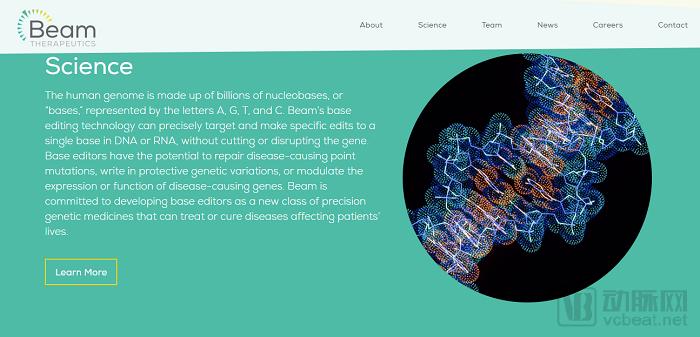
Image from the Beam Therapeutics official website
Among all the aforementioned companies, Beam Therapeutics is the youngest, having been founded in 2017. Nevertheless, its establishment undoubtedly generated the most significant buzz.
Beam Therapeutics was co-founded by three luminaries in the CRISPR field: MIT tenured professor Feng Zhang, Harvard University chemist David Liu, and Keith Joung, who earned his doctorate at Harvard University and Massachusetts General Hospital.
Beam Therapeutics is the world’s first innovative company to leverage single-base editing technology to develop precision gene medicines, securing $87 million in Series A financing led by F-Prime Capital Partners and ARCH Venture Partners upon its establishment.
The company’s core technology is primarily built upon the scientific breakthroughs of Feng Zhang and David Liu, and it owns multiple gene-editing platforms with intellectual property rights.
Beam Therapeutics’ first technology license was obtained from Harvard University, covering the DNA base editing platform from David Liu’s laboratory and Zhang’s work. This technology license primarily focuses on the application of gene editing in human therapeutics. The agreement covers two foundational editing platforms developed by David Liu’s laboratory. This technology achieved, for the first time, the ability to substitute the four DNA bases—A, T, G, and C—without relying on DNA double-strand breaks.
The second technology license comes from the Broad Institute. Under the agreement, Beam Therapeutics can obtain the rights to use the RNA base editing technology from Feng Zhang’s laboratory. This technology was first published in *Science* magazine in 2017 and enables single-base editing from A to G in transcribed RNA by linking Cas13 with adenosine deaminase.
These two technology licenses are exclusive; however, if Beam Therapeutics fails to actively develop them in the later stages, Harvard University retains the right to license the technologies to other parties. Beam Therapeutics is developing precise genetic medicines through gene-editing technologies. The company aims to leverage its proprietary base-editing technology,
Finally, Beam Therapeutics obtained the gene-editing technologies previously licensed by Harvard University, the Broad Institute, and Massachusetts General Hospital to Editas Medicine. Through this agreement, Beam Therapeutics secured exclusive patent licenses from the laboratories of David Liu and Keith Joung. In return, Editas Medicine acquired an equity stake in Beam Therapeutics and gained the right to utilize certain related proprietary technologies.
Currently, the board of directors of Beam Therapeutics includes Chief Executive Officer John Evans; investors Kristina Burow, Stephen Knight, and Robert Nelsen; co-founder Feng Zhang; and independent director Professor Mark Fishman (Professor of Stem Cell and Regenerative Biology at Harvard University).
Gene editing is currently regarded as the most promising technological approach for addressing monogenic diseases. The global market for diagnosing monogenic diseases is valued at approximately $75 billion, while analysts project that the therapeutic market could reach $2 trillion.
Undoubtedly, this technology will play a significant role in the healthcare sector, as its series of technological breakthroughs and successful translation of research into practical applications are bringing our aspirations closer to reality. While it remains unclear exactly how this technology will revolutionize healthcare, we believe the future is near and look forward to witnessing its impact.