

Song Dawei of Meiview Dental Pioneers China's Third Oral Healthcare Model, Aims to Build Regional Leading Brands
MEI WEI DENTAL GROUP
Oral Health Service Provider
From June 9 to 10, the “New Structure – 2018 Summit on Innovative Practices in Primary Healthcare,” co-hosted by the National Engineering Laboratory for Internet Medical Systems and Applications, Sir Run Run Shaw Hospital Affiliated to Zhejiang University School of Medicine, the Internet Medical Health Industry Alliance, and VCBeat, was grandly held in Hangzhou. MEI WEI DENTAL GROUP (hereinafter referred to as “MEI WEI”) received the award for Best Specialty Clinic.
In just two years, MEI WEI DENTAL GROUP has invested in and acquired 12 dental chain brands through its business partner model, operating 130 dental hospitals and clinics across 35 cities in China, thereby becoming one of the largest platforms in the industry.
During a break at the conference, a reporter from VCBeat (WeChat: vcbeat) conducted a brief interview with David Song, Partner and Chief Operating Officer of MEI WEI DENTAL GROUP. He provided a clear analysis of the company’s operational model and its expectations for future development.
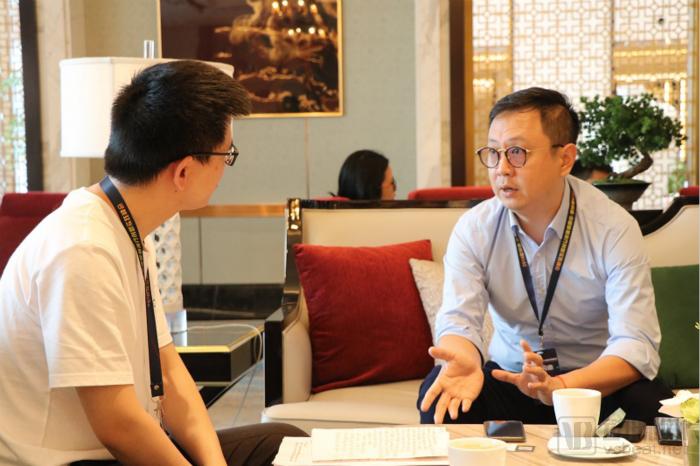
VCBeat (left) interviews Song Dawei, COO of MEI WEI DENTAL GROUP (right)
David Song believes that the development of China’s dental healthcare industry has evolved through three phases. “The earliest form consisted of small, independent private clinics, which served as a strong complement to public hospitals. As franchise expansion accelerated, regional or nationwide chain healthcare groups gradually emerged, leveraging supply chain and management integration to achieve brand value and economies of scale.”
Since the 1990s, after more than two decades of development, the dental industry has achieved a high degree of marketization. With relatively low barriers to entry and intense competition, challenges such as patient attrition, talent scarcity, and rising operational costs have emerged. Driven by capital, clinics have expanded aggressively, with their growth rate outpacing that of the patient population. As a result, nationwide dental chains are generally operating at a loss, and regional chain models are in urgent need of iterative upgrades.
“MEI WEI DENTAL GROUP follows the third model, which can be summarized in one sentence: integrating resources to build a platform that empowers China’s outstanding dental chain brands and enables their personalized development. We help promising brands continue to grow and strengthen, becoming leading brands in their respective regions or niche segments. MEI WEI leans more towards platform-based operations.”
Reporters learned that MEI WEI DENTAL GROUP can address the challenges faced by regional brands in areas such as healthcare, financing, talent, operations, and management through three key dimensions: strategic investment, standardization output, and brand management. “Empowerment is about adding value. All partner clinics share a common understanding and expectations. Dentistry is inherently a labor-intensive industry with a long value chain; it is no longer a sector characterized by exorbitant profits. Therefore, a platform is needed to resolve pain points and weaknesses across the entire industrial chain.”
In terms of its business model, Mei Wei Dental Group is similar to dental support organizations (DSOs) in the United States. David Song frankly stated, “To some extent, it is indeed a benchmarking model. The problems addressed are somewhat similar, yet there are notable differences. For instance, Mei Wei insists on holding a controlling stake in acquired clinics. Moreover, Mei Wei not only helps dental institutions resolve operational challenges but also genuinely supports them in scaling up and strengthening their market presence.”
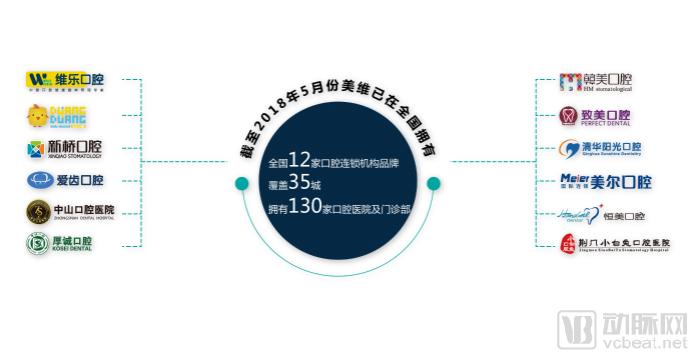
MEI WEI DENTAL GROUP’s Dental Chain Brand Layout
As of now, MEI WEI DENTAL GROUP’s 12 dental chain brands operate 130 dental hospitals and clinics across 35 cities in China. What challenges did these clinics face prior to acquisition? Song David revealed, “MEI WEI strives to preserve the individualized development of each institution. The specific challenges vary from clinic to clinic—some suffer from capital shortages, while others struggle with patient acquisition. MEI WEI primarily addresses these issues by providing support in standards, technology, talent, operations, and informatization.”
“Providing targeted support based on specific challenges is MEI WEI DENTAL GROUP’s strategy. To illustrate, if a clinic lacks operational management capabilities, we will assign professionals to help the region establish a marketing and operations team, formulate marketing strategies, and standardize internal management processes such as finance and human resources over a period of 3–6 months, thereby swiftly bringing enterprise management and market operations onto the right track. Our shared goal is to increase the density of these already influential regional chains from five clinics to twenty or more.”
Among the clinics under MEI WEI DENTAL GROUP, some were acquired while others were self-established. “These two approaches are pursued in tandem; even within our self-built brands, there are acquisition projects. MEI WEI enters into partnerships with brands through a capital operation model. Our acquisition criteria include alignment of values and complementary resources—whether in medical services, talent, or local resources, at least one aspect must be highly compatible with ours. If a party is merely seeking cash-out opportunities, we cannot collaborate.”
As for the principles governing the selection of cities for new store openings, David Song offered reporters a vivid analogy: “We are unwilling to spread ourselves thinly across more than 200 cities in China like sprinkling pepper. Instead, we prefer to increase the density of our clinics in each city, striving to become the leading local brand across various dimensions, including scale, revenue, talent pool, and brand recognition.”
The business partnership model and multi-brand platform empowerment strategy introduced by MEI WEI DENTAL GROUP have garnered increasing attention from industry peers. “MEI WEI is willing to share its business model and accumulated operational experience with the dental industry, as we remain committed to building an open platform. Ultimately, regardless of the model employed, what matters most is the specific problems you can solve.”
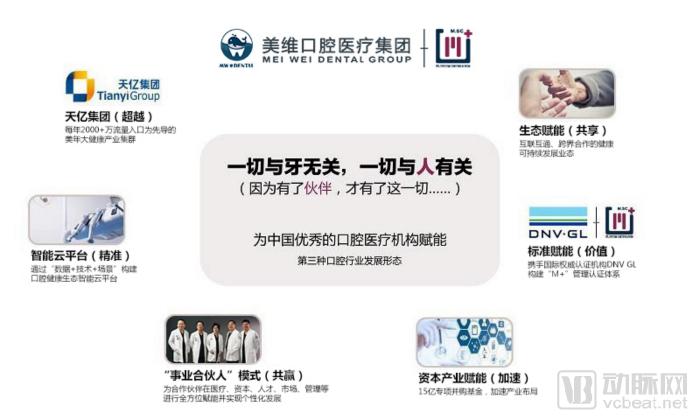
MEI WEI GROUP Strategic Development Roadmap
“Leveraging Tianyi Group and Meinian Onehealth, the health checkup entry point has helped us address certain traffic challenges. By drawing on Meinian Onehealth’s mature, hands-on experience in customer acquisition, marketing, and healthcare delivery—alongside our capital operations and business partner mechanism—our advantages are evident. Of course, we are not simply replicating their model; rather, we are engaged in dynamic adaptation and continuous improvement.”
Regarding the business partner model, David Song stated, “MEI WEI DENTAL GROUP implements a three-tier equity incentive structure to establish its partnership system, comprising the core management team, city partners, and clinic partners. By delegating authority to local business partners, the company incentivizes them to leverage their accumulated local expertise, medical teams, operational management capabilities, and social networks to expand market presence.”
Moreover, there is a clear career progression path from outpatient clinics to urban practices and ultimately to senior leadership. This system addresses issues related to professional identity and profit-sharing. Finally, MEI WEI DENTAL GROUP places significant emphasis on cultural alignment and cohesion, a focus rarely highlighted by other enterprises. Two principles in MEI WEI’s corporate culture remain unchanged: “It has nothing to do with teeth; everything has to do with people.”
After acquiring 12 chain brands, David Song also provided an explanation on how to address the multi-brand strategy: “In fact, all dental chains are currently facing these issues, but many institutions are avoiding them. MEI WEI DENTAL GROUP has been confronting this challenge head-on and has long incorporated it into our planning. It won’t be long before you see the implementation of our next strategic moves.”
The oral care industry has evolved to a point where it can no longer be described as highly lucrative, although profit margins remain respectable. Competition in first-tier cities is currently intense, with some high-demand areas even descending into talent poaching and price wars. Regarding this competition, Song Dawei remarked, “This is the inevitable growing pain experienced during the early stages of any industry’s development; similar situations can be observed in sectors such as ride-hailing and food delivery. Only when competition becomes more rational will scale advantages generate greater synergistic effects. Perhaps, within the next three to five years, a new landscape for China’s oral care industry will emerge.”
Regarding the future trend-driven developments in the oral care industry, Song Dawei identifies three particularly prominent trends:
First, precision diagnosis and treatment plans. With the advancement of upstream technologies, such as artificial intelligence combined with imaging data, diagnostic processes in dentistry can be assisted. For instance, integrating data from CT scans, intraoral scans, and occlusion analysis enables the formulation of comprehensive diagnosis and treatment plans, helping clinicians enhance both the efficiency and accuracy of their treatments.
Second, vertical specialization. Business models that segment and target specific populations—whether adolescents, children, or families seeking general practice services—offer substantial growth potential.
Third, online oral health management. With increasing consumer awareness of oral healthcare and the adoption of the family doctor model, private dentistry can operate in parallel with family medicine. Leveraging internet technologies helps integrate fragmented service scenarios; for instance, mobile apps enable users to manage their oral health and locate nearby clinics and dentists, ultimately establishing a private dentist relationship that supports patients throughout their entire lifecycle.
“We have positioned ourselves to address the challenge of helping consumers develop healthy oral hygiene habits. With the state actively promoting a policy shift from treatment to prevention, we will focus on oral health management across the entire lifecycle using comprehensive data. This represents the true potential of ‘mobile internet + dentistry’ beyond addressing patients’ functional dental issues, and it is the direction in which MEI WEI DENTAL GROUP is striving.”
David Song is full of expectations for MEI WEI DENTAL GROUP’s development path in the coming years: “We aim to foster a truly healthy ecosystem within the dental industry, and MEI WEI will also extend upstream into the supply chain. For us, going public is merely an important milestone on the journey toward achieving our goals; the future holds infinite possibilities for MEI WEI’s development.”