Analysis of Community-Embedded Elderly Care Models in China: Five Key Challenges and Lessons from Japan's 30-Year Mature System
The United Nations defines an “aging society” as one in which individuals aged 60 and above account for 10% of the total population. Based on current trends, China is projected to have 35.5% of its population (approximately 450 million people) aged over 60 by 2050, far exceeding the UN’s threshold. By 2100, not only will the proportion of those aged 60 and above rise to 39.6%, but the country’s total population will also shrink to 941 million, resulting in an unprecedented level of population aging.
Amid population aging, the elderly care industry faces new opportunities and challenges. Policy support has accelerated industry development, prompting companies to innovate their models and seize the substantial business opportunities presented by an aging society. In this context, the “9073” structure—where 90% of seniors age at home, 7% receive community-based services, and 3% reside in institutions—remains intact. Community- and home-based care continue to be the dominant models. Within this framework, embedded elderly care, a model integrated into the smallest residential unit—the community—has emerged to meet market demand.
Government procurement enables the elderly to receive basic old-age security benefits free of charge. The government and communities assume full responsibility for operations, with government fiscal subsidies serving as the primary funding source. Communities are responsible for integrating elderly care resources, including land, human resources, and medical services, while other social organizations participate through embedded partnerships. (Examples include Guangzhou’s Xiaoci Xuan, Shanghai’s Elderly Care Homes, and Beijing’s Sanlitun Elderly Care Station.)
High-end services paid for by the elderly are provided by for-profit social institutions within the silver economy. Funded by eldercare enterprises in combination with government subsidies, these services involve the independent recruitment of caregiving staff and self-sustained operations (bearing both profits and losses) by the enterprises, with community participation in coordination and management, and flexible involvement from other social organizations (e.g., Vanke’s Smart Care Hubs in Shanghai and Guangzhou).
In recent years, continuous policy support and guidance from the national government have been complemented by local governments gradually exploring paths tailored to their respective regional circumstances.
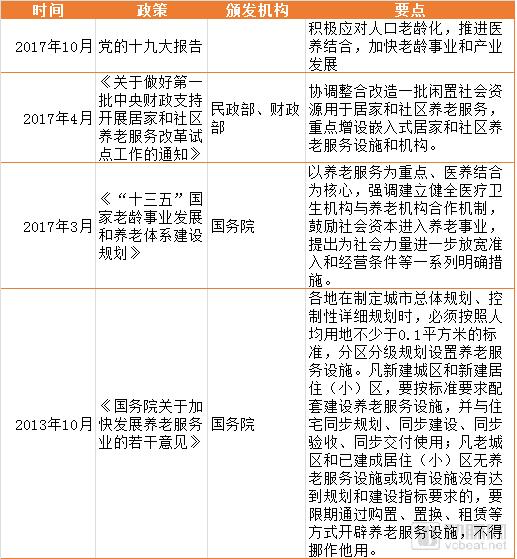
In October 2017, the report delivered at the 19th National Congress of the Communist Party of China proposed establishing a policy framework and social environment for elderly care, support, and respect; promoting the integration of medical and elderly care services; and accelerating the development of both public initiatives and industries related to aging. Multiple government bodies, including the State Council, the Ministry of Civil Affairs, and the Ministry of Finance, subsequently issued documents in response. The requirements and emphasis set forth by top-level design now serve as the guiding direction for the development of elderly care services.
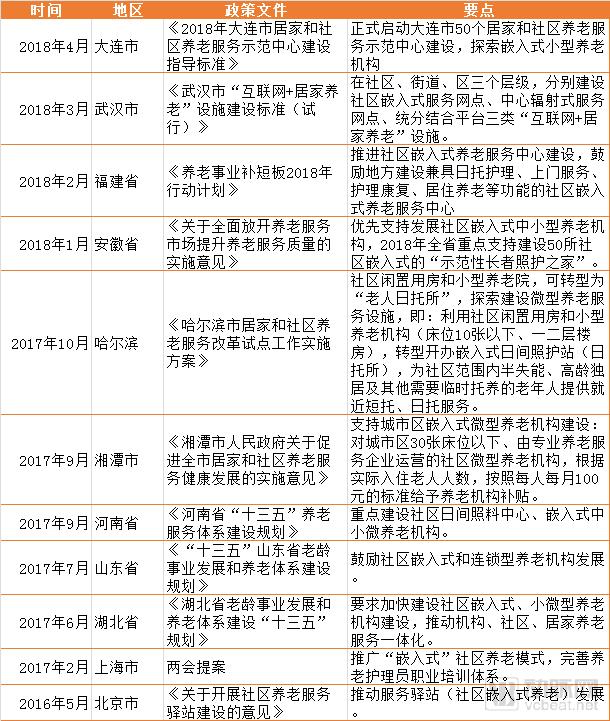
Under the guidance of national macro-level policies, provinces and municipalities have responded in kind, basing their actions on the requirements set forth by national policies for the elderly care industry. By taking into account local practical needs and market characteristics, they have further strengthened support for the embedded elderly care model.
In June 2017, Hubei Province released the “13th Five-Year Plan for the Development of Aging Causes and the Construction of the Elderly Care System in Hubei Province,” which called for accelerating the development of community-embedded, small-scale elderly care institutions and promoting the integration of institutional, community, and home-based elderly care services. In March 2018, Wuhan City issued the “Construction Standards for ‘Internet + Home-Based Elderly Care’ Facilities (Trial),” which provided more detailed requirements. At the three levels of community, sub-district, and district, three types of “Internet + Home-Based Elderly Care” facilities were to be established respectively: community-embedded service outlets, center-radiating service outlets, and integrated platforms combining centralized and decentralized management.
As the “embedded” elderly care model is still in its developmental stage, corresponding models are currently available only in communities of several economically developed cities, such as Shanghai, Beijing, Shijiazhuang, and Chongqing, while other regions are gradually exploring this approach.
Corporate Involvement Sparks Vitality
Currently, interventional medical device companies in China are broadly categorized into two types:
Due to practical challenges such as high capital investment and slow return on investment in the elderly care industry, a pronounced “Matthew Effect” is currently evident. As major players from the real estate and insurance sectors see favorable development trends in high-end market projects like “elderly care real estate” and “high-end nursing homes,” they are gradually expanding into the mid-to-low-end elderly care segment and entering the “embedded” elderly care model.
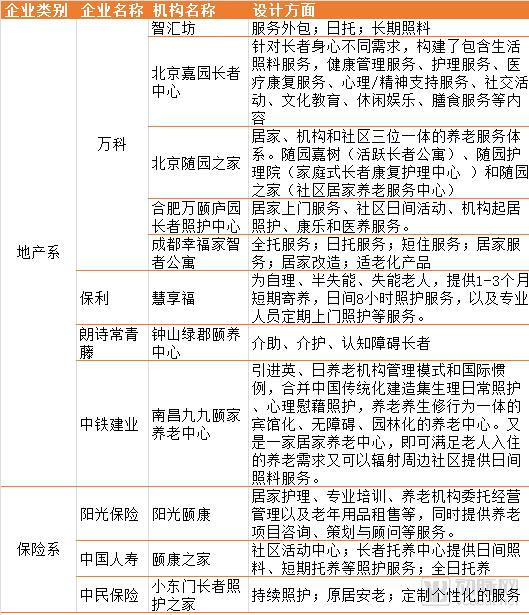
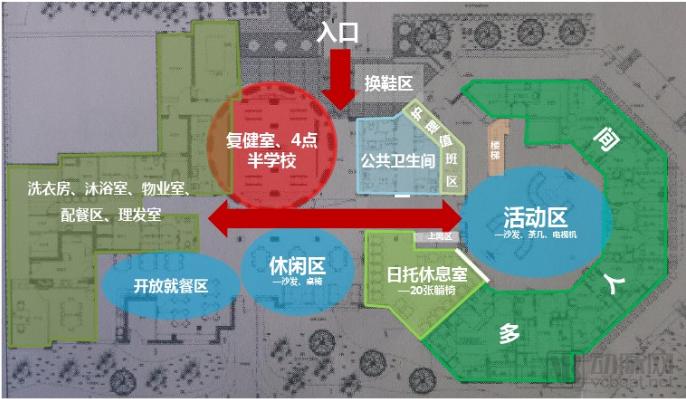
Vanke’s Zhihuifang is a typical “embedded” elderly care project. The various health facilities, cultural and recreational activities, and catering services within Zhihuifang are also open to elderly residents in the community on a membership basis.
“Zhihuifang” in City Garden is the first elderly care product launched by Shanghai Vanke—an embedded elderly care clubhouse within the community.
The service center can accommodate approximately 40 elderly individuals in its day care program and provides residential spaces with 38 beds for long-term stayers (including 10 single rooms, 6 double rooms, and 4 quadruple rooms). The daytime custodial care service offers “respite care” for seniors whose families are unable to provide care during the day due to work commitments. The short-term respite nursing service targets empty-nest households and families with members requiring post-operative or post-illness rehabilitation, providing nursing care, rehabilitation services, health management, and assistance with activities of daily living.
Age-Friendly Interior Design at Zhihuifang:
a. Spacious public spaces that encourage elderly residents to move around and interact with one another;
b. A specially designed sunlit corridor that caters to the winter habit of elderly residents in southern China enjoying sunlight. In rooms with underfloor heating, seniors bask in the sun and chat, painting a warm and happy scene;
c. The senior care club provides healthy, low-oil, low-salt, and low-sugar meals prepared primarily through steaming, boiling, roasting, and baking. Combined with a clean and elegant dining environment, it creates a warm and comfortable space for social interaction among the elderly;
d. The senior living facility fully adopts “barrier-free design” to facilitate access for elderly residents using wheelchairs. For instance, conventional hinged doors have been replaced with sliding doors to maximize space and ease wheelchair maneuverability; barrier-free elevators are installed across the two-story building to enable convenient vertical movement for seniors; brightly colored yellow grab bars are mounted in slip-prone areas such as restrooms; and mirrors are angled to allow wheelchair users to view their full bodies, among other measures.
Living spaces for day-care seniors and residential seniors are clearly demarcated:
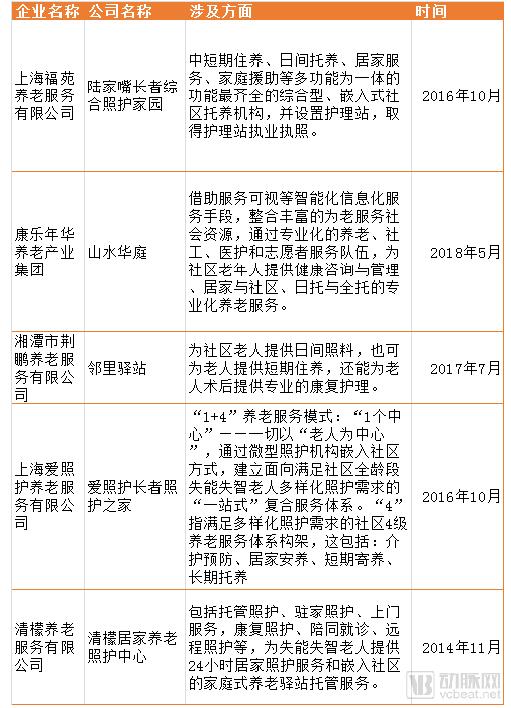
In recent years, as population aging has intensified, the number of companies specializing in elderly care services has grown. Unlike well-capitalized players in real estate or insurance, these predominantly asset-light firms focus more on the mid-to-low-end market, making the “embedded” elderly care model better suited to their operational realities.
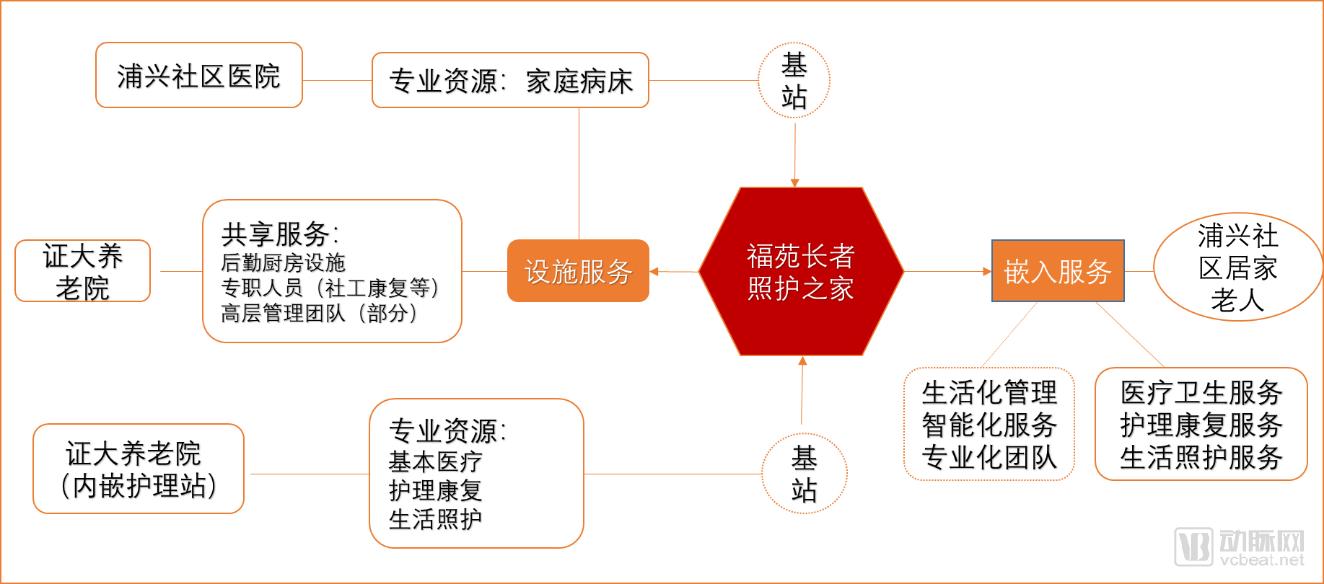
As Shanghai’s first fully licensed and completed elderly care home, the Fuyuan Elderly Care Home in Puxing Community covers a total area of 470 square meters and has 14 beds. It achieved a 100% occupancy rate within two months of operation and realized bed turnover within three months, becoming the first micro-institution in Shanghai to achieve operational break-even.
Embedded Elderly Care Models in Different Regions
Shanghai strongly advocates the government-purchased embedded elderly care model, characterized by government tendering, corporate investment and operation, and community support. The Shanghai Municipal Government has established a policy for assessing levels of care needs, enabling seniors to access services such as home-based elderly care, care for the very old, and nursing care for the elderly. Services provided under the embedded elderly care model include daily living assistance, medical care, emotional support, and cultural and recreational activities. Shanghai’s “Elderly Care Homes” facilitate the organic integration of these three sectors, achieving stratification and convergence within the elderly care service system.
The advantage of the Shanghai model lies in its optimal integration of various social resources, maintaining a leading role in community-based elderly care services. It achieves a high degree of synergy among market-oriented enterprise operations, government-provided welfare benefits, and personalized community services, thereby demonstrating strong practical operability.
Shanghai’s Ai Zhaohu Elderly Care Homes, launched in 2014 with an initial pilot in six subdistricts, have now expanded to more than 70 facilities citywide. Although operated by different enterprises, they largely follow the same model and operational framework.
Ai Zhao Hu Elderly Care Homes has established a branded and chain-operated business model in Shanghai.
Features of Ai Zhaohu Elderly Care Home:
a. Smart nursing beds are shared by homes and institutions, enabling elderly care services to be provided either on-site or via home delivery
b. Sign contracts with elderly residents specifying fixed stay durations to facilitate subsequent admissions and address the “scarcity of available beds” issue.
c. Innovative Compensation Model: Piece-Rate Pay and Multi-Tiered Incentives to Retain Nursing Talent
Beijing implements a model characterized by government funding and operation by professional legal entities. This operational model is suitable for regions with high governmental efficiency and relatively complete teams of professional talent. Due to its developed economy and large-scale provision of elderly care services, Beijing focuses on expanding coverage by implementing an integrated medical and elderly care model. This approach transforms elderly care from mere "convalescence" to comprehensive "nursing and care." Community health service stations are embedded within nursing centers, and cooperation agreements have been signed with emergency centers to establish "green channels" for urgent care. Meanwhile, active partnerships with relevant enterprises have been forged to provide free professional health assessments for empty-nesters in the community. Additionally, a will repository has been established within the nursing centers, and these facilities are open to the public for "trial experiences."
As the first demonstration institution to adopt Beijing’s unified elderly care branding, the Sanlitun Elderly Care Service Station has also become a benchmark entity for “embedded” elderly care in Beijing.
The Sanlitun Community Elderly Care Service Station was initially renovated by the Sanlitun Subdistrict Office. After Longzhen Elderly Care took over, it invested approximately RMB 760,000 in environmental decoration, cultural development, and the procurement of rehabilitation equipment and functional cognitive toys. Each private room for the elderly is equipped with basic furniture and appliances, including medical beds, televisions, and small coffee tables. The common area features a projector, sofas, and round tables, providing a space where seniors can gather to watch movies, chat, engage in handicrafts, or receive basic nursing care and massage from medical staff. Truly, “small in size but complete in every aspect.”
Overview of the Actual Operations of the Sanlitun Community Elderly Care Service Station:
a. Fulfill the primary functions of “elderly care stations,” including short-term respite care, day care, and home-based services
b. Provide services including full-time residential care, day care, temporary stay, meal programs, assisted bathing, haircuts, massage, meal delivery, rehabilitation and health care, medical appointment accompaniment, emotional support, psychological care, legal consultation, cleaning, maintenance, accessible facility design and installation, rental of rehabilitation medical equipment, and one-on-one volunteer public welfare programs organized by federations.
c. For short-term stays, the combined monthly cost for bed, meals, and nursing care ranges from RMB 3,600 to 6,000; daytime care is priced at RMB 100 per day; a package including one meal plus assisted bathing, pedicure, and haircut costs approximately RMB 110.
d. Approximately 5 meal assistance services provided per day, with a total of around 400 meal assistance instances
e. 12 staff members, with monthly costs of approximately RMB 8,000 per person covering accommodation, meals, social insurance, and salaries. The operation breaks even with a slight surplus.
In the Shijiazhuang area, referencing the American CCRC model, a set of home-style residential facilities and supporting services capable of meeting the needs of different age groups and health conditions has been established in densely populated downtown areas. Embedded within elderly communities that include nursing institutions, this approach not only provides seniors with a sense of belonging but also ensures they receive professional elderly care services, while extending its reach to surrounding communities.
The Jingzhonghe Embedded Elderly Care Community in the Shijiazhuang area is purpose-built for seniors. Leveraging its prime urban location and mature amenities, it integrates residential facilities with comprehensive services in a home-like setting. This model addresses the diverse needs of older adults across different age groups and physical conditions, including independent living, assisted living, and skilled nursing care. It creates a community where seniors can age continuously within a familiar environment—encompassing both the urban and cultural contexts—thereby mitigating the adverse physical and psychological effects associated with frequent relocations and ensuring a healthy aging experience.
The model's experience needs to be further accumulated.
Currently, the “embedded” elderly care model, as a new approach to senior living, has established a distinct operational framework in economically developed cities such as Shanghai and Beijing. Guided by local policies, its development has remained relatively stable, resulting in a well-defined model. However, in cities with relatively weaker economic conditions, community development is less robust. Consequently, the embedded elderly care model has either not yet been implemented or remains in an exploratory phase, lacking directly applicable best practices tailored to local contexts.
“Embedded” Elderly Care Model Has Insufficient Penetration
In the context of China’s traditional belief that “raising children provides security in old age,” placing elderly parents in external care facilities is often perceived as an act of “filial impiety.” However, families not only lack professional caregiving expertise but also face constraints on time and energy due to demanding work schedules. Although “embedded” elderly care institutions offer the advantage of proximity to home and differ from traditional nursing homes, public awareness of this model remains limited, leading to certain challenges in its acceptance.
Lack of Clear Policies and Financial Support
Currently, China is vigorously promoting the development of both public welfare and industrial sectors in elderly care. However, specific policies lack direct support for the “embedded” elderly care model. This is mainly reflected in two aspects: regarding policy incentives, there are few preferential measures—such as financing and land-use benefits—for enterprises adopting the “embedded” elderly care model; in terms of elderly care planning, existing urban construction and functional plans give limited consideration to the scale of “embedded” elderly care services. Therefore, it will take some time to refine policies, provide financial support, and ensure their effective implementation.
Poor Internal Coordination Within the Community
Under the “embedded” elderly care model, nursing centers primarily secure land through two channels: one is leasing vacant residential properties within communities, and the other involves elderly care service enterprises independently applying for permits to construct new facilities. However, both approaches frequently encounter challenges related to limited construction space and difficulties in land acquisition. Furthermore, community residents often resist the establishment of such embedded elderly care institutions due to concerns over medical waste generation, air pollution, and the encroachment on public spaces.
Disputes Over Costs
According to relevant surveys and interviews, elderly care homes in Shanghai alone have varying fee structures across different communities, with some charging over RMB 3,000 and others as much as RMB 6,000. For enterprises, this model requires significant investment in high-tech facilities, intelligent monitoring systems, premium management teams, and internationally advanced concepts. For residents, however, such high costs are less cost-effective than hiring a live-in caregiver. Therefore, it is essential to establish a reasonable pricing standard for embedded elderly care institutions that is acceptable to both parties, thereby achieving a win-win outcome.
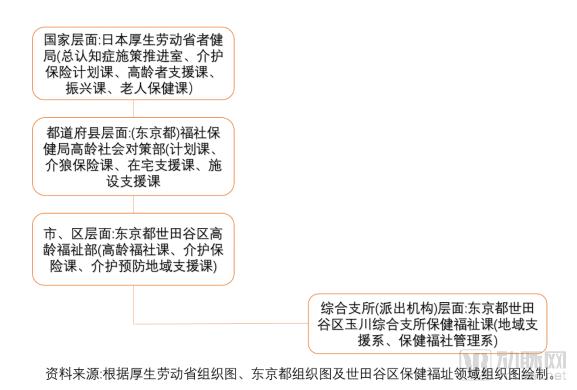
An analysis of Japan’s community-embedded elderly care services, promoted over the past three decades, reveals that the Japanese government has consistently advanced such services in accordance with the principle of aging in place. This has gradually fostered a multi-stakeholder, diversified service model characterized by the integration of four support mechanisms: self-help (self-management and market-based services), mutual aid (civil volunteer organizations and social participation by older adults), co-support (Long-Term Care Insurance), and public assistance (government-funded livelihood protection for low-income groups and safeguarding of elderly rights). Japan’s experience offers valuable lessons for China.
After 30 years of exploration, Japan has developed a relatively mature model that is worthy of our reference:
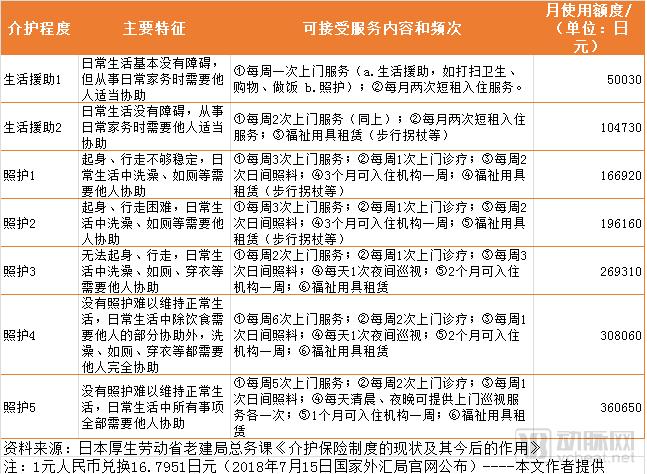
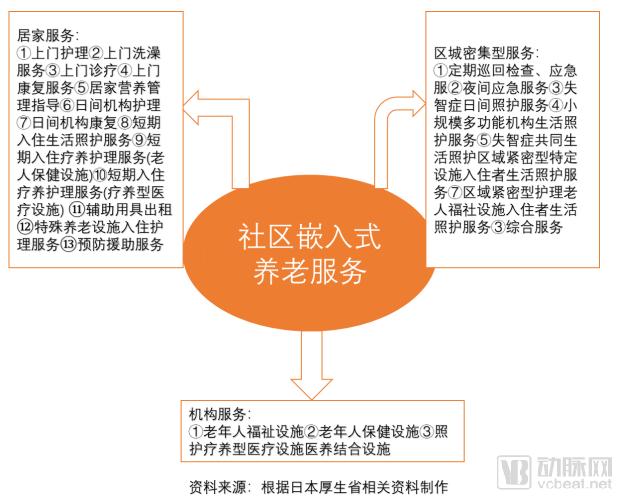
The scope and embedding models of community-embedded elderly care services in Japan continue to expand, with service delivery becoming increasingly flexible and diversified. Currently, these services in Japan are broadly categorized into the following four major types:
a. Institutional Elderly Care Services
The services are primarily provided by three types of facilities: welfare institutions for elderly individuals with moderate to severe care needs (Care Level 3 and above) who face challenges in receiving home-based care; health facilities for the elderly focused mainly on rehabilitation; and integrated medical-nursing care facilities. Service fees vary depending on the type of institution, room type, and level of care required.
b. Home-based Elderly Care Services
As shown in the figure below, such services have currently expanded to 13 items. Based on the service location, they can be broadly categorized into two types: home-based services and institutional day care services. Home-based services include home care and home medical nursing. Home care services are primarily provided by professionals qualified as Certified Care Workers or Home Helpers from professional nursing agencies designated by local governments at various levels. Home medical nursing services are delivered by nurses and public health nurses from home medical nursing stations or hospitals designated by local governments, who visit the elderly at their residences to provide professional services. Institutional day care services mainly refer to care services provided by specialized institutions during daytime hours.
c. Regionally Intensive Services
As shown in the figure above, there are eight service categories under regionally intensive services. These services require the assignment of dedicated staff to ensure that older adults receive consistent care from familiar personnel who are well-acquainted with their individual circumstances, whether they are receiving care at a day care facility or through home-based services.
d. Accessible Apartments for the Elderly
Barrier-free apartments for the elderly are a new type of accessible housing designed for individuals aged 60 and above who live alone. These facilities often adopt models such as elder-to-elder care or cohabitation of the elderly with the infirm (referring to living with adult children who have illnesses), and incorporate additional services including emergency response, safety monitoring, and daily life assistance.
As shown in the figure below, Japan has continuously introduced a series of policies to promote home-based elderly care services. These policies not only established specific quantitative targets and implementation strategies at the national macro level, but also mandated local governments to formulate Elderly Welfare Plans, prioritizing the promotion of home-based elderly care services at the municipal, town, and village levels. This approach enabled the phased implementation and development of relevant services starting from the late 1980s, with a well-organized institutional system providing critical support.