

Mingyi Chuanshi Files for IPO: A Leading Medical Education Platform with Nearly RMB 100 Million Raised and Courses Adopted by 300+ Hospitals
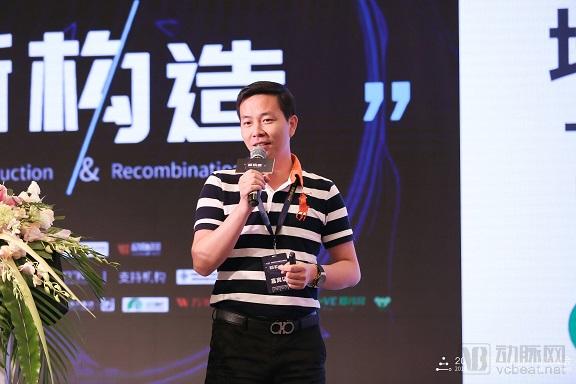
Chen Jin, Founder of Mingyi Chuanshi
In the field of medical education, Mingyi Chuanshi has developed rapidly.
After four years of operation, the company has completed three rounds of financing, raising a total of nearly RMB 100 million. Its training courses have been procured by four government agencies and more than 300 hospitals. The platform has assembled a team of over 6,000 renowned medical experts from across China. It offers more than 2,600 medical training courses, with over 100 new or updated courses added each month. These courses cover more than 30 medical specialties, including diagnosis, treatment, and procedural case studies for common diseases, frequently occurring conditions, chronic diseases, infectious diseases, and complex or rare disorders.
Because Mingyi Chuanshi aims to provide a comprehensive training solution for grassroots healthcare technical personnel at all levels of healthcare institutions through the model of “medical training videos + SaaS platform,” it primarily leverages a training management platform to deliver systematic, standardized, and homogeneous online training, combined with offline practical exercises to help consolidate and enhance the skills of grassroots healthcare workers. The target audience includes all healthcare personnel at the county/district level or below, not just physicians.
On the other hand, significant changes have taken place in the medical education market since 2011. By 2015, all provinces (autonomous regions and municipalities) had fully launched standardized residency training programs; by 2020, a standardized residency training system had been basically established, requiring all newly recruited clinicians with a bachelor’s degree or higher to undergo standardized residency training. This has indirectly driven the development of the medical education market.
With a plethora of medical education and training platforms and the rise of online videos, how can training effectiveness be ensured despite the abundance of content? To address this, VCBeat conducted an exclusive interview with Chen Jin, Founder and CEO of Mingyi Chuanshi.
No Matter How Difficult Primary Care Medical Training Is, I Will Pursue It
Mingyi Chuanshi is a subsidiary of GuangDong YiQun Technology Co., Ltd., which was established in 2014. The current team size is approximately 200 people. The founder and CEO, Chen Jin, graduated with a degree in Clinical Medicine from Sun Yat-sen University of Medical Sciences. He previously served as a surgeon at a Grade 3A hospital in Guangzhou and has over ten years of experience in both the biotechnology and internet industries. The CTO graduated with a degree in Electronic Information Engineering from Beijing Information Science and Technology University and has held positions such as Technical Manager at Santak Electronics, Tianbai Broadband, and Beijing Saiwei Anxun Company. The Director of the Film and Television Center has 15 years of experience in film and television communication and production. He previously served as Executive Creative Director (ECD) at BBDO, an international 4A advertising agency, and at Guangdong Advertising Group. He has completed over one hundred brand communication cases for Fortune 500 companies. The co-founders include a former professor of neurosurgery at PLA General Hospital (301 Hospital) and the former Vice President of Southern Medical University.
According to Chen Jin, Mingyi Chuanshi’s business primarily comprises three segments: first, training programs tailored to the roles and specialties of hospital physicians; second, a training system for standardized residency training bases; and third, a training management system for primary-care physicians under county- and city-level Health and Family Planning Commissions.
“Leveraging internet platforms to disseminate the expertise of renowned physicians to grassroots healthcare providers in a more effective and efficient manner is precisely what Mingyi Chuanshi is dedicated to achieving.” This was stated by Chen Jin during his first interview with the reporter. In July 2016, he was leading Mingyi Chuanshi in preparing for a Series B financing round of RMB 100 million.
Upon seeing Chen Jin again, he said, “We will focus on just one thing—training for primary care physicians. I have traveled to many provinces and cities, but whenever this topic comes up, people avoid it. But no matter how difficult it is, we must do it.” Chen Jin remains steadfast in his original aspiration.
In his view, within the State Council’s Opinions on Promoting the Development of “Internet + Healthcare,” medical education is perhaps the most challenging component, as it represents a particularly tough nut to crack.
China has approximately 11.75 million medical and health technical personnel, the majority of whom are concentrated at the primary care level. More than 60% of staff in primary healthcare institutions hold an associate degree or lower, resulting in an overall low level of professional competence. Therefore, continuing education and professional development have become imperative.
There are numerous existing approaches to enhancing the capabilities of primary healthcare professionals, such as advanced study programs and temporary assistance provided by specialists from tertiary hospitals. Short-term training is also a viable pathway. In addition, various internet-based methods, including live streaming and remote education, are widely utilized.
However, these so-called short-term or title-oriented training programs fail to provide grassroots medical personnel with comprehensive and systematic instruction due to variations in cities, training venues, experts, and other factors. Furthermore, the diverse educational backgrounds of grassroots healthcare workers make it difficult to implement standardized training and management.
To address the issue of limited medical expertise among primary care institutions and physicians, relevant authorities have been promoting the allocation of high-quality medical resources to the grassroots level. Measures include establishing medical consortia that link large hospitals with smaller ones and primary care institutions within the same region, as well as actively advancing telemedicine consultations and remote multidisciplinary consultations between hospitals.
In response, Mingyi Chuanshi’s approach is to first invite expert physicians to record courses in its dedicated studio, and after establishing a comprehensive educational training system, hospitals adopt these recordings as training videos for their medical staff.
Course production: unit price reduced from RMB 80,000 per session to RMB 10,000
Currently, Mingyi Chuanshi operates more than 20 recording studios, many of which are located directly within hospitals, such as the Chinese PLA General Hospital (301 Hospital), Peking University Third Hospital, and the Affiliated Hospital of Jinan University. Unlike similar companies that typically rely on physicians to record or livestream content themselves, Mingyi Chuanshi has established a systematic approach to video production on its platform.
Generally, producing a video for Mingyi Chuanshi requires coordination among five departments within the company: First, the Medical Resources Department, responsible for liaising with experts and establishing collaborations with frontline Grade A tertiary hospitals, clinical departments, and authoritative specialists; Second, the Planning Department, which designs the curriculum and determines filming topics based on the experts’ technical specialties; Third, the PPT Enhancement Department, tasked with polishing the initial drafts provided by experts and handling graphic layout and typesetting; Fourth, the Photography Department, responsible for studio filming; and Fifth, the Post-Production Department, which completes the final video editing. Due to the need for coordination with physicians and post-production editing, the entire process of producing a course typically takes about two months.
This complex process inevitably drives up production costs. Chen Jin stated that the initial cost per video exceeded 80,000 yuan; currently, although costs have decreased with the increase in video production volume, they remain at approximately 10,000 yuan per video. To date, Mingyi Chuanshi has produced nearly 3,000 videos, with an additional 7,000 videos scheduled for production.
These videos are all premium courses, with all content derived from the national syllabus as well as requirements outlined in clinical pathways and guidelines. To this end, Mingyi Chuanshi invited experts from Beijing, Shanghai, and Guangzhou to spend over four years filming and recording these materials. Currently, Mingyi Chuanshi offers more than 2,600 premium courses, boasting the largest collection of high-quality medical videos in China.
Additionally, the recording studio for "Mingyi Chuanshi" is built within hospitals to facilitate long-term course development, with expert support provided by associations such as the Chinese Medical Doctor Association, the China Medical Education Association, and the Guangdong Medical Education Association.
The Mingyi Chuanshi Platform operates on a SaaS model, enabling every medical institution and government entity to possess its own training management system. This facilitates hierarchical implementation and oversight, ensuring the effectiveness of training outcomes. The backend provides real-time monitoring to identify any units or departments with inadequate training performance.
This approach rejects formalistic training. Similar to a driver’s license examination, it employs facial recognition technology to verify that the registered individual is actually engaged in learning. Meanwhile, leveraging big data mining techniques, Mingyi Chuanshi conducts comprehensive analysis of trainees’ study duration, habits, and progress. This enables the platform to provide employers with targeted recommendations and precise training services.
According to Chen Jin, before recording training videos, experts first sign a contract with Mingyi Chuanshi, which then pays the corresponding service fees. Of course, most experts engage in this collaboration on a pro bono basis, hoping to leverage their years of accumulated experience to provide grassroots physicians with high-quality, practical training courses. Currently, Mingyi Chuanshi has signed nearly 6,000 physicians, all of whom are specialists from Grade A tertiary hospitals in Beijing, Shanghai, and Guangzhou.
Integrating Online Video Consultations with Physician Performance Assessment to Identify Payers
After years of exploratory practice, Chen Jin believes that talent development in primary healthcare is effective only when linked to performance incentives. Furthermore, the business model should adopt B2B or B2G approaches, with hospitals or relevant government departments purchasing in-house physician training programs as the paying parties. “Our training courses have been procured by four government agencies and more than 300 hospitals.” Based on this experience, Chen Jin has summarized three key points for delivering effective primary care training:
First, policy issues—specifically credentialing and qualification requirements—must be addressed. It is essential to clarify the rationale for training, the benefits or credentials participants will obtain upon completion, and the consequences of not participating.
Second, the pathway. What methods can be employed to ensure cost controllability and suitability for large-scale promotion? It is unrealistic to expect the government to invest substantial funds in grassroots training.
Third, training content. The healthcare workforce is highly heterogeneous, with diverse roles and varying levels of expertise, making it extremely challenging to design and standardize training curricula.
The approach adopted by Mingyi Chuanshi is to establish a training management platform. Primarily online, it delivers systematic, comprehensive, and standardized e-learning, integrated with offline hands-on practice to create a blended training model. This training system is designed for managers to help enhance the competencies of grassroots healthcare professionals.
The target audience includes all healthcare professionals at the county level and below, encompassing not only physicians but also nursing staff, medical technologists, and administrative personnel. The training curriculum, developed by Mingyi Chuanshi, consists of a systematic series of video-based instructional materials aligned with the training outlines and guidelines issued by relevant national authorities.
“Is it difficult for a primary healthcare worker to study one course module per week? Not at all. When training is linked to their performance evaluations and allocated bonuses, they will certainly master the material,” said Chen Jin.
From January 9 to 18, 2018, healthcare professionals in Luoding City underwent training and assessment via the “Mingyi Chuanshi” platform, with over 1,900 participants and more than 1,800 ultimately passing.
Following traditional practices, the training for these 2,000 participants would be divided into small sessions of over 100 attendees each. To ensure all personnel are trained, it would take at least 20 days. However, by leveraging the Mingyi Chuanshi platform, results can be achieved in just 10 days, with significantly lower costs compared to resource-intensive offline training.
Moreover, the training effectiveness of Mingyi Chuanshi is monitorable. Luoding City has 30 medical and health institutions at various levels, with a total of 4,323 staff members. According to system data, Mingyi Chuanshi was officially implemented starting in May. To date, the average number of courseware tasks completed per person is 28.57, equivalent to one course per week, with the total training duration exceeding 200,000 hours.
Using a city in Guangdong Province as a case study, over 1,900 participants from healthcare institutions of various levels underwent training via the Mingyi Chuanshi platform. The entire training program was completed within 10 days, achieving zero cost and controllable outcomes. Subsequently, the municipal Health Bureau adopted this platform for the training of 4,323 staff members across 30 healthcare institutions throughout the city, with formal implementation commencing in May. Each participant was assigned an average of 28.57 course modules, resulting in a total training duration exceeding 200,000 hours. Both administrators from the Health and Family Planning Commission and healthcare institutions, as well as the trainees, expressed satisfaction with the training outcomes.
“We have been widely adopted across more than ten cities and counties nationwide. In alignment with the overarching ‘Health Poverty Alleviation’ policy, we are providing province-wide support to grassroots healthcare facilities in several provinces. Currently, two provinces have explicitly committed to achieving full coverage by leveraging our platform to train grassroots medical and health technical personnel,” said Chen Jin.