

Huainan's Sole Public Grade-A Tertiary Hospital Files IPO Prospectus, Highlighting Internet Hospital Expansion and Medical Consortium Connecting Over 40 Institutions
Huainan City, Anhui Province, is located on the banks of the Huai River. It is not only the birthplace of the Twenty-Four Solar Terms but also known as the "Hometown of Chinese Idioms."
In a city with such a profound cultural heritage, the healthcare market is dominated by private hospitals, which hold a 70% market share, while public hospitals are relatively scarce. According to the "2016 Top 50 Private Hospital Groups in China" released by the Hong Kong AiLiBi Hospital Management Research Center, Huainan City accounted for three of the top positions. In the "2017 Top 100 Non-Public Hospitals Nationwide" also released by AiLiBi, Huainan again secured three spots, namely: Huainan Dongfang General Hospital, Chaoyang Hospital, and Huainan Xinhua Medical Group. All three are comprehensive Grade III Class B hospitals.
Established in 1952, Huainan First People’s Hospital is the only Grade III Class A general hospital in the Huainan region. The hospital has 1,162 beds and has achieved remarkable results in digitalization. With the comprehensive launch of the new Hospital Information System (HIS) and the implementation of clinical pathway management through electronic medical records, the hospital has improved the quality of medical care and nursing, shortened patients’ length of stay, reduced medical costs, and enhanced its level of informatization. At the National Health and Family Planning Commission’s exhibition showcasing achievements from the “12th Five-Year Plan” period, the hospital stood out among hospitals in 255 prefecture-level cities across China for its informatization initiatives, ranking among the top nine prefecture-level city hospitals with notable construction achievements.
Previously, the Huainan Municipal People's Government and Das Intellitech signed an agreement for the Huainan Smart Healthcare Big Data Platform, selecting Huainan First People's Hospital as the implementation site. The project requires information interconnectivity, with Das Intellitech providing the technical support.
To this end, a VCBeat (WeChat ID: vcbeat) reporter conducted an exclusive interview with Yang Lixin, President of Huainan First People’s Hospital, to gain insights into the hospital’s distinctive health IT initiatives and its medical consortium development.
Let us first examine the construction of the medical consortium at Huainan First People's Hospital, which constitutes the core component of tiered diagnosis and treatment. Without the establishment of such medical consortia, tiered diagnosis and treatment would remain merely a theoretical concept.
However, implementing tiered diagnosis and treatment is currently extremely challenging, and it is not feasible to launch a second round of paired assistance programs. Yang Lixin believes that information technology infrastructure is a crucial tool for advancing tiered diagnosis and treatment. At present, the development of such infrastructure within medical consortiums is highly problematic: not only do hospitals employ disparate technologies, but their levels of sophistication also vary significantly, resulting in isolated data silos. Meanwhile, the construction of medical consortiums faces three major dilemmas: insufficient funding, lack of technical expertise, and absence of top-level design.
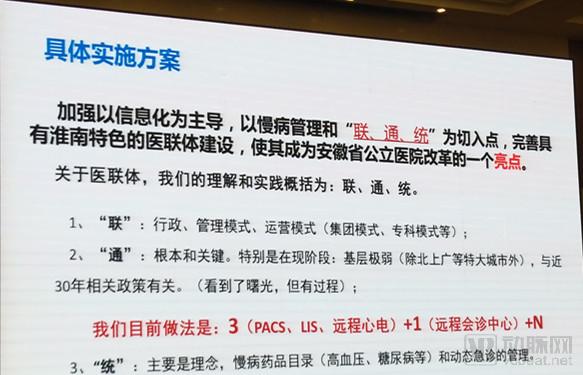
To address these challenges, the top-level design of the medical consortium led by Yang Lixin is as follows: strengthen information technology-driven initiatives, focus on chronic disease management and the principles of “integration, connectivity, and unification,” and improve the construction of a medical consortium with Huainan characteristics, making it a highlight of public hospital reform in Anhui Province.
Its medical consortium practice is as follows:
“Linkage” refers to administrative, management, and operational models (group model, specialized model). In Huainan City, private hospitals are predominant. The three key themes of this round of new healthcare reform are “urban,” “public hospitals,” and “comprehensive reform.” Anhui Province is one of the pilot provinces, and it is ahead of Fujian Province in this regard.
“Connectivity” is fundamental and critical, especially at the current stage. Except for first-tier cities such as Beijing, Shanghai, Guangzhou, and Shenzhen, medical technologies in other regions are relatively weak, making it difficult for primary healthcare institutions to develop independently. The only viable approach is to leverage tertiary hospitals to cascade medical expertise down to the grassroots level.
System: Primarily encompasses concepts and care delivery models, formularies for chronic disease medications (such as hypertension and diabetes), and dynamic emergency department management.
In terms of funding and technology, Huainan First People's Hospital chose to partner with Das Intellitech through a Public-Private Partnership (PPP) model. Led by the local government and the enterprise, this collaboration integrates the construction of medical consortia into the broader framework of regional smart healthcare. With an investment of 163 million yuan, the project facilitates renovations at both grassroots hospitals and the main hospital, thereby resolving the lack of technical expertise and capital at the grassroots level. Grassroots hospitals are not required to contribute financially; instead, the local government makes installment payments to Das Intellitech over a ten-year period following project completion. This model is highly suitable for the current development of medical consortia.
Yang Lixin stated that, through information technology infrastructure, Huainan First People’s Hospital has connected with more than 100 secondary hospitals and community health service centers. Its specific approach follows a “3 (PACS, LIS, remote ECG) + 1 (remote consultation center) + N” model, with chronic disease management delegated to community health service centers.
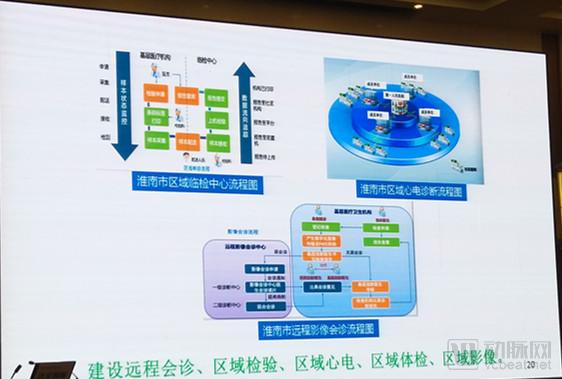
According to Yang Lixin’s vision, all member institutions within the medical consortium system must achieve full standardization, including in areas such as health information technology, laboratory testing, and medical imaging. Without such standardization, even if specialists provide consultations at lower-tier hospitals, patients will still flock to higher-tier hospitals due to inconsistencies in diagnostic equipment and pharmaceuticals.
As a result, the medical consortium initiative at Huainan First People's Hospital has achieved remarkable outcomes. Yang Lixin highlighted two key aspects:
First, data center construction: The Huainan Health and Medical Big Data Center was established within the China Mobile (Huainan) Data Center. A dedicated health network was deployed to every village, with a cumulative total of 1,380 various devices (servers, storage systems, core switches, etc.) installed and commissioned.
Second, three regional collaborative systems were established: the remote imaging diagnosis center has been launched in 10 institutions, handling 1,086 consultation cases; the regional ECG system has been implemented in 5 institutions, serving a cumulative total of 9,200 patients and conducting 3,981 case consultations; and the regional laboratory testing system has been deployed in 14 institutions, serving a cumulative total of 2,797 patients.
In terms of internet hospital development, the mobile app and WeChat platform have registered 14,195 users, with 1,644 appointment registrations. Subsequently, once the urban medical consortium’s internet hospital is launched and operational, more residents will gain access to convenient and efficient healthcare services.
“We have established top-down remote consultation connectivity with more than 40 medical consortiums we are linked to. Without the financial support from Das Intellitech, it would have been difficult to achieve such comprehensive integration,” said Yang Lixin.
With the assistance of Das Intellitech, particularly in intelligent infrastructure development, the establishment of this medical consortium has benefited from their more extensive experience and top-level design capabilities compared to individual hospitals.
On March 28, 2017, the regional imaging system was successfully launched at the Chaoyang Community Health Service Center in Tianjia’an District, laying the foundation for future remote imaging diagnosis collaborations with the First People’s Hospital. On April 11, the laboratory information system went live at the Chaoyang Community Health Service Center, paving the way for subsequent collaborative medical testing with the First People’s Hospital.
In other words, even if community health service centers lack electrocardiographers and technicians, as long as nurses can upload test results, specialists from higher-level hospitals can still conduct remote consultations with patients. The system has currently been implemented across all medical institutions in Panji District, Tianjia’an District, Datong District, Bagongshan District, and Shannan New Area, connecting to the core network of the Fengtai County Health and Family Planning Commission’s Information Center.
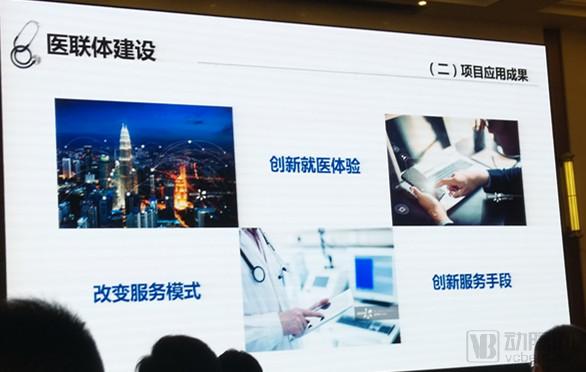
This innovative healthcare experience has transformed how the general public accesses medical services: diverse appointment registration models and on-site booking for follow-up visits help patients precisely locate appropriate specialists, effectively alleviating the longstanding pain point of “three long waits and one short consultation.” On average, each patient saves one hour of waiting time. Following the launch and operation of the Urban Integrated Medical Payment Platform, it is projected that each patient will save two hours in total visit time.
Furthermore, this serves as an innovative approach to help healthcare institutions transform their diagnostic and treatment models, such as through cross-regional telemedicine. It has established a consultation channel between primary healthcare institutions in Huainan City and the Huainan First People’s Hospital, effectively facilitating remote consultations for complex cases. This initiative realizes the goal of “managing minor illnesses within the county and treating major illnesses within the city.”
When discussing the operational planning for future medical consortium projects, Yang Lixin highlighted urban internet hospitals as a key focus.
According to the General Office of the State Council’s April 28 document, “Opinions on Promoting the Development of ‘Internet + Healthcare,’” the construction of internet hospitals will have clear guidelines to follow, may be named using second-person designations, and must explicitly be affiliated with physical hospitals.
“However, our medical consortium development features Huainan characteristics. It is still in its early stages and has not yet been opened to community pharmacies; we are currently preparing for the tendering process. Once pharmacies are integrated into the medical consortium, patients will be able to collect their medications at community level, which will be much more convenient,” said Director Yang.
He hopes that, against the backdrop of the current implementation of the “Big Health” concept, modern hospital management models under the new healthcare system will gradually diversify. Hospitals can proactively enhance their level of medical informatization through IT infrastructure development, emphasizing information technology as the primary support, and making precise, sustained efforts to advance smart hospital initiatives. By fully leveraging intelligent, informatized, and remote technologies, hospitals should accelerate the development of “Internet + Health.” This will provide higher-quality services for medical care while meeting the comprehensive operational requirements of hospitals.