

Qihuang Foundation: Advancing Traditional Chinese Medicine Through Four Pillars of Action, Not Just Sentiment
Room 806, 8th Floor, Paidun Building, Wanliu Middle Road, Haidian District, Beijing is where the Qihuang Traditional Chinese Medicine Culture Development Fund is located.
This non-profit, non-governmental organization, the Traditional Chinese Medicine Foundation, was established in July 2009. It is a non-public fundraising charitable foundation approved by the Beijing Municipal Civil Affairs Bureau.
For the Qihuang Foundation, the development, inheritance, and promotion of the traditional Chinese medicine (TCM) industry in China constitute its founding mission. One of the dilemmas facing TCM is the inconsistency between the traditional “master-apprentice” model of knowledge transmission and the centralized classroom instruction prevalent in contemporary university education. Exploring a mode of inheritance that aligns with both the unique characteristics of TCM and China’s national conditions has remained a continuous focus of the Foundation’s efforts.
Therefore, the Qihuang Foundation has designated "Talent Inheritance" as the first component of its business segments.
Following inheritance, it is natural to promote and disseminate Traditional Chinese Medicine (TCM) culture, enabling more people to understand its authentic essence, clarify its origins, and restore the true face of TCM. This includes highlighting the diseases and medical fields where TCM excels, acknowledging its limitations, and elucidating its theoretical foundations and philosophical underpinnings.
Rather than allowing the public to be misled by certain “fake TCM practitioners” and false health wellness information on the market, or equating Traditional Chinese Medicine (TCM) with “metaphysics” or “pseudoscience,” as such perceptions hinder its acceptance among individuals with modern scientific knowledge.
In response, the Qihuang Foundation promotes Traditional Chinese Medicine (TCM) with deep sentiment yet objective prudence through various channels, including funding book publications, producing documentaries on the TCM industry, and operating new media platforms. Its coverage spans from the arduous development of national medical masters and the authentic traceability of Chinese herbal medicines to comprehensive evaluations of TCM culture. This fulfills the core mission of the Foundation’s second pillar: “Cultural Dissemination.”
With top-level design for inheritance and promotion, and having achieved positive responses in public welfare projects, the Qihuang Foundation began to contribute to the development of Traditional Chinese Medicine (TCM) in greater depth.
A foundation truly committed to the inheritance and development of Traditional Chinese Medicine (TCM) culture cannot rest on superficial efforts such as awarding prizes and providing donations to talent. Instead, it must leverage research as a key driver to explore the intrinsic pathways of TCM development, and grow by supporting and promoting innovative projects that align with the inherent laws governing the advancement of TCM. Only in this way can it lay a solid foundation for the development of Traditional Chinese Medicine.
Meanwhile, the Qihuang Foundation is not an elitist organization; by engaging with the public and addressing livelihood concerns, it aims to build a more profound foundation for Traditional Chinese Medicine (TCM) culture. This is precisely why the Qihuang Foundation has established its third pillar, “Research Projects,” and its fourth pillar, “Livelihood Projects.”
Overall, the Foundation’s logic proceeds from its core mission of “inheritance” and “promotion,” while taking into account top-level design, scientific research, and public welfare foundations. The four sectors each carry distinct emphases, yet they are complementary and mutually integrated, ultimately forming a cohesive whole to drive the innovative development of China’s traditional Chinese medicine (TCM) cultural undertakings.
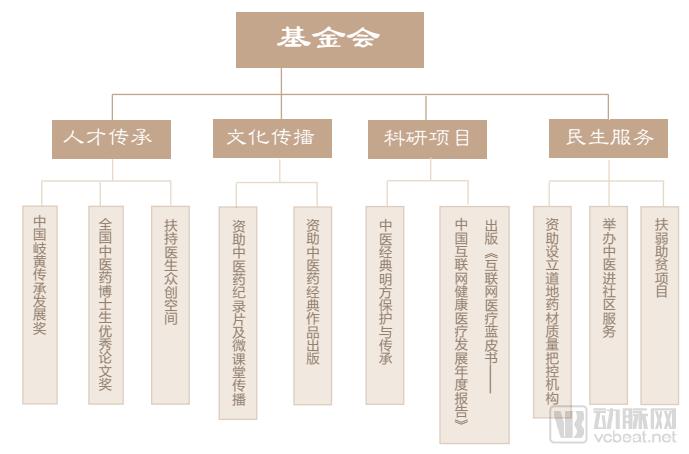
Qihuang Foundation Service Architecture
Qihuang Inheritance and Development Award
The Qihuang Inheritance and Development Award is the first initiative established by the Foundation, as well as its most influential and prestigious flagship program. The award targets institutions of higher education and research organizations in traditional Chinese medicine (TCM), honoring doctoral and master’s supervisors who have demonstrated long-term commitment to the study, teaching, and clinical practice of TCM and ethnic medicine classics. The award has been instituted at three institutions: China Academy of Chinese Medical Sciences, Beijing University of Chinese Medicine, and Tibet University of Tibetan Medicine. As of 2016, a total of 103 recipients have been honored, including National Medical Masters, nationally renowned senior TCM practitioners, and outstanding young inheritors, earning widespread recognition from industry professionals.
In 2016, the Foundation and the China Academy of Chinese Medical Sciences jointly established the national “Qihuang Award for Inheritance and Development of Traditional Chinese Medicine (TCM).” This award recognizes outstanding TCM practitioners who promote traditional TCM culture, advance TCM theories, pioneer distinctive TCM techniques, impart TCM knowledge and skills, and conduct research using traditional TCM methods. The initiative strives to build a prestigious and influential brand award within the TCM community.
On February 24, 2017, the inaugural “Qihuang Award for Inheritance and Development of Traditional Chinese Medicine” was presented at a grand ceremony held in the Great Hall of the People in Beijing. Five distinguished veterans of the TCM community—Professor Li Jinyong, Professor Li Dexin, Professor Zhang Xuewen, Professor Chen Keji, and Professor Lu Zhizheng—were honored with this award.
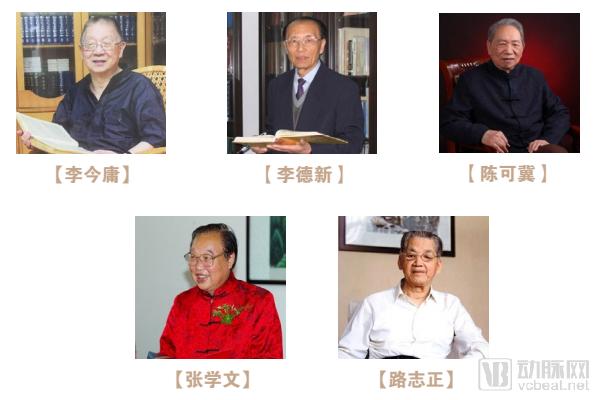
Hailed by the industry as China’s first award dedicated to the “classical inheritance of Traditional Chinese Medicine (TCM),” this accolade has not only established the Foundation’s strong reputation within the TCM community but also increased its visibility among scholars and experts. This growing recognition has encouraged more professionals to support and collaborate with the Foundation, working together to advance the inheritance of TCM.
National Award for Outstanding Doctoral Dissertations in Traditional Chinese Medicine
In 2014, the Foundation partnered for the first time with the China Association of Chinese Medicine and the Editorial Office of the Chinese Journal of Traditional Chinese Medicine to jointly organize the National Excellent Doctoral Dissertation Award in Traditional Chinese Medicine, achieving notable results. This initiative marked a gradual shift of the Foundation’s talent programs toward supporting young professionals. The Foundation has participated in this award for five consecutive sessions, with over 1,600 student participants and more than 500 awardees to date.
Guided by its mission to promote the inheritance of Traditional Chinese Medicine (TCM) culture and foster innovation in TCM development, the Qihuang Foundation facilitated the collaboration between Renmin University of China and the China Academy of Chinese Medical Sciences. The leadership of both institutions held their initial talks in July 2016 and are poised to cooperate on matters concerning student admissions, specialized tracks, curriculum design, and training programs for the School of Guoyi (National Medicine). Currently, both parties have formally signed an agreement to jointly establish the “Renmin University of China · China Academy of Chinese Medical Sciences School of Guoyi.”
In 2010, the Qihuang Foundation collaborated with CCTV International’s program Chinese Medicine and the World Federation of Chinese Medicine Societies to jointly produce the television documentary series Traditional Chinese Medicine Goes Global, which reflects the current state of development of traditional Chinese medicine around the world.
“Chinese Medicine” is also the only authoritative program on China Central Television (CCTV) that disseminates Chinese traditional medicine culture to audiences both within and outside China, covering 98% of countries and regions worldwide, and is one of CCTV’s outstanding programs.
In 2012, the Qihuang Foundation funded the publication of *A Historical and Theoretical Study of Tibetan Medicine*. This book represents over a decade of research by Professor Mima, Vice President of the Tibet University of Tibetan Medicine. It is a systematic monograph in Tibetan on the development of Tibetan medicine and holds significant academic value within the field of Tibetan medicine.
In 2013, the Qihuang Foundation assisted in the publication of Eighteen Medical Works by Wang Qi and participated in the compilation of the 17th volume, Heirs of Qihuang: My Journey in Traditional Chinese Medicine. In 2017, the Foundation funded the publication of Integrated Experience in Processing Chinese Herbal Medicines, which comprehensively compiles and organizes empirical knowledge on the processing of Chinese herbal medicines.
In addition to its longstanding commitment to the development of Traditional Chinese Medicine (TCM) culture and the cultivation of TCM talent, the Qihuang Foundation also closely monitors cutting-edge trends in the integration of modern technology with traditional TCM.
In 2016, the Qihuang Foundation was approved to join the Blue Book series of Social Sciences Academic Press (China), and officially published the book *Blue Book of Internet Healthcare: Report on the Development of China’s Internet Healthcare (2016)* in September. This also marked the foundation’s first public welfare project focused on scientific research.
During the preparation and research phases, this book received strong support from professional traditional Chinese medicine (TCM) institutions and authoritative experts. Wang Qi, a National Medical Master of TCM at Beijing University of Chinese Medicine, and Academician Huang Luqi from the China Academy of Chinese Medical Sciences, personally guided their research teams in completing chapters such as “TCM Informatics Response and Big Data Applications” and “Strategic Choices and Practical Pathways for ‘Internet + TCM Resources’.”
Currently, the 2017 “Blue Book of Internet Healthcare: Report on the Development of China’s Internet Health and Medical Services,” produced through the collaboration between the Qihuang Foundation and the central state-owned enterprise China Electronics Corporation (CEC), has been published.
In addition, the Foundation vigorously supports the preservation and inheritance of classic TCM formulas, promotes the translation of contemporary renowned TCM practitioners’ achievements into practical applications, safeguards traditional processing techniques and craftsmanship of Chinese herbal medicines, and encourages and funds TCM professionals in applying modern scientific technologies alongside traditional TCM research methodologies. It conducts scientific research in TCM to foster the inheritance and innovation of TCM theories and technical methods. Meanwhile, it assists in intellectual property protection and the development of proprietary brands.
Currently, we have collaborated with renowned traditional Chinese medicine practitioners Guo Zhiqiang and Lu Jinghua to develop classic prescriptions.
As a public welfare organization, the Qihuang Foundation places great emphasis on the application of Traditional Chinese Medicine (TCM) in serving social livelihood, building upon extensive collaborations with mainstream institutions in the medical community.
The Foundation has actively participated in government-procured social service projects, successfully securing contracts for the 2011 and 2012 fiscal years and completing them to high standards in accordance with requirements. These projects encompassed the popularization and promotion of traditional Chinese medicine (TCM) health knowledge, training for blind massage therapists, and community medical services.
Since 2014, the Foundation has collaborated with Beijing Qianyuan Danxitang Traditional Chinese Medicine (TCM) Outpatient Department to carry out various TCM community outreach initiatives. During this period, renowned national TCM masters and university professors were invited to deliver over 20 health preservation lectures on topics such as “Seasonal Health Preservation,” “Prevention of Breast Cancer,” and “Constitution-Based Health Preservation,” along with more than 50 free TCM consultation sessions. The project has reached five communities in the vicinity of Wanliu, benefiting a cumulative total of over 1,000 individuals.
When discussing the Qihuang Foundation’s practices in the traditional Chinese medicine (TCM) industry, it is essential to mention Danxitang TCM Clinic and Danxi Technology Company.
During its charitable and research initiatives, the Qihuang Foundation has observed that while mobile internet technologies, big data, cloud computing, and even blockchain are advancing rapidly, the field of Traditional Chinese Medicine (TCM) remains relatively insular and has yet to fully capitalize on the dividends offered by these digital innovations.
On one hand, Traditional Chinese Medicine (TCM) itself is characterized by non-standardized practices; on the other, many technology companies lack a deep understanding of TCM and have failed to develop technological products that truly meet the needs of the TCM community. Examples include cloud-based Hospital Information Systems (HIS) tailored to TCM diagnostic and consultation requirements, patient management tools for TCM practitioners, online platforms for the inheritance and dissemination of TCM knowledge, and platforms for the establishment and operation of internet-based TCM hospitals.
Therefore, Mr. Gong Xiaodong, the founder of the Qihuang Foundation, spearheaded the establishment of Qianyuan Danxi Technology Company, with the aim of developing technological products that better align with the core needs of the traditional Chinese medicine (TCM) community, thereby facilitating a more seamless integration of the traditional TCM industry with modern technology.
In 2014, Qianyuan United Investment Co., Ltd., the primary donor company to the Qihuang Foundation, initiated the establishment of the Beijing Qianyuan Danxitang Traditional Chinese Medicine Outpatient Department, which was officially established in July upon approval by the Health Bureau and other competent authorities.
This outpatient clinic, which operates independently, brings together renowned experts in internal medicine, surgery, and traditional Chinese medicine from Beijing.
In addition to providing compliant clinical facilities for users of Danxi Technology’s systems, Qianyuan Danxi Tang also serves as the first batch of pilot clinics for experiencing products developed by Danxi Technology. Furthermore, it functions as a practical training base for young physicians, a heritage center for renowned senior TCM practitioners, and a promotion hub for Traditional Chinese Medicine culture, all supported by the Qihuang Foundation.
In addition, Danxitang hosts free health and wellness lectures and free clinics for nearby residents, providing strong support for the foundation’s livelihood projects.
In 2018, the Qihuang Foundation, in collaboration with CEC Data and VCBeat, launched the China Health and Medical Big Data Industry Innovation Competition.
Healthcare Big Data, as one of the key technological enablers in the “Internet Plus” era, will provide significant support for the innovative development of traditional Chinese medicine.
As the Qihuang Foundation, which has been committed to promoting innovation in traditional Chinese medicine (TCM), chose to co-launch this competition with CEC Data and VCBeat, it serves as an important vehicle for the foundation to employ new methods and explore novel approaches to support the inheritance and development of TCM culture.
This is not only significant for the development of the foundation, but will also serve as an important platform to promote the advancement of Traditional Chinese Medicine (TCM). By discovering projects, cultivating talent, exploring new models, and implementing new technologies, it will inject new vitality into the development of TCM.
Scan to Register