

National Doctors Group Association Launched, Signaling a New Growth Era for China's Medical Collectives
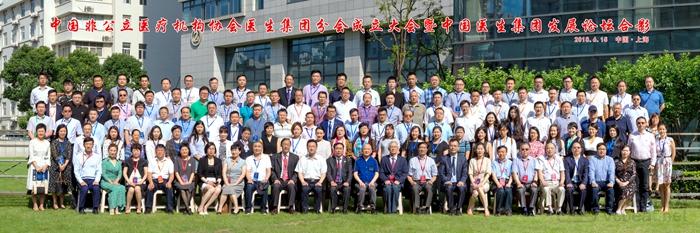
VCBeat (WeChat ID: vcbeat) has learned that from June 14 to 15, the inaugural establishment of the Physician Group Branch of the Chinese Non-State Medical Institution Association (hereinafter referred to as “CNMIA”) and the China Physician Group Development Forum were grandly held at the lecture hall of Shanghai Tenth People’s Hospital, Tongji University. This marks the formal establishment of China’s first industry association for physician groups under a legally registered social organization.
The inaugural meeting was hosted by the Chinese Non-State Medical Institutions Association, and co-organized by the Physician Group Branch of the Chinese Non-State Medical Institutions Association and Roentgen (Shanghai) Medical Technology Co., Ltd.
On the afternoon of June 14, Hao Deming, Executive Vice President and Secretary-General of the China Non-Public Medical Institutions Association; Zhao Shugui, Resident Vice President; Wang Shan, Deputy Secretary-General and Director of the Membership Organization Department; Feng Xiaoyuan, Chairman of Roentgen (Shanghai) Medical Technology Co., Ltd.; Xie Rushi, CEO of Shenzhen Bodex Jialian Doctor Group Medical Co., Ltd.; Li Ke, Founder of Roentgen (Shanghai) Medical Technology Co., Ltd.; and Gong Wei, Managing Director of Yidong Network Technology Development (Shanghai) Co., Ltd., attended the election assembly. At the meeting, Feng Xiaoyuan was elected President of the Doctor Group Branch of the China Non-Public Medical Institutions Association; Xie Rushi and eight others were elected as Vice Presidents of the Branch; Li Ke was elected as Secretary-General of the Branch; and Gong Wei and three others were elected as Deputy Secretaries-General of the Branch.
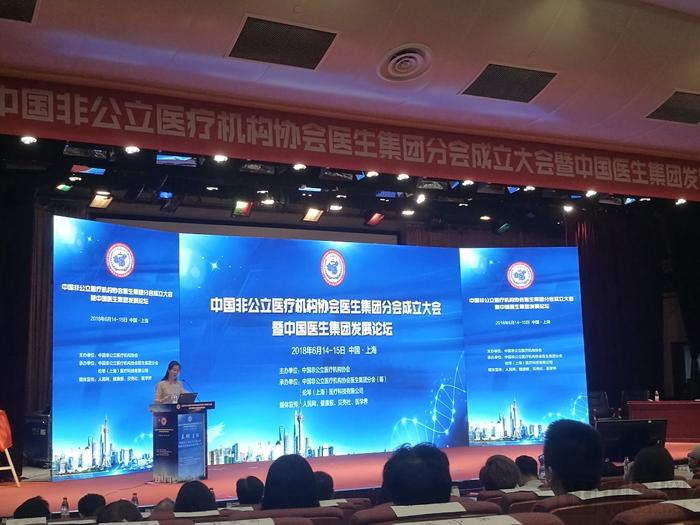
Image source: VCBeat
On June 15, the inauguration ceremony of the Physician Group Branch was officially held. Hao Deming presented the plaque to the “Physician Group Branch” and issued appointment letters to the vice presidents and deputy secretary-general. Relevant leaders from the National Health Commission, the Health Development Research Center of the National Health Commission, and the Shanghai Municipal Health and Family Planning Commission delivered speeches. The event was also attended by more than 400 participants, including experts in related disciplines, hospital administrators, representatives from investment institutions, and heads of third-party medical service companies.
Hao Deming pointed out that the establishment of a national industry organization for physician group chapters aims to promote the standardized, orderly, and healthy development of physician groups, consolidate the strengths of various physician group organizations, and better contribute to the construction of a Healthy China. Meanwhile, it seeks to build a bridge for extensive communication and liaison between members and the government, strengthen industry self-discipline and services, enhance industry research and surveys, formulate industry standards, regulate clinical practices, and ensure medical quality and safety.
Going forward, the Physician Group Branch willFormulating Industry Standards and RegulationsIt holds significant practical and historical importance to conduct education, training, evaluation, assessment, and certification in areas such as institutional management, personnel qualifications, operational services, and medical quality and safety, thereby improving the innovative service models of physician groups and fostering the development of new business formats, so as to better provide the public with multi-level, diversified, and high-quality medical services.
“Overall, whether for physician groups, internet healthcare, or private medical institutions, future medical services are likely to lean more towards comprehensive integration. With various elements in dynamic flux, scaling up, intensification, and clustering will become the direction of development. At the same time, greater demands will be placed on managers in terms of operational specialization,” said a relevant official from the Department of System Reform of the National Health Commission.
In June 2014, the Zhang Qiang Doctor Group was established, marking the first time the concept of a “doctor group” became widely known to the public. The founder, Zhang Qiang, is a surgeon who resigned from Shanghai East Hospital (affiliated with Tongji University) at the end of 2012 to establish the Zhang Qiang Doctor Group. At the time of his resignation, Dr. Zhang already served as the Director of the Department of Vascular Surgery, General Manager of the Hospital Management Company, and concurrently held the position of Minister of Health Promotion for External Hospital Cooperation. The Zhang Qiang Doctor Group experienced rapid growth, once setting a record by securing a term sheet (venture capital agreement) within just four hours.
Since then, physician groups in China have entered a period of rapid development. According to Hao Deming, the number of physician groups in China has now exceeded 600. These physician groups take diverse forms. In terms of physician composition, they include both physicians who remain within the public healthcare system and those who have left it. Regarding operational models, there are both physician-led PHP (Physician-Hospital Partnership) models and platform-based models leveraging internet technologies. Miao Yanqing, Associate Researcher at the Health Development Research Center of the National Health Commission and Deputy Director of the Rural Health Research Office, stated at the conference that there is currently no clear definition for physician groups in China, and further regulatory guidelines are still under development.
From a policy perspective, although the state has not yet introduced specific measures to encourage physician groups, it has given clear affirmation to this emerging entity, which has, to some extent, promoted the development of physician groups.
In April 2016, Premier Li Keqiang of the State Council explicitly stated while presiding over the executive meeting of the State Council: “Launch initiatives to encourage attending physicians and above, whether currently employed or retired from public hospitals, to provide medical services at the grassroots level.”
On October 25, 2016, the State Council issued the “Outline of the ‘Healthy China 2030’ Plan,” which stated, “Innovate models for the utilization, mobility, and service delivery of medical personnel, and actively explore independent practice by physicians, contractual services between individual physicians and medical institutions, or the formation of physician groups.” This marks the first time that “independent practice” and “physician groups” have been included in a national-level policy document.
In May 2017, the General Office of the State Council issued the “Opinions on Supporting Social Forces in Providing Multi-level and Diversified Medical Services,” which stated: “Support socially-run medical institutions in introducing strategic investors and partners, strengthen the synergy between capital, brand, and management, and explore models such as entrusting well-known branded medical entities, hospital management companies, and physician groups to carry out elite management.”
Feng Xiaoyuan pointed out that in the current distribution of personnel across various medical and health institutions nationwide, staff at large public hospitals account for 48%, those at private hospitals account for 10.8%, and those at primary healthcare institutions account for 33%, indicating a high concentration of medical resources. With the establishment of a tiered diagnosis and treatment system, issues such as the mismatch between medical demand and supply, as well as the imbalance between private hospitals and their staffing levels, are gradually being resolved; physician groups represent a promising development pathway. Miao Yanqing also stated that physician groups can serve as a transitional form for doctors changing their professional status.
Currently, physician groups in China are still in their nascent stage, and their development continues to face a series of challenges, including inadequate social security benefits for physicians joining these groups, unclear career development pathways such as training and promotion, and lack of support from medical insurance policies.
“The First Question”:Does the operational model adopt an asset-heavy or asset-light approach?
One view holds that the greatest advantage of physician groups is their asset-light operational model, and they should be positioned as corporate entities or institutional bodies primarily providing medical services.
Huang Fanzi believes that physician groups can adopt a hybrid operational model combining asset-light and asset-heavy approaches. For instance, world-class physician groups such as Kaiser Permanente and the Mayo Clinic currently employ an asset-heavy development model. Taking Kaiser Permanente as an example, it currently operates 30 physical hospitals and more than 600 clinics worldwide, with tens of thousands of full-time physicians and nurses. The asset-heavy model may be more conducive to helping physician groups build their brands and attract top talent.
Xie Rushi, founder of Bodé Jialian, also argues from a practical perspective that physician groups with the necessary conditions should establish their own physical hospitals. “Relying entirely on collaborations with medical institutions would constrain the development of physician groups due to the policies of the host institutions, resulting in high transaction costs.”
“Second Question”:Should Doctors Leave the Public Healthcare System?
Many physicians are reluctant to leave the public healthcare system, primarily due to the lack of a reasonable mechanism for transferring medical liability risks. Consequently, at this stage, the professional status of physicians within physician groups is quite diverse. However, as a pioneer in this field, the approach adopted by the Zhang Qiang Physician Group is worthy of reference. They require that physicians joining the group must first sever their ties with the public healthcare system.
The Zhang Qiang Doctor Group has adopted a management approach that differs from traditional hospitals. For instance, in terms of consultations, doctors are required to allocate 20–30 minutes of communication time to each patient; in performance evaluation, the U.S. CPT code model is introduced to compensate physicians for their services. If doctors retain their positions within the public healthcare system, it will negatively affect the implementation effectiveness of this management model.
In terms of medical risk transmission, conventional medical liability insurance typically covers hospitals, whereas the Zhang Qiang Doctor Group attempts to designate physicians as the insured parties, thereby reducing their practice-related risks.
“Three Questions”:When to Bring in Capital?
Currently, capital is flowing heavily into physician groups. As a component of non-public medical institutions, physician groups have an inherent demand for capital. However, the timing of capital infusion has become a critical issue. As Xie Rushi noted, the profit-driven nature of capital may conflict in practice with physicians’ pursuit of professionalism and standardized clinical practice.
In this regard, attendees suggested that the ability to establish a closed-loop business model could serve as a key criterion for determining whether capital investment should be introduced. Additionally, Hu Hai, founder of the Oriental Gallbladder Disease Physicians Group, emphasized that special attention should be paid to the design of equity structure when introducing capital. In physician groups, the founding team must always retain decision-making authority over medical affairs to ensure R&D investment and service quality.
The establishment of the Physician Group Branch has provided practitioners with a robust platform for communication and oversight, ushering in a new period of opportunity for the development of physician groups. Moving forward, physician groups are poised to play a more significant role in enhancing the supply of effective medical resources, ensuring their rational allocation, supporting healthcare delivery in remote, border, ethnic minority, and impoverished areas as well as in privately run medical institutions, and advancing the Healthy China initiative.