

Mingyi Zhudao Files IPO Prospectus: Building an Internet-Enabled Surgical Medical Consortium to Capture China's Trillion-Yuan Surgical Market
Since its inception, the “Mingyi Zhudao” project has been a favorite among investors, characterized not only by rapid fundraising but also by substantial funding amounts. After completing its Series B financing of RMB 150 million in 2016, Mingyi Zhudao reached a valuation of RMB 1.5 billion.
Mingyi Zhudao, established in 2014, is a professional mobile surgical platform headquartered in Shanghai. It currently has branches in Beijing, Hangzhou, Tianjin, Guangzhou, Nanjing, Jinan, Chengdu, and other cities, with its services covering China.The platform aggregates high-quality medical expert resources from both domestic and international sources, as well as underutilized hospital bed capacity. It aims to help patients with surgical needs promptly schedule appointments with renowned specialists across China, while mobilizing and optimizing the allocation of idle bed resources. This facilitates timely hospital admission and surgery for patients, effectively addressing their practical need for accessible and high-quality medical care.
“We kept a low profile last year, focusing on refining our products and business operations, and achieved break-even in the first quarter of this year,” said Su Shu, Founder and CEO of Mingyi Zhudao, at the “New Structure – 2018 Summit on Innovative Practices in Primary Care” held on June 9. The summit was jointly organized by the National Engineering Laboratory for Internet Medical Systems and Applications, Sir Run Run Shaw Hospital affiliated with Zhejiang University School of Medicine, the Internet Healthcare Industry Alliance, and VCBeat.
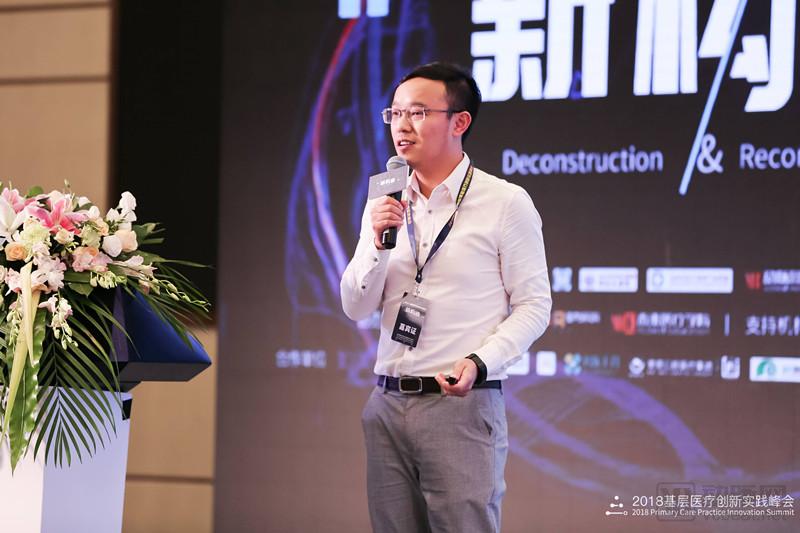
Su Shu, Founder and CEO of Mingyi Zhudao
The conference was grandly held in Hangzhou, featuring six specialized forums. It brought together more than 1,000 top experts, scholars, industry talents, and investors from China’s healthcare sector, and attracted coverage from over 30 industry media outlets.
So, what products has Mingyi Zhudao refined over the past year? How effective have they been? To find out, VCBeat conducted an exclusive interview with Su Shu, hoping to hear him share the story behind his experiences with Mingyi Zhudao.
This year, national policies are encouraging the development of internet-based healthcare, building tightly integrated medical consortia, liberalizing multi-site practice, accelerating the breakthrough of restrictions on medical resources, and promoting the establishment of a tiered diagnosis and treatment system.
Driven by the government’s vigorous promotion of new healthcare reforms, and amplified by the dual forces of innovative technologies and capital momentum, China’s primary healthcare service system is undergoing profound and far-reaching transformations. This systemic shift will inevitably deconstruct and reshape China’s primary healthcare industry. Primary care is poised to become the key patient-entry gateway for future healthcare services. Its industrial upgrading and leapfrog development follow an initial trajectory akin to plate tectonics—evolving, distributing, and combining structurally—to give rise to new industrial forms.
Meanwhile, the pain points of primary healthcare institutions, patients, and physicians have become increasingly prominent. For instance, primary care facilities have limited diagnostic and treatment capabilities, making it difficult to retain local patients and increase hospital revenue. Patients face challenges in accessing affordable and convenient medical care and lack effective channels to connect with high-quality specialist resources. Meanwhile, grassroots experts encounter difficulties in brand building, income generation, academic development, and career advancement.
Precisely by identifying these pain points and aiming to capture the new traffic gateways of future healthcare, enterprises are empowering primary care institutions from various angles—some focus on informatization, others on platform development, some target county-level hospitals, while others concentrate on rural markets. Given the differing needs across various levels of medical institutions, distinct business logics have naturally evolved.
Taking county-level hospitals as an example, the principle that “stable counties bring national stability” applies equally to the healthcare and health system. County-level hospitals serve a population of 900 million across China and constitute the backbone of the national healthcare and health service system. Therefore, enhancing the medical service capacity at the county level is a critical measure for improving China’s healthcare and health service system and establishing a tiered diagnosis and treatment framework.
In response to the national call for a tiered diagnosis and treatment system,“We primarily target primary care hospitals at the municipal and county levels.”Su Shu told VCBeat. In June 2017, the business model of Mingyi Zhudao was upgraded to: join hands with top experts in Beijing, Shanghai, and Guangzhou to pass on first-class medical technology through the method of "famous doctors casting knives," effectively sinking high-quality medical resources to the vast city and county levels. It has successively established strategic cooperation with nearly a thousand grassroots hospitals, enabling every doctor to practice medicine well.
According to Su Shu, Mingyi Zhudao currently has three core business segments:
First, we will establish a closely integrated specialized medical consortium. By partnering with top-tier experts from Beijing, Shanghai, and Guangzhou, renowned surgeons will leverage the “Mingyi Zhudao” platform to mentor and transfer first-class medical expertise through hands-on surgical guidance. This initiative aims to effectively channel high-quality medical resources down to city- and county-level institutions, comprehensively elevating the healthcare capabilities of grassroots hospitals. Specifically, it will assist these facilities in accessing expert resources, enhancing disciplinary competitiveness, optimizing online and offline operations, and strengthening both hardware and software infrastructure. Ultimately, this approach seeks to achieve the national healthcare reform goal of “managing serious illnesses within the county,” while also integrating the surgical care value chain and implementing sustainable profit models.
Second, we are building a mobile surgical platform to provide experts with safe and convenient multi-site practice services, increase physicians’ transparent income, and empower them in academic research and other areas; this also enables patients to receive care locally, reducing the costs associated with seeking treatment in other regions.
Third, we are establishing a self-operated ambulatory surgery center to build brand equity. The first ambulatory surgery center under the “Mingyi Zhudao” brand has been launched at the Shanghai New Hongqiao International Medical Center. The park enjoys medical preferential policies equivalent to those in Boao, Hainan, enabling seamless integration with overseas medical resources and facilitating the early adoption of new drugs, vaccines, and other innovations. The center is scheduled to open in October this year. In the future, we plan to replicate this model in cities such as Xiong’an (Hebei), Boao (Hainan), Guangzhou, and Chengdu.
Spanning over 1,000 mu, this medical park brings together seven of the world’s leading specialized hospitals from both China and abroad, including Huashan Hospital, the Orthopedic Branch of Shanghai Sixth People’s Hospital, the Branch of Shanghai Red House Obstetrics and Gynecology Hospital, MD Anderson Cancer Center, and Cleveland Clinic Heart Specialist Hospital. At its core stands a comprehensive building housing a pharmacy, imaging center, and clinical laboratory testing center. These seven hospitals share the medical resources within this central facility, creating a truly “shared healthcare” model.
For county-level primary hospitals, Su Shu’s approach is to help them establish tightly integrated specialized medical consortia. He believes that teaching someone to fish is better than giving them a fish; once economic benefits are generated in the later stages, both parties share the profits according to an agreed-upon ratio, allowing renowned surgeons who perform the operations to also earn substantial income.
Specifically, the approach involves aligning the company’s resources of renowned physicians and specialized departments with the departmental development needs of primary care hospitals, while providing support in medical equipment, consumables, and financial operations to effectively enhance their diagnostic and treatment capabilities. This strategy also facilitates efficient patient acquisition and localized management by leveraging referrals from hospitals, primary care physicians, and village doctors.
For mobile surgical platforms, on one hand, they directly help patients seamlessly schedule appointments with top-tier domestic and international specialists, leveraging multi-site practice policies to achieve efficient resource matching; on the other hand, by utilizing big data—derived from platform traffic and comprehensive disease information and imaging data provided by surgical patients—they create the most robust vertical disease-specific datasets, thereby providing a continuous stream of data for medical artificial intelligence research and development.
The standardized department construction model led by renowned surgeons is currently unique in China. Through its distinctive “Six Pillars” service model, it enhances the “medical capabilities” and “operational capabilities” of county-level hospitals, ensuring favorable return on investment and social benefits for the projects. This ultimately achieves the goal of healthcare reform in county-level regions—keeping the treatment of serious diseases within the county—and alleviates the public’s difficulties and high costs associated with accessing medical care.
On March 18, 2018, Mingyi Zhudao entered into a strategic partnership with Huaining County People's Hospital in Anqing City, Anhui Province, establishing the Huaining Renowned Physicians Studio led by Professor Zheng Zhi and Professor Fu Peiliang, and signed an agreement to jointly build a closely integrated specialized medical consortium for ophthalmology between Shanghai and Anhui.
Founder and CEO of Mingyi ZhudaoSu Shu stated,Following the collaboration, Huaining County People's Hospital became the only county-level hospital in Anhui Province capable of performing posterior segment eye surgeries.During the collaboration period, two experts—Director Zheng Zhi of the Department of Ophthalmology at Shanghai General Hospital and Professor Fu Peiliang of the Department of Orthopedics at Shanghai Changzheng Hospital—regularly held outpatient clinics at Huaining County People's Hospital, providing the hospital with expert consultation and operational support.
Thereafter, the total revenue of the Ophthalmology Department at Huaining County People's Hospital increased by 3.5 times year-on-year, and the revenue of the Orthopedics Department increased by 1.6 times year-on-year.
Two months ago, Mingyi Zhudao signed a collaboration agreement with Qingdao No. 6 People’s Hospital (hereinafter referred to as “Qingdao Sixth Hospital”) in the field of hepatobiliary surgery, aiming to establish a hepatobiliary surgery department and build disciplinary advantages.
Wang Mingmin, President of Qingdao No. 6 People’s Hospital, stated that Shandong Province, as a populous and economically robust province, has made rapid, efficient, and steady progress in healthcare reform, emerging as a leader among non-pilot provinces nationwide. Qingdao, by virtue of its strategic geographic location, has become a focal point of Shandong’s healthcare reform efforts. The health sector is experiencing strong momentum, yet faces increasing complexity and urgency. Through this collaboration with “Renowned Surgeons Leading Procedures,” the hospital aims to introduce high-quality medical resources to both the institution and the city of Qingdao, thereby establishing and enhancing hepatobiliary surgical services at Qingdao No. 6 People’s Hospital and creating a sustainable operational mechanism to meet patients’ needs for local medical care.
Su Shu emphasized that Mingyi Zhudao aims to promote the discipline construction of the Department of Hepatobiliary Surgery at Qingdao Sixth People’s Hospital through the close integration of “surgical performance” and “talent development.” This approach involves consolidating various resources, including technology and personnel, while providing more young doctors at Qingdao Sixth People’s Hospital with opportunities to observe surgeries, receive training, and participate in case discussions alongside industry experts and senior physicians. By fostering such an organic cycle that maximizes benefits, this initiative seeks to drive discipline construction in grassroots hospitals and benefit every patient in need.
Professor Zheng Yaxin from Shanghai Eastern Hepatobiliary Surgery Hospital, Professor Wu Liqun from the Affiliated Hospital of Qingdao University, and Professor Zhao Zhiming from Beijing 301 Hospital will all conduct diagnosis and treatment of hepatobiliary diseases at Qingdao Sixth People’s Hospital. Procedures will include radical hepatectomy for liver cancer, resection of benign liver tumors, and laparoscopic minimally invasive gallbladder and bile duct surgeries. In addition to benefiting patients, these experts will empower local physicians through surgical mentoring, thereby elevating the standards of hepatobiliary surgery at Qingdao Sixth People’s Hospital. Through live surgeries, intraoperative guidance, discussions of complex cases, academic lectures, research collaborations, and remote consultations, they aim to build a center of excellence in this specialty, further improving care for patients with hepatobiliary conditions.
The official opening of the Department of Hepatobiliary Surgery at Qingdao No. 6 People’s Hospital signifies that hepatobiliary diseases will no longer be an insurmountable challenge for the residents of Qingdao. It will become a reality for local patients to access renowned medical experts from Beijing, Shanghai, and Guangzhou right in their own city. These distinguished specialists will mentor, guide, and train local physicians, thereby enhancing the hospital’s diagnostic and therapeutic capabilities. This initiative will enable more patients to benefit from the “tiered diagnosis and treatment system,” ensuring high-quality care at lower costs and ultimately improving the well-being of the people of Qingdao.
“We are integrating industry resources, such as insurance, medical devices, and financial leasing, while simultaneously helping municipal- and county-level public hospitals achieve rapid overtaking through six key areas: expertise, operations, funding, public welfare, branding, and hardware,” said Su Shu.
To date, Mingyi Zhudao has performed surgeries in over 800 primary care hospitals and established close medical consortium partnerships for surgical services with more than 50 primary care hospitals at Grade II Class A level or above. Its departments cover all surgical specialties. Centered in the Yangtze River Delta and Beijing-Tianjin-Hebei regions, its services extend to more than 20 provinces across China. The company aims to establish close collaborations with 100 primary care hospitals this year, projecting to reach 500 within three years and 1,000 within five years.
According to relevant data, the number of surgical procedures performed on inpatients in China reached 50.82 million in 2016, a year-on-year increase of 11.6%. The volume of surgeries in China has continued to grow, exceeding 50 million procedures. By 2020, the market size of China’s surgery-related industry reached the trillion-yuan level. For instance, the potential market size for multi-site practice by surgeons is estimated at RMB 220 billion, the potential market size for revenue sharing from surgical fees is estimated at RMB 240 billion, and the market size for medical devices and consumables is projected to exceed RMB 700 billion in 2020.
Before the arrival of the next wave of dividends, we hope that these changes by Mingyi Zhudao will help it take the lead in claiming a share of this trillion-yuan market.