

Johnson & Johnson Innovation Launches Shanghai Lung Cancer QuickFire Challenge to Advance Early-Stage Prevention and Intervention Solutions
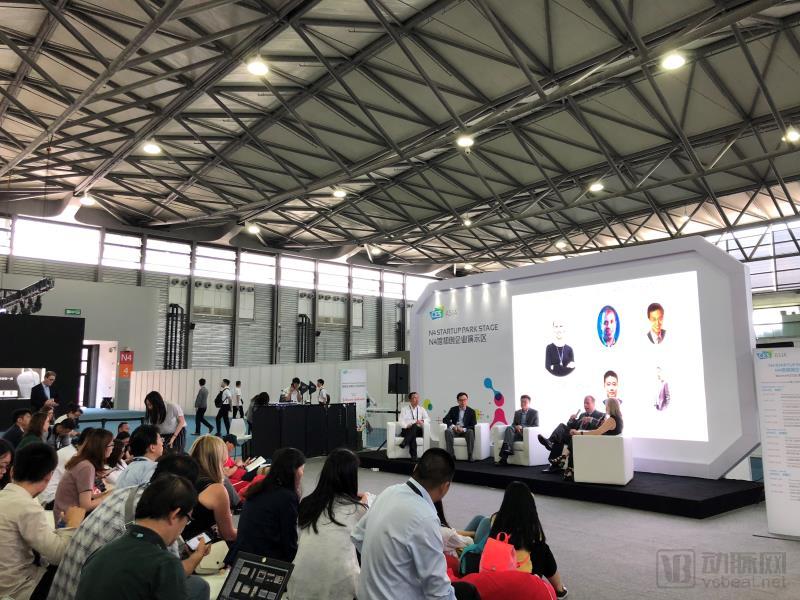
Johnson & Johnson Executives Discuss Innovation Opportunities in Lung Cancer with Chinese Entrepreneurs
(From left to right: Zhang Jiangli, Co-founder and CEO of Genetron Health; Hua Yi, Director of New Business Development at Johnson & Johnson Medical Devices; Dr. Fan Jianbing, Founder and CEO of Burning Rock Biotech; Avrum Spira, Global External Innovation Lung Cancer Program Lead at Johnson & Johnson; Melinda Richter, Global Head of JLABS at Johnson & Johnson Innovation)
VCBeat (WeChat ID: vcbeat) has learned that on June 14, at Hall N4 of the Shanghai New International Expo Centre, Johnson & Johnson Innovation announced the launch of the Shanghai Lung Cancer QuickFire Challenge, a cancer innovation competition with prize money totaling up to $750,000. Winners will also receive one-year residency at Shanghai JLABS, along with access to lab benches, office facilities, and the JLABS resource network, as well as entrepreneurial mentoring and training from Johnson & Johnson Innovation, Xi’an Janssen Pharmaceutical Ltd. (a subsidiary of Johnson & Johnson), and other affiliated experts.
The Shanghai Lung Cancer Innovation QuickFire Challenge will identify groundbreaking early-stage innovations worldwide that span the entire continuum of lung health management, from prevention and intervention to treatment. The competition aims to uncover innovative solutions on a global scale for maintaining lung health and combating the threat of lung cancer. Open to entrepreneurs, academics, biotechnology researchers, and startups worldwide, the challenge is dedicated to improving the health outcomes of millions of people in China and around the globe.
Lung cancer is one of the leading killers worldwide, causing death and disability, with 1.6 million deaths annually. Since 2010, lung cancer has been the deadliest cancer in China. China has the highest incidence and mortality rates of lung cancer globally. In 2015 alone, there were 4.3 million new cancer cases in China, including 730,000 lung cancer patients, accounting for approximately 36% of the global total of new lung cancer cases. While the prevalence remains high, more alarmingly, the survival rate for lung cancer patients is extremely low.
By 2020, lung cancer was projected to cause 700,000 deaths annually in China. From 2020 to 2030, the number of new lung cancer cases among adults aged 40 and above is expected to reach 7.4 million per year. Therefore, to meet the dual demands of clinical medicine and economics, it is crucial for China and even the entire world to address this issue with innovative solutions. This QuickFire Challenge innovation competition is dedicated to supporting China in tackling the lung cancer challenge and contributing to the realization of the goal outlined in the “Healthy China 2030” Planning Outline to “increase the overall five-year cancer survival rate by 15%,” as well as the implementation of long-term goals for lung cancer prevention and control.
Avrum Spira, Global Head of External Innovation for Lung Cancer at Johnson & Johnson, stated, “China possesses two critically important factors: creativity, and professionalism and ethics. Therefore, we are proud to be here.” Melinda Richter, Global Head of JLABS by Johnson & Johnson Innovation, added, “Leveraging its competitive advantages in talent, scale, development speed, financing channels, and the business policy environment, China is playing an increasingly vital role in today’s global health innovation ecosystem. We believe that great ideas know no borders. This conviction aligns seamlessly with the vision of JLABS@Shanghai, which is about to commence operations. Our goal is to discover innovative technologies beyond what has been achieved before, creating more effective health solutions for people worldwide. By working together, we can unleash the next big idea capable of transforming the trajectory of life and health.”
China boasts a robust innovation ecosystem, and this event has received strong support from the Pudong New Area of Shanghai. Melinda Richter, Global Head of JLABS at Johnson & Johnson Innovation, stated that a solid partnership has been established with the Shanghai Municipal Government and the Pudong New Area Government, based on a shared vision for innovation. Together, the Shanghai Municipal Government and the Pudong New Area Government collaborated with Johnson & Johnson Innovation to develop the JLABS initiative. The Shanghai JLABS is a joint investment by Johnson & Johnson, the Shanghai Municipal Government, and the Pudong New Area Government, with the government entities serving as co-investors alongside Johnson & Johnson. Melinda Richter remarked, “We believe that having them as co-investors enables us to build a JLABS in Shanghai that embodies distinct Shanghai characteristics, or more broadly, Chinese characteristics.”
QuickFire Innovation Challenge: Lung Cancer ChallengeThis global initiative seeks to identify breakthrough early-stage innovations spanning the entire spectrum of pulmonary health management, from lung cancer prevention and intervention to treatment. Lung cancer is the leading cause of cancer-related mortality in China, primarily because it is often diagnosed at an advanced stage. Traditionally, most research and therapeutic approaches have focused on late-stage lung cancer. Johnson & Johnson aims to shift this paradigm by promoting earlier diagnosis and treatment across the continuum of prevention, intervention, and therapy, thereby striving to halt the spread of lung cancer within the body at the earliest possible stage. Consequently, through this Innovation Challenge, Johnson & Johnson seeks to incubate innovative projects dedicated to lung cancer prevention.
1. Bullish on early prevention solutions, integrating consumer goods, pharmaceuticals, and medical devices
Avrum Spira provided an on-site explanation of the projects favored by the Innovation Challenge: First, in terms of prevention. We aim to provide early protection against carcinogens inhaled through the respiratory tract.
Second, interception. We must also identify carcinogens that have entered the body through respiration or other routes in individuals who have not yet developed cancer, and furthermore, prevent certain carcinogenic substances from undergoing malignant transformation within the body. This strategy is referred to as interception.
Third, cure. For patients already diagnosed with lung cancer, the goal of a cure is to employ interventions that prevent cancer cells from spreading beyond the lungs or even eradicate them entirely before metastasis occurs.
Notably, the direction favored by Johnson & Johnson differs from previous therapeutic approaches that either modularly attack cancer cells via the immune system or seek to block cancer cell invasion by targeting genomic mutations. It also differs from invasive procedures and device-based methods designed to selectively kill cancer cells. Although these traditional methods are advanced, they are fundamentally solutions aimed at late-stage disease.
Therefore, the Shanghai Lung Cancer QuickFire Challenge Innovation Competition, launched today, aims to identify promising ideas and solutions. These innovations should focus on breakthrough projects in the early stages that cover the entire spectrum of lung health management, from prevention and intervention to treatment. Therapies for late-stage disease are not part of the solutions sought by this competition.
2. Specific Cases Illustrating Johnson & Johnson’s Promising Medical Innovations and Models
By identifying more innovative cases in lung cancer care, Johnson & Johnson aims to integrate its consumer health, pharmaceutical, and medical device portfolios to prevent, intervene in, and treat lung cancer through a holistic approach. Therefore, the criteria for this competition are not limited to medical interventions but encompass comprehensive solutions for lung cancer. In terms of prevention, the Lung Cancer Challenge will focus not only on preventive measures but also on areas such as reducing public smoking rates and minimizing exposure to secondhand smoke.
Melinda Richter also cited the specific case of CertaDose to illustrate Johnson & Johnson’s standards. The founder of CertaDose, who originally lived in El Salvador, left his homeland due to civil unrest and successfully became an emergency medicine physician in Florida.
As an emergency department physician, he recognized that many children brought to the ER faced significant risks in its tense, high-pressure environment. Poor conditions and excessive stress often led to inaccurate medication dosing, particularly overdosing, resulting in numerous injuries and deaths. To address this, he invented a “color-coded system” that ensures children receive the correct medications at the appropriate doses in the emergency room setting.
Johnson & Johnson awarded him a $75,000 bonus to further develop his idea. Shortly thereafter, he secured an additional $5 million in funding through other channels. He is now developing a global “color-coding system” designed to ensure medication safety for children, whether in hospital or home settings, by helping them receive the correct medication at the correct dosage. This serves as an excellent example of the type of innovation we particularly hope to see: a young man from an impoverished background and family rising to make such outstanding contributions to human health.
If JLABS in Shanghai officially begins operations, it will become the 10th JLABS globally under Johnson & Johnson. Johnson & Johnson’s JLABS incubates entrepreneurs, scholars, biotechnology researchers, and startups worldwide. Currently, there are a total of 373 companies residing in JLABS facilities. Furthermore, resident companies at JLABS are subject to no additional restrictions; they are free to form partnerships, engage in transactions, or license intellectual property with any other company, and may also collaborate with any venture capitalists or investment firms.
The 373 companies housed in JLABS have collectively secured up to $10 billion in financing. The JLABS centers foster a virtuous ecosystem. Melinda Richter stated, “We have every reason to believe that the upcoming JLABS in Shanghai will achieve similar success.” The Shanghai JLABS will offer a wide array of tools, resources, and expert mentorship—precisely what innovative enterprises in this sector seek. While “lung health” is a key focus area for our Shanghai JLABS, we also welcome companies from other therapeutic areas to join as resident startups. Johnson & Johnson aims to attract more innovative enterprises dedicated to combating lung cancer to the Shanghai JLABS.
Tenant companies enjoy access to the same resources and platforms as Johnson & Johnson’s internal teams. The Shanghai JLABS facility spans 4,000 square meters. Half of this 4,000-square-meter gross floor area is dedicated to shared business-essential amenities and state-of-the-art research facilities, which would otherwise cost each company millions of dollars to procure independently if they were not tenants. The remaining half is allocated for exclusive use by individual tenant companies, providing dedicated networked laboratories, as well as physical and dry laboratories.
To address the common operational shortcomings faced by innovative enterprises, Johnson & Johnson has established a dedicated team to handle daily operations, enabling these resident companies to focus on our joint research projects. Additionally, commercial services are provided to support the growth of resident enterprises.
In addition, Johnson & Johnson has established an investment hub, through which it will facilitate connections between interested investors and the companies residing in our facilities. JLABS also offers educational programs, along with networking initiatives and amenities, to comprehensively enhance corporate capabilities and build an “ecosystem” for these enterprises. Most importantly, startups gain access to entrepreneurial mentorship and training from experts at Johnson & Johnson Innovation, Xi’an Janssen Pharmaceutical Ltd. (a subsidiary of Johnson & Johnson), and other affiliated entities, thereby accelerating their R&D processes.
Melinda Richter further stated, “Johnson & Johnson also has an investment platform, JJDC. If both the companies and Johnson & Johnson deem it appropriate, we are willing to invest in these projects or solutions through JJDC, and we can also form various strategic partnerships with them through J&J’s Asia Pacific Innovation Center in Shanghai.”