

Academic-Industry Collaboration Accelerates AI Adoption in Medical Imaging: Insights from PolyAI and Tsinghua University Joint Symposium
PVmed
AI-Assisted Diagnosis Service Provider
VCBeat (WeChat ID: vcbeat) has learned thatOn June 15, 2018, the “Seminar on Intelligent Medical Image Analysis,” jointly organized by PVmed and the Center for Statistical Science at Tsinghua University, was held at the Ziguang International Conference Center.
This conference brought together top domestic and international experts with extensive experience in intelligent analysis of medical imaging. It featured research scholars from renowned universities and leading scientific institutions, including the University of Georgia, Cornell University, Illinois Institute of Technology, Peking University, Tsinghua University, and the Chinese Academy of Sciences, as well as industry representatives from leading medical device manufacturers such as Philips, Siemens, and Mindray. The event served as an intellectual feast for exploring the frontiers of scientific research and applications in medical imaging AI.
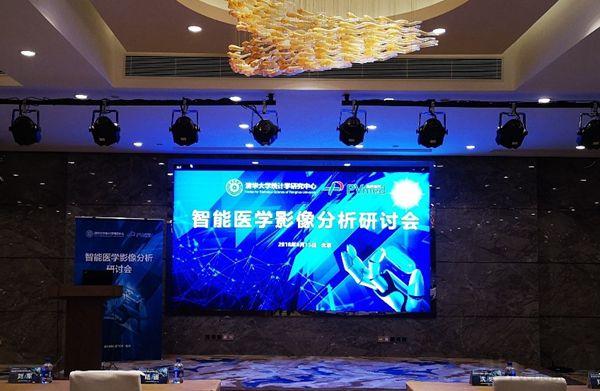
Opening of the Symposium on Intelligent Medical Imaging Analysis
Professor Jun Liu, a renowned statistics expert from Harvard University and Director of the Center for Statistical Science at Tsinghua University, delivered the opening remarks. Lu Yao, President of PVmed and Professor at the School of Data Science and Computer Engineering, Sun Yat-sen University, presented a report titled “Intelligent Analysis of Medical Images and Its Applications,” using breast cancer as an example to illustrate the fundamental theories and techniques of medical image analysis and radiomics.
Lu Yao is a professor at Sun Yat-sen University. Before returning to China, he served as a researcher at the University of Michigan Medical School for many years. With over 15 years of research experience in medical imaging and computer-aided diagnosis (CAD), he has maintained long-term, in-depth collaborations with top-tier hospitals both domestically and internationally. At this conference, he primarily discussed the latest research and advancements in high-dimensional reconstruction, feature extraction, dimensionality reduction, and machine learning for complex medical data.
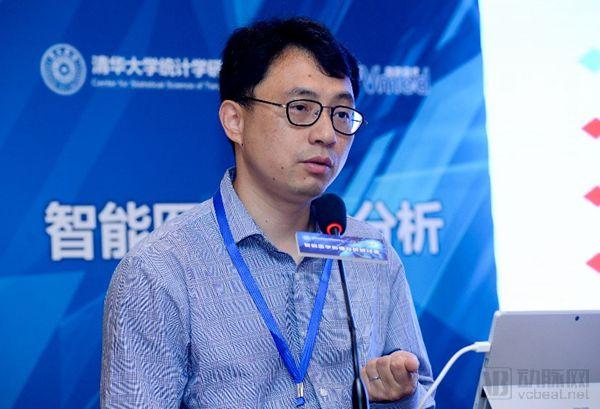
Dr. Lu Yao, President of PVmed
The conference was divided into four topics: Applications of Artificial Intelligence in Medical Imaging: Opportunities and Challenges, Applications of Machine Learning and Deep Learning in Medical Imaging, Intelligent Systems and Platforms for Medical Imaging, and Frontier Technologies and Algorithms in Medical Imaging. In each session, experts from both industry and academia delivered insightful presentations.
In the session titled “Applications of Artificial Intelligence in Medical Imaging: Opportunities and Challenges,” Professor Kenji Suzuki from the Illinois Institute of Technology provided a technical review of research advances in machine learning for medical image analysis and computer-aided diagnosis. He focused on analyzing and comparing the characteristics and advantages of current mainstream convolutional neural networks (CNNs) and deep learning models such as the large-scale trained artificial neural networks he proposed. Furthermore, drawing on examples including bone and tissue separation in chest X-rays, as well as pulmonary nodule detection and benign-malignant differentiation, he summarized the current status and future prospects of deep learning applications.
Dr. Mao Hai’e from Siemens elaborated on the importance of structuring and refining data in medical imaging from a clinical application perspective. He primarily analyzed how to construct high-quality data in daily clinical practice that complies with medical regulatory constraints while enabling subsequent mining and utilization, thereby leveraging machine learning techniques to achieve efficient detection and diagnosis of diseases and syndromes.
The expert speaker on the topic of “Applications of Machine Learning and Deep Learning in Medical Imaging” introduced various technical approaches of machine learning and deep learning in medical imaging applications.
Professor Fei Wang from Cornell University in the United States introduced a novel graph convolutional network technique, which defines convolutions in both the spatial and spectral domains of graphs and leverages deep learning to extract richer features from graph data. Professor Wang also highlighted several successful applications of this technology in medical image analysis over the past two years.
Dong Bin from Peking University reinterpreted existing convolutional neural network models from the perspective of applied mathematics, proposing new ideas for the development of novel models and the optimization of existing network architectures. Professor Yiyu Shi from the University of Notre Dame and Professor Ping Ma from the University of Georgia respectively introduced technical approaches involving quantized fully convolutional networks (FCNs) for precise image segmentation and machine learning on gene sequences to assist in cancer diagnosis.
In the session on “Intelligent Systems and Platforms for Medical Imaging,” industry experts presented advanced medical imaging intelligent systems and platforms currently available both domestically and internationally.
Dr. Huai Xiaochen from Philips introduced the Philips IntelliSpace Discovery platform, a medical imaging research platform that offers nearly 100 research plugins. It provides medical research platform services targeting various research directions for different diseases, including cardiac, vascular, oncological, neurological, and skeletal conditions. The platform also features plugin interfaces for third-party programming development and has successfully integrated PVmed’s automatic CTV delineation algorithm plugin for nasopharyngeal carcinoma.
Dr. Zhu Lei from Mindray introduced Mindray Medical’s advancements in ultrasound intelligence from three perspectives: intelligent imaging, intelligent workflows, and intelligent assisted diagnosis, with a focus on intelligent features such as automatic standard plane recognition, automatic measurement of tissue structures, and automatic detection and diagnosis of lesions.
Finally, Lu Yao, President of PVmed; Zhu Yu, Deputy Director and Tenured Professor at the Statistical Research Center of Tsinghua University and Purdue University; and representative experts in attendance engaged in an in-depth and detailed discussion on the opportunities and challenges encountered in the application of artificial intelligence in medical imaging, as well as its potential future development directions.
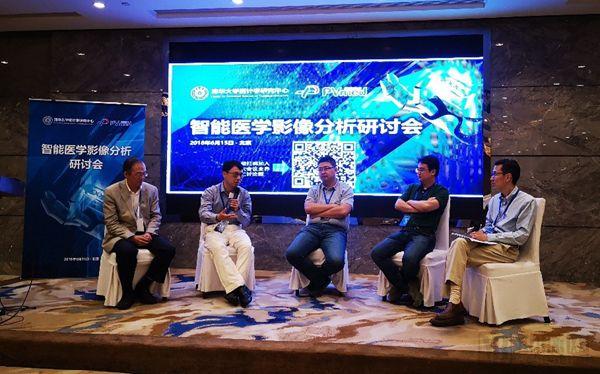
Roundtable Discussion Session of the Intelligent Medical Imaging Analysis Symposium
Finally, Lu Yao, President of PVmed; Zhu Yu, Deputy Director and Tenured Professor at the Statistical Research Center of Tsinghua University and Purdue University; and representative experts in attendance engaged in an in-depth and detailed discussion on the opportunities and challenges encountered in the application of artificial intelligence in medical imaging, as well as potential future development directions.
PVmed positions itself as a leader and technology provider in medical artificial intelligence, with multiple technologies in the field of AI-based medical imaging reaching international leading levels. Among its global peers, PVmed possesses the highest-quality annotated imaging database and algorithmic expertise. The company offers globally leading solutions for target volume delineation in nasopharyngeal carcinoma radiotherapy and comprehensive analysis and detection for all lung diseases. Additionally, it provides domestically leading systems for breast cancer detection and diagnosis, computer-aided diagnosis of liver cancer, and AI-assisted pathological analysis.
The Center for Statistical Science at Tsinghua University is led by its founding director, Professor Jun S. Liu, a renowned statistics expert from Harvard University, and co-director, Professor Xihong Lin, Chair of the Department of Biostatistics at Harvard University, who jointly oversee the development and advancement of statistical sciences at Tsinghua University. The center’s research scope encompasses biostatistics, medical statistics, and big data analytics.
The Intelligent Medical Image Analysis Conference, jointly organized by PVmed and the Center for Statistical Science at Tsinghua University, helps build a bridge between leading institutions and universities in the frontier theories of AI in medical imaging and their industrial applications. It facilitates joint exploration of models and pathways for applying artificial intelligence in the field of medical imaging, accelerating the implementation of AI technologies in this domain.