

China's Hemodialysis Industry Surge: Policy Tailwinds, Chain Expansion, Data-Driven Dialysis, and Evolving Insurance Payment Models
In December 2016, the former National Health and Family Planning Commission successively issued the basic standards and management specifications for four categories of independently established medical institutions: medical imaging diagnostic centers, medical laboratories, blood purification institutions, and pathological diagnosis centers, encouraging the opening of hemodialysis centers to private capital. The issuance of Document No. 67 signifies that, from both the patient’s perspective and the industrial perspective, state support for the hemodialysis industry has reached an unprecedented level, ushering this sector into a golden age of development.
Of course, opportunities often coexist with challenges. Given the severe shortage of hemodialysis centers, how can they establish a chain collaboration model? What are the changes in standards for third-party hemodialysis centers in China?
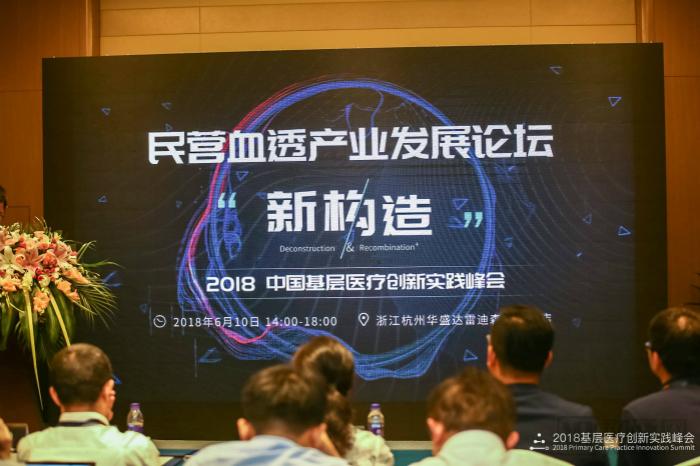
On June 9–10, the “New Structure – 2018 Summit on Innovative Practices in Primary Healthcare,” co-hosted by the National Engineering Laboratory for Internet Medical Systems and Applications, Sir Run Run Shaw Hospital Affiliated to Zhejiang University School of Medicine, the Internet Medical Health Industry Alliance, and VCBeat, was grandly held in Hangzhou. As part of the summit, the Forum on the Development of the Private Hemodialysis Industry invited founders and senior executives of companies involved in hemodialysis centers, as well as industry research experts, to engage in a half-day discussion focused on the construction and development of hemodialysis centers, along with the associated opportunities and challenges. Below, VCBeat (WeChat ID: vcbeat) has compiled the viewpoints shared by the corporate guests.
The 2.0 Era of Third-Party Hemodialysis Centers
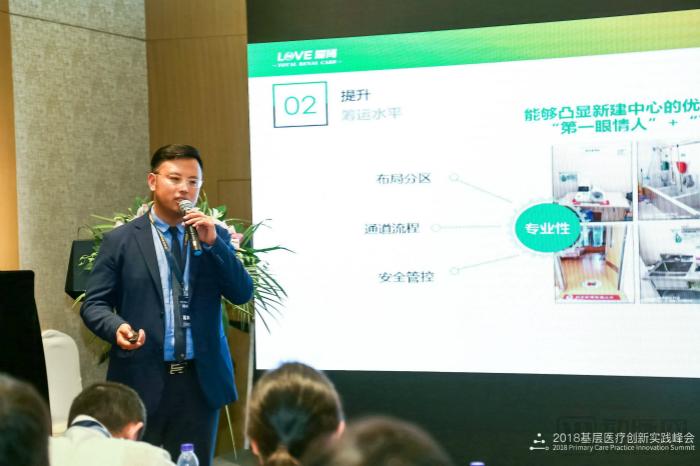
Guest Speaker: Zhang Yongqiang, Deputy General Manager of Aishen Medical
During 2014–2015, policy liberalization spurred a surge of entrants into the hemodialysis industry, generating widespread excitement. However, starting in 2017, the hemodialysis sector entered a new “2.0” phase of development.
Third-party hemodialysis centers have been developing abroad for decades, while they are a relatively new concept in China. The year 2011 marked a milestone in the development of independent hemodialysis centers in China. At that time, while I was still working at another publicly listed company, I began building a team to establish hemodialysis centers.
Current data from hemodialysis centers show that a total of 346 facilities completed business registration between 2016 and June 2018, with 247 registered in the past year alone, indicating a rapid pace of growth. This trend is an inevitable outcome of socioeconomic development and the growing public demand for health services, and it may have a significant impact on the positioning, value, trust, and development of private healthcare.
Compared with the overseas market, where industry giant DaVita took 10 years to establish over 1,000 dialysis centers, I believe the Chinese market will not lag behind. While it is difficult to predict exactly how much faster it will be, I estimate that a scale of tens of thousands could be achieved in approximately five years. However, due to policy, resource constraints, and other factors, this will be a gradual evolutionary process.
Currently, there are nearly 5,000 hemodialysis centers in the market, with over 95% being public institutions. In terms of overall positioning, even if the total number exceeds 10,000 in five years, at least 70%-80% of the additional 6,000-7,000 centers will be privately operated. Independent hemodialysis centers will continue to serve as a supplement to public hospitals. This does not diminish the importance of third-party independent hemodialysis centers; rather, the ultimate goal is to establish a service system characterized by complementary quality and quantity. This is my expectation for the industry’s future development.
The first aspect is the expansion of capacity, reflected in both absolute and relative terms. In absolute terms, there remains significant room for growth in the total number of dialysis patients in China, while national reforms and restrictions on public hospitals are being actively advanced. In relative terms, existing hemodialysis centers are highly concentrated and unevenly distributed; particularly in the main urban districts of certain cities, surrounding areas remain underserved, with differentiated demands gradually emerging.
The second aspect is qualitative enhancement, reflected in the optimization and diversification of services as well as the improvement of medical quality. We cannot focus solely on quantity; while there will indeed be a substantial demand for private hemodialysis centers in the future, these facilities will have no room for growth if they fail to ensure high-quality care. Service diversification includes patient education on nutrition, exercise, and psychological well-being, as well as out-of-hospital patient management and response capabilities. These are areas where private hemodialysis centers can outperform public hospitals.
Improvements in healthcare quality, encompassing costs, expenses, and innovation—such as supplementary coverage and subsidies from commercial insurance and charitable foundations, price negotiations and reductions for consumables and pharmaceuticals, or enhancements and innovations driven by new systems and institutions—affect the development of hemodialysis and patients’ quality of life in China, with economic issues being the most prominent.
How, then, can independent hemodialysis centers enhance their core competencies? It is necessary to improve cognitive awareness, site selection and business model planning, operational management capabilities, and medical service quality.
First, elevate cognitive awareness. Hemodialysis centers require substantial capital investment, involve long operational cycles, and carry significant risks, necessitating that practitioners be more pragmatic, open-minded, and diligent. Unlike consumer healthcare sectors such as medical aesthetics and dentistry, hemodialysis is an essential, medically intensive service. Weekly dialysis treatments are mandatory for patients; without them, patients face life-threatening risks within approximately two months. Furthermore, in the absence of medical insurance coverage, only a very small minority of patients can afford to pay entirely out-of-pocket. Finally, the hemodialysis industry is characterized by intense competition, particularly from public hospitals.
Second, expansion models and site selection. In terms of patient distribution, major cities undoubtedly account for a larger share. Whether to focus on first-tier cities (Beijing, Shanghai, Guangzhou, and Shenzhen), provincial capitals, or prefecture-level cities and their subordinate districts and counties should be demand-driven, with resource allocation optimized by comprehensively balancing costs and profits. Current implementation strategies primarily include departmental collaborations, hospital acquisitions, and establishing new centers.
From the current perspective, partnership models with public or private hospitals are not very viable. Acquiring hospitals may save time, but team integration poses significant challenges. Therefore, although establishing new dialysis centers and specialized nephrology hospitals may be cumbersome in the early stages, it is an inevitable path. If the goal is to embed medical and service systems into a hospital, it is advisable to start from scratch. Once a stable and mature management system is established, expansion can proceed rapidly. In the United States, 150–160 hemodialysis centers are added annually; in China, this pace could actually be accelerated.
Third, enhance operational planning capabilities. To highlight the advantages and cutting-edge concepts of the newly established center, it must create a strong “first impression” while delivering substantive value. This entails superior hardware infrastructure, including optimized layout and zoning, streamlined workflow pathways, robust safety controls, environmental facilities, patient-centered care, medical referral systems, and labor protections. The approach should be not only professional but also human-centric.
Furthermore, enhancing operational capabilities—such as becoming the preferred provider for dialysis patients and building scalable chain operations from one to ten facilities—is essential for sustainability. This involves reducing procurement costs, establishing a rational compensation structure, lowering labor expenses, and attracting and retaining talent.
Fourth, enhance medical capabilities. In demonstrating medical capability, medical quality is the core element. The prerequisite is to ensure the safety of dialysis patients; on this basis, we must improve quality and then enhance our medical service delivery. Standardization across all processes is essential to improve the patient care experience, which is critical.
It is premature to describe the third-party hemodialysis center market as “fierce,” as China still has significant room for growth. Empowering the industry to elevate its overall standards requires collaboration; for instance, Aishen Medical has partnered with Beideng to establish “Shenxie Yigou,” a B2B procurement platform for renal medical devices. Given the highly fragmented nature of equipment and pharmaceutical procurement in hemodialysis treatment, this platform empowers the industry by optimizing product portfolios, pricing, technical support, and after-sales service, thereby reducing procurement costs and minimizing intermediaries.
Although the hemodialysis industry is an emerging sector, it offers excellent cash flow and scalability in the long run. In the future, the industry must join forces to elevate its overall standards and reputation, strive to establish standardized regulations, and engage in endeavors that will benefit future generations.
Data-Driven Hemodialysis Enables Homogenized Chronic Disease Treatment and Management Through Tiered Diagnosis and Care
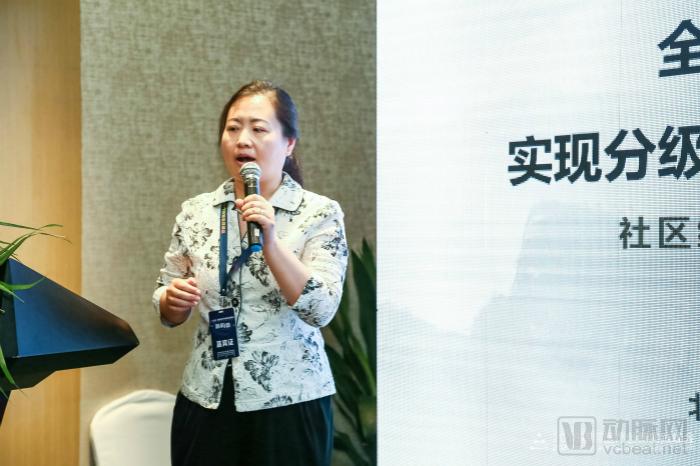
Guest Speaker: Wang Wei, Founder of Infomei Information Technology
With a background in IT, I have 10 years of experience in ecosystem management in Japan and another 10 years dedicated to the R&D of medical products at Fortune 500 healthcare companies such as Toshiba Medical and GE Healthcare. The Infumei team introduced the concept and comprehensive framework of “Data-Driven Hemodialysis,” leading the development and implementation of clinically standardized processes and a portfolio of personalized, precision-oriented clinical products.
Hemodialysis is essentially a routine treatment for chronic disease, requiring patients to visit healthcare facilities 2–3 times per week, with some cases needing 4–5 visits. Given this frequency, daily treatment must be accessible at nearby medical clinics rather than overcrowded large hospitals. Therefore, the hemodialysis industry is inherently suited for an integrated model combining dialysis centers in regional general hospitals with those in community hospitals. Specifically, regional general hospitals (classified as Grade II or above) should provide foundational technical support and emergency care, covering community-based satellite dialysis centers within a 10-kilometer radius. Additionally, a regional nephrology dialysis guidance or quality control center should be established.
What are the advantages of the hemodialysis industry? As long as you provide treatment to patients, they will generally remain with your facility. However, to deliver high-quality patient care, our IT team—initially lacking healthcare experience—began by focusing on serving physicians and departments effectively, identifying their pain points. This approach formed the foundation for designing our comprehensive solution.
In the continuous management of chronic diseases, data is paramount. Without accurate data, physicians struggle to efficiently manage patients, and patients find it difficult to accurately assess their condition and adhere to treatment regimens. Therefore, we have adopted a data-driven approach to build an integrated chronic disease diagnosis and treatment service platform for hemodialysis. This platform serves departments and physicians by liberating doctors and nurses from tedious administrative tasks, allowing them to devote more time and energy to humanistic care and clinical support—a model widely observed in the successful operation of many hemodialysis centers in Japan.
The integrated chronic disease diagnosis and treatment service platform for hemodialysis can seamlessly connect various components, including the comprehensive clinical management system for hemodialysis, personalized prognosis assessment and precision therapy services, online clinical quality control management, remote expert guidance, online patient education, online training for medical and technical staff, referral services, and out-of-hospital doctor-patient management. Furthermore, Infumei began its promotion in large tertiary hospitals, including secondary hospitals, as their medical personnel are the busiest; achieving success in these settings can serve as an excellent demonstration for private healthcare institutions.
Currently, we have established a Regional Nephrology Dialysis Guidance Center platform in Chaoyang District, Beijing. This platform enables timely access to data from community hospitals; after de-identification, analytical reports are provided to physicians, helping them more effectively identify subtle details that might otherwise go unnoticed. Through this tool, we have the responsibility and capability to enhance the analytical and diagnostic skills of primary care physicians. This approach is more practical and impactful than inviting renowned department directors from tertiary hospitals to conduct consultations at a single community hemodialysis center. Moreover, as chronic diseases require continuous monitoring and treatment, reliance on one’s own medical team is essential.
HIS vendors and appointment scheduling software providers are all developing data platforms. Where do our advantages lie? InforMed has developed a closed-loop data solution for hemodialysis. At its core is a software model created by Japanese dialysis expert Takahiro Niizato, which incorporates 30 years of patient hemodialysis data from 1968 to 1998. Building on this foundation, we conducted independent research and development over a period of three to four years, and officially launched our patented product in March 2014: the i-DiaPro Electronic Medical Record System for Hemodialysis.
At the outset of our R&D efforts, we dedicated two years to market research and analysis, with formal development commencing in 2012. Our research identified that the primary challenge to address was the accurate collection of data. This issue is not unique to private hemodialysis centers; public hospitals face it as well. The community hospital in Chaoyang District, our partner, diligently followed our protocols and requirements from the start, prioritizing the establishment of standardized and normalized procedures. Within two months, the medical and nursing team achieved standardization in their workflows and operations, initially meeting the benchmarks for clinical data completeness. Furthermore, we employed big data algorithms to assess dialysis adequacy in patients who previously lacked well-established clinical management approaches, all without imposing any additional burden on the healthcare staff.
The comprehensive blood purification data management platform we have established includes the i-DiaPro electronic medical record (EMR) system for hemodialysis, the EMR system for continuous renal replacement therapy (CRRT), the EMR system for peritoneal dialysis, and a personalized diagnosis and treatment platform for hemodialysis. What benefits can this achieve?
The primary objective is to address clinical treatment management covering the four major stages and twelve key operational aspects of hemodialysis, adhering to Standard Operating Procedures (SOPs) for hemodialysis therapy, thereby enhancing patient confidence in participating in the treatment process. The i-Diapro electronic medical record system for hemodialysis is tailored specifically for hemodialysis specialties, providing dedicated formats and content for vascular access, dialysis prescriptions, phase summaries, and nursing assessments. It is integrated with the Laboratory Information System (LIS), Hospital Information System (HIS), and Inpatient Medical Record System.
Quality control analysis statistics perform overall distribution statistics in accordance with quality control standards, conduct comparative trend analysis of patients' biochemical indicators, strengthen monitoring of process and outcome indicators, and meet the requirements for dialysis quality control and improvement.
Quality control analysis is a highly intelligent system designed for clinical departments. It enables physicians to directly identify compliant data metrics and trace back to potential deficiencies in a patient’s treatment plan for any given year. As a tool that supports bedside diagnosis and treatment, it effectively mitigates clinical risks.
In terms of online data acquisition, it is possible to achieve fully automated collection of dialysis treatment data, with automatic recording, real-time monitoring, and timely alerts. Data acquisition must be periodic and routine, and only through multi-dimensional data integration can a comprehensive assessment of patients' treatment outcomes be achieved. Once precise data is collected, individual and population-level characteristics are naturally reflected, highlighting the clear advantages of IT.
Only continuous, normalized, precise, periodic, and multidimensional data sets can reflect individual and population-level characteristics. With policy encouragement at the national level for “Internet + Healthcare,” there is hope for integrating in-hospital and out-of-hospital data. Only such integrated data can provide substantial benefits to clinical practice, while also addressing many challenges related to research data and clinicians’ data analysis.
Platform for Personalized Diagnosis and Treatment: We feature a globally leading online system for assessing dialysis adequacy (Kt/V). This system is built upon a mature model derived from thirty years of Japanese hemodialysis statistics, developed by Professor Takahiro Shinzato, a renowned Japanese expert. After years of continuous optimization and clinical validation in both Japan and at the China-Japan Friendship Hospital in China, its accuracy is comparable to that of blood sampling-based urea clearance index (Kt/V) measurements. The online Kt/V monitoring device for hemodialysis has been granted a national patent.
Through our clinical collaborations with experts, we have discussed that patients must undergo multidimensional, comprehensive assessments—rather than isolated, single-point evaluations—to ensure their quality of life.
Currently, three private hemodialysis group centers are using our platform. Additionally, the system incorporates the concepts of a group center and sub-centers. For quality monitoring, it enables real-time data surveillance of hemodialysis treatments for patients across various centers, ensuring timely identification of issues and reducing the risk of medical incidents. It also allows for statistical analysis of the effectiveness and quality of dialysis treatment for patients currently undergoing therapy, thereby meeting regulatory requirements for quality control.
The operational management function consolidates the clinical work status and workload of all chain centers, summarizes the revenue and expense status of each center, and conducts regular aggregation and statistical analysis of drug and consumable usage across centers. This enables the group headquarters to monitor the operational status of each center and provides robust data support for corporate decision-making, thereby eliminating barriers to data interoperability within the group.
For us, our primary clients are hospital departments and healthcare professionals, while our entire product portfolio is designed for the industry as a whole. We do not distinguish between public and private hospitals, as our goal is to address the broader need for balance across the entire healthcare sector. Entering the medical field requires patience; haste is counterproductive. The hemodialysis industry has entered a phase where operational efficiency drives profitability, emphasizing refined management through reasonable costs and investments. Ensuring medical quality and patient retention—so that patients are willing to continue their treatment with us—is critical. This necessitates enhancing standardized departmental operations and improving the clinical skills of healthcare staff. These are the contributions Infome aims to make to the industry.
Analysis of Changes in Standards for Independent Hemodialysis Centers in China
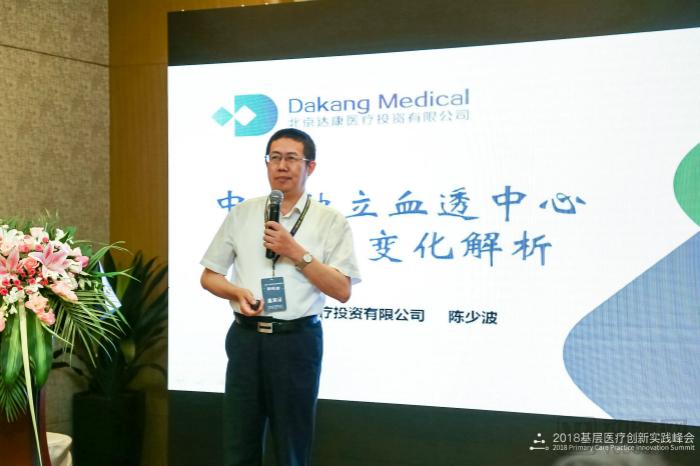
Guest Speaker: Chen Shaobo, Chairman of Beijing Dakang Medical Investment
In 2016, after the former National Health and Family Planning Commission issued Document No. 67, hemodialysis became a widespread topic of discussion; prior to this, local standards varied across regions.
In China, the earliest provider of community-based dialysis was Sansheng Kidney Friends Home. In 2009, it established a joint venture with DaVita and opened two dialysis centers within community health clinics in Jinzhou, Liaoning Province.
In 2010, the former Ministry of Health authorized the Bethune Foundation to launch a pilot program for establishing non-profit chain hemodialysis medical services in communities and at the grassroots level. Dakang Medical undertook the investment, operation, and management of the project. Through years of accumulation, Dakang Medical has explored and practiced an independent chain hemodialysis development model characterized by “unified management standards, unified medical standards, and unified service standards.” However, during the initial standard-setting phase, there was considerable debate and research on various issues, such as vascular access safety, physician qualifications, and facility grading.
Against this backdrop, the Basic Standards for Hemodialysis Rooms in Medical Institutions were formulated in 2010. For instance, regarding staffing, the standards require two physicians, one of whom must hold an intermediate or higher professional title in nephrology. For facilities with more than 20 dialysis machines, one additional physician is required for every 10 additional machines. Tertiary hospitals are required to have more than 10 dialysis units, while other institutions are required to have at least five.
Later, we identified a key issue: the more hemodialysis centers are decentralized to the grassroots level, the better. Ideally, they should be located right in communities where people live. Therefore, instead of establishing hemodialysis centers in first-tier cities such as Beijing, Shanghai, Guangzhou, and Shenzhen, or in certain provincial capitals, we have chosen to focus on district and county-level markets, even extending our pilot programs to townships. Dakang Medical established the non-profit chain “Bethune Blood Purification Centers,” which has invested in and built over 50 hemodialysis service centers across central China, including Henan, Hebei, Shandong, and Jiangxi provinces.
When classifying dialysis institutions, the first strategic move was to establish the Baiqiuen Blood Purification Center in Jiaozhou, Qingdao, with approval from Shandong Province. The second step involved entering the Shanxi market. These standards have been evolving; in 2014, the former National Health and Family Planning Commission issued a request for comments on the basic standards and management specifications for hemodialysis centers, after which various provinces successively released their own standards for independent hemodialysis centers.
A key point is that in December 2016, the former National Health and Family Planning Commission issued the “Basic Standards for Hemodialysis Centers (Trial)” and the “Management Specifications for Hemodialysis Centers (Trial).” However, unlike third-party institutions such as clinical laboratory centers, medical imaging centers, and pathology centers, hemodialysis centers operate on a direct-to-consumer (toC) basis. This implies higher risks compared to business-to-business (toB) models, because continuous tightening of standards increases leverage, leading to ever-higher input costs. Consequently, capital investors are increasingly reluctant to enter this sector.
Fundamentally, third-party hemodialysis centers are intended to supplement public hospitals; however, the current dynamic is one of competition. For a hemodialysis center, the ideal scenario is to achieve favorable returns starting in the third year after opening and integrating with the national medical insurance system. Nevertheless, the duration of the preparatory and operational ramp-up phase remains difficult to control at present.
The Current Status and Future of the Integration of Internet Insurance and Healthcare in China
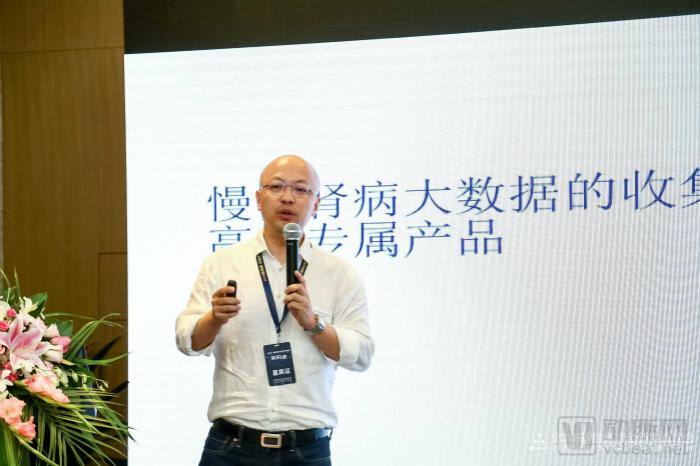
Guest Speaker: Xu Han, Chairman of Xiaoyusan Insurance
Xiao Yusang Insurance is, in essence, an internet technology company. It completed its Series B financing of RMB 100 million in March this year, with joint investment from Matrix Partners China and Tasly Capital. Previously, it had secured two rounds of funding from Sequoia Capital China and Xiantian Venture Capital. The company has launched multiple comprehensive health protection solutions.
The company operates in two sectors: finance and healthcare. In the healthcare sector, we successfully won the bid this year to establish congenital heart disease patient databases for Fuwai Hospital and Shenzhen Sun Yat-sen Cardiovascular Hospital.
Data shows that the prevalence of chronic kidney disease (CKD) in China has reached 130 million, with 400,000 patients suffering from renal failure requiring dialysis. There are two types of dialysis: hemodialysis and peritoneal dialysis. The former costs RMB 70,000–100,000 per year, while the latter costs RMB 40,000–50,000 per year. Simply put, peritoneal dialysis is more affordable.
From an insurance perspective, the treatment modality chosen by patients is determined by medical insurance policies. Over the 50-year evolution of the dialysis industry in the United States, the proportion of patients undergoing hemodialysis versus peritoneal dialysis has fluctuated significantly, primarily due to differences in reimbursement methods and coverage rates. Therefore, the choice of dialysis modality is heavily influenced by policy factors.
The vast majority of countries and regions primarily use hemodialysis. However, only Hong Kong (China), New Zealand, and Mexico have a significant proportion of patients undergoing peritoneal dialysis. For instance, Hong Kong has implemented a “peritoneal dialysis first” policy: unless contraindications necessitate hemodialysis, patients must initially choose peritoneal dialysis; otherwise, the costs will not be reimbursed by medical insurance.
What is the ultimate solution to high costs? We choose the Internet. In 2017, there were already 3.3 billion Internet users worldwide, and the widespread adoption of mobile phones has facilitated connectivity through social media. Consumers have shifted to online channels, but insurance companies’ services and products are significantly lagging behind. Currently, among all insurance companies’ offerings, two sectors remain relatively underdeveloped in the online space: telecommunications and cable, followed by healthcare.
Specifically in the field of nephrology, the collection of big data on chronic kidney disease (CKD) is essential to customize cost-effective, tailored insurance products. We currently serve as a third-party administrator (TPA) for six insurance companies, providing claims processing services. After we design the insurance products, we also handle the final claims settlement for these insurers. Last year, we processed 50,000 claims, none of which involved kidney disease. This figure indicates that the insurance market for kidney diseases remains largely untapped and holds significant potential. Without adequate data, it is difficult to develop customized insurance products for this sector.
We have collaborated with Fuwai Hospital to establish a surgical database for congenital heart disease. The hospital shares congenital heart disease data on the platform. With this accumulated data, it can be integrated into insurers’ actuarial models, thereby enabling the development of insurance products.
In addition to insurance product design, we operate the Xiaoyusan Fundraising platform, an internet-based crowdfunding platform primarily for patients with critical illnesses. Notably, one in every ten cases involves a patient with uremia who requires hemodialysis and relies on online fundraising to cover treatment costs.
After purchasing commercial critical illness insurance and receiving claim payouts, patients’ primary need shifts to medical guidance rather than the transaction simply ending with compensation. For instance, for a patient diagnosed with uremia, determining the optimal hemodialysis modality and implementing effective chronic disease management strategies are services they urgently require.
In this regard, Xiaoyusan Insurance also aims to partner with high-quality chronic disease management institutions. When customers purchase our products and subsequently file claims, we can not only meet their post-insurance needs but also drive customer acquisition for these institutions, thereby establishing trust endorsement. This mutually beneficial arrangement warrants discussion among all industry practitioners.