

Biomarker Diagnostics Firms Gain Momentum as Lab Innovations Transition to Real-World Healthcare Applications
With the advancement of precision medicine, personalized medicine is receiving increasing attention from the clinical medical community, and biomarkers serve as the foundation for implementing personalized medicine.
Biomarkers refer to biochemical indicators that can mark changes or potential changes in the systems, organs, tissues, cells, and subcellular structures or functions, with a very wide range of applications.
Biomarkers can reflect normal physiological processes, pathological processes, or pharmacological responses to therapeutic interventions, playing a role in early diagnosis, disease prevention, drug target identification, assessment of drug response, and other areas. Biomarkers may be used alone or in combination with other factors to evaluate an individual’s health or disease status.
Currently, the search for and discovery of valuable biomarkers have become a research hotspot, particularly in the study of biomarkers for cancer and brain disorders. VCBeat (WeChat ID: vcbeat) has compiled an overview of this field.
Cancer: Or Develop Early Cancer Screening Tests for the General Public
Blood is a commonly used carrier for biomarkers, and the vast majority of biomarker research focuses on cancer.Recently, researchers at the University of Sheffield in the United Kingdom identified 786 blood-based cancer biomarkers by screening more than 19,000 studies published over the past five years. These biomarkers could be used to develop early cancer screening tests for the general population.
Next, the researchers will verify the studies on these biomarkers and, throughClinical TrialEvaluation of Each Marker for EarlyTumorpredictive capability.
Professor Ian Cree, Director of the Early Cancer Detection Association, said: “Our expectation is that, following verification and clinical trials, we will be able to select a panel of approximately 50 biomarkers for inclusion inClinical Trial, to evaluate their combined predictive capability for early-stage cancer. Our goal is for the final screening test to detect these biomarkers in the blood of patients with early-stage cancer, who would then be referred for more specific tests to determineTumortypes.”
Alzheimer’s Disease: Further In-Depth Research Still Needed
As a neurodegenerative disease, Alzheimer’s disease (AD) is characterized by significant memory loss. The global number of AD patients is projected to increase from 44 million currently to 135.5 million by 2050. Consequently, Alzheimer’s disease has become a focal point of brain research.
In traditional biomarker research, researchers typically analyze plasma. Plasma contains abundant proteins, hormones, RNA, and inflammatory markers. Some proteins, such as many involved in the inflammatory response, can serve as potentialDiagnosisBiomarkers.
Research on diagnosing Alzheimer’s disease based on blood tests is highly promising, but further in-depth studies may be required in the future.Biomarkers in the blood are highly variable and often depend on the stage of disease progression, as well as other environmental and physiological factors. Researchers remain uncertain about how to leverage these biomarkers to differentiate Alzheimer’s disease from other types of dementia or neurological disorders.
Brain Injury: Advancing Clinical Trials and Commercial Development
Brain injuries cause significant harm to the human body, and accurate assessment of brain injury status is crucial for patient recovery. ABCDx is a Swiss diagnostic research and product development company that develops and validates new diagnostic products based on its proprietary portfolio of blood biomarker technologies, thereby facilitating appropriate and timely clinical decision-making for patients with various types of brain injuries, ranging from traumatic injuries to stroke and post-stroke infections.The biomarkers used by ABCDx are produced by damaged or stressed brain cells and tissues and are released into surrounding body fluids in response to brain stress or injury.
ABCDx'sTechnology can expedite clinical decision-making, thereby significantly reducing costs for patients with brain injuries and stroke. Early decisions may alter the care of patients who receive early administration of known life-saving medications and reduce the burden on hospital emergency departments from referred patients.
In June 2018, ABCDx completed its first round of private financing, with the amount undisclosed. The funds will be used to accelerate and advance the clinical and commercial development of diagnostic products related to brain injury. ABCDx has offices in Geneva, Switzerland, and Seville, Spain, and conducts significant research and clinical collaborations in Geneva, Barcelona, and Seville.Scheduled for2018Applied to European regulators for the first batch of products this year。
However,Many scientists believe that the signals contained in a single blood biomarker may not be sufficientDiagnosisGiven this value, researchers hope to develop novel technologies in the future to facilitate research. Consequently, projects that leverage digital tools as biomarkers have attracted significant capital interest. VCBeat has identified a representative company in this space.
Mindstrong Health: Analyzing Smartphone Interaction Data to Attract Investor Interest
Mindstrong Health, based in Palo Alto, California, was founded in 2016 as a digital brain biomarker company. In June 2018, Mindstrong Health completed a $15 million Series B financing round, with the funds to be used for scaling up operations and advancing commercial deployments with healthcare industry partners. Previously, in June 2017, Mindstrong Health had secured a $14 million Series A financing round.
Mindstrong Health is built onFounding Teamon a digital biomarker platform that has been extensively developed over the years. Mindstrong HealthThis technology will, for the first time, provide patients and healthcare professionals with a seamless and instantaneous approach,Striving to transform healthcare from a reactive to a proactive model, with the goal of reducing disability, hospitalizations, emergency room visits, and suicide, ultimately shifting the focus of medicine from “diagnosis and treatment” to “prediction and prevention.”
Mindstrong Health’s technology originated with smartphones. Currently, there are over 3 billion smartphones worldwide, and more than 75% of U.S. adults own a smartphone; among individuals aged 18 to 29, this figure reaches 92%. Mindstrong Health’s digital phenotyping collects data from smartphones to provide measures of emotion, cognition, and behavior.
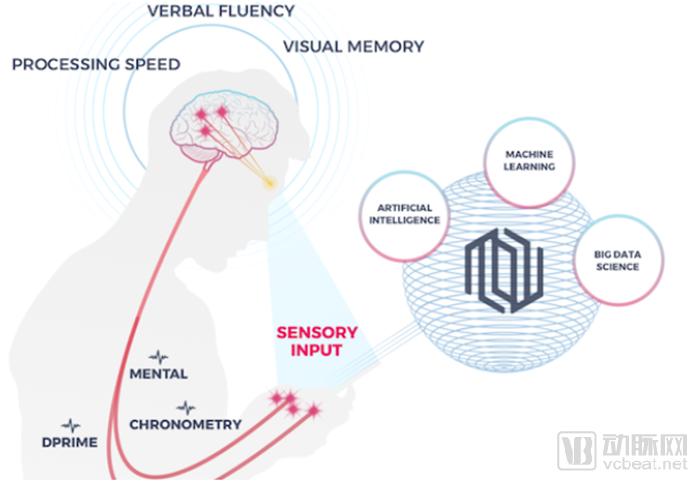
Image from the Mindstrong Health official website
Digital phenotyping utilizes three types of signals from smartphones: sensor-measured activity, location, and social metadata (such as message counts); keyboard performance captured during human-computer interaction, including typing and tapping; and speech and voice data analyzed via natural language processing, which can provide insights into emotional and cognitive congruence. Together, these signals constitute what Mindstrong Health refers to as a digital phenotype—a comprehensive picture of an individual’s mood, cognition, and behavior.
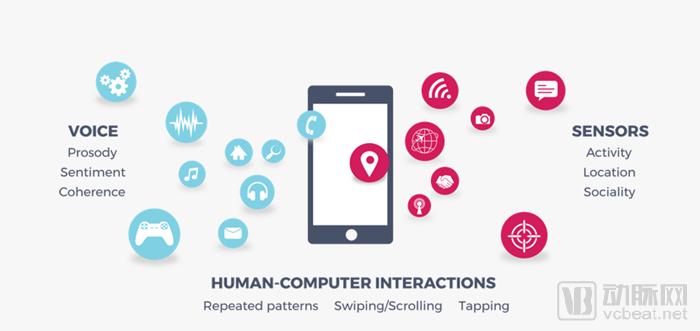
Image from the Mindstrong Health official website
To identify digital phenotypic features with potential clinical utility, study volunteers completed extensive neuropsychological testing, clinical assessments of mood and cognition, and, in certain cases, neuroimaging using functional magnetic resonance imaging (fMRI). The results revealed a set of digital biomarkers derived from human-computer interaction (keyboard performance) that were highly correlated with selective cognitive measures and brain connectivity.
Furthermore, the reporter noted on Mindstrong Health’s official website that the company plans to conduct clinical trials involving nearly 10,000 participants over the next four years. Its partners include Stanford University, Kadima Clinic, the University of Michigan, Blackthorn Therapeutics, King’s College London, Yale University, Zhejiang University, and the University of North Carolina. The brain disorders under investigation include depression, severe mental illness, and PTSD.
Mindstrong Health’s team is composed of three authorities in the fields of neuroscience, medicine, and computer science.
Founder and CEO Paul Dagum developed and patented large-scale, scalable algorithms using big data science for the world’s largest data company. He also created and secured the first patent for digital measurement of central nervous system function based on human-computer interaction models. During his time at Stanford University, Paul Dagum led projects funded by the NSF and NIH, published over 75 peer-reviewed articles and book chapters in computer science and medicine, and holds 25 patents.
Co-founder and President Thomas R. Insel previously served as Director of the National Institute of Mental Health (NIMH) at the U.S. National Institutes of Health (NIH) and led Verily’s mental health team in South San Francisco, California from 2015 to 2017 (formerly Google Life Sciences).
Co-founder and Executive Chairman Richard D. Klausner previously served as the Executive Director of Global Health at the Bill & Melinda Gates Foundation. Dr. Klausner was appointed by Presidents Clinton and Bush as the 11th Director of the U.S. National Cancer Institute, serving from 1995 to 2001.
NeuraMetrix
NeuraMetrix is another digital brain health biomarker company that has developed NeuraMetrix TC, an application that monitors brain health by analyzing typing rhythms.
NeuraMetrix TC is installed on Windows PCs or laptops, with a macOS version coming soon. It captures typing rhythms in milliseconds, enabling the detection of subtle changes in cognitive and motor functions and the calculation of digital biomarkers.

Image from the NeuraMetrix official website
By measuring and analyzing over 2,000 variables, NeuraMetrix TC quantifies “inconsistencies” in typing rhythm, which serve as potential indicators of the onset and progression of neurodegenerative diseases. Typing rhythm is one of a user’s most deeply ingrained habits, effectively hardwired in the brain. When a disease or condition affects the brain, these hardwired patterns begin to deteriorate slowly and in very small increments.
NeuraMetrix TC is sensitive enough to detect minute changes in typing rhythm, rendering variations as small as 1/100th of a second statistically significant and enabling the measurement of decline and progression over time. Consequently, NeuraMetrix TC can detect changes in the brain before individuals notice any adverse effects.
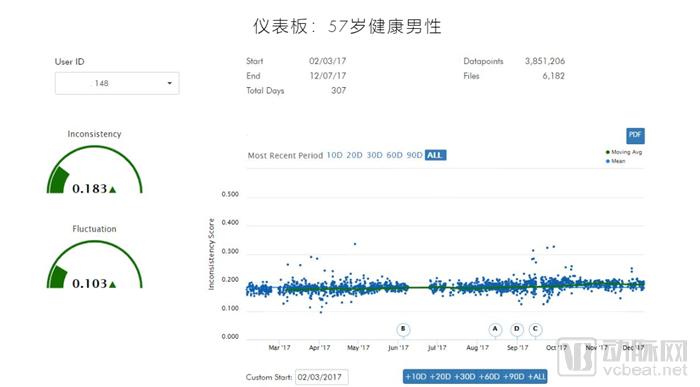
NeuraMetrix TC: Statistics on Typing Rhythm in Healthy Males. Image source: NeuraMetrix official website.
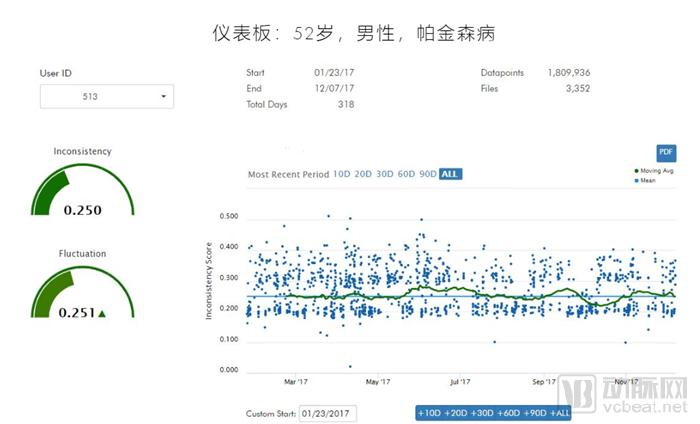
Statistical Analysis of Typing Rhythm in Male Parkinson’s Disease Patients by NeuraMetrix TC, Image from the Official NeuraMetrix Website
NeuraMetrix TC assesses users’ typing rhythms without requiring specific typed content, thereby safeguarding user information security. Currently, NeuraMetrix TC is widely used by researchers, physicians, patients, and their caregivers, serving applications ranging from companion diagnostics to continuous monitoring tools. Furthermore, researchers at leading academic institutions worldwide are employing NeuraMetrix TC in research projects involving Alzheimer’s disease, brain tumors, chemotherapy-related cognitive impairment (“chemo brain”), depression, heart failure, Huntington’s disease, Parkinson’s disease, and REM sleep behavior disorder.
NeuraMetrix is a startup in the capital markets, but its founding team has extensive experience.
Founder and CEO/CTO Jan Samzelius has specialized in quantitative methodology research for 40 years and invented NeuraMetrix’s core technology. He has led numerous analytical projects, ranging from customer satisfaction measurement to price elasticity and conjoint analysis. Jan Samzelius has served as the Chief Executive Officer of six companies, most of which were startups, and has dramatically increased profits in several cases.
COO and CFO William S. Wisialowski has 30 years of experience in investment banking and financial advisory, serving as the head of Craftsman Advisors, co-founder of Seven Hills Partners, and Managing Director at Robertson Stephens & Company. He previously served as Vice President in the M&A division at Morgan Stanley and as an auditor at Peat Marwick Mitchell & Co.
Chief Software Developer Oleg Salyakhov is a successful senior software engineer who previously served as the CTO of a major DRM provider, where he developed the only DRM system that has been running continuously for 430 days.
There is a substantial body of research on biomarkers, covering chronic diseases such as diabetes and hypertension, as well as conditions like intervertebral disc degeneration. The clinical relevance of many of these studies has been validated by large-scale clinical trials, demonstrating their potential for translation from the laboratory to clinical practice. Furthermore, there is a considerable number of projects employing innovative digital approaches to biomarker research.
Just as ABCDx was able to raise more than its target in seed funding, and Mindstrong Health secured nearly $30 million in financing before officially launching its product to the market, biomarker research has demonstrated a strong capacity to attract capital. Underpinning this robust fundraising ability is the transition from empirical medicine to evidence-based and precision medicine, which is undoubtedly the trend in modern medical development. Biomarker research, or digital biomarker research, has become a highly contested sector among enterprises, and VCBeat will continue to monitor this space closely.