

Seven Hospital Presidents Share Insights on Internet Hospital Development as Policy Support Strengthens

The Internet Medical Consortium of the Affiliated Hospital of Qingdao University Goes Online
The State Council’s new policies on “Internet + Healthcare” have ushered in fresh opportunities for industry prosperity, ending the previous imbalance where internet companies were eager while hospitals remained lukewarm, and initiating a “passionate engagement” between the internet and traditional healthcare.
Since 2015, the State Council has successively issued the “Guiding Opinions on Actively Promoting the ‘Internet Plus’ Action” and the “Guiding Opinions on Promoting and Standardizing the Application and Development of Health and Medical Big Data,” both of which propose advocating for online appointment-based diagnosis and treatment via mobile internet, promoting new models of online healthcare services, fully leveraging mobile internet to facilitate health and medical data sharing, improve patient care experiences, develop telemedicine, and provide diversified health and medical services.
On April 28, 2018, the General Office of the State Council issued the “Guiding Opinions on Promoting the Development of ‘Internet + Healthcare’,” explicitly permitting new initiatives such as the establishment of internet hospitals, online follow-up consultations, prescription sharing, and intelligent healthcare. On May 20, Vice Premier Sun Chunlan conducted an on-site inspection of the Wuzhen Internet Hospital—the first internet hospital in China, jointly established by the Tongxiang Municipal Government and WeDoctor—to review its “Internet + Healthcare” initiatives. She encouraged the further development of “Internet + Healthcare” to provide the public with high-quality, efficient, and convenient health services.
Encouraged by supportive policies and the proliferation of internet hospitals, the question for public hospital directors is no longer “whether to establish an internet hospital,” but rather “how to build one.” To address this emerging challenge, we spoke with seven hospital directors who have been deeply involved in developing internet hospitals, exploring how traditional healthcare leaders view the construction and operation of these digital platforms.
In China’s current healthcare landscape, internet hospitals enable residents in remote mountainous areas to consult specialists from developed regions, provide grassroots physicians with assistance and guidance from leading experts, significantly improve the diagnostic and treatment efficiency of these specialists, and enhance traditional care pathways and patient experiences for hospitals that have integrated with internet hospital platforms.
Unlike hospital informatization, achieving online collaboration of medical services and data interoperability among hospitals via the Internet is a systematic and complex challenge.
From Vice President of Huashan Hospital in Shanghai to President of Wuzhen Internet Hospital, Zhang Qunhua has introduced the medical management systems upheld by public hospitals into the internet hospital model. In his view, compared with traditional hospitals, internet hospitals have broken down information silos within healthcare institutions. The integration of internet technology capabilities and professional operational expertise has enabled all hospitals to evolve into hybrid models combining online and offline services.
Gansu Internet Hospital, established through a collaboration between the Second People’s Hospital of Gansu Province and Wuzhen Internet Hospital, is the first internet hospital in Gansu Province. According to Mi Denghai, the hospital director, the Gansu Internet Hospital platform comprises a remote consultation system, an electronic prescription and online medical order system, a prescription review system, an electronic medical record (EMR) system, and a billing and settlement system. It has achieved deep integration with the Hospital Information Systems (HIS), Laboratory Information Systems (LIS), and Picture Archiving and Communication Systems (PACS) of healthcare institutions at all levels, enabling one-stop medical services for patients, including EMR sharing, online consultations, and medication delivery.
In accordance with national requirements, various regions are to gradually establish a tiered diagnosis and treatment system and healthcare-seeking pattern characterized by initial consultations at primary care institutions, two-way referrals, separate management of acute and chronic conditions, and coordination between upper- and lower-level medical facilities. As evidenced by the Wuzhen Internet Hospital model, its initial focus on online follow-up visits and multidisciplinary consultations has enabled it to function as an open platform that effectively complements initial diagnoses at large hospitals, thereby serving as a key instrument for implementing tiered diagnosis and treatment across different regions. President Zhang Qunhua stated, “The synergistic effects of the internet have provided a particularly critical lever for medical consortia and tiered diagnosis and treatment. With the new round of deepening healthcare reform, the combination of internet hospitals and medical consortia will become the ultimate pathway to achieving tiered diagnosis and treatment.”
The system platform of Wuzhen Internet Hospital continues to be implemented across various regions. In April this year, Shandong Province’s first intelligent medical center was established at the Affiliated Hospital of Qingdao University. Concurrently, the hospital’s Internet Medical Consortium Platform went live, featuring functionalities such as a remote consultation center, an internet hospital, a remote electrocardiogram (ECG) center, a remote training academy, and a prescription-sharing platform, thereby significantly transforming traditional medical service models.
The Affiliated Hospital of Qingdao University ranks first in outpatient volume in Shandong Province. Wang Xinsheng, Chairman of the hospital, aims to leverage technologies such as the internet, big data, and artificial intelligence to facilitate standardized and regulated interoperability of information among member institutions of the Qingdao University Medical Group, with the Affiliated Hospital of Qingdao University as the lead entity. This initiative seeks to substantially enhance medical efficiency and specialty care capabilities within the medical consortium, strengthen Qingdao’s disciplinary capacity in “Internet + Health,” and promote the implementation of tiered diagnosis and treatment, coordinated reform of healthcare, health insurance, and pharmaceutical sectors, as well as health-focused poverty alleviation.
Wang Xinsheng introduced that the Affiliated Hospital of Qingdao University is advancing the development of an innovative medical consortium, fully implementing a “cloud–intelligence–endpoint” strategy-based model. This year, it will connect with more than 100 medical institutions to build a new healthcare service network that integrates online and offline services as well as software and hardware, covering five tiers: provincial, municipal, county, township, and village levels.
As a National Clinical Research Base for Traditional Chinese Medicine (TCM), Guangdong Provincial Hospital of Chinese Medicine has partnered with Wuzhen Internet Hospital to establish an Internet-based Medical Consortium. This initiative currently covers more than 120 primary TCM medical institutions across China. Focusing on key projects such as the Remote Consultation Center, Training Center, Imaging Diagnosis Center, Laboratory Diagnosis Center, and Patient Transfer Center, the consortium leverages WeDoctor’s hardware, software, platforms, services, and internet healthcare capabilities to extend high-quality medical resources—including those from renowned senior TCM practitioners—to member institutions. Through discipline co-construction, remote consultations, and mentorship training programs, the consortium facilitates regional collaboration, thereby enhancing the service capacity of primary medical institutions and the overall level of TCM care.
Chen Dacan, President of Guangdong Provincial Hospital of Traditional Chinese Medicine, believes that internet technology can help hospitals break away from old traditions, transcend physical boundaries, extend their service radius, and develop new service models. It serves as one of the foundational guarantees for the effective implementation and efficient operation of tiered diagnosis and treatment systems or medical consortia, enabling patients, doctors, and hospitals to all benefit.
Internet hospitals have gained increasing recognition from industry professionals at both the policy and practical levels, emerging as a new tool for the transformation and innovative development of traditional hospitals and accelerating the advent of innovation in these institutions.
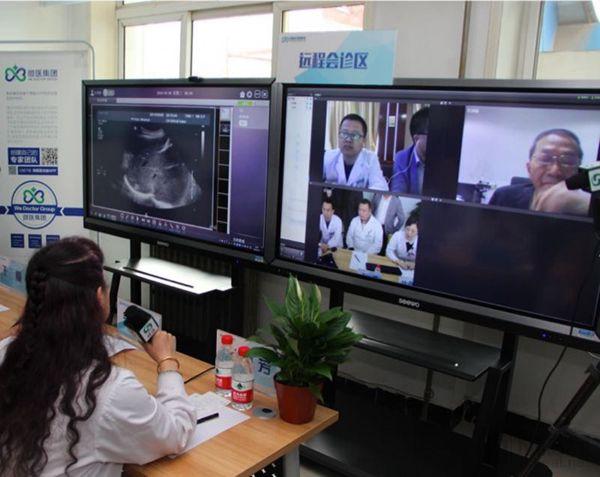
Gansu Internet Hospital Conducts Remote Consultations
Neither the implementation of internet hospitals nor the practice of tiered diagnosis and treatment is simply a matter of developing an app or building a new information system. From the perspective of internet industry professionals, the hallmark of a successful internet hospital is sustained business activity, which requires continuous user acquisition and activation, physician incentivization and support, as well as ongoing optimization and innovation of service offerings. Unlike traditional health IT companies, genuine internet hospital platforms embrace an operational mindset, wherein continuous investment and ongoing operations are essential components of their work.
Only a “package” solution that addresses primary healthcare issues can constitute an internet hospital and truly help medical institutions resolve their problems.
How Can Internet Hospitals Achieve Sustained Implementation? According to Dean Mi Denghai, Gansu Internet Hospital has successively established the Tumor Medical Center, Pediatric Medical Center, Rehabilitation Medical Center, and Nephrology Medical Center. It has also set up a big data center for Gansu Internet Hospital. Leveraging internet technology, the hospital has first built a four-tier system spanning provincial, municipal, county, and township levels, enabling internet-based resource sharing and mutual recognition of online electronic prescriptions. By utilizing big data, it aims to better serve the people across the province and gradually achieve interconnectivity with internet hospitals in other provinces and regions, thereby facilitating remote outpatient consultations.
Zhang Qunhua believes that the success or failure of an internet hospital hinges on its ability to provide continuous and efficient operational services. He stated that the development of an internet hospital should leverage a well-known public hospital within the region as a cornerstone, by deploying an integrated software-and-hardware internet hospital solution. This approach aims to strengthen connectivity among regional central hospitals, county- and township-level hospitals, primary healthcare centers, and pharmacies. By utilizing methods such as remote consultations, two-way referrals, online training, joint discipline development, and the construction of health and medical big data, it seeks to establish a regional medical consortium characterized by information interoperability, resource sharing, and collaborative operations.
“While building an internet hospital platform is certainly important, the ongoing operation and continuous system upgrades and optimization are of paramount importance,” said Zhang Qunhua in an interview.
Taking Huashan Hospital as an example, on April 20, 2017, after completing system integration with the Wuzhen Internet Hospital, Huashan Hospital Affiliated to Fudan University achieved a “major upgrade” in its online hospital services. On the same day, it conducted a remote consultation across six internet medical consortium platforms spanning five provinces and autonomous regions. Experts from Huashan Hospital successfully provided remote diagnoses for patients with complex conditions on the internet medical consortium platforms in four locations: Gansu, Guangxi, Yunnan, and Haikou.
Ma Xin, Vice President of Huashan Hospital, stated that through system interoperability, Huashan Hospital and WeDoctor have creatively explored a new model of “Internet + Medical Consortium,” achieving an upgrade to the traditional medical consortium framework. By leveraging online collaboration and online training, this approach aims to extend Huashan Hospital’s advantages in disciplines, talent, technology, and brand to primary healthcare institutions across China, thereby supporting the national implementation of tiered diagnosis and treatment as well as health-focused poverty alleviation.
Currently, cloud computing, big data, and artificial intelligence are gradually becoming new “infrastructure” for society and national strategies. Technologies represented by cloud computing have been widely applied in fields such as government services, transportation, and manufacturing, while their application in the healthcare sector is still in its early stages. In light of the potential for large-scale adoption in the future, establishing robust security assurance mechanisms for big data and cloud computing in the healthcare industry is particularly crucial.
Lin Hui, Dean of Guangxi Internet Hospital, believes that the most fundamental aspect of a hospital is management centered on medical safety and quality, which serves as both the starting point and the ultimate goal, with all other activities revolving around it. The same principle applies to the development and operation of internet hospitals.
In the view of Dr. Wang Shan, former president of Peking University People’s Hospital, the technological applications of internet hospitals are neither inherently public nor private; while hospitals prioritize security, it is not a major concern. Dr. Wang stated that cloud technology worldwide has already reached the required security levels for application and can significantly reduce costs for hospitals.
“Medical safety is the bottom line, and it must be supported by comprehensive safeguards that include both technology and institutional frameworks.” Introduced President Zhang Qunhua, Wuzhen Internet Hospital has been continuously participating in discussions on national standards for internet hospitals. From the outset, it prioritized medical safety and established a complete set of technical, procedural, and operational regulatory mechanisms. Currently, after more than two years of operation, the Wuzhen Internet Hospital platform serves an average of over 60,000 patients per day, with zero safety incidents reported to date.
“For Wuzhen Internet Hospital, from the very beginning, we have insisted on being anchored to physical medical institutions to carry out services such as follow-up consultations, multidisciplinary consultations, and chronic disease management. This serves as a fundamental guarantee for the quality and safety of healthcare provided by internet hospitals at the current stage,” stated Zhang Qunhua.
Public information indicates that, in terms of information security and computing power, WeDoctor has streamlined healthcare service processes for more than 2,700 key hospitals over the past seven years, achieving cloud-based hospital service windows; through eight major telemedicine support systems, it has launched internet hospitals in 19 provinces and municipalities across China, enabling cloud-based consultation rooms for 240,000 physicians; it has built a province-wide online diagnosis and treatment platform, achieving cloud-based provincial medical insurance payments; it has established a provincial population health information cloud platform, realizing cloud-based electronic medical records (EMR); and it has constructed 117 internet-based medical consortia, achieving cloud-based management of these consortia.
Cloud applications in the healthcare industry have established industry organizations to promote coordinated industrial development. On May 18 this year, China’s first national health and medical industry cloud platform, jointly built by public cloud and medical cloud providers, was launched. The platform was developed through a tripartite collaboration among the Family Health Professional Committee of the Chinese Society for Health Informatics and Medical Big Data, Tencent Cloud, and WeDoctor Cloud. It adopts cloud computing technologies and a microservices architecture, employing multiple measures to ensure data security and application security.
Zhang Xuegao, Director of the Statistical Information Center of the National Health Commission, once stated, “Policy promotion, guidance from industry associations, and participation by social forces such as internet healthcare enterprises help pool resources from multiple parties. This contributes to advancing informatization and the development of health and medical big data, fostering more excellent models of medical applications, and effectively improving industry efficiency.”