

Qiqi Health Files IPO Prospectus: Revolutionizing Hospital Wheelchair Management with IoT-Powered Shared Wheelchair Solutions
To facilitate medical access for patients with special needs, hospitals often provide “compassion wheelchairs” or wheelchair rental services. However, this charitable initiative can easily become a managerial burden. Some patients fail to return the wheelchairs after use, and even when they do, the wheelchairs are often severely damaged. For hospitals, wheelchair rental is a non-profit service typically managed by on-duty nurses. In the event of a missing wheelchair, these nurses must search the entire hospital premises, placing significant pressure on institutional management.
Even if hospitals have dedicated departments to manage wheelchair rentals, the subsequent recovery process far exceeds the scope of physicians’ responsibilities and may even lead to doctor-patient conflicts. A deputy head nurse from the outpatient office of a municipal central hospital stated, “A man in his thirties borrowed a wheelchair and left it carelessly; by the time we went to look for it, it was nowhere to be found. The patient refused to cooperate with the search, became physically aggressive toward the nurses, and forcibly snatched back his ID card. Ultimately, only through police mediation did he agree to compensate half of the cost.”
To address the aforementioned pain points, Qiqi Health has launched a wheelchair-sharing solution, leveraging advanced IoT technology to replace traditional manual management. This approach enables unmanned and intelligent wheelchair management, enhancing hospital service quality while alleviating the burden on medical staff. VCBeat (WeChat ID: vcbeat) conducted an interview and reported on this initiative.
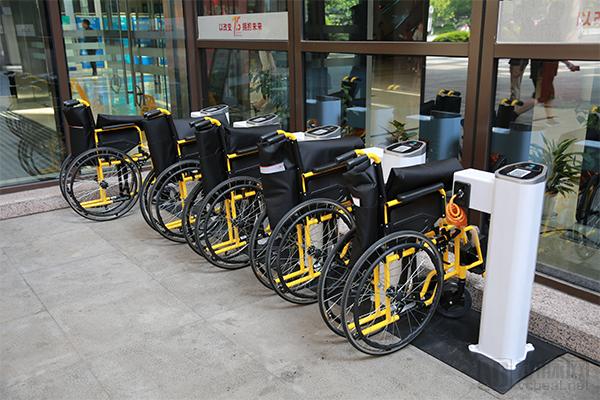
Qiqi Health’s wheelchair-sharing solution centers on shared docking stations, with its core equipment—the single-post docking station and accompanying locking mechanism—having obtained national patent certification.
The shared docking station is connected to the internet in real time and linked to the cloud, enabling timely tracking of wheelchair locations. Its accompanying latch is compatible with various wheelchair models. To rent a wheelchair, users simply scan the QR code on the dock using WeChat or Alipay and complete a few simple steps.
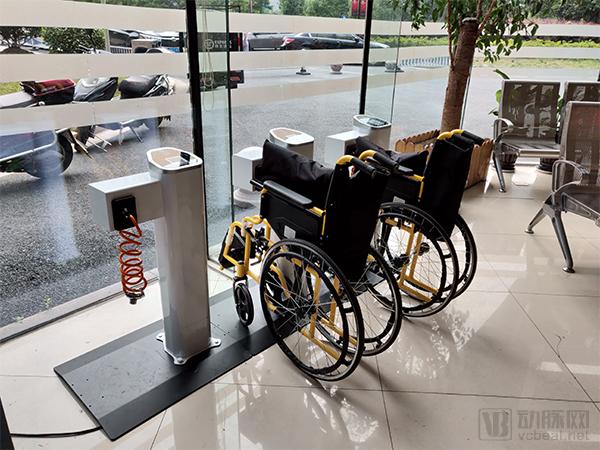
Qiqi Health informed VCBeat that hospital administrators have expressed strong support for the introduction of shared wheelchairs. For hospitals, the cost of deploying docking stations is low, yet it enhances service quality, reduces labor costs, and alleviates the burden on medical staff, bringing significant convenience to hospital operations. In the past, hospitals often faced issues with disorderly placed wheelchairs, resulting in a cluttered environment. In contrast, the shared docking stations are arranged in an aesthetically pleasing and rational manner, with wheelchairs securely fixed to them, thereby helping hospitals maintain a tidy environment. Furthermore, as the docking stations operate via QR code scanning for rentals, no manual assistance is required, enabling 24-hour rental services for patients.
The Qiqi Health team has years of experience in developing and operating shared rental platforms. Operators deploy shared wheelchairs in hospitals by purchasing docking stations and other related equipment. Qiqi Health’s shared wheelchairs support integration with multiple platforms, including Alipay, WeChat Official Accounts, and WeChat Mini Programs. Hospitals may also opt for direct procurement to independently manage the shared wheelchairs and flexibly adjust rental prices. Additionally, the shared wheelchairs can be linked to hospital patient cards, facilitating access for elderly individuals without smartphones and providing higher-quality, more convenient wheelchair services to patients visiting the hospital.
Under this operational model, the procurement and routine maintenance of wheelchairs are the responsibility of the operator or the hospital. Qiqi Health provides backend software cloud services to the operator on a paid basis, enabling the operator to directly utilize the full suite of software functionalities. The operator pays an annual platform service fee and communication data fee based on the number of shared docking stations and data usage.
The user’s experience with the wheelchair follows a subscription-based rental model, which allows operators or hospitals to deeply integrate the wheelchair rental process with official WeChat accounts. This integration enables targeted delivery of valuable information to specific users, thereby enhancing user stickiness and raising the operator’s brand awareness. Furthermore, the docking stations of shared wheelchair hubs possess inherent advertising value, allowing operators to display advertisements to targeted demographics through these stations.
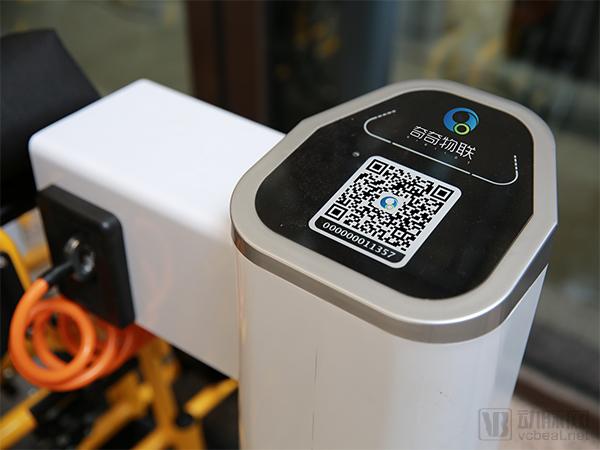
The Qiqi Health Shared Docking Station, designed by professional designers with a minimalist aesthetic, offers a highly modern look that enhances the overall image of hospitals. The docking station supports 220V mains power and features a leakage protection system, making it safer and more reliable than traditional battery-powered docking stations. Additionally, Qiqi Health’s unique soft-chain latch simplifies the locking process; users need only insert the latch easily into the strike plate.
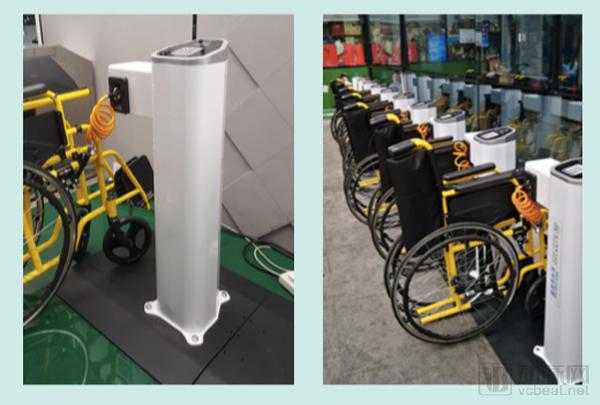
Currently, wheelchair rental services on the market require customized specialized wheelchairs. However, thanks to its proprietary soft-chain latch mechanism, Qiqi Health’s shared wheelchairs are compatible with various types of wheelchairs. Greater wheelchair selection means that the deployment of shared wheelchairs is not constrained by specific models, and this high level of compatibility is more favorable for operators. Hospitals or operating companies can procure suitable wheelchairs based on local conditions. Different wheelchairs can also be assigned varying deposit amounts and rental prices, providing users with greater flexibility and choice.
Currently, the Qiqi Health Shared Dock supports 2G/4G networks, with berths remaining online in real time. Wheelchairs are identified via electronic tags, enabling operators to perform remote control and fault detection.
Hangzhou Xingwoxing Network Co., Ltd., the parent company of Qiqi Health, was established in 2012 and pioneered QR code-based bike rental services in China in early 2014, dedicating itself to the promotion and operation of bike-sharing platforms. Its venture into shared wheelchairs can be viewed as another exploration in the “Internet of Things + Sharing” sector. Drawing on years of market experience, Qiqi Health believes that the sharing model is entirely viable for wheelchairs: patients have a demand for wheelchair rentals, while hospitals seek to improve the efficiency of wheelchair management.
Therefore, the introduction of shared wheelchairs serves as a highly valuable reference, demonstrating the efficiency gains brought about by the Internet of Things (IoT). Beyond shared wheelchairs, other medical devices and scenarios are poised to achieve seamless integration with IoT technology. This development holds significant positive implications for the sharing economy and, indeed, for the broader functioning of society.
As of now, Qiqi Health’s shared wheelchair service has been deployed in dozens of hospitals across four provincial-level regions: Beijing, Shanghai, Zhejiang, and Guangdong. Meanwhile, projects in other regions, including Chongqing, Chengdu, Shaanxi, and Hubei, are currently under negotiation.
Qiqi Health is also considering whether to deploy shared wheelchairs in non-hospital settings such as shopping malls and tourist attractions, so as to improve mobility for specific population groups.