

Yifeng Pharmacy Finalizes RMB 1.384 Billion Acquisition of 86.31% Stake in Xinxing Pharmacy, Marking the Largest Merger in China's Chain Pharmacy Sector
On the evening of June 22, Yifeng Pharmacy (600578) announced that it plans to acquire assets by issuing shares and paying cash. The target of the transaction is an 86.31% equity stake in Shijiazhuang Xinxing Pharmacy, with a transaction price of approximately RMB 1.384 billion. Prior to the disclosure of the transaction, Yifeng Pharmacy already held a 4.69% equity stake in Xinxing Pharmacy. Upon completion of the transaction, Yifeng Pharmacy will hold a 91% equity stake in Xinxing Pharmacy.
On April 17, Yifeng Pharmacy disclosed its intention to acquire Shijiazhuang Xinxing Pharmacy but did not reveal the transaction price or method. After more than two months of deliberation, the deal has finally been finalized, marking the largest merger and acquisition in the chain pharmacy industry to date.
VCBeat (WeChat ID: vcbeat) has found that, beyond Yifeng’s acquisition of Xinxiang, the retail pharmacy sector is undergoing a “capital feast.” Capital players—led by listed chain pharmacy leaders, pharmaceutical manufacturers, industrial capital, and cross-industry investors—are aggressively snapping up retail pharmacies, making them a highly coveted prize in the eyes of investors.
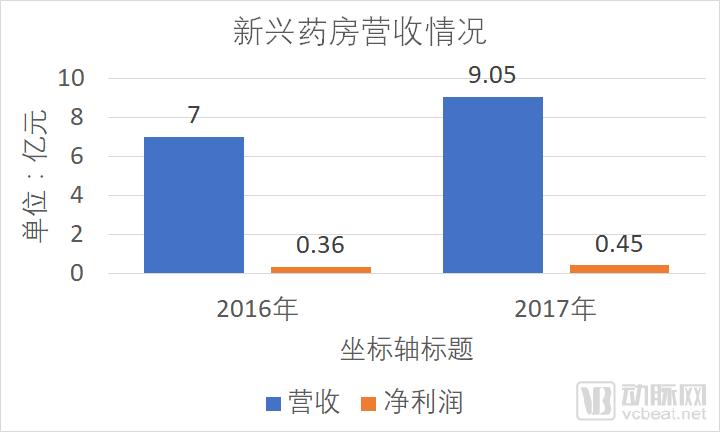
Since its establishment, Emerging Pharmacy has been dedicated to the direct-operated chain retail of Chinese and Western proprietary medicines, traditional Chinese medicine decoction pieces, health supplements, and medical devices. Currently, it operates over 460 directly managed stores in Hebei Province and Beijing, with sales revenue exceeding RMB 900 million in 2017.
Revenue Performance of Emerging Pharmacies
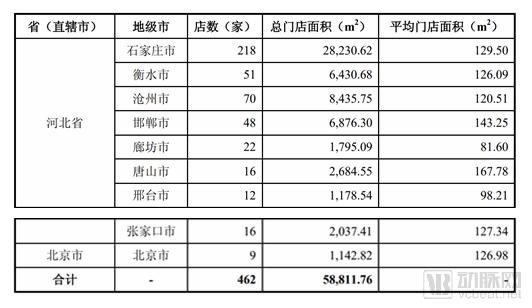
After years of development, XinXing Pharmacy has become a leading regional chain retailer in the pharmaceutical industry. XinXing Pharmacy’s stores are primarily concentrated in Hebei Province, including 218 in Shijiazhuang, 70 in Cangzhou, 51 in Hengshui, 48 in Handan, 22 in Langfang, 16 in Tangshan, 16 in Zhangjiakou, 12 in Xingtai, and 9 in Beijing.
Xinxing Pharmacy Store Distribution
Yifeng Pharmacy plans to acquire an 86.31% equity stake in Xinxing Pharmacy, held collectively by multiple individuals and corporate entities, through a combination of share issuance and cash payments. Specifically, it will acquire a 48.96% equity stake in Xinxing Pharmacy in cash and a 37.35% equity stake through the issuance of shares.
The announcement disclosed that, with March 31, 2018 as the valuation reference date, the assessed value of 100% equity interest in Xinxing Pharmacy was approximately RMB 1.6 billion. Prior to the transaction, Xinxing Pharmacy distributed profits amounting to RMB 26.2 million, resulting in a shareholders’ equity value of RMB 1.573 billion after ex-rights and ex-dividend adjustments.
Based on the aforementioned assessment results, and taking into account the strategic significance of the Target Company to Yifeng Pharmacy’s future development as well as the favorable synergies, the parties to the transaction have amicably agreed that the total consideration for 100% equity interest in the Target Company shall be RMB 1.603 billion, with the corresponding consideration for the 86.31% equity interest in Xinxing Pharmacy amounting to RMB 1.384 billion.
Yifeng Pharmacy believes that this transaction will help improve its regional layout; enhance bargaining power with upstream suppliers, achieve economies of scale, and reduce procurement costs; acquire high-quality store resources, and strengthen sustained profitability.
Prior to this transaction, as of March 31, 2018, Yifeng Pharmacy operated 2,328 stores (including 95 franchised stores). Its business operations were primarily concentrated in the Central-South and East China regions, covering Hunan Province, Hubei Province, Guangdong Province, Jiangsu Province, Shanghai, Zhejiang Province, and Jiangxi Province. Among these, there were 1,296 stores in the Central-South region and 1,032 stores in the East China region.
Upon completion of this transaction, the stores of Xinxing Pharmacy will be incorporated into Yifeng Pharmacy’s management scope, increasing Yifeng Pharmacy’s total number of stores to 2,790. Meanwhile, Hebei Province and Beijing will be included in the Company’s operational footprint, further expanding its business coverage to North China.
Upon completion of this transaction, Yifeng Pharmacy’s store network will cover the Central-South, East, and North China regions, significantly increasing its chain store ratio and market share. The company’s operational scale will further expand, thereby enhancing its overall competitiveness.
Meanwhile, Yifeng Pharmacy has seen a substantial increase in both the number of stores and the breadth of its geographic coverage, which will further expand the company’s sales scale and reach, effectively enhance its economies of scale, strengthen its bargaining power with upstream manufacturers, and reduce product procurement costs.
Xinxing Pharmacy has established stores in the core commercial districts of various cities in Hebei Province and Beijing. The location and layout of these stores align with Yifeng Pharmacy’s development and expansion strategies. Upon completion of this transaction, Yifeng Pharmacy can rapidly expand its presence in surrounding cities and channels based on Xinxing Pharmacy’s existing store network, further broadening its store coverage in the North China market, enhancing market concentration, increasing sales scale, and strengthening its sustainable operational capabilities.
Yifeng Pharmacy is one of the leading pharmaceutical retail chain enterprises in China. In its store layout, Yifeng Pharmacy provides comprehensive product offerings by opening large-format stores to meet consumers’ one-stop shopping needs and rapidly enhance its local brand influence. It also opens numerous small and medium-sized stores around these large-format stores to cater to consumers’ convenience needs. The “large-store model” is a key feature of Yifeng’s business strategy.
Following the rise of pharmaceutical e-commerce, Yifeng Pharmacy launched its online pharmaceutical business in 2013 and established an E-commerce Business Group in 2016. This group comprises divisions for B2C, O2O, CRM, and e-commerce technology, with a focus on CRM and big data to build an integrated online-offline pharmaceutical e-commerce operation.
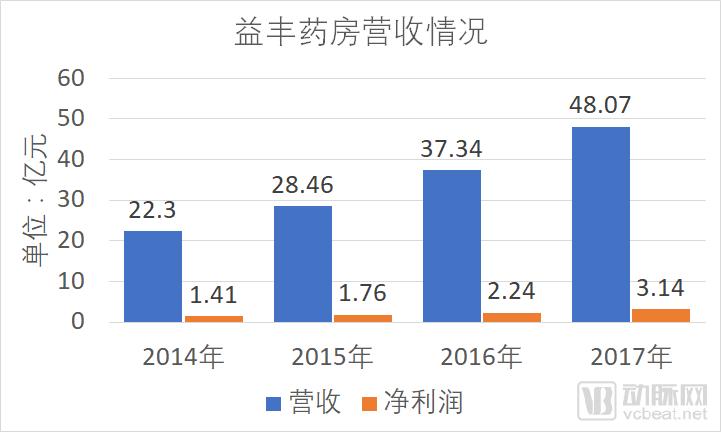
From a financial perspective, Yifeng Pharmacy has experienced rapid growth in revenue and net profit in recent years, leading the pharmaceutical retail industry.
Yifeng Pharmacy Revenue and Net Profit Data
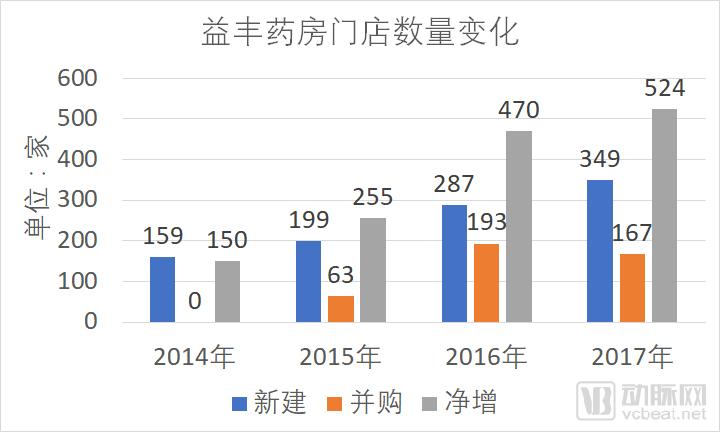
Since 2015, Yifeng has expanded its store network through a strategy of “new openings + acquisitions,” resulting in rapid growth in the number of stores. The company had 1,065 stores at the end of 2015, which increased to 1,535 in 2016 and further rose to 2,059 in 2017. In each of the past two years, it has achieved a net increase of nearly 500 stores annually.
Changes in the Number of Yifeng Pharmacy Stores
Yifeng Pharmacy stated that it will seize opportunities for industry consolidation and accelerate its expansion by adopting a dual strategy of opening new stores and pursuing mergers and acquisitions, thereby expanding its operational scale on the existing foundation.
In terms of regional layout, we will adhere to the development goal of “consolidating Central and South China and East China, and expanding across the national market.” We will first deepen our expansion and brand penetration in the Central and South China and East China markets, where we have already established a certain market presence, by intensifying our efforts, and then gradually develop markets in other provinces and municipalities.
In terms of management, Yifeng Pharmacy enhances its operational efficiency and customer satisfaction through store branding, professional services, product category management, and a refined, standardized, and informatized management model. Regarding business model innovation, in line with pharmaceutical industry policies and e-commerce development trends, Yifeng Pharmacy is accelerating the growth of its B2C pharmaceutical e-commerce business while prioritizing the development of its O2O pharmaceutical e-commerce operations.
Meanwhile, in accordance with global pharmacy development trends, we will actively pursue diversified business operations to foster the growth of the broader health and wellness category. By integrating offline and online channels, we will provide members with targeted health management services, including rehabilitation, healthcare, prevention, wellness, and nursing care. This strategy aims to drive sales growth across key health and wellness segments, such as health supplements, wellness tonics, products derived from ingredients that are both food and medicine, functional foods, maternal and infant products, functional daily necessities, and home physiotherapy devices.
In recent years, the pharmaceutical retail industry has seen a continuous stream of policy changes, presenting both opportunities and challenges. On one hand, the comprehensive reform of public hospitals, the accelerated separation of prescribing from dispensing, and the outflow of prescriptions have driven market growth. Meanwhile, the pharmaceutical retail sector has entered an era of “strict regulation,” with industry oversight becoming more scientific and routine.
According to the statistical bulletin issued by the China Food and Drug Administration, as of the end of November 2017, the chain store penetration rate of retail pharmacies in China had just exceeded 50%, whereas that in the United States was approximately 75%, indicating substantial room for growth. Meanwhile, data from the Ministry of Commerce’s Flash Report on the Circulation and Operation of the Healthcare Industry showed that in 2017, the market share of the seven leading national enterprises in the pharmaceutical retail sector was only 13.96%, while that of the 14 leading regional enterprises stood at approximately 8.31%. By comparison, China’s pharmaceutical retail industry has a relatively low chain store penetration rate, and industry consolidation along with the expansion of pharmacy chains represent long-term development trends.
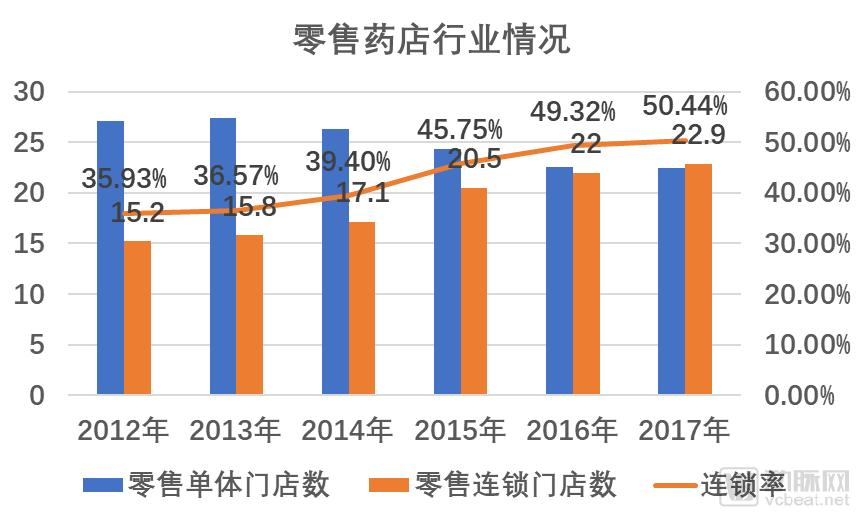
Low market concentration is driven by multiple factors, with stringent regulation and local protectionism being the primary causes. Before 2000, retail pharmacies in China were largely embedded within the traditional pharmaceutical distribution system, dominated by state-owned sales outlets. After 2000, the low-cost, large-scale supermarket model emerged, propelling the pharmaceutical retail sector into a phase of rapid market-oriented growth. Meanwhile, strict regulatory oversight and local protectionism have accompanied this development. As part of the healthcare sector, retail pharmacies are subject to supervision by multiple authorities, including health administrations, food and drug regulatory agencies, industry and commerce departments, and medical insurance bureaus. Cumbersome policies regarding taxation and administrative approvals have further hindered the cross-regional expansion of retail pharmacy chains.
Compared with single-store pharmacies, chain pharmacies possess greater advantages in terms of scale, capital, talent, management, and specialization. Therefore, under policy guidance, the trend toward chain-based and large-scale operations has become the norm for retail pharmacies in recent years.
As stated in the “Development Plan for the Pharmaceutical Distribution Industry (2016–2020),” the chain pharmacy rate was targeted to exceed 50% by 2020. Meanwhile, the increasingly stringent regulatory and industrial environments have made independent pharmacies and small-scale chains more willing to align with industry giants, with franchising or mergers and acquisitions becoming highly cost-effective options. These trends will further drive up industry concentration.
However, it should be noted that the number of retail pharmacies has basically approached saturation, reaching a ratio of 3,283 people per store. In developed countries, this figure stands at 2,500 people per store. Given China’s large population and concentrated residential patterns, the market is closer to saturation. This implies that opening new stores will not be the primary mode of entry into the retail pharmacy industry in the near future; instead, the industry will focus mainly on mergers, acquisitions, and consolidation.
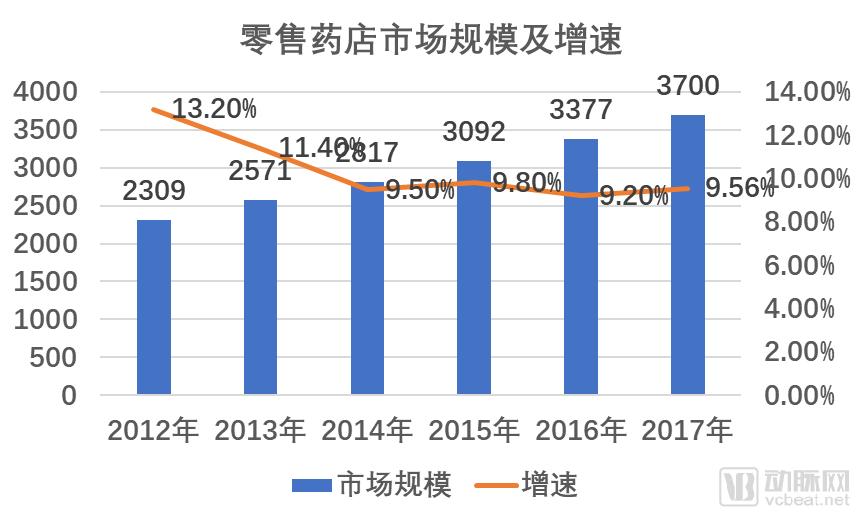
Notably, the outflow of prescriptions will create an incremental market worth over RMB 100 billion for the retail pharmacy sector, with retail pharmacies—particularly chain retailers—emerging as the primary beneficiaries. First, retail pharmacies possess a robust operational foundation, enabling them to systematically meet patient demand for medications and pharmaceutical care services. Second, the high coverage rate of retail pharmacies across China positions them as the preferred choice for residents purchasing medicines. Finally, supported by digital tools and prescription circulation platforms, the competitiveness of retail pharmacies is steadily strengthening.
Mergers and acquisitions (M&A) integration will be the dominant theme in the retail pharmacy industry for the foreseeable future, with numerous players taking turns to assume prominent roles. Industry insiders believe that capital’s optimism toward pharmaceutical retail stems primarily from three factors: First, pharmaceutical retail is not a high-barrier business model, making market entry relatively easy. Second, the concentration ratio of China’s pharmaceutical retail industry remains very low, and capital infusion can facilitate industry consolidation. Third, favorable policies are supporting the development of retail pharmacies, such as the relaxation of medical insurance qualification reviews and opportunities arising from prescription outflow under the separation of prescribing and dispensing. By entering the market early, investors can seize these opportunities and generate substantial returns.
In fact, capital participation in the mergers and acquisitions (M&A) and consolidation of the pharmaceutical retail industry has a long history. As early as 2004, Nepstar signed a $40 million investment agreement with Goldman Sachs, a globally renowned investment bank, becoming the first pharmaceutical retail enterprise in China to accept direct foreign investment.
In 2008, Capital Today injected RMB 200 million into Yifeng Pharmacy. Currently, Capital Today still holds approximately 21% of Yifeng Pharmacy’s shares, which, based on the company’s current market capitalization, are valued at over RMB 3 billion. This demonstrates that capital has been “bound” to the retail pharmacy sector for an extended period, yielding substantial returns.
According to VCBeat, there are roughly four types of capital players driving mergers and acquisitions in the retail pharmacy sector: listed chain pharmacy leaders such as Dashenlin, Yixintang, and Laobaixing; pharmaceutical manufacturers represented by Shenwei Pharmaceutical, Guangzhou Baiyunshan Pharmaceutical Holdings, and Tasly; professional investment firms including Hillhouse Capital, Huatai Capital, and Morgan Stanley-affiliated funds; as well as other cross-industry investors and spontaneous consolidations among small-scale chains.
It goes without saying that listed pharmaceutical retail enterprises have been aggressively expanding their market share. Take Yixintang, known as the “M&A maniac,” as an example: prior to its listing in April 2014, it operated more than 2,400 stores. Following its IPO, the company pursued multiple acquisitions, and by the third quarter of 2017, its store count had exceeded 5,000—more than doubling its pre-IPO footprint. While maintaining a strategic focus on Southwest China, Yixintang has extended its reach across the country.
Industrial capital has been actively involved in investing in pharmaceutical e-commerce companies; for instance, IDG Capital, SoftBank China, and Shengtai Investment have invested in Shanghai Pharma Cloud Health, while Tus-Holdings Venture Capital, Jiangsu Gaoke, and Changjiang Guohong have invested in Qilekang.
Currently, there are more than ten pharmaceutical retail enterprises with extensive national footprints in China, such as Guoda Drugstore, Yixintang, Laobaixing, Yifeng Pharmacy, and Dashenlin, whose pharmacy networks span the entire country. Regional leaders also exist in various areas, including Shandong Lijian, Hebei Xinxing Pharmacy, Henan Zhang Zhongjing, Hubei Tianji, and Sichuan Derentang. As the pace of mergers and acquisitions in the pharmaceutical retail industry accelerates, independent pharmacies and small-to-medium-sized chains will inevitably be absorbed to varying degrees. The national pharmaceutical retail landscape will evolve into a structure dominated by a few national giants alongside regional leaders, with mutual checks and balances between the national and regional key players.
Capital participation in mergers and acquisitions (M&A) and consolidation within the pharmaceutical retail sector will undoubtedly drive an increase in industry concentration in the short term. However, integration is merely the first step. For dealmakers, ensuring the thorough assimilation of integrated resources involves addressing a wide range of challenges, including clashes in corporate culture between different entities, power transitions between new leadership and incumbent executives, clarification of management structures, alignment of responsibilities, authority, and interests, and adjustments to business strategies. These issues require time to resolve, and a prolonged period of digestion is expected to follow this wave of consolidation.