

Global Medical Giants Including GE, Philips, Siemens, Johnson & Johnson, and United Imaging Strategically Expand in the $536.6B Digital Health Market
The clarion call of the global digital era has already sounded, and its momentum is stronger than ever.
Digital technologies such as big data, artificial intelligence, robotics, and VR/AR are impacting various industries, ranging from education and transportation to financial services and retail. According to authoritative statistics, by 2020, the value added by industries related to global digital transformation will reach $10 trillion. Furthermore, 67% of the Global 1000 companies and 50% of China’s Top 1000 enterprises will make digital transformation the strategic core of their businesses.
Compared with other industries, the digitalization process in the healthcare sector, though relatively slower, is catching up. The digital transformation of the healthcare industry has seen robust development in many developed countries in Europe and the United States. Driven by technological advancements and societal demands, the digital revolution in China’s healthcare field has also quietly begun.
During this year’s Two Sessions, Premier Li Keqiang repeatedly mentioned “digital healthcare.” Tencent Chairman Ma Huateng has also been actively discussing digital healthcare and has invested over a billion US dollars in related companies. At the China Medical Equipment Fair (CMEF) in recent years, reporters from VCBeat (WeChat ID: vcbeat) have observed that thousands of medical device manufacturers are promoting digital healthcare products, which will tangibly assist hospitals, physicians, and patients in practical applications.
Based on this, VCBeat has reviewed the current state and trends of digitalization in the medical device industry.
The Global Digital Health Market Size Will Reach 3.6 Trillion
According to Transparency Market Research, the global digital health market size reached $179.6 billion in 2016. At a compound annual growth rate (CAGR) of 13.4%, this market is projected to reach $536.6 billion (approximately RMB 3.6 trillion) by the end of 2025. In 2017, the digital health market size in North America reached $80.0286 billion.
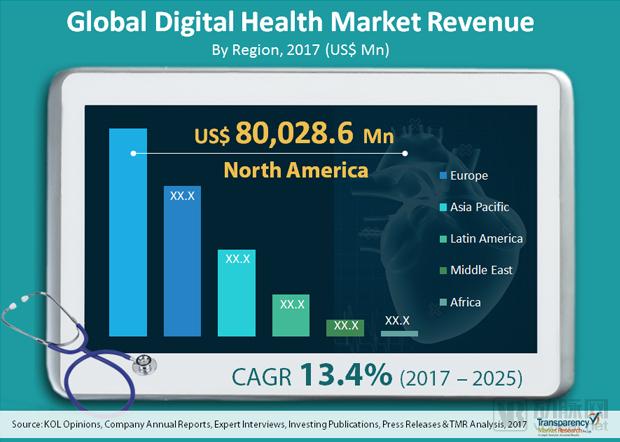
2017 Digital Health Growth in North America Was Strong (Source: TMR)
China, as a Country with a Large Population, digital healthcare boasts a vast market in China. According to a report by Boston Consulting Group, venture capital investment in China’s digital healthcare market amounted to approximately RMB 4.5 billion in 2014, with investments spanning areas such as pharmaceutical e-commerce, online doctor-patient communication services, and disease management applications. In the future, China’s digital healthcare market is poised for exponential growth,It is projected that by 2020, the market size of China’s digital healthcare industry will reach nearly RMB 700 billion.
Vigorously developing digital healthcare is a key strategic priority for China. Since the 18th National Congress of the Communist Party of China, the country’s medical and health sector has achieved certain progress; however, the entire healthcare system continues to face numerous challenges, including relatively scarce medical and health resources, strained doctor–patient relationships, an accelerating aging population, and a growing number of patients with chronic diseases.
Digital healthcare is one of the effective ways to alleviate these pressures. At the Two Sessions, Ma Huateng pointed out that digital technologies hold great promise in promoting balanced development, inclusive healthcare, and precision medicine. “Digital technologies such as mobile internet, big data, cloud computing, the Internet of Things, and artificial intelligence have effectively enhanced the informatization, networking, and intelligence levels of the health and medical industry.”
Digital healthcare is a new, modernized model of medical care that applies contemporary computer and information technologies to the entire healthcare process. It represents the developmental direction and management objective of public healthcare, with digital medical devices and their applications being evident across various fields.
Current Status of Digital Medical Equipment in China and Abroad
The digitization of healthcare begins with the digitization of medical devices.Digital medical equipment is the most critical foundational infrastructure in the construction of healthcare service systems and public health systems. It serves as a key enabler driving the evolution of medical diagnostic and therapeutic technologies toward early diagnosis, precise diagnosis, minimally invasive therapy, and precision treatment, and acts as the core engine catalyzing a new wave of health economy development.
Digital medical equipment refers to devices in which processes such as data acquisition, processing, storage, and transmission are all based on computer technology, enabling the equipment to independently store, process, and transmit the collected information. Medical devices operating under computer software have gradually replaced conventional equipment to become the mainstream in current clinical practice. Examples include high-end, high-value medical devices such as CT scanners, MRI systems, color Doppler ultrasound machines, and digital X-ray machines (DR), which provide physicians with medical imaging information.
Digital medical devices include high-end diagnostic equipment, therapeutic devices, and home-use wearable devices.According to a report by Transparency Market Research, the global digital medical device market is experiencing rapid growth. Notably, therapeutic devices have achieved a compound annual growth rate (CAGR) of 15.6%. The global market size for therapeutic medical devices is projected to reach $20.83 billion by 2025, significantly higher than the $590.8 million recorded in 2016.
In terms of technological innovation, the global digital medical device industry demonstrates high overall activity, with innovative products continuously emerging. In recent years, productDigital medical devices are increasingly trending toward miniaturization, integration, networking, and intelligence, with integrated fusion of multi-source diagnostic information and the convergence of minimally invasive, interventional, and precision therapies. The United States, Japan, and certain European countries have long held a leading position in the technology and industry of digital medical devices.
Compared with developed countries, China’s digital medical equipment—especially high-end digital medical devices—still exhibits significant gaps. The main manifestations include: heavy reliance on imported core components; product functionality and performance that do not yet adequately meet clinical needs; remaining disparities in product stability and reliability; and insufficient recognition of domestically produced equipment by clinical healthcare institutions.
In recent years, supported by national policies and driven by capital investment, China has achieved breakthroughs in core technologies for a range of digital medical devices. For instance, domestically developed CT scanners have broken the monopoly of foreign products in the Chinese market; magnetic resonance imaging (MRI) systems have successfully gained traction in the domestic market; and high-intensity focused ultrasound (HIFU) tumor treatment equipment has reached an internationally leading level and is being exported overseas.
# Riding the Policy Tailwinds, Domestic Digital Medical Equipment Soars
In recent years, the technological and industrial competitiveness of China’s medical device sector has improved significantly, with an average growth rate exceeding 20%. However, due to factors such as weak technological innovation capabilities, insufficient integration among industry, academia, research, and clinical application, incomplete innovation and industrial chains, inadequate policy support, and an imperfect application environment, China’s medical devices—particularly high-end digital diagnostic and therapeutic equipment such as advanced imaging diagnostics and large-scale treatment systems—remain technologically less competitive. High-end digital diagnostic and therapeutic equipment is still heavily reliant on imports, leaving national healthcare security vulnerable to external dependencies.
To break the long-standing monopoly of imported brands on high-end medical equipment in hospitals, dozens of policy documents have been issued by relevant national ministries and commissions since 2014 to encourage and support the development of the medical device industry. These policies provide substantial support across various dimensions, including policy frameworks, funding, talent acquisition, and technology. In particular, targeted support has been provided for the development of high-performance medical diagnostic and therapeutic products, such as medical imaging equipment and in vitro diagnostic (IVD) products, to promote the coordinated development of the upstream and downstream segments of the medical device industry chain.
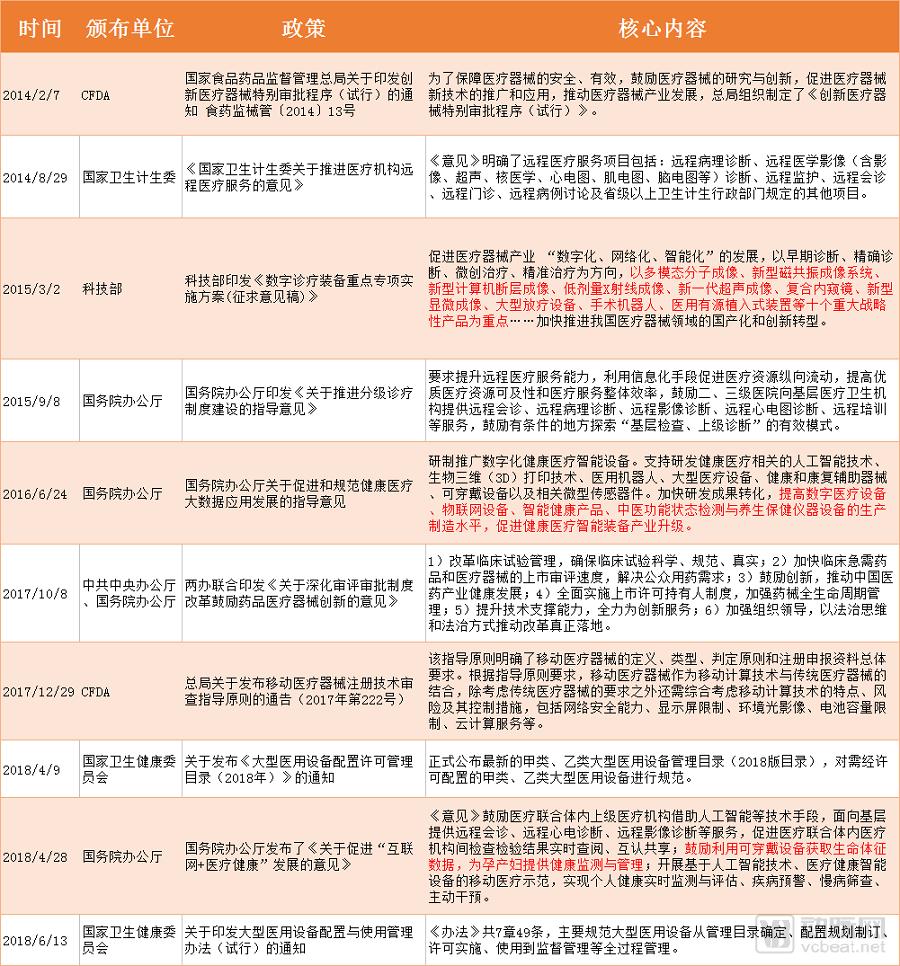
Major Policies Related to Digital Medical Equipment in Recent Years
In 2015, the Ministry of Science and Technology, in conjunction with the National Health and Family Planning Commission, the Ministry of Industry and Information Technology, the China Food and Drug Administration, the General Logistics Department’s Health Bureau, and other departments, jointly proposed the key R&D program project on “Research and Development of Digital Diagnostic and Therapeutic Equipment.” The special initiative focuses on early diagnosis, precise diagnosis, minimally invasive therapy, and precision treatment, prioritizing ten major strategic products—including multimodal molecular imaging systems and large-scale radiotherapy equipment—to promote the “digitalization, networking, and intelligentization” of China’s medical device industry.
In 2016, the number of projects launched under the “Research and Development of Digital Diagnostic and Therapeutic Equipment” initiative reached 70. On November 8, 2017, the China National Center for Biotechnology Development publicly announced support plans for three key special programs, including the “Research and Development of Digital Diagnostic and Therapeutic Equipment,” with multiple programs slated to receive RMB 210 million in central government funding. Among these, the “Research and Development of Digital Diagnostic and Therapeutic Equipment” program covered five projects, with a proposed central government allocation of RMB 88.33 million in support.
On June 24, 2016, the General Office of the State Council issued the Guiding Opinions on Promoting and Regulating the Application and Development of Health and Medical Big Data. The Opinions explicitly call for the development and promotion of digital intelligent health and medical devices. Support shall be provided for the research and development of artificial intelligence technologies related to health and medicine, biological three-dimensional (3D) printing technology, medical robots, large-scale medical equipment, health and rehabilitation assistive devices, wearable devices, and related micro-sensors; accelerate the conversion of research and development achievements, enhance the manufacturing standards of digital medical equipment, Internet of Things (IoT) devices, intelligent health products, and traditional Chinese medicine (TCM) functional status detection and wellness instruments, and promote the industrial upgrading of intelligent health and medical equipment.
On December 29, 2017, the China Food and Drug Administration (CFDA) formulated and promulgated the “Technical Review Guidelines for the Registration of Mobile Medical Devices,” which set forth general requirements for the definition, classification, determination principles, and registration submission materials for mobile medical devices.
On April 28, 2018, the General Office of the State Council issued the "Guiding Opinions on Promoting the Development of 'Internet + Healthcare'," encouraging upper-level medical institutions within medical consortia to leverage artificial intelligence and other technological means to provide remote consultation, remote electrocardiogram (ECG) diagnosis, and remote imaging diagnosis services to primary care facilities; encouraging the use of wearable devices to collect vital signs data for health monitoring and management of pregnant and postpartum women; and launching mobile healthcare demonstrations based on artificial intelligence technology and smart medical health devices to achieve real-time personal health monitoring and assessment, disease early warning, chronic disease screening, and proactive intervention.
This series of favorable policies has undoubtedly provided a powerful boost to the development of domestically produced high-end digital medical devices.
Global Medical Device Companies Strategize in Digital Health, Pursuing Differentiated Competition
Why Must Medical Devices Be Digitized?
On the one hand, healthcare institutions have a strong demand for intelligentization across the entire medical process, requiring digital medical equipment to assist physicians in their work.Meanwhile, the healthcare industry has accumulated a vast amount of data, yet the majority of it remains underutilized and unanalyzed.
Although the digitization of medical devices has been underway for a long time, data generated by many devices remain incompatible and unable to interconnect. This necessitates manual recording by healthcare professionals before integration into electronic health records, thereby impairing the efficiency of clinical consultations. According to a survey conducted by the Gary and Mary West Health Institute in the United States, more than half of nurses reported witnessing medical errors primarily caused by the lack of interoperability among medical devices.
Therefore, healthcare providers have put forward demands for the digitalization, intelligence, and networking of medical devices, hoping that medical equipment can be equipped with data transmission capabilities and integrated intoOn the EHR platform, this approach not only reduces medical errors but also improves efficiency.
On the other hand, digital transformation is also imperative for medical device manufacturers. To maintain absolute competitiveness in their respective markets, they are seeking ways to reinvent themselves as digital health companies. Driven by growing healthcare demands, economic pressures to reduce medical costs, and intense industry competition, profit margins for medical devices have been significantly threatened, forcing manufacturers to rethink their existing business models and create value for customers through innovative products and solutions.
How Can Medical Devices Be Digitized?
“Digitalization of Medical Devices”This concept encompasses the entire lifecycle of medical devices, including design, research and development, manufacturing, distribution, and use. It also involves the interaction and integration of various technologies and data during both clinical and home-based use of medical device products.
Digital technologies enable medical device companies to control costs, enhance patient care, and provide data support for business decision-making.For example, digital technologies (such as predictive analytics or patient monitoring features in devices) can help companies proactively identify quality issues and improve device performance. According to the FDA’s medical device recall reports from fiscal year 2003 to fiscal year 2012, the number of medical device recalls increased by 97% during this period.
In addition to digitally upgrading medical devices from a product perspective, medical device companies are also transforming their business models from the angles of processes, services, and stakeholders, focusing on providing comprehensive digital solutions for the construction of medical institutions and hospitals.
They leverage digital technologies such as the Internet, big data, and artificial intelligence to integrate advanced concepts and methodologies with industry characteristics and user needs.Transforming medical devices from “manufacturing” to “intelligent manufacturing” to seek breakthroughs and innovation in digital transformation.
Among these enterprises, the traditional “Big Three” foreign players—“GPS” (GE, Philips, and Siemens)—and the “Big Three” domestic players (United Imaging, Mindray, and Yuwell) have demonstrated the most outstanding performance. In recent years, they have launched multiple digital health products and solutions.
VCBeat’s analysis of the digital health operations of several core enterprises reveals that the implementation and application of digital healthcare solutions remain largely in their early stages. Their digitalization efforts primarily focus on the digital upgrading of products, medical equipment asset management (remote monitoring, upgrades, and maintenance), telemedicine, supply chain management, AI-assisted diagnosis, and digital operating room/laboratory solutions.
GE embarked on its dual-focused digital transformation journey as early as 2015, and today it is striving toward a “simple” yet challenging goal: to become the world’s largest digital industrial empire.
In an interview with Business Insider, GE Healthcare CEO John Flannery offered a bold and intriguing outlook: “Soon, we may start viewing medical devices, such as MRI or X-ray machines, as smartphones. In other words, the hardware itself will become less important than the software running on it. Consider the iPhone: its capabilities extend far beyond voice calls, text messaging, and photography. At its core, it delivers a suite of high-value-added functions through the integration of hardware and software. GE Healthcare’s business will follow the same trajectory.”
Digitalization is inseparable from the synergy between software and hardware. With a century-long heritage, GE has amassed formidable strength in the hardware domain through long-term accumulation. GE Healthcare alone invests approximately $1 billion annually in launching new hardware. Superior hardware serves as a solid foundation for advancing digitalization.
GE Healthcare is one of the business units with the most mature software operations. It boasts a team of 5,000 software engineers, accounting for 10% of its total workforce. By 2018, GE Healthcare will have invested over $500 million in the software sector.
John Flannery believes that software and hardware are not mutually exclusive; their integration can bring about qualitative change. If an imaging device can monitor a patient’s tumor, including its growth rate and degree of change, and intelligently analyze this data and information, physicians may be able to provide better medical diagnoses for patients.
GE Digital Health is positioned to center on assets, leveraging data collection and utilization across the entire industry chain to help hospitals enhance performance-based asset management, precise diagnosis of critical diseases, and overall capability development.
To this end, the company has launched three flagship products—Asset Cloud Manager, Cloud Imaging Solution, and Cloud ECG Solution—focusing respectively on asset operation management, clinical diagnosis for patients, and hospital capacity building, thereby comprehensively demonstrating its spirit of self-renewal and digital strategy.
Asset Cloud Manager:ThisThis is GE Healthcare’s first digital project implemented in China and the first cloud-based medical equipment management application developed by GE’s China team. By monitoring and analyzing equipment data, it leverages remote connectivity to enhance equipment efficiency, thereby improving the overall operational efficiency of hospital equipment maintenance.
Leveraging GE Healthcare’s leading Asset Cloud Manager platform, hospitals can achieve real-time equipment monitoring and dynamic information updates. Equipment warranty services can be managed via the WeChat platform, with tasks prioritized by urgency to facilitate efficient staff allocation. Additionally, real-time queries into equipment usage and maintenance status enable coordinated resource allocation, maximizing resource utilization.
More importantly, leveraging the extensive data accumulated on the system, Asset Cloud Manager can perform intelligent analysis and provide predictive insights into equipment usage conditions. In the past, hospitals typically adopted a reactive maintenance approach, repairing equipment only after failures occurred, which severely disrupted normal hospital operations. Today, by harnessing artificial intelligence and big data analytics, hospitals can shift to a proactive strategy, preventing issues before they arise, thereby enhancing maintenance and quality control efforts and facilitating more effective budget planning.
It is reported that since its initial launch in late June last year, the Asset Cloud Manager platform has been deployed in over 100 hospitals across China, including not only large Grade III Class A hospitals but also secondary and primary care institutions. Currently, the platform manages more than 80,000 medical devices, with total assets under management reaching RMB 8.8 billion.
Cloud Imaging Solution:A patient-centric collaborative platform that coordinates medical resources across different regions, institutions, specialties, and care pathways, enhancing healthcare services through advanced radiology workflows, sophisticated imaging diagnostic tools, intelligent reporting tools, and a multidimensional collaboration system.
GE’s cloud-based imaging solution delivers advanced capabilities for collaborative radiological diagnosis and shared access to examination equipment. It enables physicians to view, process, and share medical images from the cloud regardless of their location, facilitating remote expert collaboration for image interpretation and multidisciplinary consultations. This approach helps reduce redundant examinations while enhancing diagnostic efficiency and accuracy.
Cloud ECG Solution:Cardiovascular disease represents a major health challenge currently facing China, making prevention and control efforts an urgent priority. To ensure the precision, intelligence, and traceability of electrocardiogram (ECG) data, this solution establishes a regional ECG network connecting tertiary hospitals with primary care institutions. It enables standardized ECG data acquisition, AI-driven analysis and predictive assessment, and cloud-based remote diagnosis and treatment, thereby allowing patients to access cardiac diagnostic services from large Grade 3A hospitals locally.
Asset Cloud Manager, Cloud Imaging Solution, and Cloud ECG Solution perfectly illustrate the three dimensions of GE HealthCare’s digitalization. Additionally, at this year’s CMEF, GE HealthCare showcased 16 products spanning CT, MRI, nuclear medicine, digital X-ray (DXR), mobile C-arms, ultrasound, patient monitoring, as well as digital applications and solutions.
It is evident that digitalization has become an integral part of GE HealthCare’s corporate DNA. GE HealthCare stated that the company will continue to pursue further initiatives in the future, such as developing big data platforms, promoting standardization of data collection, and enabling data interoperability, thereby fully committing to its digital transformation.
In 2018, Philips championed the cause of artificial intelligence, showcasing integrated solutions that apply AI technologies across four key specialty areas: chest pain centers, stroke centers, oncology, sleep-disordered breathing, patient monitoring, and maternal and infant care.
Philips also unveiled a series of products and solutions featuring artificial intelligence (AI) capabilities for the first time, including:
MR Ingenia 3.0T CX intelligent MRI, Prodiva 1.5T all-digital MRI, UNIQ 2.0 X-ray equipment featuring Blue Dose technology, the new Affiniti 30 high-definition general-purpose ultrasound diagnostic system powered by the efficient and intelligent “Sharp Intelligence Platform,” the next-generation high-end dynamic flat-panel gastrointestinal fluoroscopy system CombiDiagnost R90, the new high-end floor-standing wireless DR DuraDiagnost F30 digital radiography system, new smart ICU solutions, patient-centric ward monitoring solutions, and the Dream Family solution for patients with obstructive sleep apnea (OSA).
Notably, the IQon Spectral CT iPatient AI Platform deserves mention. As a patient-centric intelligent scanning platform, the all-new Philips CT iPatient AI Platform achieves breakthroughs in three key areas: intelligent engine, intelligent recognition, and knowledge demonstration.
The intelligent engine eliminates the need to manually set scanning parameters; users only need to specify image requirements, and the engine will automatically match all scanning conditions. It features automatic anatomical region recognition and positioning, automatic matching and linking of different sequences after supplementary scanning, and automatic identification of abnormal physiological signals. The knowledge deduction system incorporates multiple learning modes within the scanning platform, enabling knowledge-based reasoning throughout the scanning process.
In fact, Philips’ digital transformation extends beyond the digitization of its products to encompass the entire medical device supply chain, including remote equipment upgrades and predictive maintenance.
Remote UpgradeThis has long been a standard feature in smartphones but has only recently been adopted by medical device companies. Philips has begun remotely upgrading its new diagnostic machines, much like Apple does for the iPhone. Product teams automatically schedule and push software updates, while integrating maintenance software revision records through ERP systems. This approach minimizes system downtime, as updates can be executed within hours, ensuring that the latest software revisions are maintained to enhance performance, compliance, and security, while also reducing travel requirements and workload for internal field engineers.
Predictive MaintenanceThis refers to service events that are triggered by a careful analysis of system data using data analytics algorithms, thereby activating before any major issues arise. These predictive alerts indicate that critical system and/or environmental parameters have exceeded specifications. Philips remotely diagnoses the issue and, where possible, resolves it remotely. Otherwise, a field service engineer will be dispatched to provide guidance, and parts will be required for a single repair. This approach helps proactively address system deviations and preempt failures, avoiding system downtime, customer disruption, and associated costs.
It is reported that Philips can now remotely identify imaging system errors, diagnose the causes, troubleshoot, and perform repairs, helping multiple partner hospitals reduce downtime to 0.1%.
"In the long run, Philips is redesigning the medical device supply chain by leveraging digitalization to provide value-added services to healthcare institutions."
As an industry-leading medical technology company, Siemens Healthineers has always regarded “realizing digital healthcare” as one of its core value commitments. The company covers the entire spectrum from the generation and collection of medical data to the aggregation of such data to achieve transparency, operational interoperability, and knowledge sharing. Furthermore, it integrates artificial intelligence technologies into the analysis and implementation phases to further streamline user experience and enhance change management support.
In May 2017, Siemens Healthineers launched teamplay, an imaging big data platform, to enhance the diagnostic capabilities of radiologists in primary care hospitals. The platform helps healthcare institutions rapidly and efficiently collect and analyze the vast amounts of data generated by imaging equipment, thereby optimizing operational efficiency and improving clinical and financial performance.
Cloud-based applications enable real-time monitoring of hospital imaging equipment utilization and patient wait times, thereby enhancing radiology department management efficiency. Additionally, the platform supports dose management by providing timely alerts for patients whose radiation exposure is approaching or exceeding established safety standards.
More importantly, given the complexity of adjusting parameters for equipment such as CT and MRI scanners, many physicians lack the expertise to optimize these settings, resulting in underutilization of the devices. Teamplay addresses this challenge by standardizing scanning protocols, enabling experts to remotely configure equipment to optimal parameters for patients, thereby enhancing the diagnostic imaging capabilities of county-level hospitals.
Meanwhile, the platform also facilitates interaction between general practitioners and specialists. For complex conditions, it establishes a communication channel via remote services with experienced physicians at tertiary hospitals, providing professional guidance and diagnostic recommendations to primary care doctors at grassroots medical institutions.
In December 2017, Siemens Healthineers joined hands with Chinese internet giant Tencent to sign a strategic cooperation memorandum on the “AI-Powered Innovative Healthcare Platform.” Guided by the “Healthy China 2030” strategy, both parties are committed to jointly advancing the development and application of medical big data and artificial intelligence in medical diagnosis, thereby enhancing diagnostic capabilities across healthcare institutions at all levels.
At this year’s CMEF Spring Expo, Siemens Healthineers unveiled more than 30 new products, with digital healthcare solutions as its primary showcase. Featured exhibits included the 7T MAGNETOM Terra magnetic resonance imaging system, the ARTIS pheno angiography system, the SOMATOM Force CT scanner, and the ACUSON Oxana 2ABVS ultrasound system.
Additionally, Siemens Healthineers’ integration of multidisciplinary intelligent laboratory solutions represents a significant endeavor in its digital transformation.
Developed as a solution to address fluctuating workloads and the evolving needs of expanding clinical laboratories, it combines superior performance, adaptability, and intelligent technology with Siemens Healthineers’ unique expertise in automated workflow processes. This integration provides laboratories with scalable business optimization capabilities, enabling operations of all sizes to adapt to changing demands and achieve optimal productivity.
Johnson & Johnson is a U.S.-based multinational corporation founded in 1886, specializing in medical devices, pharmaceuticals, and packaged consumer goods. In recent years, the company has reinvented itself as an innovator in medical technology, digitizing its products to improve patient outcomes.
Digital Tools:Johnson & Johnson has launched several digital tools, leveraging its clinical expertise and technological capabilities to enhance the quality and accessibility of healthcare services.
For example, RA-RA (Remote Assessment of Rheumatoid Arthritis) is a mobile app that pairs with wearable devices such as Fitbit to collect user behavior and health data, including heart rate, sleep duration, and daily joint pain severity, thereby helping physicians better understand patients’ disease status and the effectiveness of pharmacological treatments. Reveal is another mobile app designed to help patients with diabetes easily monitor and manage their blood glucose levels. Integrated with Johnson & Johnson’s one-touch blood glucose meter, the app tracks patients’ blood glucose levels, facilitates observation of data trends, and enables data sharing with physicians.
Surgical Robot:Johnson & Johnson’s other exciting initiative is surgical robotics.
Verb Surgical is a joint venture established by Johnson & Johnson and Google Verily in 2015, with the aim of developing better and more affordable surgical robots. The CEO of Verb Surgical stated, “There are 100,000 to 200,000 surgeries performed annually, yet only 5% are conducted using robotic systems. We believe this figure should be 75–90%.”
Currently, most robotic surgeries are performed using the da Vinci system, a machine composed of large, precise robotic arms controlled by surgeons. However, Verb Surgical aims to go beyond hardware; its goal is to become a digital surgery platform. To achieve this, the company will leverage five core technological pillars—robotics, visualization, advanced instrumentation, data analytics, and connectivity—and harness vast amounts of data to help surgeons make highly informed, rapid, and accurate decisions.
Verb Surgical states that this digital surgical platform will represent the next phase of surgery, namely Innovative Surgery 4.0.
Internet of Things:Johnson & Johnson is applying IoT to internal product manufacturing and distribution, as well as to interactions between its products and external patients.
First, IoT technology is leveraged to track products across the entire supply chain, from manufacturing and distribution to hospitals. For Johnson & Johnson, access to real-time information facilitates improved inventory management, more accurate product demand forecasting, and better-informed manufacturing decisions.
Furthermore, by monitoring the entire product lifecycle, it is possible to clearly determine the product’s location and whether it is being maintained correctly. In addition, the automated monitoring processes enabled by smart sensors provide end-to-end visibility, helping distributors and hospitals improve operational efficiency and accuracy.
Secondly, sensors can be embedded in certain medical products, such as artificial joints or contact lenses, to obtain real-time data on patients’ health conditions. This not only facilitates postoperative monitoring of patients’ health and recovery but also helps gather feedback from the patient end to aid future product development.
Artificial Intelligence:In the digital age, Johnson & Johnson leverages artificial intelligence and its expertise to continuously create breakthrough drugs and surgical solutions.
In 2018, United Imaging Healthcare launched a total of three intelligent medical imaging devices and ten intelligent diagnostic applications.
The three intelligent imaging devices are the Intelligent SkyEye CT, the Intelligent LightShuttle 1.5T MRI, and the Intelligent Digital PET-CT. AI empowers the entire line of imaging equipment to enable intelligent data acquisition and processing. With just a single press, the device automatically completes complex scanning procedures, including patient registration, positioning, and parameter adjustment. Furthermore, by leveraging intelligent algorithms, the system reduces hardware requirements and scanning radiation dose while ensuring ultra-high image quality.
In the intelligent diagnostics sector, the addition of two renowned experts, Shen Dinggang and Zhou Xiang, has enabled United Imaging to achieve remarkable progress in medical artificial intelligence. Currently, its 10 intelligent diagnostic applications are tailored to different clinical scenarios and address pressing healthcare challenges. These applications cover a variety of diseases and conditions, including lung cancer, breast cancer, rib fractures, osteoarthritis, and coronary artery stenosis, utilizing imaging modalities such as CT, PET-CT, MR, and DR.
What has drawn the most attention from the industry is its independently developed, cross-product-line, open-architecture artificial intelligence platform—uAI. United Imaging aims to leverage this platform to empower its imaging and radiotherapy equipment as well as the uCloud United Imaging Smart Healthcare Cloud, thereby enabling physicians to deliver efficient and precise diagnosis and treatment.
It was revealed that United Imaging Intelligence has currently launched 16 joint research projects with 15 scientific research institutions, including Zhongshan Hospital Fudan University and Huashan Hospital Fudan University. The projects cover a range of diseases such as hepatocellular carcinoma, glioma, Parkinson’s disease, stroke, and bone tumors, jointly exploring the limitless possibilities of artificial intelligence in healthcare.
Over the past few years, United Imaging has broken the decades-long monopoly held by foreign companies through its independent research, development, and manufacturing of high-end medical equipment. Industry analysts suggest that as China gradually transitions into an aging society and imaging equipment is frequently subjected to excessive use, the medical imaging industry is expected to maintain a high growth rate.
In addition to United Imaging, leading domestic medical device manufacturers such as Mindray, Shinva Medical, Edan, and Neusoft are all advancing their strategies in medical digitalization. Mindray has been committed to building itself into a global powerhouse in the medical equipment industry. Its product portfolio spans four major sectors: patient monitoring and life support, in-vitro diagnostics and reagents, digital medical ultrasound imaging, and clinical information systems, with sales extending to more than 190 countries and regions worldwide.
As early as 2009, Mindray launched integrated solutions for digital operating rooms and ICUs. In 2018, Mindray showcased its new series of professional surgical lights, tables, and ceiling pendants, along with comprehensive digital operating room/ICU equipment integration solutions, at the Spring CMEF, where it also unveiled its new product—the intelligent high-end obstetric and gynecologic ultrasound system, Resona 8 Nuwa.
Digital Health Will Have a Major Impact on the Industry in the Next Decade
As an increasing number of device manufacturers enter the digital health arena, the digital transformation of medical devices has become unstoppable. In the future, digital health will exert a significant impact on the medical device industry and even the entire healthcare sector.
Representatives of Xinhua Medical believe that, in the future, computer and information technologies will be increasingly integrated into the research, development, production, and manufacturing of medical devices. Traditional medical equipment that is standalone and incompatible with informatization will gradually be phased out of the market.
Dai Ying, Chief Marketing Officer of GE Healthcare’s Greater China region, noted that by 2020, approximately 50 billion machines would be connected to the internet, scaling everything up to an industrial level. This entails larger machines, bigger business, greater challenges, and more significant opportunities. By 2030, this trend is projected to drive a $15 trillion increase in global GDP through enhanced productivity.
Xue Min, Chairman and CEO of United Imaging Healthcare, also stated: “For the medical device industry, the most significant change brought about by digital health is the digitization and networking of medical equipment. Just as smartphones, powered by the internet and big data, have transformed how people communicate, travel, and shop, digital health will usher in a profound transformation in healthcare delivery models and reshape the industrial value chain system.”
The medical device industry also faces numerous challenges in the process of digital transformation, such as issues related to safety, user experience, and return on investment.Duan Xiaoying, Senior Vice President of GE Worldwide and President and CEO of GE Chinastated: “In the process of advancing digitalization, the greatest challenge lies not in technological means, but in transforming business models, traditional usage patterns, and mindsets.”
Changing traditional usage patterns and mindsets is akin to introducing mobile phones to people who have never used them before; adopting a mobile phone for the first time inevitably requires a shift in habits. Similarly, in the industrial sector, many processes undergo reengineering, which drives significant changes in user behavior. Promoting digitalization is not merely a matter of deploying digital solutions; it necessitates the reengineering of the underlying processes themselves.
However, despite the numerous challenges, we remain optimistic about the digitalization of healthcare and believe that the medical industry will continue to improve.