

Digital Hospitals in China: Patient-Centric Transformation Led by Eastern Region
The emergence of digital hospitals has brought about profound changes to traditional healthcare practices.
In some countries in the United States, Europe, and Asia, digital hospitals have entered a substantive phase; digital hospital initiatives are also underway in China, such as the promotion and application of the “Military Project No. 1.” Experts predict that the next 5 to 10 years will be a period of significant development for digital hospitals.
How significant is the gap between traditional hospitals and digital hospitals? What are the defining characteristics of a digital hospital? Which companies are focusing on providing solutions for digital hospitals?
To this end, VCBeat (WeChat ID: vcbeat) has reviewed the development of digital hospitals in China and compiled a list of more than 50 companies providing digital hospital solutions, with the aim of addressing these questions.
Digital hospitals benefit all stakeholders in the healthcare industry, prompting the Chinese government to vigorously advance their development. On March 6, 2015, the General Office of the State Council issued the Outline Plan for the National Medical and Health Service System (2015–2020). The document pointed out that the rapid advancement of information technologies—such as cloud computing, the Internet of Things (IoT), mobile internet, and big data—has created favorable conditions for optimizing medical and health service processes and improving service efficiency, which will inevitably drive profound transformations in both service delivery and management models within the healthcare sector.
In January 2018, the National Health and Family Planning Commission and the State Administration of Traditional Chinese Medicine issued the “Notice on Printing and Distributing the Action Plan for Further Improving Medical Services (2018–2020),” deploying initiatives to enhance medical services over the following three years. The plan emphasizes consolidating effective measures while innovating healthcare service models, putting forward many highly anticipated requirements and objectives. It advocates a patient-centered approach, promotes multidisciplinary diagnosis and treatment models, and leverages “Internet Plus” technologies to build smart hospitals. Developing smart hospitals with Chinese characteristics has become an inevitable trend, marking the entry of Chinese hospitals into a new stage of digital hospital development.
In recent years, with the deepening of healthcare reform, information technology construction has undergone significant changes in the process of building digital hospitals, gradually shifting from being an "assistant" to hospital operations to becoming a "leader." Hospital development has shifted its focus from "construction" to "management," and hospitals have also leveraged information technology to transition from "extensive" management to "refined" management.
From the perspective of a hospital’s overall business architecture, informatization aims to enhance service efficiency, reduce medical errors, control healthcare costs, and improve the patient care experience; from an operational standpoint, it seeks to achieve high efficiency, low cost, and zero errors; and from a service perspective, it strives to facilitate access to care, ensure patient satisfaction, and eliminate doctor-patient disputes.
From a management perspective, this encompasses five key areas: patient relationship management centered on the patient, clinical management anchored in electronic medical records (EMR), resource management aimed at ensuring hospital operational support, charge management based on the execution of medical orders, and service management oriented toward organizational coordination.
In China, the term “digital hospital” first appeared in the 1990s, and the concept of a digital hospital was proposed in 2001.
Abroad, the term “digital hospital” generally carries two meanings: one refers to virtual network hospitals, cyber hospitals, silicon hospitals, virtual hospitals, and the like; the other denotes what is referred to in China as a physical hospital with a high degree of digitalization and intelligence, closely associated with hospital informatization.
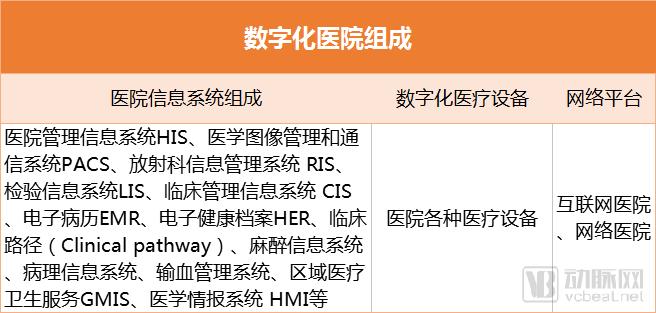
According to the definition of a digital hospital on Baidu Baike, a digital hospital system is an integrated information system comprising three components: hospital business software, digital medical equipment, and network platforms. The digital hospital initiative helps hospitals achieve resource integration and process optimization, reduce operational costs, and improve service quality, work efficiency, and management standards.
A digital hospital in the narrow sense refers to the use of information technologies, such as computers and digital communication networks, to achieve the digital acquisition, storage, reading, replication, processing, retrieval, and transmission of information including voice, images, text, data, and charts. This encompasses the digitization of medical equipment, Hospital Information Systems (HIS), Picture Archiving and Communication Systems (PACS), and Office Automation (OA) systems. Its characteristics include paperless operations, filmless imaging, and wireless networking.
Broadly defined, a digital hospital is built upon the development of computer network technologies. By applying information technologies such as computers, telecommunications, multimedia, and networking, it breaks through the temporal and spatial constraints of traditional medical models, achieving automated and digital operations in business management (including disease prevention, healthcare, diagnosis and treatment, and nursing) as well as administrative management. This entails comprehensive digitization, encompassing Online Transaction Processing (OLTP) systems, Hospital Information Systems (HIS), Clinical Information Systems (CIS), Online Analytical Processing (OLAP) systems, Intranet/Internet systems, Telemedicine systems, and Intelligent Building Management Systems. Its key characteristics are: full networking (comprehensive, high-performance networking across multiple systems), all-around coverage (covering medical care, education, and research), and full connectivity (comprehensive interconnectivity among hospitals, society, banks, communities, and families).
Who are the beneficiaries of implementing digital hospitals, and what benefits have they gained? From the perspective of hospital stakeholders, there are healthcare service providers (hospitals) and demand-side users (patients).
For patients, digital hospitals effectively resolve the "three longs and one short" issue, creating a more comfortable and patient-centered care environment; enabling greater transparency in costs and enhancing informed consent; providing more comprehensive information for more accurate diagnosis and treatment; and offering diversified services that are more accessible and user-friendly.
For physicians, the most significant changes include paperless and filmless medical workflows, rapid information transmission, and more timely diagnoses. Comprehensive electronic medical records help doctors understand patient history, perform comparative analyses, and support diagnostic decision-making. The application of various clinical diagnostic tools enhances diagnostic accuracy. A medication knowledge base assists physicians in prescribing rationally and automatically identifies drug incompatibilities. Mobile office capabilities bridge the gap between doctors and patients, effectively reducing medical errors and minimizing medical accidents.
For hospital administrators, digital hospitals break through temporal and spatial constraints, enabling real-time access to medical and operational status anytime and anywhere. Refined management effectively controls costs, plugs loopholes, and optimizes resource allocation. Functional departments and hospital leadership can monitor medical quality and care processes. Data warehousing and data mining technologies provide support for executive decision-making.
Thus, it is evident that digital hospitals have undergone transformations in medical service delivery models, clinical workflows, hospital management paradigms, telemedicine frameworks, operational models, and integrated approaches to medical practice, education, and research. Naturally, these changes represent a positive shift toward the outcomes desired by society.
So, how should digital hospitals be evaluated? In the policy issued in the second half of 2011 by the Hospital Management Institute of the Ministry of Health, seven levels of maturity for assessing digital hospitals were mentioned:
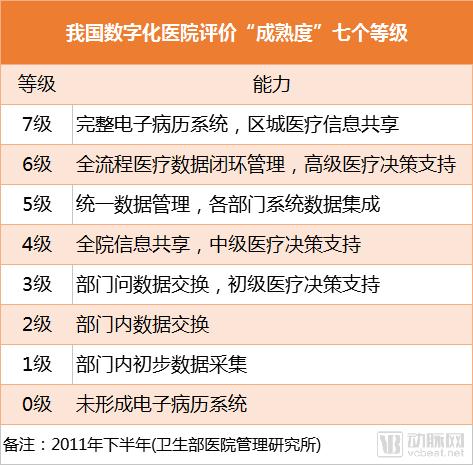
Moreover, corresponding detailed evaluation criteria have been successively introduced across China, such as in Sichuan Province and Henan Province. Taking Henan Province as an example, the Health and Family Planning Commission of Henan Province conducted an assessment of hospital informatization development for all secondary and tertiary hospitals in the province. This initiative comprehensively evaluated the level of informatization construction in these hospitals, helped them identify deficiencies and pursue continuous improvement, and thereby advanced the development of health informatization throughout Henan Province.
It is explicitly clarified that the construction of digital hospitals is not a superficial project that increases the burden on hospitals, but rather an essential means to ensure medical safety, standardize medical services, improve work efficiency, and implement refined management, constituting one of the core competencies of a hospital. The objective is to unify standards for standardized construction, promote emphasis on evaluation-driven development, provide guidance to avoid detours, and advance comprehensive implementation through pilot initiatives.
To this end, specific measures have been introduced:
(1) Establish expert organizations and share successful experiences: Established an Expert Advisory Committee for Digital Hospital Construction and a pool of experts in digital hospital construction; organized training courses on digital hospital construction and conducted training on evaluation standards.
(2) Pooling collective wisdom to issue guidelines and standards: Compiling the "Guidelines for the Construction of Digital Hospitals in Henan Province" and issuing the "Evaluation Standards for Digital Hospitals in Henan Province."
(3) Linking to Hospital Accreditation Levels to Garner Significant Attention: Integrating the digital hospital assessment with the hospital accreditation level review (re-evaluation) has drawn significant attention from hospital administrators.
(4) Innovate review methods to ensure review quality: Implement innovative online self-assessment; adopt a process of self-assessment followed by formal application, which both encourages hospitals’ participation and guarantees the quality of the review; conduct specialized training to standardize review criteria.
Hospital informatization serves as the foundation and fundamental unit of regional health informatization. Only by standardizing hospital information system development can the accuracy of regional medical data sources be ensured, thereby providing a reliable basis for decision-making by health administrative departments.
Consequently, the number of digital hospital construction projects across China has surged dramatically. According to data on national digital hospital construction achievements released by HC3i China Digital Healthcare Network in March 2018: 100 hospitals from 26 provinces nationwide presented 189 key projects, including 80 general hospitals, 16 specialized hospitals (such as oncology, women’s and children’s, and stomatology hospitals), and 4 traditional Chinese medicine hospitals. The specific list is as follows:
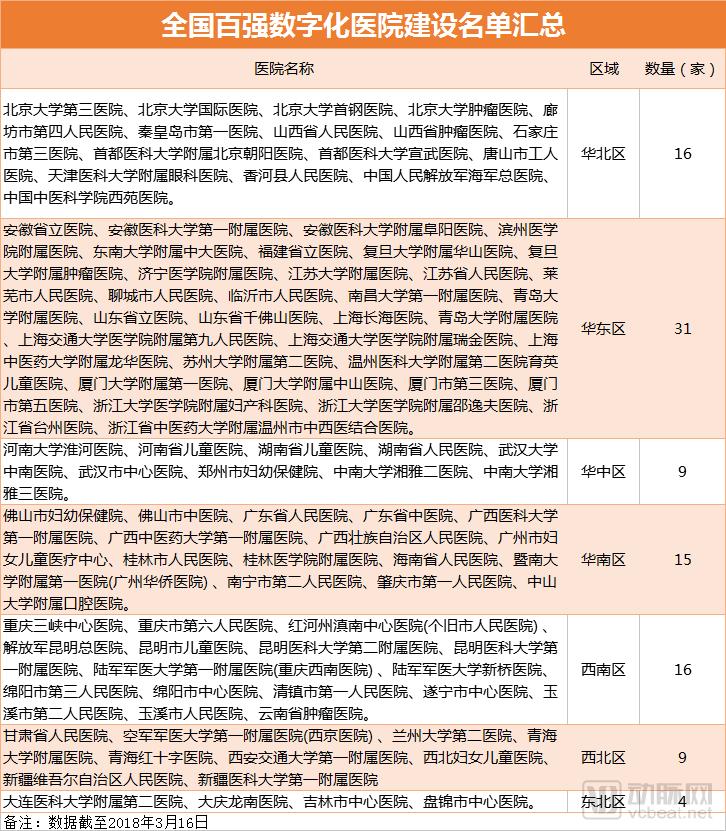
As can be seen from the list, North China has the largest number of hospitals that have passed the Digital Hospital evaluation, including Anhui Province, Shandong Province, Zhejiang Province, and Shanghai. These regions have large populations, and there is an urgent demand among residents to improve their medical care experience.
The hospitals selected in this evaluation primarily showcased achievements across various application domains, including refined hospital management, clinical operation support, optimization of diagnosis and treatment workflows, coordination of medical resources, standardization initiatives, air ambulance emergency services, international remote consultations, and specialized development. These achievements involved the implementation of emerging technologies such as cloud computing, big data, Internet Plus, the Internet of Things (IoT), and artificial intelligence. They also encompassed distinctive practices in models such as mobile payments, asset positioning, proactive intervention, intelligent monitoring, and information security, fully demonstrating the vibrant and diverse landscape of digital transformation in hospitals at all levels across China over the past five years.
As healthcare reforms advance, numerous enterprises have turned their attention to the medical industry, hoping to capture a share of the market. According to the “Healthy China 2030” Planning Outline issued by the State Council in 2016, the scale of the health service industry is projected to exceed RMB 8 trillion by 2020 and RMB 16 trillion by 2030. Participants at the Health Industry Investment and Financing Branch Conference predict that over the next five years, healthcare expenditure as a percentage of GDP is expected to reach approximately 10%, with the industry’s output value approaching RMB 10 trillion.
As the healthcare industry evolves, so too have the companies serving hospitals. Some have crossed over from other industries, some have long specialized in healthcare, and others are new entrants to the sector. To trace the development trajectories of these enterprises, VCBeat has selected 57 Chinese companies providing digital hospital solutions, as shown below:
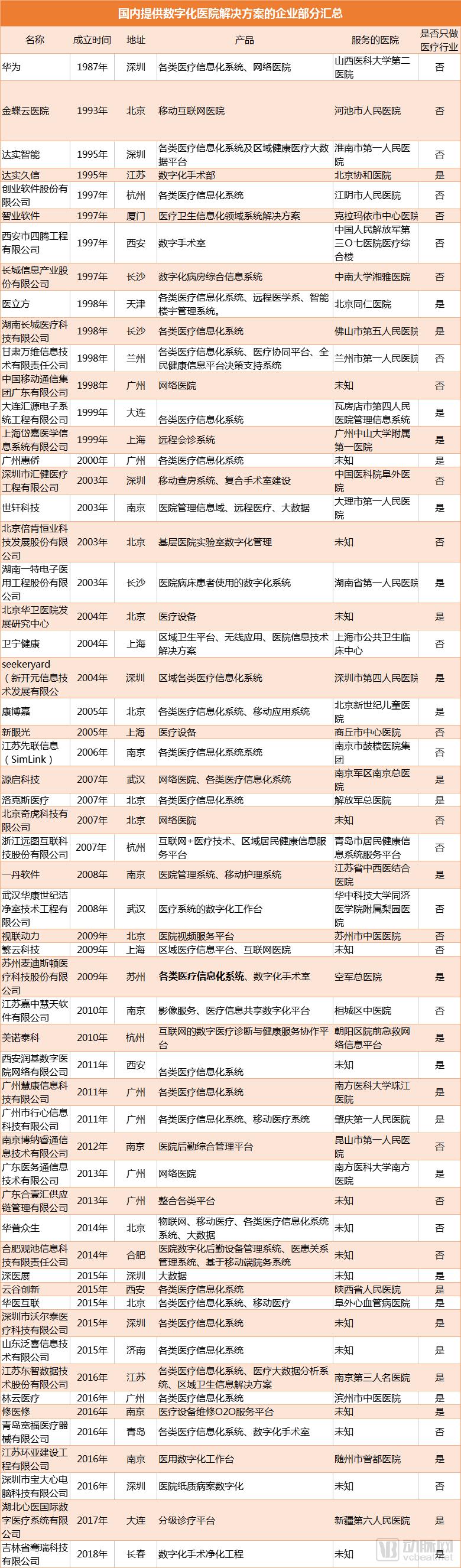
The establishment period spans 30 years, with the earliest being 1987.
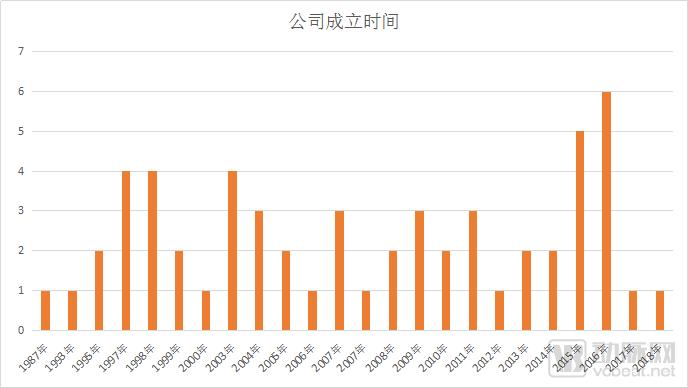
According to the list, the earliest year in which a company provided digital hospital solutions was 1987, and that company was Huawei. It proposed its digital hospital solution in 2016; as a technology company, it had an easier time doing so compared to other enterprises.
Most of these companies were also founded in 2016, as policies on digital hospitals had just been introduced in 2015. Everyone believed this was a prime opportunity and sought to seize it by riding the wave.
Region: A large number of enterprises in first-tier cities

In terms of the location where the companies were founded, Beijing has the highest number with 9 enterprises; Guangzhou and Nanjing rank second with 7 each. This is related to the number of hospitals. Large cities have abundant medical resources and a greater number of hospitals.
A wide variety of products are offered, with information technology (IT) products being the most prevalent.
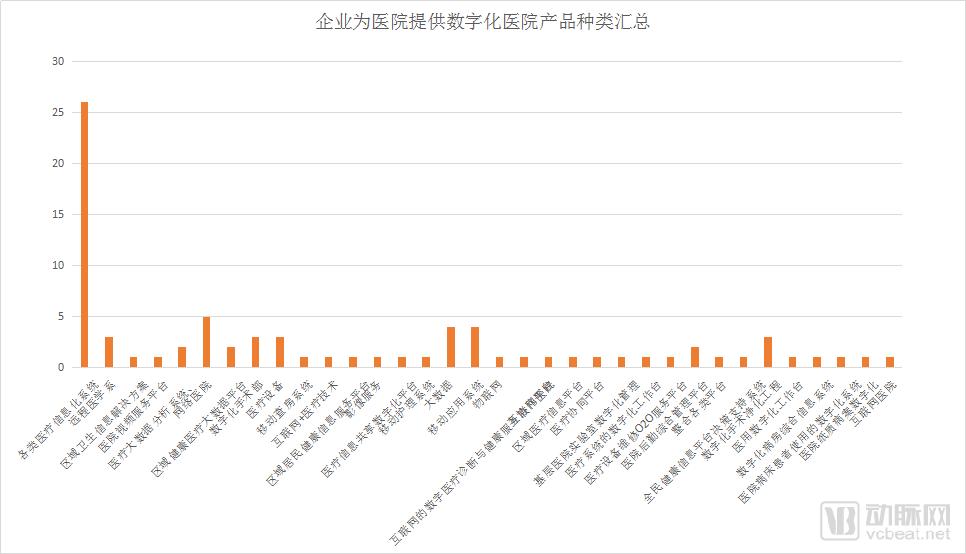
This is directly related to the definition of a digital hospital. Generally speaking, all hospitals implement health information systems, with variations only in the range and number of systems deployed.
On the other hand, digital hospital accreditation is closely linked to hospital grading evaluations. Whether applying for Class A tertiary hospital status or a secondary hospital seeking upgrade to tertiary level, passing the digital hospital accreditation is mandatory. For reference, the “Detailed Implementation Rules for the Accreditation Standards of Tertiary General Hospitals” contain numerous criteria and monitoring indicators directly or indirectly related to informatization among its 378 standards. For instance, in the core evaluation items, those specifically assessing the effectiveness of informatization applications account for 10.4%, while those directly related to medical quality and patient safety constitute 17.8%, and management-related criteria reach 25%.
Information technology (IT) infrastructure plays a pivotal role in hospital accreditation, with accreditation outcomes heavily dependent on the level of a hospital’s IT maturity. Consequently, many healthcare IT enterprises have grown and expanded by meticulously preparing in accordance with the Guidelines for Digital Hospital Construction. These companies conduct comprehensive assessments of hospitals’ IT capabilities and undertake replanning, redesign, and retrofitting of existing systems to help hospitals establish robust IT foundations in preparation for accreditation reviews.
45% of these enterprises are involved in multiple industries.
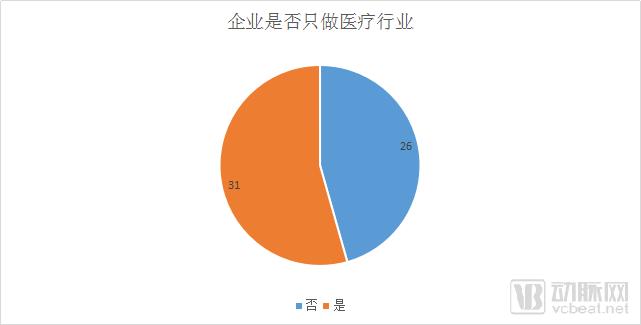
From the perspective of these industries, 45% of enterprises are involved in multiple sectors. Examples include Huawei, 360, Kingdee Cloud Hospital, Das Intellitech, and Winning Health.
Although a large number of digital hospitals have been built across China, the overall level still lags behind that of developed countries. The reasons include limited investment in infrastructure construction, a shortage of specialized professionals, and suboptimal application outcomes.
Weak scientific research; inadequate management structures; incomplete supporting regulations; standardization issues; low levels of information openness and utilization; system security and data security concerns.
Despite the aforementioned challenges, China’s digital hospitals have ample opportunities for exploration in terms of both operational models and profitability. For instance, in patient care, advancements in communication technology, along with the ubiquity of smartphones and mobile devices, are empowering healthcare professionals to work more efficiently.
With the advancement of policies such as tiered diagnosis and treatment, multi-site practice for physicians, and “Internet Plus” healthcare, China’s transition from digital hospitals to comprehensive digital healthcare is no longer a distant dream. Driven by both government initiatives and industry forces, medical resources are expected to become less concentrated, while community-level healthcare capabilities will improve rapidly. Tiered diagnosis and treatment will play a pivotal role in this transformation. The integration of big data and the development of secure data confidentiality systems will create more collaboration opportunities between tech giants and the healthcare sector. In the near future, cloud-based electronic health records (EHRs) and e-prescriptions are anticipated to be widely adopted across China. Furthermore, although numerous domestic companies produce mobile health monitoring hardware that resembles medical devices, their large-scale deployment still requires governmental approval. Nevertheless, strong market demand will accelerate the application of such products in the healthcare field.
However, mindsets must evolve alongside this transformation. By consistently adhering to a people-oriented philosophy and embedding the “patient-centered” concept throughout every stage and aspect of digital hospital development, we can leverage optimized workflows and convenient services to create a healthcare environment that is accessible, reassuring, and satisfying for patients.
Xinyi International has successively undertaken the construction of provincial-level telemedicine platform demonstration projects in Qinghai, Henan, Guizhou, and Shanxi provinces, and has actively participated in their operational services. Among these, the Guizhou Provincial Telemedicine Platform has achieved remarkable results. From June 2016 to October 2017, Guizhou conducted over 21,000 remote consultations, a figure 80 times the total accumulated in all previous years. Through the telemedicine platform, tertiary Grade-A hospitals at the provincial and municipal levels have carried out more than 300 routine remote training sessions for medical institutions across the province, reaching nearly 300,000 participants. These compelling data undoubtedly serve as the strongest testament to Xinyi’s successful support of the “Internet + Healthcare” initiative and its creation of a new, collaborative, and interconnected model of smart healthcare services.
According to the definition by Medbanks International: Smart Healthcare = (Technology + Operations + Discipline) × (Ecosystem + Data) = Healthcare Empowerment.
While building China’s largest remote medical consortium network and creating an internet healthcare operational service platform based on physical hospitals, Sinyi International facilitates targeted co-development of branded specialties at the primary care level through remote operations and specialized medical services. It provides on-demand practical medical skills training for primary care physicians, driving medical consortium development through service excellence. This approach ensures that medical consortia are not only “connected” but also “active,” truly empowering healthcare delivery.
In terms of technology: XinYi International serves medical institutions at all levels and various medical consortium projects through its five R&D centers established across China, an independent R&D team of over 340 members, and a remote operations and quality control team of more than 200 professionals.
In terms of operations, Xinyi International boasts a comprehensive operational service system, also known as Medical Consortium Stewardship Services. These operational services cover medical consortium network planning, demand matching, process management, and the establishment of self-operated systems, providing complete solutions for governments and healthcare institutions.
In terms of specialty disciplines, Heart Doctor International has built an open platform that provides integrated solutions encompassing IT, clinical specialties, and operations. By sharing resources with specialty institutions to empower healthcare delivery, it assists primary care facilities in co-building branded clinical specialties. Closely aligned with the four pillars of “clinical practice, education, research, and management,” the company actively empowers medical institutions at all levels. To date, it has launched co-building services for 12 major branded specialties, including respiratory medicine, oncology, neurosurgery, rehabilitation, vascular surgery, cardiovascular and cerebrovascular diseases, and hepatobiliary surgery, and has implemented 27 specialized medical consortia across China.
In 2017, Xinyi International further introduced the concept of an open platform. By bringing in external teams of specialists from various disciplines and ecosystem partners—including pharmaceutical companies, medical device manufacturers, and supply chain providers—the company continuously integrated resources to enhance value. This strategy established a “Three-Network Integration” business model, with medical consortia as the backbone network, complemented by regional health networks and ecosystem collaboration networks.
In the data segment, based on China’s largest remote medical consortium network, Xinyi International covers 5,700+ hospitals across 31 provinces in China, 160+ medical consortia, 160+ regional leaders, 50+ national Grade-A tertiary hospitals, and 20+ specialty leaders, achieving an annual volume of 180,000 remote consultation and diagnosis cases, thereby supporting hospital management with massive volumes of real-world clinical data derived from healthcare operations.
In fact, digital healthcare is also widely adopted abroad. For instance, Selayang Hospital in Malaysia, with 960 beds and 22 departments, is receiving a government investment of 500 million ringgit to build a paperless environment focused on wireless healthcare, telemedicine, and Internet-based solutions. By integrating bedside monitoring into advanced electronic medical records, physicians can remotely access critical patient information from outside the hospital, enabling continuous monitoring for mobile patients.
Indiana Heart Hospital in the United States has 88 beds, 32 outpatient departments, 4 operating rooms, 6 cardiac catheterization laboratories, and 1 cardiac emergency room. With an investment of $15 million, it was completed at the end of 2002 as the first fully digital specialized cardiac hospital in the United States, completely eliminating traditional paper- and film-based medical records. Information entry and retrieval can be performed at the patient’s bedside, and clinicians can access patient information via electronic health records both within and outside the hospital.
Taking North America’s first fully digital hospital as an example, the new Humber River Hospital in Toronto, Canada, covers an area of 161,000 square meters and has 656 beds. Throughout the design process, evidence-based design strategies, refined management, sustainable green design solutions, and advanced digital technologies were employed to realize the hospital’s “community-oriented” positioning.
This campus employs state-of-the-art fully digital technologies, including smart hospital bed systems, integrated bedside terminals, robotics, automated laboratory and pharmacy workflows, automated guided vehicles (AGVs), and speech recognition software. For instance, the digital terminal on one side of the hospital bed allows patients to directly access their personal medical records, upcoming diagnostic appointments, and visitation schedules for family and friends. The device also enables patients to connect with family and friends via video chat, browse the internet, and watch television.
Robotics in pharmacies and laboratories can synchronize electronic patient records, pharmacy inventory data, and bedside terminal information, reducing processing time by 60%.
It is evident that hospitals can only liberate their workforce and achieve success in fierce market competition by fully leveraging digital information technology. Through digitalization, hospitals will accelerate innovation across various domains, including medical care, management, services, and institutional systems.
Taking this hospital as the ideal model of a digital hospital, future advancements in computer and network technologies will provide a reliable technical foundation for the construction of digital hospitals. The realization of digital hospitals will break down institutional barriers, enabling hospitals to expand from a purely treatment-oriented model to an integrated healthcare and medical service model. This transformation will facilitate radiation from individual points to broader areas and extend services into communities, thereby providing more comprehensive and fundamental healthcare services to the Chinese population. It also serves as one of the indicators of a nation’s level of development.