

From Technology to Practice: Deconstructing Hospital IoT – A Prospectus-Backed Overview
Currently, digital transformation has permeated every industry. Aspects of people’s daily lives—including clothing, food, housing, transportation, work, and production services—have all become scenarios for digitalization. You can connect a Bluetooth speaker to your mobile phone to play music, have a robotic vacuum cleaner automatically clean your floors, or use a smart wristband to monitor your health. The examples are numerous and varied.
The digital transformation of the healthcare industry started early, but its development has been relatively slow. Dai Xingjiang, Head of Healthcare Expansion at Huawei’s Enterprise Business Group (EBG) China Region, once summarized: “Previous hospital digital transformation focused on streamlining business processes. However, with the advancement of data and information technology, transforming individual business units in isolation tends to create silos between different functions. By leveraging emerging technologies such as cloud computing, the Internet of Things (IoT), and big data to build integrated platforms and solutions, hospitals can drive comprehensive digital transformation across all processes and data.”
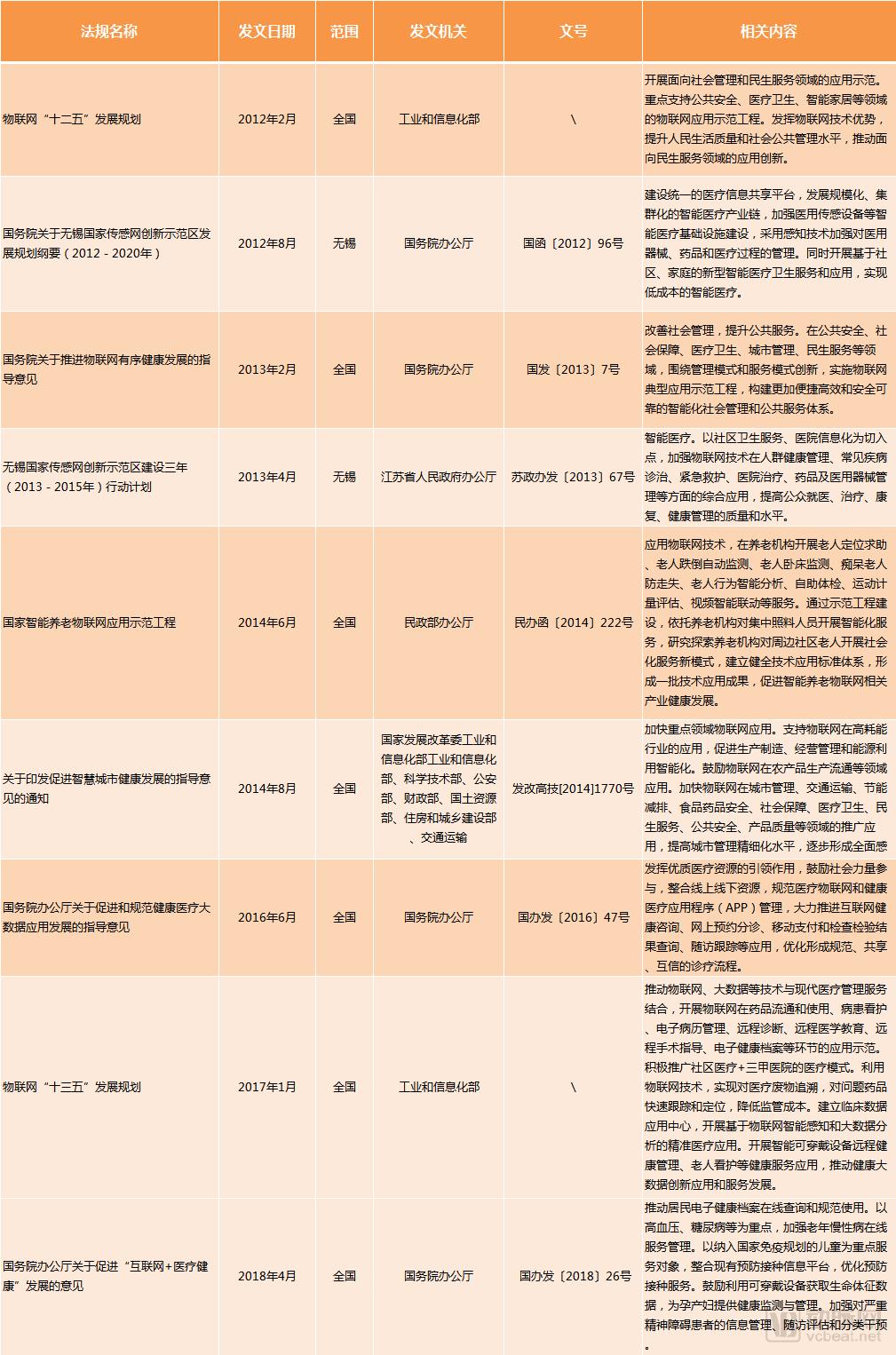
The Internet of Medical Things (IoMT) is undoubtedly the core driver leading the digital transformation of hospitals. This conclusion is further supported by the policies issued in China in recent years. From 2012 to 2018, China rolled out a series of policies related to the IoMT, which have provided clear direction for the digital transformation of hospitals and the development of the medical internet.
Policies Related to the Medical Internet of Things
Medical Internet of Things: The Foundation of Hospital Digital Transformation
The Medical Internet of Things (MIoT) serves the healthcare sector by integrating advanced technologies such as optical technology, pressure-sensitive technology, and RFID technology. Combined with various medical sensors, it facilitates information exchange through sensor networks based on agreed-upon protocols, leveraging mobile terminals, embedded computing devices, and medical information processing platforms.
Similar to the Internet of Things (IoT), the Internet of Medical Things (IoMT) also comprises three layers: the perception layer, the transmission layer, and the application layer.
Medical IoT Perception Layer
In the perception layer, currently mainstream and widely adopted technologies include optical technology, pressure-sensitive technology, and RFID technology.
Taking the most widely used RFID technology as an example, hospitals store patients’ medical records and personal information using devices such as RFID wristbands, with hospital servers responsible for receiving, processing, and storing this medical data. Before providing care, healthcare professionals can use PDAs to read information from patients’ RFID medical cards, thereby accessing details such as medical history and blood type.
In addition to retrieving information, healthcare professionals can also use PDAs to record patients’ injury details and basic treatment measures, and transmit this data to the hospital via wireless communication, enabling the hospital to assess the situation promptly and make adequate preoperative preparations.
In this regard, Wuxi Shiling Technology Co., Ltd. (hereinafter referred to as “Shiling Technology”), located in the Wuxi Sensor Network University Science Park, is a representative enterprise in the industry. As a high-tech enterprise dedicated to researching comprehensive solutions for the medical Internet of Things (IoMT) sector, it is the first developer of passive microwave RFID technology in China.
In the past few years, Shiling Technology has filed for and obtained authorization for more than 60 domestic and international invention patents and copyrights in the field of ultra-high frequency (UHF) and microwave passive RFID technology. Meanwhile, the hospital IoT information integration platform and RFID smart terminal devices developed by Shiling Technology have been deployed in over 340 hospitals across China, including renowned Grade A tertiary hospitals such as The First Affiliated Hospital of Sun Yat-sen University, Sir Run Run Shaw Hospital of Zhejiang University, Sinopharm Zhongyuan Hospital Management Group, and Hebei General Hospital.
Ensuring nursing safety and improving nursing quality are critical components in alleviating doctor-patient conflicts.
At present, medical malpractice incidents occur frequently in hospitals across China, often leading to significant doctor-patient disputes when they arise. Data indicates that 70%–80% of medical disputes do not constitute medical malpractice but are instead caused by improper nursing care. Taking intravenous (IV) infusion, the most common procedure, as an example, nurses are highly prone to administration errors during patient IV management. Strict regulations govern IV medications, dosages, and timing; any deviation in these aspects can potentially result in medical malpractice.
If every patient wears an RFID wristband, nurses can scan the wristband and medication code before infusion to verify their match, thereby minimizing the risk of administration errors.
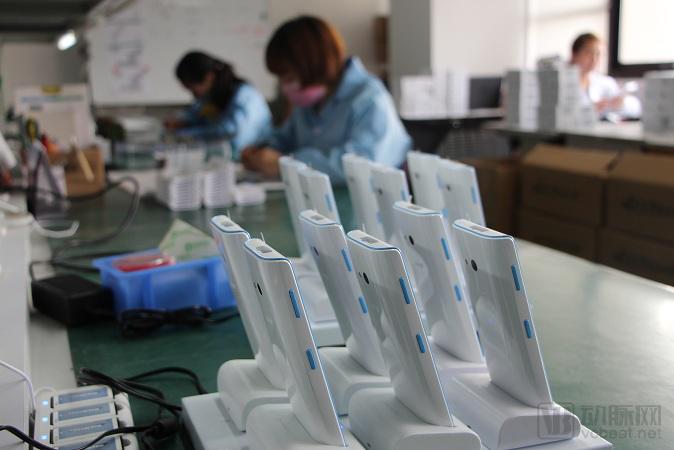
Shiling Technology’s RFID-based Smart Nursing System for Hospitals leverages hospital wards as its operational platform and aligns with the IoT-enabled RFID application needs of healthcare facilities. It marks the first domestic implementation of ultra-high-frequency (UHF) wireless RFID technology in hospital nursing care, enabling comprehensive, contactless patient identification, real-time acquisition of nursing operation data, procedure verification, and automated documentation.
The intelligent nursing system ensures that nurses adhere to the “Three Checks and Seven Verifications” protocol, thereby reducing nursing errors. Upon admission, each patient is issued an RFID wristband that serves as a “temporary ID” during their hospital stay. This wristband contains basic patient information—such as name, gender, age, department, bed number, and blood type—as well as data related to medical order processing, laboratory tests, intravenous infusions, and injections.
In addition to the sensors mentioned above, mainstream sensors widely used in the medical industry currently include solution temperature sensors, pH sensors, DNA sensors, and humidity sensors.
Medical IoT Transmission Layer
Common wireless transmission methods for the Internet of Medical Things (IoMT) include Wi-Fi technology and Bluetooth communication technology.
From a technical performance perspective, Wi-Fi offers advantages such as high bandwidth and fast transmission speeds, making it primarily suitable for communication in devices like computers and smartphones. Bluetooth technology, characterized by low power consumption and rapid data transfer rates, is currently the short-range wireless communication technology of choice for the Medical Internet of Things (MIoT).
Take Daoyixun, a well-known domestic indoor navigation company, as an example. The company integrated its indoor navigation technology into the official app of the Guangzhou Women and Children’s Medical Center, providing patients with services such as procedure-integrated navigation, self-service query-based navigation, and location sharing. This has effectively reduced the hospital’s investment in patient guidance while enhancing overall service quality and operational efficiency.
The hospital has mounted Dao Yi Xun’s iBeacon Bluetooth positioning beacons on the walls. When users enable Bluetooth on their smartphones for positioning, precise location tracking is achieved by leveraging the signals emitted by these beacons. In this process, apart from the initial launch of the app which requires loading offline maps, there is no need to activate 4G or Wi-Fi networks thereafter, thus consuming no mobile data. Simply put, this principle is similar to how smartphones connect to Wi-Fi and mobile networks outdoors and then use GPS or BeiDou for positioning.
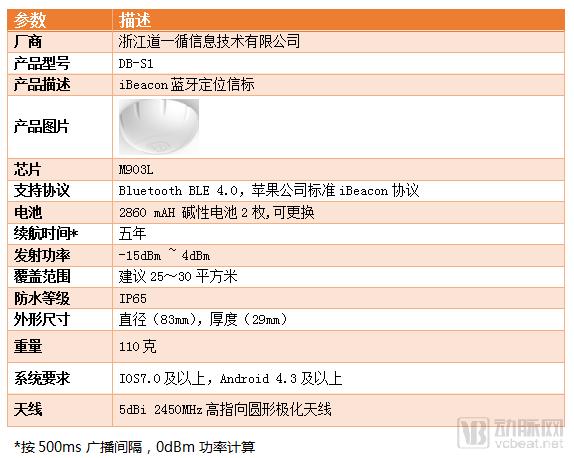
Dao Yixun’s electromagnetic fingerprint matching technology (based on signal strength from Bluetooth beacons) does not rely on network connectivity, resulting in navigation stability more than ten times higher than that of traditional technologies. Meanwhile, Dao Yixun is the first company in China to integrate smart antennas into Bluetooth base stations and adopt smartphone-based inertial navigation technology.
Application Layer of the Medical Internet of Things
Driven by the application of Internet of Things (IoT) technology, healthcare is increasingly evolving toward digitalization and intelligence. Overall, digital healthcare applications can be categorized into the following areas:
Digital hospitals represent the comprehensive application of Internet of Things (IoT) technology in healthcare settings. They leverage IoT to build various application services, integrating diagnosis and treatment, management, and decision-making into a unified system. Telemedicine is one such application.
According to the regulations of the National Health and Family Planning Commission, telemedicine services currently include: remote pathological diagnosis; remote medical imaging diagnosis (covering radiology, ultrasound, nuclear medicine, electrocardiography, electromyography, electroencephalography, etc.); remote monitoring; remote consultation; remote outpatient services; and remote case discussions.
Taking XinYi International, a well-known domestic telemedicine company, as an example, its remote consultation platform has evolved from an initial point-to-point remote network to a current integrated “point-line-plane” model after nearly three years of research and development. It has taken the lead in establishing horizontal connections among peer-level hospitals, thereby maximizing the release of medical resources. In addition to building collaborative platforms within regions, XinYi provides data center and regulatory platform services for these areas, achieving data interconnectivity and enabling a comprehensive, unified view of patient data.
Furthermore, technologies such as Xinyi’s optimized medical image data transmission and pathological image caching have significantly enhanced the speed and accuracy of reviewing patient medical records during consultations. Currently, several national-level Grade III Class A hospitals in China are adopting this technology. With the integration of 5G networks and Xinyi’s proprietary image data transmission technology, consultation efficiency can be further improved, facilitating mobile applications.
Digital Solution Integrating the Perception Layer, Transmission Layer, and Application Layer
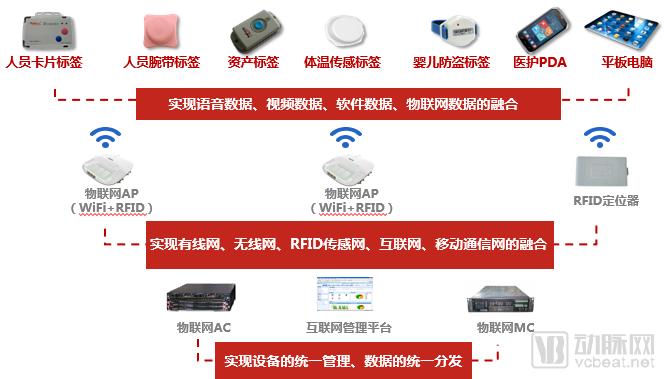
Solutions that integrate the perception layer, transmission layer, and application layer are rare. To illustrate this, we take YiHui Technology, a leading domestic medical IoT enterprise, as a case study. The company has launched an IoT infrastructure platform featuring “four-network integration,” with IoT Access Points (APs) and Access Controllers (ACs) at its core. The IoT APs, equipped with RFID reader capabilities, enable dual-frequency, four-channel data transmission and reception. These IoT APs can receive information returned from both RFID tags and Wi-Fi-enabled mobile terminals, thereby achieving fusion at the front-end perception layer.
In addition to interfacing with IoT access points (APs), the IoT access controller (AC) can leverage an integrated IoT middleware module to enable conversion, encapsulation, parsing, and integration between front-end sensing data and back-end application systems.
By integrating the converged communication gateway module, RFID signals are converted into TCP/IP signals for transmission. Through management via a unified convergence management platform, unified and effective configuration and management of wireless network applications and RFID applications for IoT access points (APs) are achieved.
Simply put, the IoT infrastructure platform addresses communication and data integration among wired networks, IoT networks, and internal/external networks in a streamlined manner.
Four-Network-Converged IoT Infrastructure Platform
If a company has completed the deployment of an Internet of Things (IoT) system for hospital temperature monitoring, it may still need to collect data on other parameters such as humidity and brightness in the future, which is difficult for a single company to handle comprehensively. Mediwisdom’s IoT platform can accommodate the collection of all types of IoT data, including temperature, humidity, and brightness, thereby enabling the sharing of IoT data.
Although the IoT infrastructure platform is open, it is not without barriers; all hardware and software products must be tightly integrated with medical workflows and comply with its standards and specifications, which demands a high level of professional expertise from enterprises.
Personnel positioning management, infant anti-theft, IoT cold chain management, real-time patient temperature monitoring, infusion management, and smart bed detection are the primary application scenarios of Winning Health’s IoT products in hospitals.
At the communication layer, Yihui Technology has partnered with H3C, a leading domestic IT solutions provider. Leveraging H3C’s underlying network infrastructure, Yihui enables connectivity for sensors and applications across various healthcare scenarios. H3C’s IoT access points have been deeply integrated with Yihui Technology’s proprietary technologies.
At the application layer, YiHui Technology has collaborated with companies such as Lvyang Technology and Yingwang Technology in areas including intelligent infusion monitoring and smart beds, building upon its independent development capabilities.
Digital Transformation in Hospitals: Comprehensive Case Studies of IoT Applications
Since the adjustment of China’s national fertility policy in 2015, the proportion of mothers giving birth to their second child has continued to rise. In 2017, Qin Geng, then Director of the Department of Maternal and Child Health under the former National Health and Family Planning Commission, noted that the number of live births in hospitals across China reached 18.46 million in 2016, representing an 11.5% increase from 2015, with a significant rise in the proportions of second-child deliveries and pregnancies among older women at high risk. Taking Beijing as an example, the proportion of pregnant women of advanced maternal age increased from 48% in 2014 to over 60% in 2016, posing substantial challenges to local governments and hospitals nationwide.
In response to this issue, in July 2017, the National Health and Family Planning Commission issued Document No. 42 [2017] of the National Health and Family Planning Commission on Maternal and Child Health, titled “Notice on Strengthening the Guarantee of Maternal and Infant Safety,” and launched the Maternal and Infant Safety Action Plan. The plan requires medical institutions at Level II and above to conduct pregnancy risk assessment and grading for pregnant and postpartum women who screen positive for pregnancy risks. They shall be classified and labeled with five color codes according to the severity of risk: “green (low risk), yellow (general risk), orange (moderately high risk), red (high risk), and purple (infectious disease),” so as to strengthen categorized management.
Furthermore, the plan explicitly calls for accelerating the development of maternal and child health information platforms to monitor data on childbirths, high-risk pregnancies, maternal mortality, and the utilization of service resources within each province (autonomous region, or municipality).
Under the guidance of national policies, and to better serve the maternal and child population, the Health and Family Planning Commission of Bijie City, Guizhou Province, formulated the “Standards for the Standardized Construction of Maternal Health Clinics in Bijie City” and the “Standards for the Standardized Construction of Child Health Clinics,” so as to regulate the development of health clinics for pregnant women and children aged 0–6 years, and strengthen screening and management efforts for high-risk pregnant women and frail children.
In 2017, the city’s hospital delivery rate was 99.20%, the maternal mortality ratio was 21.05 per 100,000 live births, the infant mortality rate was 7.16‰, and the under-5 child mortality rate was 9.30‰. The rate of systematic management for pregnant and postpartum women was 88.65%, the health management rate for children aged 0–6 years was 89.48%, and the systematic management rate for children under 3 years of age was 89.16%, all meeting the target objectives.
More Scientific Management of High-Risk Pregnant and Postpartum Women
In December 2015, Evergrande Group held a signing ceremony for paired assistance with Dafang County, Guizhou Province, committing to provide RMB 3 billion in unconditional funding to help the county’s impoverished population achieve comprehensive poverty alleviation within three years. As part of its healthcare poverty-alleviation initiatives, Evergrande Group funded the construction of a new hospital based on the existing Dafang County Traditional Chinese Medicine Hospital, built to the scale and standards of a tertiary general hospital. The facility is named the Second People’s Hospital of Dafang County, Bijie City, Guizhou Province (Dafang County Evergrande Charity Hospital).
The hospital covers an area of 46,142.7 m², with a building area of 40,708.18 m² and 500 beds. It is a modern large-scale comprehensive public hospital integrating medical care, teaching, scientific research, rehabilitation, and healthcare services. The hospital comprises 44 clinical departments and 10 medical technology departments. The total staff count is 800, including 680 healthcare professionals and 120 administrative and logistical personnel.
In terms of departments, the hospital receives designated medical assistance from the Affiliated Hospital of Guizhou Medical University. Its key specialized disciplines include obstetrics and gynecology, oncology, stroke, and chronic cardiovascular diseases. The Women’s and Children’s Center has 200 beds and serves approximately 10,000 maternal and pediatric patients annually.
As a highly representative innovative hospital in Bijie City, Dafang County Second People's Hospital has adopted mobile healthcare and Internet of Things (IoT) technologies provided by Ruikang Yixin. By leveraging functionalities such as report push notifications, physician order alerts, health management, data transmission, and one-touch emergency calls, the hospital has established specialized information services for high-risk maternal management that bridge in-hospital and out-of-hospital care, thereby creating a closed-loop service model covering “prenatal–intrapartum–postpartum” stages and “pre-hospital–in-hospital–post-discharge” phases.
On the physician side, building upon the Hospital Information System (HIS) and Electronic Medical Records (EMR), the hospital has established a specialized high-risk maternal management system that integrates outpatient and inpatient services. The obstetrics department is equipped with a dedicated nurse monitoring workstation featuring an intelligent large-screen display, enabling dashboard-style management of both hospitalized patients and high-risk pregnant women at home.
On the patient side, the system is equipped with a dedicated mobile app and WeChat mini-program, supporting cloud-based services such as mobile report access, medication reminders, health management, appointment scheduling and payment, and emergency alerts. Additionally, through smart bracelets with ultra-long battery life, it provides location services and continuous monitoring of basic vital signs.
In terms of IoT technology, the hospital has deployed a network using bidirectional Bluetooth access points (APs) and provides positioning services through medical-grade Bluetooth smart wristbands. In terms of accuracy and safety, this technology far surpasses traditional positioning technologies such as Wi-Fi, indoor base stations, RFID video, and UWB (Ultra-Wideband).
This case study focuses on Patient A, a 40-year-old advanced maternal age pregnant woman from Dafang County. After suspecting she was pregnant, Patient A visited the Obstetrics and Gynecology Outpatient Department of Dafang Second People’s Hospital. Following routine prenatal examinations, the physician confirmed her pregnancy but identified comorbidities including gestational hypertension and diabetes. Consequently, the physician established an electronic health record for Patient A in the High-Risk Maternal Management System and classified her as a high-risk pregnant woman with “orange” risk level.
After providing professional advice, the doctor recommended downloading a maternal self-management app and renting a compatible smart wristband. The doctor also suggested purchasing or renting a blood pressure monitor and a glucometer for self-management to control indicators such as blood pressure, blood glucose, and body weight. Accordingly, with the assistance of hospital staff, Pregnant Woman A downloaded and registered for the app at the hospital’s comprehensive service counter and rented the supporting devices, including the wristband, blood pressure monitor, and glucometer. She was then able to view her examination results, the doctor’s orders and recommendations, and important precautions within the app.
After leaving the hospital, Pregnant Woman A followed the app’s automated reminders to daily adhere to medical advice for measuring and automatically collecting data on step count, weight, blood glucose, and blood pressure. She regularly reviewed development trends and physician management recommendations, and scheduled her next follow-up visit via the mobile app.
If a pregnant woman is nearing her due date and feels unwell, she can use a mobile app to instantly connect with the on-duty obstetrician at the hospital. Upon confirmation that inpatient observation is required, the doctor will arrange an ambulance to provide her with a green channel for expedited hospital admission.
After being admitted to the hospital’s obstetrics department, Pregnant Woman A will continue to wear a smart wristband and use the associated app, and may engage in slow movement within the hospital premises during the observation period. As the hospital has deployed a three-tier IoT electronic geofencing and positioning system covering the obstetrics department, the inpatient building, and the hospital entrance, the pregnant woman can also benefit from automated off-bed monitoring services.
When she experiences abdominal pain and signs of labor, a long press on the wristband for three seconds triggers an automatic alarm. Obstetric medical staff can then immediately pinpoint the patient’s location via the department’s smart terminal and transfer her to the delivery room as quickly as possible to ensure a smooth delivery.
After delivery, in addition to emphasizing essential childcare knowledge, healthcare providers must deliver personalized education on postpartum recovery and care tailored to each mother’s specific condition. To this end, the obstetrics department maintains a comprehensive knowledge base for maternal education, which is pushed to patients’ mobile apps. Mothers can review the materials independently and follow medical advice accordingly. This approach significantly reduces the time required for doctor-patient communication, thereby achieving the goals of evidence-based postpartum recovery and scientific childcare.
Four Major Innovations in Service Models
Overall, the specialized information service for high-risk pregnant and postpartum women at Dafang County Second People’s Hospital has not only established a closed-loop service model covering “prenatal–intrapartum–postpartum” and “pre-hospital–in-hospital–post-discharge” phases, but also features four key innovations.
Innovation in the Full-Course Service Model for Maternal Care: This model addresses the specialized needs of full-course disease management for pregnant and postpartum women, breaking through the limitations of traditional mobile health applications that primarily focus on appointment registration. By leveraging information sharing between in-hospital and out-of-hospital settings and facilitating close monitoring and communication between healthcare providers and patients, the model enhances patient adherence, increases app usage frequency, and improves user stickiness. It provides personalized, precision management services for high-risk pregnant and postpartum women on the platform and establishes a green “life channel” for high-risk cases, demonstrating strong replicability.
2. Innovation in IoT-based Medical Applications: Addressing the needs of high-risk pregnant and postpartum women, such as off-bed monitoring and electronic geofencing, this project integrates next-generation IoT positioning and communication technologies with mobile app software to enable real-time, ubiquitous monitoring (including off-bed monitoring), providing 24/7 uninterrupted services to the target user group.
3. IoT Technology Innovation: The IoT system employed in this project utilizes bidirectional Bluetooth-based positioning technology and the latest bidirectional Bluetooth access points (APs), supplemented by geomagnetic sensors, GSM base stations, and Wi-Fi for correction and optimization. In comprehensive evaluations of key performance indicators—including positioning accuracy, signal penetration, anti-interference capability, installation complexity, cost, and device compatibility—it outperforms traditional solutions such as Wi-Fi, RFID, and UWB.
Innovation in User Operation Service Models: At Dafang County Second People's Hospital, in addition to deploying the necessary hardware and software IT infrastructure, a dedicated operations team and a specialized obstetrics team have been established. These teams provide operational volunteer services to pregnant women seeking care, including QR code-based registration via mobile app, training on app usage, and health education on perinatal care. This ensures that high-risk pregnant patients receive the hospital’s novel whole-course disease management services.
Model Effectiveness Analysis
Leveraging advanced information technologies such as mobile health and the Internet of Things, and supported by an on-site operational team, Dafang County Second People’s Hospital has gradually implemented a precision management model for high-risk pregnant women in primary healthcare institutions. This model delivers mutual benefits to both patients and the hospital, achieving three major outcomes:
1. Enhancement of Hospital Brand and Regional Demonstration and Promotion of the Model: By implementing high-risk maternal management and utilizing a mobile app, the hospital’s obstetrics department has established a brand for precise maternal care services within its jurisdiction and surrounding areas.
2. Significant Improvement in Departmental User Management and Service Efficiency: By leveraging advanced information technology, the hospital’s obstetrics and neonatology departments have achieved comprehensive health monitoring for mothers and infants throughout the entire care continuum. This approach not only fulfills governmental policy requirements for the management of high-risk pregnant women but also enables electronic management, providing administrators with real-time, at-a-glance visibility into the status of both routine and high-risk pregnancies on the platform. Furthermore, a one-click direct connection has established a streamlined “green channel” for emergency care, substantially enhancing service efficiency.
3. Significant enhancement in the sense of gain, happiness, and security among high-risk pregnant and postpartum women: Through the use of mobile apps, electronic health records for pregnant women, and smart wristbands, pregnant women—especially those at high risk—can enjoy uninterrupted hospital services, fostering a sense of security akin to being at home.